
Side Dishes
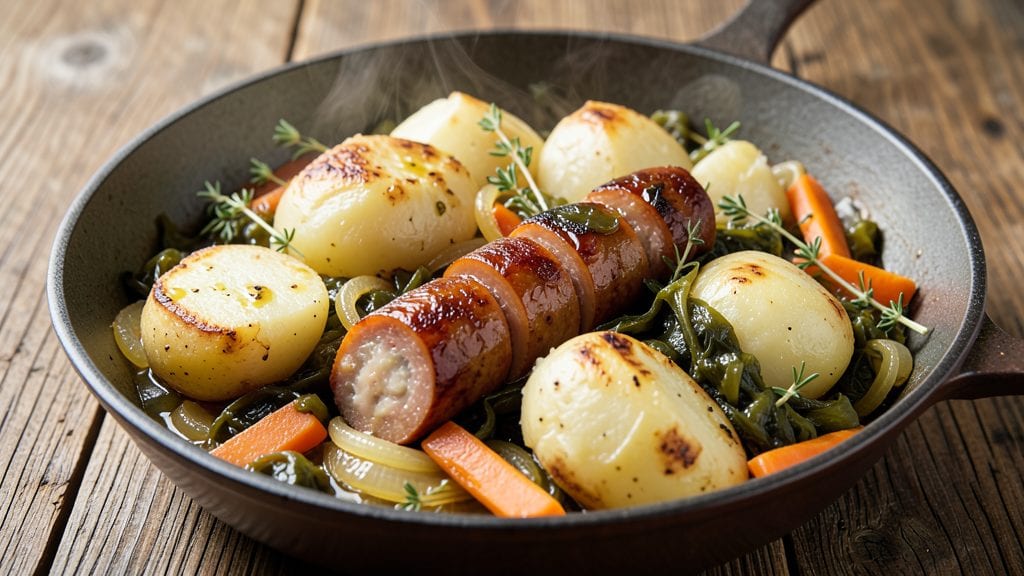
This sauerkraut potatoes with sausage recipe delivers the kind of hearty, one-pan German-inspired comfort that transforms a simple weeknight into a homey feast. The tangy punch of sauerkraut meets the richness of crispy sausage and tender potatoes, all simmered together until every bite is perfectly balanced.
I first discovered this dish while helping my Nonna in her cramped Boston kitchen—where flavor always won over space.
The beauty of this recipe lies in its simplicity: just three core ingredients braised together until the potatoes are fork-tender and the sausage is infused with all the sauerkraut's tangy goodness. No fancy techniques required—just a cast-iron skillet, patience, and a willingness to let the flavors meld.
The result? A dish that's rustic enough for a family Sunday dinner but impressive enough for guests.
What makes this recipe truly special is how the sauerkraut's lactic acid tenderizes the potatoes while adding depth, while the sausage provides that satisfying meaty bite. The potatoes develop crispy edges from the braising process, and the sauce thickens into a savory, slightly sweet glaze that coats everything.
It's the kind of meal that tastes even better the next day—perfect for meal prep or leftovers.
Whether you're serving it alongside roasted meats or making it the star of the meal, this one-pan wonder delivers restaurant-quality comfort without the fuss. Here's how to make it—step by step—for a dish that's equal parts nostalgic and satisfying.
Ingredients for sauerkraut potatoes sausage
Three core ingredients transform into a hearty German-inspired one-pan masterpiece.
| Ingredient | Amount | Notes |
|---|---|---|
| Russet Potatoes 🥔 | 1 ½ lb | Cut into 1-inch chunks, skin on |
| Kielbasa Sausage 🌭 | 1 lb | Sliced into 1/2-inch rounds, smoked variety preferred |
| Sauerkraut 🥬 | 14 oz | Drained, rinsed if too sour |
| Yellow Onion 🧅 | 1 whole | Sliced into 1/4-inch rounds |
| Carrots 🥕 | 3 medium | Cut into 1/2-inch chunks |
| Fresh Thyme 🌿 | 2 sprigs | Or 1 tsp dried thyme |
| Garlic Cloves 🧄 | 4 cloves | Smashed with side of knife |
| Apple Cider Vinegar 🍎 | 2 tbsp | For balancing acidity |
| Bay Leaves 🌿 | 2 whole | Removed before serving |
| Diamond Crystal Kosher Salt 🧂 | 1 ½ tsp | Adjust to taste |
| Freshly Ground Black Pepper 🌶️ | ½ tsp | Cracked over top |
| Extra-Virgin Olive Oil 🫒 | 2 tbsp | For searing sausage |
| Beef Broth 💧 | 1 cup | Low-sodium preferred |
The kielbasa is the foundation—opt for smoked variety from Whole Foods or your local butcher for authentic German flavor. Kielbasa with caraway seeds elevates the dish further, but standard smoked sausage works beautifully. For the sauerkraut, look for fermented, not vinegar-braised—the tangy depth comes from proper fermentation. Trader Joe's and Costco often carry excellent quality at reasonable prices. The potatoes should be firm and starchy—Russets or Yukon Golds work best for that perfect fork-tender texture after braising. If using pre-sliced sausage, pat it dry before cooking to ensure proper browning.
No kielbasa? Substitute smoked brisket or andouille sausage—both add rich, smoky depth. The carrots can be swapped for celery or parsnips if preferred, though they'll alter the flavor profile slightly. Fresh thyme is ideal, but dried works at half the quantity—just toast it in the skillet first for deeper flavor. The beef broth can be replaced with chicken broth or even water in a pinch, though the umami depth will diminish. For extra richness, add a splash of apple juice to the braising liquid—it complements the tangy sauerkraut beautifully. If your sauerkraut is overly sour, rinse it quickly under cold water before adding to the pot.
This dish tastes even better the next day as the flavors meld—portion into containers for easy meal prep. The braised potatoes keep 4-5 days in the fridge, while the sausage can be cooked ahead and stored separately for 3 days. For longer storage, freeze the entire dish (without reheating) for up to 3 months. When reheating, cover with a lid and warm over medium-low heat, adding a splash of water if it appears dry. The crispy edges are best achieved by searing the sausage first—don't skip this step, as it builds the flavor foundation.
Why You'll Love This Recipe
- One-Pan Magic: I swear by this recipe because it’s all in one skillet—no fussing with multiple pans or messy cleanup. Just toss in the potatoes, sausage, and sauerkraut, and let the onions and carrots caramelize while you sip your coffee. Honestly, the only thing I’m scrubbing is my conscience for not making it more often.
- Tangy-Smoky Bomb: That first bite? The sauerkraut’s sharp tang cuts through the Kielbasa’s smokiness, while the crispy potatoes soak it all up like a sponge. Between us, I’ve tried this with regular kraut, but the fermented bite here is chef’s kiss—like a hug for your taste buds.
- Lunchbox Hero: Pack this for work or school? Absolutely. The flavors only get better after sitting overnight, and it reheats like a dream. My kids actually ask for leftovers, which is basically a parenting win. (Yes, even on a Tuesday night.)
- Budget Power Move: Russets and carrots are cheap, Kielbasa stretches far, and sauerkraut lasts forever in the fridge. I’ve fed six people for under $12 with this—no splurges, just solid, filling comfort. It’s my go-to when I need to stretch a grocery budget without sacrificing taste.
Step-by-step instructions for sauerkraut potatoes with sausage
This German-inspired one-pan dish delivers deep flavors and satisfying textures through precise layering and timing.
Sear the Kielbasa and Build the Flavor Base
Heat a large Dutch oven over medium-high heat. Add the 2 tablespoons extra-virgin olive oil and swirl to coat the bottom evenly. Once shimmering, add the 1 pound kielbasa sausage sliced into ½-inch rounds, spreading them in a single layer. Sear undisturbed for 2 minutes until golden brown on one side, then flip and cook another 2 minutes until evenly colored. This initial searing creates a rich, caramelized foundation for the dish.
Remove the sausage and set aside on a plate. In the same pot, add the 1 whole yellow onion sliced into ¼-inch rounds and the 3 medium carrots cut into ½-inch chunks. Cook for 5 minutes, stirring occasionally, until the onions soften and begin to caramelize at the edges. Here's the thing—don't rush this step. The deeper the color, the more complex the flavor will be in your finished dish.
Layer and Parboil the Potatoes
Add the 1.5 pounds russet potatoes cut into 1-inch chunks to the pot with the onions and carrots. Pour in the 1 cup beef broth and add the 2 whole bay leaves. Bring to a gentle boil, then immediately reduce heat to medium-low. Cover and simmer for 10 minutes, stirring once halfway through. This partial cooking ensures the potatoes will finish tender without turning mushy in the final bake.
While the potatoes cook, prepare the sauerkraut by draining it thoroughly in a colander and pressing out any excess liquid. This step prevents a watery finished dish. The drained sauerkraut should be just moist enough to hold its shape when squeezed gently. If it's still too wet, pat it dry with paper towels.
Combine and Braise the Dish
Return the seared kielbasa to the pot along with the drained sauerkraut. Stir in the 4 smashed garlic cloves, 2 sprigs fresh thyme, 1.5 teaspoons diamond crystal kosher salt, and 0.5 teaspoon freshly ground black pepper. The garlic should be visibly crushed but not minced—this allows for maximum flavor infusion without bitterness. Pour in the 2 tablespoons apple cider vinegar and stir gently to combine all ingredients.
Cover the pot and transfer to a preheated 375°F oven. Braise for 35-40 minutes, stirring once halfway through the cooking time. You'll know it's ready when the potatoes are fork-tender and the flavors have melded into a cohesive, hearty dish. The sauerkraut should be heated through but still retain its distinctive tang.
Finish and Rest for Maximum Flavor
Remove the dish from the oven and let it rest uncovered for 5 minutes. This resting period allows the juices to redistribute throughout the potatoes and vegetables, ensuring each bite is moist and flavorful. During this time, the potatoes will finish cooking slightly from the residual heat, developing a subtle crust on their edges.
Before serving, taste and adjust seasoning if needed. The apple cider vinegar should balance the richness of the sausage, while the thyme and bay leaves add aromatic depth. Remove and discard the bay leaves before serving. This one-pan German-inspired dish delivers comforting heartiness with minimal effort, making it perfect for family meals or cozy weeknight dinners.
Pro Tips For Making Sauerkraut Potatoes Sausage
- PARBOIL POTATOES FIRST: Russet potatoes take forever to cook through if you start them raw in the pan. Boil them whole in salted water for 8–10 minutes until a knife slides in easily—this cuts cooking time by half and keeps them from turning to mush later.
- SWEAT ONIONS LOW AND SLOW: I used to blast onions on high heat and they’d burn before softening. Instead, cook them over medium-low with a splash of water, lid on, for 10 minutes. They’ll turn translucent and sweet without a single browned bit—no one will guess you rushed it.
- DON’T DRAIN THE SAUKRAUT: That briny liquid is flavor gold. After heating the sauerkraut in the pan, just stir it into the potatoes and sausage at the end. The acid tenderizes everything, and you’ll get that deep, tangy richness without extra work.
- SLICE KIELBASA THIN: Thick kielbasa slices stay chewy no matter how long you cook them. Cut them lengthwise into ¼-inch strips before browning—this guarantees they crisp up perfectly while staying juicy inside. (Yes, it’s extra effort, but the payoff is crispy edges every time.)
Serving suggestions for this sauerkraut potatoes sausage
Crispy Topping Ideas
Finish with a sprinkle of toasted breadcrumbs or crushed potato chips for texture contrast. I like using panko toasted in a dry skillet until golden—just ¼ cup adds a satisfying crunch. For extra richness, mix in 1 tablespoon melted butter before toasting. 🌟
Fresh Herb Garnish
Brighten the dish with fresh herbs like chopped chives or parsley right before serving. The crisp, bright flavor cuts through the richness of the sausage and sauerkraut beautifully.
For a more robust option, try fresh dill—it pairs wonderfully with the tangy fermented flavors. Add about 2 tablespoons of finely chopped herbs per serving.
Creamy Sauce Option
Drizzle with a simple sour cream or crème fraîche sauce for added creaminess. Mix ½ cup sour cream with 1 tablespoon apple cider vinegar and a pinch of salt, then thin with a splash of milk if needed. This balances the tangy sauerkraut while adding a velvety texture. 💛
Beverage Pairings
Serve with a crisp German lager like Beck's or Warsteiner to complement the smoky sausage and tangy sauerkraut. For a non-alcoholic option, sparkling apple cider adds a refreshing contrast. A bold dark beer like Stout also works if you prefer something richer.
Side Dish Complements
Pair with buttery mashed potatoes or crusty rye bread to soak up the flavorful juices. For a lighter option, serve with a simple green salad dressed with lemon vinaigrette—the acidity balances the heartiness of the main dish. A pickled vegetable platter also adds vibrant contrast.
Leftovers Reinvention
Transform leftovers into sauerkraut potato pancakes by mixing the cooled dish with 1 egg and 2 tablespoons flour, then pan-frying into golden patties. Or shred the sausage and mix it into scrambled eggs for a hearty breakfast. The flavors only get better as they meld over time! ✨
Nutrition facts
Frequently asked questions
Why does my sauerkraut taste too sour in this dish?
Sauerkraut's natural acidity can overpower the other flavors if not balanced. Rinse it quickly under cold water before adding to reduce sharpness, or add 1 tablespoon apple cider vinegar during braising to mellow the tang. The potatoes and sausage will also help temper the flavor as they cook.
Can I make this recipe without a Dutch oven?
Use a heavy-bottomed skillet or oven-safe pot with a tight lid. The key is maintaining even heat distribution—just monitor the liquid level and add 1-2 tablespoons broth if it reduces too much during braising. A 375°F oven temperature works in any oven-safe vessel.
How do I make the potatoes extra crispy?
For crispier edges, parboil the potatoes for just 5 minutes (instead of 10) before adding the sauerkraut mixture. Then, transfer the pot to a 425°F oven for the final 15 minutes uncovered. The high heat creates a golden crust while keeping the centers tender.
What's the best way to reheat leftovers?
Reheat gently in a skillet over medium-low heat with 1 tablespoon water or broth to restore moisture. Cover for 3-4 minutes—this prevents drying. For microwave reheating, cover with a damp paper towel and heat in 30-second intervals, stirring between each. The crispy edges won't survive, but the flavors stay rich.
Can I use sweet potatoes instead of russets?
Yes, but expect a different texture and flavor profile. Sweet potatoes will be slightly sweeter and softer after braising. Reduce the cooking time to 30 minutes in the oven (they cook faster) and add ½ teaspoon cinnamon to complement their natural sweetness. The dish will still be delicious, just with a New England-German fusion twist!