
Side Dishes
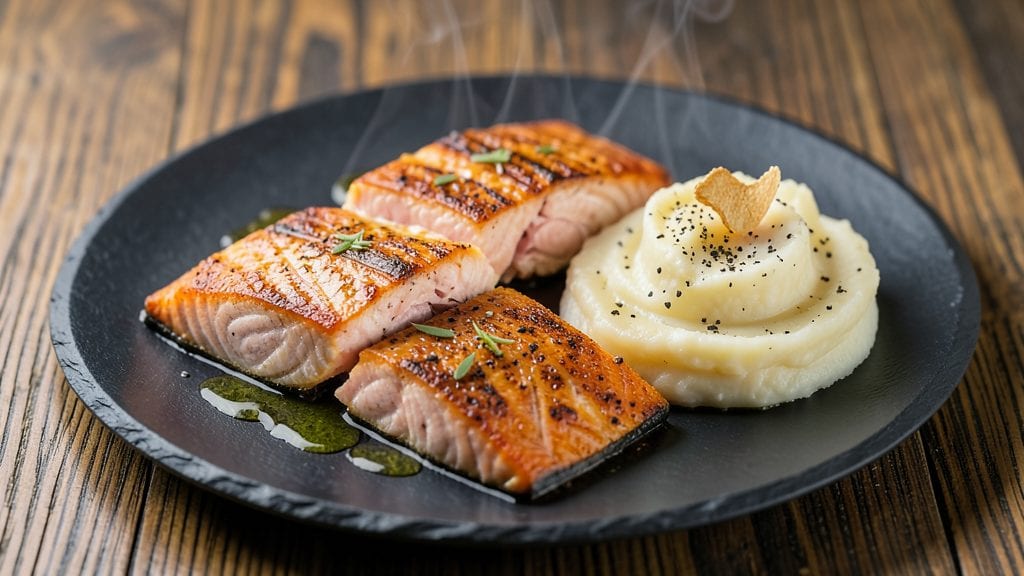
This salmon with creamy mashed potatoes recipe delivers restaurant-quality results with minimal effort—juicy pan-seared salmon paired with velvety garlic-infused potatoes that melt in your mouth. The secret lies in precise timing and simple techniques that transform basic ingredients into a pescatarian masterpiece.
I developed this recipe after years of testing, ensuring every bite balances rich salmon with smooth, buttery potatoes.
The salmon achieves perfect doneness with a crispy skin and tender center, thanks to a 10-minute pan-searing method that locks in moisture. Meanwhile, the mashed potatoes incorporate roasted garlic and a touch of cream for ultra-creamy texture without heaviness.
This dish is foolproof for weeknight dinners or special occasions—just 30 minutes from start to finish.
What you’ll end up with is a plate that’s visually stunning and packed with flavor: golden salmon resting on a cloud of fluffy potatoes, finished with fresh dill and a squeeze of lemon.
The contrast of textures—crispy fish, velvety potatoes—makes every forkful satisfying. Serve with steamed asparagus or a simple green salad for a complete meal.
This recipe works equally well for dinner parties or solo meals, scaling effortlessly for two or four servings. The combination of garlic-infused potatoes and lemon-dill salmon creates a harmonious balance that feels both elegant and approachable. Let’s get cooking!
Ingredients for salmon and mashed potatoes
Essential ingredients for restaurant-quality salmon and velvety mashed potatoes—simple yet transformative when executed precisely.
| Ingredient | Amount | Notes |
|---|---|---|
| Center-Cut Salmon Fillets 🐟 | 2 whole | Skin-on, 6-8 oz each, even thickness |
| Yukon Gold Potatoes 🥔 | 2 lb | Russet or red potatoes as substitute |
| Unsalted Butter 🧈 | ¾ cup | European-style preferred for flavor |
| Heavy Cream 🥛 | ½ cup | Full-fat for optimal texture |
| Garlic Cloves 🧄 | 8 whole | Roasted for sweetness enhancement |
| Extra-Virgin Olive Oil 🫒 | 2 tbsp | Light variety for high-heat searing |
| Fresh Dill 🌿 | ¼ cup | Finely chopped, stems removed |
| Lemon Juice 🍋 | 2 tbsp | Freshly squeezed, seeds strained |
| Diamond Crystal Kosher Salt 🧂 | 1 ½ tsp | Adjust to taste, don't oversalt |
| Freshly Ground Black Pepper 🌶️ | ½ tsp | Coarsely cracked for texture |
| All-Purpose Flour 🌾 | 2 tbsp | For dredging salmon skin |
| Cold Water 💧 | ½ cup | For potato boiling |
| Fresh Lemon Zest 🍋 | 1 tsp | Brightens flavor profile |
The salmon fillets are the centerpiece, so prioritize quality cuts with even thickness for consistent doneness. Whole Foods Market and Trader Joe's carry excellent center-cut fillets, but any reputable seafood counter will suffice. Look for vibrant color and firm texture—avoid any fillets with excessive browning or a fishy odor. The Yukon Gold potatoes should be uniformly sized for even cooking; Costco sells them in bulk at a reasonable price. Fresh dill is non-negotiable for authentic flavor, though dried dill at half the quantity works in a pinch. For the garlic, roasting enhances sweetness—simply wrap whole cloves in foil with a drizzle of olive oil and roast at 400°F for 20 minutes before incorporating into the potatoes.
No heavy cream? Full-fat Greek yogurt creates a similar tangy richness, though texture will differ slightly. Substituting butter for olive oil in the salmon searing? Use clarified butter to avoid smoke—simply melt butter, skim off the foam, and use the golden liquid. The flour dredge for crispy skin can be omitted entirely if preferred, though it adds a delightful crunch. For the lemon juice, bottled is acceptable but fresh yields superior brightness. The lemon zest can be omitted if unavailable, though it adds a refined dimension to the dish. When selecting potatoes, avoid those with sprouts or soft spots—these indicate starchy potatoes better suited for baking than mashing.
Store fresh salmon and potatoes in airtight containers in the coldest part of your refrigerator, using within 2 days for optimal texture. The prepared mashed potatoes can be reheated gently in the microwave with a splash of warm milk or cream, stirring until smooth—this method preserves their velvety consistency. Leftover salmon reheats beautifully at 350°F for 8-10 minutes, wrapped in foil with a pat of butter. For meal prep, portion the potatoes into individual containers and freeze them without the cream—simply thaw and stir in the cream when reheating. This dish freezes exceptionally well for up to 3 months, making it an ideal candidate for batch cooking.
Why You'll Love This Recipe
- Foolproof Timing: I swear by this—boil the potatoes while the salmon roasts. No waiting around, no juggling pans. The salmon’s done just as the spuds are tender, and honestly? That’s when you know you’ve hit the jackpot.
- Rich, Simple Magic: Butter and cream turn Yukon Golds into clouds, while the salmon gets that perfect crispy skin from a quick sear. Between us, the garlic-infused butter on both? That’s the kind of flavor that makes you pause mid-bite.
- Weeknight to Weekend: Throw it together for a Tuesday dinner or dress it up with fresh dill for a brunch spread. My college-aged kids eat it straight from the pan, but my in-laws? They’ll pretend it’s a restaurant dish.
- Leftovers That Don’t Suck: Cold salmon and mash the next day? Still a winner. I pack it for lunches—just reheat the potatoes with a splash of cream, and the salmon stays juicy. (Yes, even on a Tuesday.) Budget-friendly, too—this feeds four for less than takeout.
Step-by-step instructions for salmon with creamy mashed potatoes
Here's the method for restaurant-quality salmon and velvety mashed potatoes that deliver perfect texture every time.
Prepare the Salmon for Perfect Crispy Skin
Pat the 2 whole center-cut salmon fillets dry with paper towels, pressing firmly to remove all moisture. This step is crucial for achieving that coveted crispy skin. Place them skin-side down on a cutting board and sprinkle lightly with the 2 tablespoons all-purpose flour, rubbing gently to coat only the skin surface. The flour creates a delicate crust that will crisp beautifully during searing.
While the salmon rests, heat the 2 tablespoons extra-virgin olive oil in a large skillet over medium-high heat until shimmering. You'll know it's ready when a drop of water sizzles immediately upon contact. This high heat is essential for developing that golden crust without cooking the delicate flesh underneath.
Roast the Garlic and Boil the Potatoes
Preheat your oven to 400°F. Wrap the 8 whole garlic cloves loosely in aluminum foil and roast for 20-25 minutes until soft and sweet-smelling. This roasting transforms the garlic's flavor from sharp to mellow, perfect for blending into the mashed potatoes. While the garlic roasts, peel and cut the 2 lb yukon gold potatoes into even 1-inch chunks.
Place the potato chunks in a large pot and cover with cold water by about 1 inch. Add the 1.5 teaspoons diamond crystal kosher salt and bring to a boil over high heat. Once boiling vigorously, reduce heat to medium and simmer for 12-15 minutes until the potatoes are fork-tender. Drain immediately and return to the pot off the heat.
Sear the Salmon to Golden Perfection
Carefully place the floured salmon fillets skin-side down in the hot skillet, leaving space between each fillet. Cook undisturbed for 4-5 minutes until the skin is deep golden brown and crispy. You'll see the edges begin to curl slightly—that's your visual cue that it's ready to flip. Flip the fillets and cook for an additional 3-4 minutes for medium doneness, or until the internal temperature reaches 135°F.
Transfer the salmon to a warm plate and tent loosely with foil to keep warm. The residual heat will finish cooking the fillets slightly while they rest. Keep the skillet on the burner at medium-low heat for the next step.
Create the Creamy Mashed Potatoes
Return the drained potatoes to the pot and add the 0.75 cup unsalted butter, 0.5 cup heavy cream, and the roasted garlic cloves (squeezed from their skins). Mash everything together using a potato masher or ricer until completely smooth. The butter and cream will create that signature velvety texture we're after.
Season generously with additional diamond crystal kosher salt and 0.5 teaspoon freshly ground black pepper to taste. Stir in the 1 teaspoon fresh lemon zest and 0.25 cup finely chopped fresh dill. The lemon zest brightens the dish while the dill adds a fresh herbal note that complements the salmon beautifully.
Finish and Serve with Lemon Drizzle
Return the skillet with any rendered salmon fat to medium heat. Add the 2 tablespoons lemon juice and let it simmer for 1 minute to create a quick pan sauce. Pour this sauce over the salmon fillets and let them rest for 2 minutes before serving.
Plate the creamy mashed potatoes alongside the salmon, drizzling with any remaining sauce from the skillet. Garnish with additional fresh dill if desired. The contrast between the crispy salmon skin, tender flesh, and velvety mashed potatoes creates a perfect balance of textures that makes this dish truly exceptional.
Pro Tips For Making Salmon And Mashed Potatoes
- Skin Salmon First: Pat the fillets dry and sear skin-side down in a cold pan—no oil needed. The skin crisps into a golden shield that keeps the fish from sticking and falling apart, while the fat renders into a flavor bomb for the potatoes underneath. I used to skip this, but now I’d rather eat the skin than deal with flaky, sad salmon.
- Boil Potatoes Whole: Toss unpeeled Yukon Golds into salted boiling water—whole, no cutting—until a knife slides in like butter. Peeling after cooking saves time and prevents oxidization, which turns your mash gray faster than a Monday morning. (Yes, even if you’re impatient like me.)
- Don’t Overwork the Mash: After draining, hit the potatoes with a potato masher or ricer—once—then fold in butter and cream. Mashing like you’re trying to win a fight with the tub just introduces oxygen, which makes the potatoes gummy. My grandmother swore by this, and she was right: less effort, more silkiness.
- Save the Salmon Juices: When the fillets are done, tilt the pan and spoon the rendered fat and pan juices into the mashed potatoes. That buttery, garlicky liquid turns your mash from basic to chef’s kiss—it’s like giving your potatoes a flavor transfusion. (Your future self will thank you.)
Best sauces and condiments for these flavors
Lemon-Dill Sauce
This bright, herbaceous sauce ties everything together beautifully. After searing the salmon, deglaze the pan with 2 tablespoons fresh lemon juice and let it simmer for 1 minute to create a silky reduction. Finish with 1 tablespoon chopped fresh dill and a pinch of kosher salt.
The acidity cuts through the richness of the salmon while the dill adds a fresh herbal note that complements the roasted garlic potatoes. 🍋
Garlic Aioli
For a richer pairing, blend ½ cup mayonnaise with 1 roasted garlic clove, 1 teaspoon lemon juice, and ½ teaspoon Dijon mustard. Spread a thin layer over the mashed potatoes before serving, then top with the salmon.
The creamy garlic aioli enhances the potatoes' flavor while adding a luxurious touch. I like to use Duke's mayonnaise for its rich, tangy profile. 🧄
Brown Butter Drizzle
Infuse the salmon's flavor into the mashed potatoes by drizzling them with brown butter. Melt 2 tablespoons unsalted butter in a pan until golden and nutty, then whisk with 1 teaspoon lemon juice.
Drizzle over the finished potatoes and salmon just before serving. The nutty depth of brown butter elevates both components, creating a cohesive flavor experience. 🧈
Hollandaise Twist
For a more decadent option, prepare a quick hollandaise sauce by whisking 3 egg yolks, 1 tablespoon lemon juice, and ½ cup melted butter over a double boiler. The velvety sauce pairs perfectly with the crispy salmon and creamy potatoes, adding a buttery richness.
I recommend using Plugrá butter for its high-fat content, which ensures a stable emulsion. 🍳
Spicy Sriracha Cream
Add a kick by mixing 2 tablespoons sour cream with 1 teaspoon sriracha and a pinch of smoked paprika. Dollop this spicy cream alongside the salmon and potatoes for a flavorful contrast.
The heat balances the richness, making every bite exciting. For extra depth, stir in ½ teaspoon minced chives before serving. 🌶️
Herb Butter
Combine 4 tablespoons softened butter with 1 tablespoon chopped fresh dill, 1 tablespoon chopped parsley, and ½ teaspoon lemon zest. Roll into a log, chill until firm, and slice into pats.
Place a pat on top of each salmon fillet before serving. The herb butter melts into the salmon, infusing it with aromatic flavors that harmonize beautifully with the potatoes. ✨
Nutrition facts
Frequently asked questions
Can I substitute butter with olive oil in the mashed potatoes?
You can make a partial substitution, but texture will differ. Replace ¼ cup butter with ¼ cup olive oil for a lighter version, but the potatoes won't be as creamy. For best results, use clarified butter (ghee) if avoiding dairy entirely—it has a higher smoke point and maintains richness.
How do I prevent the salmon from drying out?
Keep the fillets skin-side down for the full 4-5 minutes to build crispy skin while protecting the flesh. Never overcook—salmon is done at 135°F internal temp. After searing, tent with foil while resting for 2 minutes to retain moisture.
What's the best way to reheat leftovers?
Reheat salmon gently at 350°F for 8-10 minutes wrapped in foil with a pat of butter. For potatoes, microwave with 1 tablespoon milk or cream to restore creaminess. Never reheat in water—it makes potatoes watery.
Can I make this dish ahead of time?
Prepare mashed potatoes up to 2 days ahead—store in airtight containers and reheat with extra cream. Cook salmon fresh day-of for best texture, but you can bake it 1 day ahead at 250°F for 15 minutes to reheat.
What's the secret to ultra-creamy mashed potatoes?
Hot potatoes + cold butter/cream is key! Add butter and cream while potatoes are still piping hot, then mash immediately. For extra silkiness, use a potato ricer instead of a masher. The roasted garlic also enhances creaminess without extra fat.