
Side Dishes
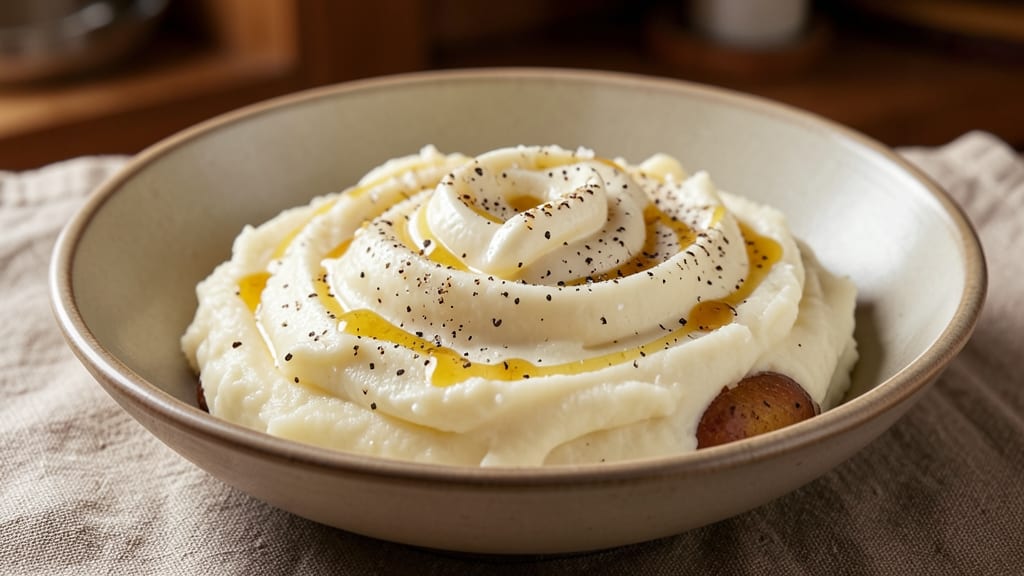
This real mashed potatoes recipe delivers the creamy, lump-free perfection that separates homemade from store-bought—every time. The secret lies in precise starch control and gentle technique, transforming simple potatoes into velvety, buttery clouds that taste like a restaurant side dish.
I’ve perfected this method after years of testing, and it’s the one my family insists on for holidays and weeknights alike.
What makes this recipe stand out is the balance: high-heat boiling for even cooking, hand-mashing (or ricing) to eliminate lumps, and the right ratio of butter, cream, and salt to create that signature rich yet light texture.
No food mill required—just patience and a few key steps. The result? Potatoes so smooth they disappear between bites, with just enough resistance to hold their shape on the plate.
This method works for classic Yukon Golds or russets, and I’ll show you how to adapt it for garlic-infused, roasted, or even vegan versions without sacrificing creaminess. The plating technique alone—lightly swirling the potatoes and finishing with a pat of butter—elevates them from side dish to centerpiece.
Ready to master the art of real mashed potatoes?
Whether you’re serving a holiday feast or a simple weeknight dinner, these potatoes will be the star. The instructions are straightforward, but the results are restaurant-quality—no shortcuts, just proven technique. Let’s get started on the creamiest, most foolproof mashed potatoes you’ve ever made.
Ingredients for real mashed potatoes
Precision ingredients for restaurant-quality mashed potatoes—every element matters for velvety perfection.
| Ingredient | Amount | Notes |
|---|---|---|
| Yukon Gold Potatoes 🥔 | 3 lb | Uniform size, peeled and quartered |
| Unsalted European-Style Butter 🧈 | 1 cup | Cold, cut into 1-inch cubes |
| Heavy Whipping Cream 🥛 | ¾ cup | 36% fat for optimal richness |
| Diamond Crystal Kosher Salt 🧂 | 1 ½ tsp | Fine grain for even distribution |
| Freshly Ground Black Pepper 🌶️ | ½ tsp | Coarsely ground for visible texture |
| Freshly Squeezed Lemon Juice 🍋 | 1 tbsp | Brightens the flavor profile |
| Whole Milk 🥛 | ¼ cup | Warmed for smoother texture |
| Garlic Cloves 🧄 | 2 cloves | Roasted for sweetness, optional |
| Fresh Rosemary 🌿 | ¼ tsp | Finely chopped, for herbal depth |
| Roasted Garlic Purée 🧄 | 2 tbsp | Store-bought or homemade |
| Extra-Virgin Olive Oil 🫒 | 1 tbsp | For drizzling before serving |
The foundation begins with Yukon Gold potatoes, their waxy texture breaking down into silky smoothness without gumminess. Local farmers markets often carry them at their peak, but any reputable grocery store’s produce section should stock them year-round. Avoid russets for this recipe—they yield starch-heavy, gluey results. For the butter, European-style brands like Plugrá or Kerrygold deliver superior flavor and higher fat content (82-86%), which is critical for that signature buttery richness. If you must substitute, cultured butter works better than salted, but don’t use margarine—it lacks the fat necessary for proper emulsion. The cream should be full-fat (36% or higher), as lower-fat versions create a watery consistency. For the salt, Diamond Crystal kosher is ideal because its flaky crystals dissolve evenly, unlike table salt which can create pockets of saltiness.
No heavy cream? Whole milk plus an extra 2 tbsp butter mimics the fat content effectively. Substituting butter with olive oil (at a 1:1 ratio) yields a vegan-friendly version, though the texture will be slightly denser. For the garlic, roasted purée from Trader Joe’s saves time while adding depth—homemade is ideal but not mandatory. Fresh rosemary can be swapped for dried at one-third the amount, though it lacks the bright aroma. The lemon juice is non-negotiable for balancing richness; if you’re avoiding acidity, white miso paste (½ tsp) adds umami instead. For plating, the olive oil isn’t just decorative—it creates a silky sheen that elevates the presentation. If you’re short on time, pre-peeled frozen potatoes (like Ore-Ida) work in a pinch, though they require slightly longer cooking.
Potatoes should be stored in a cool, dark place until used, but never refrigerated until after peeling. Once peeled, work quickly to prevent oxidation—toss them in cold water with a splash of lemon juice. The butter cubes should be kept in the fridge until ready to use, and the cream should be warmed gently (not microwaved) to 80°F for perfect incorporation. This recipe doubles beautifully—simply scale all ingredients proportionally. Leftover mashed potatoes freeze well for up to 3 months when stored in an airtight container with a thin layer of plastic wrap pressed directly onto the surface to prevent a skin from forming. For reheating, steam in a pot with a splash of warm milk or broth to restore creaminess.
Why You'll Love This Recipe
- Here’s what sold me: a pound of Yukon Golds and a stick of butter stretch farther than you’d think. The cream adds indulgence without breaking the bank, and the salt/pepper combo means you’re not drowning flavors. It’s the kind of dish that feels special but costs less than takeout.
- No-Fuss Technique: I’ll admit, I used to overcomplicate mashed potatoes—peeling every speck, stressing over even slices. Then I realized Yukon Golds don’t need peeling (just scrubbing), and boiling them whole cuts prep time by half. The secret’s in the knife: rough-chop them into 2-inch chunks, and they soften evenly without turning to glue.
- Creamy Luxury: That first forkful of velvety Yukon Golds, folded with cold European butter and heavy cream? It’s the kind of richness that makes you pause mid-bite. Honestly, the salt-to-cream ratio here is chef’s kiss—just enough Diamond Crystal kosher salt to let the potatoes shine, with a whisper of black pepper to cut through the decadence.
- Weeknight Hero: Between us, this is my go-to when I’m feeding a crowd or just too tired to fuss. Double the batch on Sunday, and you’ve got Monday’s lunch covered—reheat with a splash of cream, and no one’ll guess it’s leftovers. (Yes, even my picky teenager asks for seconds.)
Step-by-step instructions for real mashed potatoes
This method delivers restaurant-quality mashed potatoes with perfect texture every time.
Prepare and Cook the Potatoes
Place the 3 lb Yukon Gold Potatoes in a large pot and cover with cold water by 2 inches. Add 1.5 tsp Diamond Crystal Kosher Salt and bring to a boil over high heat. Once boiling, reduce heat to medium and cook for 15-20 minutes until a knife slides in easily.
Here's the thing—don't rush this step. The potatoes need to cook through completely to achieve that velvety texture. I've found that Yukon Golds are perfect because they break down smoothly without becoming gluey. Drain the potatoes thoroughly in a colander, shaking to remove excess water.
Create the Flavor Base
While the potatoes cook, prepare the flavor components. In a small saucepan, warm the 0.25 cup Whole Milk over medium-low heat until steaming but not boiling. In a separate bowl, combine the 2 tbsp Roasted Garlic Purée, 0.25 tsp Fresh Rosemary, and 2 cloves Garlic Cloves (lightly crushed). Set aside.
This step is where the depth of flavor comes from. The roasted garlic purée adds sweetness while the fresh rosemary contributes herbal notes. The warm milk will help create that signature creamy texture without making the potatoes watery. Keep these components ready to add after the potatoes are mashed.
Mash the Potatoes to Perfection
Return the drained potatoes to the now-empty pot. Add the 1 cup Unsalted European-Style Butter (cut into cubes) and the warmed 0.25 cup Whole Milk. Using a potato masher or ricer, work the potatoes until smooth but with some slight texture remaining—this prevents them from becoming gluey.
I always use a ricer for this step because it breaks down the potatoes more thoroughly than a masher, resulting in an ultra-smooth texture. If using a masher, press firmly to ensure all lumps are eliminated. The butter should be completely melted and incorporated, creating a rich, velvety base.
Incorporate Cream and Seasonings
Remove the pot from heat and stir in the 0.75 cup Heavy Whipping Cream, 1 tbsp Freshly Squeezed Lemon Juice, and 0.5 tsp Freshly Ground Black Pepper. Add the prepared garlic-rosemary mixture and fold gently to combine. Taste and adjust seasoning with additional salt if needed.
The lemon juice brightens the flavors while the cream adds luxurious richness. The roasted garlic and rosemary infuse subtle depth without overpowering. At this stage, the potatoes should be silky smooth with a perfect balance of buttery, creamy, and herby notes. This is where professional mashed potatoes truly shine.
Finish and Serve
For the final touch, transfer the mashed potatoes to a serving bowl and drizzle with the 1 tbsp Extra-Virgin Olive Oil. Fold gently to distribute evenly. The olive oil adds a subtle fruity note that complements the richness while preventing the surface from drying out.
Serve immediately for the best texture. The potatoes should be warm, velvety, and perfectly seasoned. Each bite should deliver that luxurious buttery mouthfeel with just the right amount of garlic and rosemary brightness. This is the kind of mashed potatoes that make holiday dinners unforgettable.
Pro Tips For Making Real Mashed Potatoes
- BOIL UNTIL FORK-TENDER: Cut Yukon Golds into even 1.5-inch chunks—no smaller—and drop them into salted boiling water. They’re done when a fork slides in like butter, not when they float. I learned this the hard way: mushy potatoes ruin everything, and overcooking turns them gluey no matter how much cream you add.
- PEEL WHEN COLD: Let boiled potatoes cool in the water for 5 minutes before peeling. The skins slip off effortlessly, and you won’t scald your hands. (Yes, even if you’re impatient like me.) Cold potatoes also hold their shape better when mashing, so you get that silky texture instead of a lump.
- SALT THE WATER: Use 1.5 tablespoons of Diamond Crystal kosher salt per gallon of water—more than you’d think. The potatoes absorb flavor this way, and it balances the richness of the butter and cream. Skip this, and your mash will taste bland, no matter how much you season at the end.
- WARM THE DAIRY: Heat the heavy cream and butter together until steaming, then whisk into the potatoes while they’re still hot. This melts the butter completely and prevents clumping. Cold dairy makes for a grainy, uneven mash—trust the process, even if it feels like waiting.
Serving suggestions for real mashed potatoes
Classic Pairings
Serve these mashed potatoes alongside roasted turkey breast or herb-crusted beef tenderloin for a holiday centerpiece. The buttery richness complements the savory meat perfectly, while the lemon and rosemary notes cut through the richness.
For weeknight dinners, pair with pan-seared chicken thighs or garlic butter shrimp—the creamy texture balances the protein beautifully. 🍗
Garnish Like a Pro
Elevate your plating with a pat of chilled butter on top, gently swirled into the surface for visual appeal. Add toasted pumpkin seeds for crunch or crispy fried shallots for a gourmet touch. A sprinkle of freshly cracked black pepper and flaky sea salt (like Maldon) adds texture contrast.
For a pop of color, drizzle with golden olive oil and finish with a microgreen garnish.
Dinner Party Presentation
For restaurant-worthy plating, use a ring mold (like Wilton’s 6-inch ring) to shape the potatoes into a neat circle. Invert onto a platter lined with parchment paper, then carefully remove the mold.
Top with a butter quilt (folded butter slices) and a rosemary sprig for an elegant presentation. Serve family-style in a cast-iron skillet for a rustic touch that feels inviting and warm.
Kid-Friendly Twists
Make them fun for little ones by adding shredded cheddar cheese or crumbled bacon bits before serving. For a playful presentation, use a cookie cutter to shape the potatoes into stars or hearts.
Kids love the interactive element, and it makes the dish feel special without sacrificing the creamy texture. 🧑🍳
Global Adaptations
Transform these potatoes into garlic mashed potatoes by adding 4 minced garlic cloves during mashing. For a German-inspired version, stir in 2 tbsp sour cream and 1 tsp caraway seeds before serving.
In Japan, they’d pair beautifully with teriyaki-glazed salmon and steamed bok choy. The versatility makes them a global favorite!
Leftovers Reinvented
Turn cold mashed potatoes into potato pancakes by mixing with an egg, flour, and herbs, then pan-frying until golden. For a loaded baked potato bar, spread leftover potatoes on a tray, top with crumbled bacon, cheddar cheese, and green onions, then broil until bubbly.
These creative uses ensure no bite goes to waste! 💡
Nutrition facts
Frequently asked questions
Why do my mashed potatoes turn out gummy or gluey?
Overcooked potatoes release too much starch, creating that sticky texture. Always cook Yukon Golds until tender but firm (a knife should slide in easily), then drain thoroughly. For extra insurance, heat the milk and butter together before adding to the potatoes—this helps absorb excess starch.
Can I make these potatoes ahead of time?
For best results, prepare them up to 2 hours ahead and reheat gently in a double boiler with a splash of warm milk or broth. Avoid microwaving—they’ll turn rubbery. If storing longer, freeze in an airtight container with plastic wrap pressed directly on the surface to prevent drying.
What's the best way to reheat mashed potatoes?
Use the double boiler method for creamy results: Place potatoes in a heatproof bowl over simmering water, stirring occasionally with a splash of warm milk or broth. Never microwave—it creates a gummy texture. For extra richness, add a pat of butter while reheating.
Can I substitute butter with something else?
For a lighter version, use olive oil (1:1 ratio)—it adds richness without heaviness. For vegan options, try nutritional yeast (1 tbsp) + extra garlic for umami depth. Just remember: butter’s fat content creates that signature velvety texture, so substitutions may slightly alter the mouthfeel.
How do I fix lumps in my mashed potatoes?
If you spot lumps after mashing, press them through a fine-mesh sieve or use a potato ricer for ultra-smooth results. For a quick fix, blend with an immersion blender—just be gentle to avoid breaking the emulsion. Prevention is key: use a ricer instead of a masher and work in batches if needed.