Side Dishes
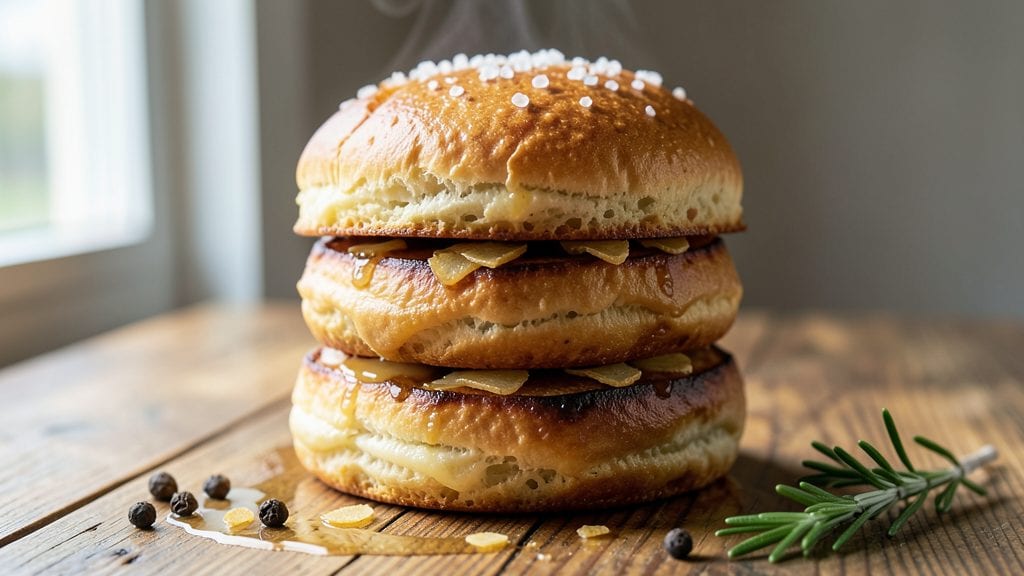
Transforming your vegan burgers with homemade potato hamburger buns is a game-changer that delivers fluffy, vinegar-kissed softness without dairy or eggs. The secret lies in a simple potato dough that bakes up tender yet sturdy enough to hold any filling—whether it's a juicy vegan patty or crispy falafel.
I developed this recipe after years of experimenting with plant-based alternatives, and it finally cracked the code for buns that rival traditional recipes in texture and flavor.
What sets these buns apart is the vinegar trick, which creates that signature tangy brightness while keeping the interior impossibly soft. Unlike store-bought options, this recipe uses just six ingredients and requires no special equipment—just a bowl, mixer, and oven.
The dough rises naturally, eliminating the need for yeast or baking powder, and bakes in under 20 minutes for perfectly golden, pillowy buns every time.
The result is a bun that's light yet substantial, with a delicate crumb that soaks up sauces beautifully without turning soggy. The vinegar-kissed flavor pairs perfectly with smoky BBQ, tangy mustard, or creamy vegan mayo, making every bite feel like a restaurant-quality experience.
Whether you're hosting a cookout or meal prepping for the week, these buns elevate any burger to new heights.
Best of all, they reheat beautifully and keep well for up to 3 days in an airtight container. Let's get started on your next burger masterpiece—these buns are the perfect foundation.
Ingredients for potato hamburger buns
Six simple ingredients transform into buns that rival any burger joint's—fluffy, vinegar-kissed, and perfectly golden.
| Ingredient | Amount | Notes |
|---|---|---|
| Russet Potatoes 🥔 | 2 lbs | Medium, peeled and grated |
| All-Purpose Flour 🌾 | 2 cups | Unbleached preferred |
| White Vinegar 🍶 | ¼ cup | Distilled for tanginess |
| Unsweetened Almond Milk 🥛 | ½ cup | Plain, unsweetened |
| Vegetable Oil 🫒 | ¼ cup | Light, neutral flavor |
| Salt 🧂 | 1 ½ tsp | Fine sea salt |
| Sugar 🍚 | 1 tbsp | Granulated, optional |
| Active Dry Yeast 🍄 | ¼ tsp | Instant yeast works too |
Russet potatoes are the secret weapon here. Organic potatoes from Trader Joe's or your local farmers market have the best texture—they're waxier and hold moisture better than store-brand. Look for ones that feel heavy for their size and have smooth, blemish-free skin. The grated potatoes should yield about 4 cups once drained, so don't skimp on the peeling. I always use a box grater with medium holes, and I squeeze out every last drop of moisture with a clean kitchen towel. Cold potatoes work best for the dough, so pop them in the fridge for 10 minutes after grating. The vinegar is non-negotiable—it's what gives these buns that signature tangy brightness that makes them taste restaurant-quality.
No almond milk? Oat milk or soy milk works just as well—just make sure it's unsweetened. Short on vinegar? Apple cider vinegar at the same amount gives a slightly sweeter tang. The yeast is optional but helps with rise—skip it if you're in a hurry, but your buns might be slightly denser. For the sugar, I usually omit it completely since the potatoes add natural sweetness, but if you want extra browning, 1 tbsp maple syrup works too. The flour matters—King Arthur or Bob's Red Mill all-purpose flour gives the best texture. If you're gluten-free, swap for a 1:1 gluten-free blend but expect slightly denser buns. And don't worry about measuring the grated potatoes precisely—they compact differently, so eyeball it.
These buns keep surprisingly well. Wrap them in a clean kitchen towel and store in an airtight container at room temperature for 3 days, or freeze for up to 3 months. To reheat, pop them in a 350°F oven for 5-7 minutes—they'll crisp up beautifully. I always make a double batch because they disappear fast. The dough can be refrigerated for up to 24 hours before baking, which is perfect for meal prep. And if you're making these for a crowd, divide the dough into 12 equal balls before the final rise—it makes shaping them so much easier.
Why You'll Love This Recipe
- No-Fuss Dough: I swear by the potato base—it’s like magic. You boil, mash, and mix in a few pantry staples (flour, vinegar, almond milk), then shape them while the oven preheats. No kneading, no waiting for yeast to rise, just hands-off simplicity that actually works.
- Crispy-Creamy Magic: That first bite? Buttery, golden crust with a pillowy inside—like a hug from a food truck. The vinegar tenderizes the potatoes just enough, while the oil keeps them from drying out. Honestly, they hold up better than most store-bought buns (and taste like they’re homemade).
- Game for Any Meal: Slap a burger patty between them for lunch, stuff with pulled pork for dinner, or even use them as sliders for game day. They freeze like a dream too—toss a batch in the fridge and pull them out whenever you’re craving something hearty but easy.
- Pocketbook Hero: Russets are cheap, almond milk stretches the dough, and you’re not sacrificing flavor for pennies. I’ve made 12 buns for under $3, and they outshine the $5 loaf from the bakery. Plus, leftovers turn into breakfast toast the next morning—zero waste, all win.
Step-by-step instructions for potato hamburger buns
Here's how to make buns that rival any bakery—soft, pillowy, and with that perfect vinegar tang.
Cook and Grate the Potatoes
Peel the 2 lbs of russet potatoes and cut them into even chunks about 1-inch thick. Place them in a pot of cold water and bring to a boil over medium-high heat. Once boiling, reduce to medium heat and cook for 15-18 minutes until fork-tender. You want them soft enough to mash easily but not falling apart.
Drain the potatoes thoroughly in a colander, then let them cool for 5 minutes. While still warm, transfer them to a clean kitchen towel and rub vigorously to remove excess moisture. This step is crucial—any remaining water will make your dough gummy. Once dry, grate the potatoes using the large holes of a box grater. You should have about 4 cups of grated potato, which will form the heart of your buns.
Mix the Dough with Vinegar and Yeast
In a large mixing bowl, combine the 2 cups of all-purpose flour, 1.5 tsp of salt, and 1 tbsp of sugar. Make a well in the center and add the grated potatoes, 0.5 cup of unsweetened almond milk, 0.25 cup of vegetable oil, and 0.25 cup of white vinegar. The vinegar might seem odd, but it adds tanginess and helps tenderize the dough—don’t skip it.
Mix everything together with a wooden spoon until it forms a shaggy dough. In a small bowl, sprinkle the 0.25 tsp of active dry yeast over 2 tablespoons of warm almond milk (about 110°F) and let it sit for 5 minutes until foamy. Pour the yeast mixture into the dough and stir until fully combined. The dough should be soft and slightly sticky but manageable.
Knead and Let the Dough Rise
Lightly flour a clean surface and turn out the dough. Knead it for 5-7 minutes by hand or 3-4 minutes with a stand mixer using the dough hook attachment until smooth and elastic. You’re looking for a dough that springs back when poked gently. If it feels too sticky, wet your hands slightly to prevent sticking.
Shape the dough into a ball, place it in a lightly oiled bowl, and cover it with a damp kitchen towel. Let it rise in a warm, draft-free spot for 1-1.5 hours, or until it has nearly doubled in size. The dough should feel light and airy, with a few small bubbles forming on the surface. If it rises too quickly, your kitchen might be too warm—adjust accordingly.
Shape and Proof the Buns
Punch down the risen dough to release any air bubbles, then divide it into 12 equal pieces (about 2 oz each). Roll each piece into a smooth ball and place them on a parchment-lined baking sheet, spacing them about 2 inches apart. Cover the buns loosely with the damp towel and let them proof for another 30-45 minutes until they’ve puffed up slightly and look plump.
Preheat your oven to 375°F during the final proofing. Once the buns are ready, bake them for 20-25 minutes until they’re golden brown on top. The edges should be set, but the centers should still feel soft to the touch. If they brown too quickly, tent them with foil to prevent over-browning.
Cool and Serve
Remove the buns from the oven and let them cool on the baking sheet for 5 minutes before transferring them to a wire rack. This brief cooling period helps them set and prevents them from becoming soggy. Serve them warm for the best texture—these buns are at their peak when slightly warm, with that perfect balance of softness and a hint of vinegar tang.
Store any leftovers in an airtight container at room temperature for up to 2 days, or freeze them for up to 1 month. To reheat, warm them in a 350°F oven for 5-7 minutes until heated through. Enjoy your homemade potato buns with your favorite burgers—they’re so good, no one will believe you made them from scratch!
Pro Tips For Making Potato Hamburger Buns
- PRE-COOK THE POTATOES: Boil them until a knife slides in like butter—no fighting for texture later. Overcooked spuds turn to glue; undercooked ones stay dense. Aim for 15-18 minutes in salted water, then shock in ice water to stop cooking. (Yes, it’s extra work, but your buns won’t fall apart when you shape them.)
- GRATE DRY, NOT WET: Drain those boiled potatoes thoroughly before grating—even a little moisture turns your dough into a sad, sticky mess. Use a clean kitchen towel to pat them dry, or worse will happen when you mix in the flour. (I learned this after one batch turned into a potato pancake instead of buns.)
- LET THE DOUGH REST: Skip the rush—fold in the almond milk and flour, then let the dough sit for 10 minutes before shaping. This relaxes the gluten enough to prevent cracks when baking. (Your future self will curse you if you skip this, trust me.)
- BRUSH WITH VINEGAR: Don’t just spray water on the buns before baking—brush them with a mix of white vinegar and water (1:1 ratio) for a crispy, golden crust. The acid cuts through the starch, making them shine. (It’s the difference between "meh" and "wow.")
Perfect pairings for potato hamburger buns
Vegan Patty Pairings
These potato buns shine with hearty vegan patties that stand up to their soft texture. Try a black bean and mushroom patty with a smoky chipotle glaze—I use 1 cup cooked black beans, ½ cup finely chopped mushrooms, 2 tbsp breadcrumbs, and 1 tsp smoked paprika.
For extra richness, add 1 tbsp vegan mayo to bind. Another winner is a lentil-walnut patty with a tangy mustard aioli. 🌱
Sauce Elevations
Skip the ketchup and go for bold flavors that complement the buns' vinegar tang. A spicy sriracha mayo (mix ½ cup vegan mayo with 1 tbsp sriracha and 1 tsp lime juice) cuts through the richness beautifully.
For a smoky option, blend ½ cup BBQ sauce with 1 tbsp maple syrup and ½ tsp liquid smoke. The vinegar in the buns balances the sweetness perfectly.
Toppings That Pop
Add crunch and texture with toppings that contrast the buns' softness. I love quick-pickled red onions (slice 1 small red onion thin, soak in ½ cup vinegar, 1 tbsp sugar, and ½ tsp salt for 30 minutes) or toasted sesame seeds for a nutty bite.
For a gourmet touch, sprinkle crumbled vegan feta (like Follow Your Heart brand) and fresh dill. These toppings keep the buns from feeling too heavy.
Drink Pairings
A crisp sparkling lemonade (mix 1 cup sparkling water, ½ cup fresh lemon juice, and 2 tbsp agave syrup) refreshes the palate between bites. For something stronger, a light lager like Heineken or Corona cleanses without overpowering.
Avoid heavy sodas—they can make the buns taste flat. A cold hibiscus iced tea (brew 2 tbsp hibiscus flowers in 4 cups hot water, then chill) adds a floral note that pairs surprisingly well. 🍹
Side Dish Harmony
Balance the richness of the burgers with lighter sides. A creamy coleslaw (shred 2 cups cabbage, 1 carrot, and toss with ½ cup vegan mayo, 1 tbsp apple cider vinegar, and ½ tsp celery seed) adds crunch.
For a heartier option, serve with garlic-parmesan roasted potatoes (toss 2 lbs baby potatoes with 2 tbsp olive oil, 1 tsp garlic powder, and ¼ cup nutritional yeast for a cheesy flavor). Both sides keep the meal well-rounded. 🥔
Meal Prep Adaptations
Make these buns ahead for easy assembly later. Store the unbaked dough balls in the fridge for 24 hours or freeze for 1 month. Bake from frozen, adding 5-7 extra minutes to the cook time.
For patties, cook a batch and store in an airtight container with parchment between layers. Reheat patties in a skillet for 3-4 minutes per side—they’ll crisp up perfectly. Assemble burgers just before serving to keep everything fresh. ✨
Nutrition facts
Frequently asked questions
Why do these potato buns stay soft instead of getting hard?
The secret is the vinegar and proper moisture control. The white vinegar tenderizes the gluten while the grated potatoes add natural moisture that keeps them soft. We also squeeze out excess water from the potatoes and use almond milk instead of water to maintain a tender crumb.
Can I make these buns without yeast?
Yes! Simply omit the yeast and reduce the rise time to 30-45 minutes total. The buns will be slightly denser but still delicious. For extra fluffiness, add 1 tsp baking powder to the dry ingredients. The vinegar and potato combo still gives that signature tang without yeast.
How do I prevent the buns from sticking to the pan?
Line your baking sheet with parchment paper and lightly grease it with oil before placing the shaped buns. For extra insurance, dust the tops with a little flour before baking. The dough should be slightly tacky but not wet—if it's too sticky, add 1 tbsp more flour when shaping.
What's the best way to reheat these buns?
For perfect reheating, place buns in a 350°F oven for 5-7 minutes on a wire rack (not directly on the tray). They'll crisp up beautifully without getting soggy. Microwaving works in a pinch (30 seconds), but oven reheating preserves the texture best.
Can I use sweet potatoes instead of russets?
Sweet potatoes will work but yield a slightly denser, sweeter bun. For best results, use 1 lb russets + 1 lb sweet potatoes to maintain the right texture. The vinegar helps balance any sweetness, but expect a more moist, cake-like bun rather than the classic soft bun texture.