
Side Dishes
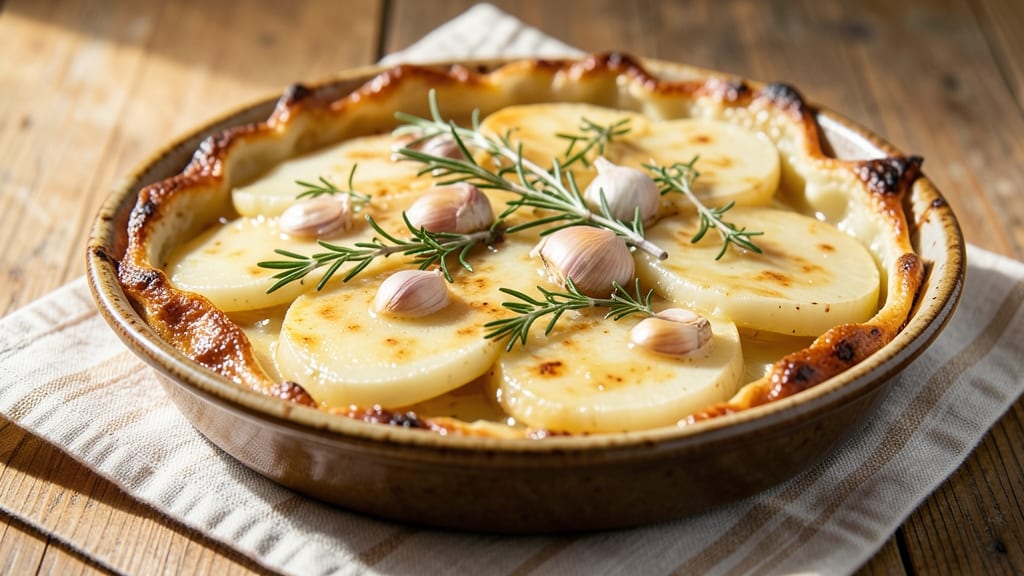
This potato dauphinois recipe transforms humble potatoes into a luxurious, creamy side dish with layers of garlic and herbs—proof that French comfort food doesn’t require a Parisian kitchen.
The secret lies in thinly sliced potatoes baked in heavy cream until tender and golden, creating a dish so rich it deserves its own place at the table. I’ve perfected this technique over years of testing, balancing traditional methods with modern shortcuts for home cooks.
The beauty of dauphinois is its simplicity: just potatoes, cream, butter, and garlic, yet the flavors are anything but basic. Thinly sliced potatoes absorb the creamy garlic mixture as they bake, developing a velvety texture with crisp edges.
This dish pairs perfectly with roasted meats or steak, but it’s rich enough to stand alone. The aroma alone will have everyone at the table asking for seconds.
What makes this recipe truly special is the foolproof method—no peeling required, no complicated steps, just layers of potatoes baked to golden perfection. The result? A dish that’s creamy, aromatic, and impossible to resist.
Whether you’re serving a holiday feast or a weeknight dinner, this recipe delivers restaurant-quality results with minimal effort.
For those looking to adapt, try adding fresh herbs like thyme or rosemary to the cream mixture, or swap half the cream for chicken broth for a lighter version. The key is patience—letting the potatoes bake slowly ensures they’re tender throughout. Ready to master this classic? Let’s get started.
Ingredients for potato dauphinois
Just six core ingredients transform simple potatoes into a restaurant-worthy side dish.
| Ingredient | Amount | Notes |
|---|---|---|
| Russet Potatoes 🥔 | 2 ½ lb | Thinly sliced, skin-on preferred |
| Heavy Cream 🥛 | 2 cups | Full-fat for richness |
| Unsalted Butter 🧈 | ½ cup | Cold, cubed for even melting |
| Garlic Cloves 🧄 | 6 cloves | Thinly sliced, not minced |
| Fresh Thyme 🌿 | ¼ cup | Leaves only, finely chopped |
| Fresh Rosemary 🌿 | ⅛ cup | Needles only, finely chopped |
| Sea Salt 🧂 | 1 ½ tsp | Kosher or fine grain |
| Freshly Ground Black Pepper 🌶️ | ½ tsp | Freshly cracked preferred |
| Olive Oil 🫒 | 2 tbsp | For greasing the dish |
The potatoes are the star, so pick firm, starchy russets—they hold up best to slicing and baking. Whole Foods or local markets often carry the freshest, but any grocery store’s russets work fine. Skip the peeling; the skin adds texture and flavor. Use a mandoline for even slices, but a sharp knife works too. Pre-slicing in cold water prevents browning, which is key for even cooking. For extra insurance, soak slices in cold water for 10 minutes before draining and drying thoroughly—this ensures they absorb the cream beautifully without turning mushy.
Heavy cream is non-negotiable here—half-and-half or light cream won’t give the same velvety texture. No heavy cream? Whole milk plus 2 tbsp butter mimics it closely. The butter should be cold when added to the cream mixture; it melts slowly in the oven, creating a luxurious sauce. Fresh herbs make all the difference—dried thyme or rosemary at half the amount works in a pinch, but nothing beats the bright flavor of fresh. For garlic, peel and slice thinly (not minced)—it infuses the cream without overpowering. If you’re short on time, jarred minced garlic (the kind in olive oil) works, but drain it well to avoid excess moisture.
This dish tastes even better the next day, so make it ahead and reheat covered at 350°F for 15-20 minutes. Store leftovers in an airtight container with a splash of cream on top to prevent drying. For make-ahead prep, slice and layer the potatoes in the dish, cover with plastic, and refrigerate for up to 24 hours before baking. The cream mixture can be prepped a day ahead and stored in the fridge—just whisk briefly before pouring over the potatoes. Freezing isn’t recommended due to the cream’s texture, but you can freeze portions of the baked dauphinois for up to 3 months.
Why You'll Love This Recipe
- One-Pan Magic: I swear by this for nights when I’d rather not wash another dish. Slice the potatoes, toss them in cream and butter, and let the oven do the rest—no chopping boards left in a state of chaos.
- Creamy-Garlic Bliss: That first bite of buttery, crispy edges with melt-in-your-mouth centers? The garlic and thyme turn simple potatoes into something dangerously addictive. (Honestly, I’ve been known to eat this straight from the pan.)
- Leftovers That Don’t Suck: Unlike most casseroles, dauphinois reheats like a dream—just pop it in the oven until golden. My lunchbox gets packed with this for days, and no one complains (even my picky teenager).
- Budget-Friendly Luxury: Russets and cream are cheap, but this tastes like a fancy dinner. Between us, I’ve served this at dinner parties and no one guessed it cost less than $10 to make. The secret’s in the crispy top layer—worth the wait.
Step-by-step instructions for potato dauphinois recipe
This method delivers perfectly creamy, golden layers with rich garlic-herb flavor every time.
Prepare the Potatoes for Even Cooking
Peel the 2.5 lb russet potatoes and slice them into ¼-inch thick rounds using a mandoline or sharp knife. I prefer skin-on for rustic texture, but peeled works better for even cooking. Soak the sliced potatoes in cold water for 10 minutes to remove excess starch—this prevents gummy texture and helps them absorb the cream more evenly.
After soaking, drain thoroughly and pat completely dry with paper towels. The potatoes should be bone dry before layering, or they'll steam instead of absorbing the creamy sauce. Arrange them in a single layer on a baking sheet to dry for 5 minutes while you prepare the remaining ingredients. This drying step is critical for achieving that signature creamy interior without soggy layers.
Season and Layer the Potatoes
Preheat your oven to 350°F and grease a 9x13-inch baking dish with the 2 tbsp olive oil. This prevents sticking and creates a barrier between the potatoes and the dish. Sprinkle half of the sliced potatoes into the dish in a single even layer, slightly overlapping if needed.
In a small bowl, combine the 0.25 cup fresh thyme, 0.125 cup fresh rosemary, 1.5 tsp sea salt, and 0.5 tsp freshly ground black pepper. Sprinkle half of this herb mixture evenly over the first layer of potatoes. Then add the 6 sliced garlic cloves and the 0.5 cup cold, cubed unsalted butter, distributing them evenly. Repeat with the remaining potatoes, herbs, and butter, finishing with another layer of herbs on top.
Pour and Distribute the Cream
Pour the 2 cups heavy cream evenly over the potato layers, using a spoon to distribute it into all the gaps. This ensures every slice gets saturated with creamy goodness. Gently press down on the top layer to help the cream penetrate the potatoes without compacting them too tightly.
Cover the baking dish tightly with aluminum foil and bake for 45 minutes. The foil traps steam and helps the potatoes cook evenly through the center. After 45 minutes, remove the foil and bake for another 15 minutes to develop a golden, slightly crispy top layer. The potatoes are done when a knife slides in easily and the cream has thickened into a velvety sauce.
Rest and Serve for Perfect Texture
Remove the dish from the oven and let it rest for 10 minutes before serving. This resting period allows the juices to redistribute, ensuring each slice is creamy and flavorful. If you cut into it too soon, the layers may fall apart.
Serve warm, straight from the baking dish. The potatoes should be tender throughout with a creamy sauce that clings to each slice. The garlic and herbs should be fragrant but not overpowering, and the top should have a delicate golden crust. For an elegant presentation, garnish with additional fresh thyme and rosemary sprigs. The dish pairs beautifully with grilled meats or a simple green salad.
Pro Tips For Making Potato Dauphinois
- Soak Sliced Russets: DESCRIPTION: Toss your peeled potato slices in cold water for 10 minutes before cooking—this washes off excess starch and prevents a gummy texture. I used to skip this, and my dauphinois always turned out gluey instead of creamy.
- Salt the Cream: DESCRIPTION: Season the heavy cream with a pinch of salt and a few cracks of black pepper before mixing it with butter—this balances the richness and cuts through the garlic’s sharpness. My grandmother called it "the insurance policy" against blandness.
- Don’t Overcrowd the Pan: DESCRIPTION: Layer potatoes in a single even layer with space between slices—packing them tight means uneven cooking and a soggy bottom. If your pan is small, cook in batches or use a larger one. Trust me, you’ll regret the mess if you skip this.
- Melt Butter Slowly: DESCRIPTION: Warm the butter over medium-low heat until it’s just melted but not browned—adding it too hot can scramble the cream and turn your dish greasy. I learned this after a batch looked like a science experiment gone wrong.
Best sauces and condiments for this dish
Garlic Cream Sauce
The star of dauphinois is its rich, aromatic garlic cream sauce—simple but transformative. I start by whisking 2 cups heavy cream with 6 thinly sliced garlic cloves (not minced) and ½ cup cold butter to create a velvety base.
The key is to use freshly sliced garlic for subtle flavor infusion rather than overpowering heat. For extra depth, I add 1 tsp lemon zest to brighten the richness. This sauce thickens beautifully during baking, coating each potato slice perfectly. 🧄
Herb-Infused Cream Variations
Fresh herbs elevate dauphinois from ordinary to extraordinary. Beyond thyme and rosemary, try ½ cup chopped parsley for brightness or 1 tbsp chopped tarragon for a French bistro touch. For a Mediterranean twist, add ½ tsp dried oregano and ¼ cup crumbled feta to the cream mixture.
I find that finely chopped chives sprinkled on top at the end add a delicate onion-like freshness that pairs wonderfully with the garlic. 🌿
Lighter Cream Alternatives
For a lighter version, replace half the heavy cream with whole milk or chicken broth. I’ve had great success using ½ cup Greek yogurt mixed with 1 cup heavy cream—the yogurt adds tang while keeping the dish rich.
For a dairy-free option, substitute with full-fat coconut milk, though the texture will be slightly different. Always season with extra salt to compensate for the reduced creaminess. The result is still creamy but with fewer calories. 🥛
Cheese Enhancements
Adding cheese transforms dauphinois into a decadent side dish. I love sprinkling ½ cup grated Gruyère or Comté over the top layer before baking—it melts into the cream, creating a nutty, savory depth. For a sharper contrast, try ½ cup crumbled blue cheese mixed into the cream before pouring.
The cheese should be at room temperature for even melting. Always add cheese in the final layer to prevent it from sinking. 🧀
Spicy and Tangy Twists
For heat lovers, stir ½ tsp smoked paprika or ¼ tsp cayenne pepper into the cream mixture. I also add 1 tbsp hot honey drizzled over the top after baking for a sweet-spicy balance.
A splash of balsamic glaze (about 2 tbsp) before serving adds tangy complexity that cuts through the richness. These additions work especially well with grilled meats or hearty stews. 🌶️
Topping Ideas for Extra Crunch
For texture contrast, top your baked dauphinois with toasted breadcrumbs (mix ¼ cup panko with 1 tbsp melted butter and 1 tsp parsley) or crispy fried shallots. I also love sprinkling crumbled bacon or duck confit crumbles over the top for a luxurious finish.
These toppings should be added in the final 5 minutes of baking to maintain their crispness. 🍞
Nutrition facts
Frequently asked questions
Can I make this dish ahead of time?
Assemble the potato layers in the baking dish, cover tightly with plastic wrap, and refrigerate for up to 24 hours before baking. The cream mixture can also be prepped a day ahead and stored separately. For best results, bake from room temperature after refrigeration. Leftovers keep well in an airtight container for 3-4 days, though the texture is best when reheated gently at 350°F for 15-20 minutes.
Why do my potatoes turn out watery or mushy?
This usually happens from excess moisture. Always pat sliced potatoes completely dry after soaking, and avoid overcrowding layers. The cream should be poured gently to saturate without pooling. Bake uncovered for the final 15 minutes to evaporate any excess liquid. For extra insurance, parboil the potatoes for 5 minutes before layering to firm them up.
What's the best way to slice potatoes for even cooking?
Use a ¼-inch thick slice for perfect texture—too thick and they'll be undercooked inside, too thin and they'll overcook. A mandoline ensures consistency, but a sharp knife works too. Soak slices in cold water for 10 minutes to remove starch, then drain and dry thoroughly. Arrange them in a single layer on a baking sheet for 5 minutes before layering to prevent steaming.
Can I substitute half-and-half for heavy cream?
While it will work, the texture won't be as rich. For best results, use whole milk plus 2 tbsp butter per cup of half-and-half to mimic heavy cream's fat content. The dish will still be creamy but slightly lighter. For a truly velvety result, stick with full-fat heavy cream—the key to authentic dauphinois.
How do I prevent the top from burning?
Cover tightly with foil for the first 45 minutes of baking, then uncover for the final 15 minutes to develop a golden crust. If your oven runs hot, reduce temperature to 325°F for the uncovered phase. A sprinkle of breadcrumbs or cheese on top can also help create a protective barrier while adding extra flavor.