
Side Dishes
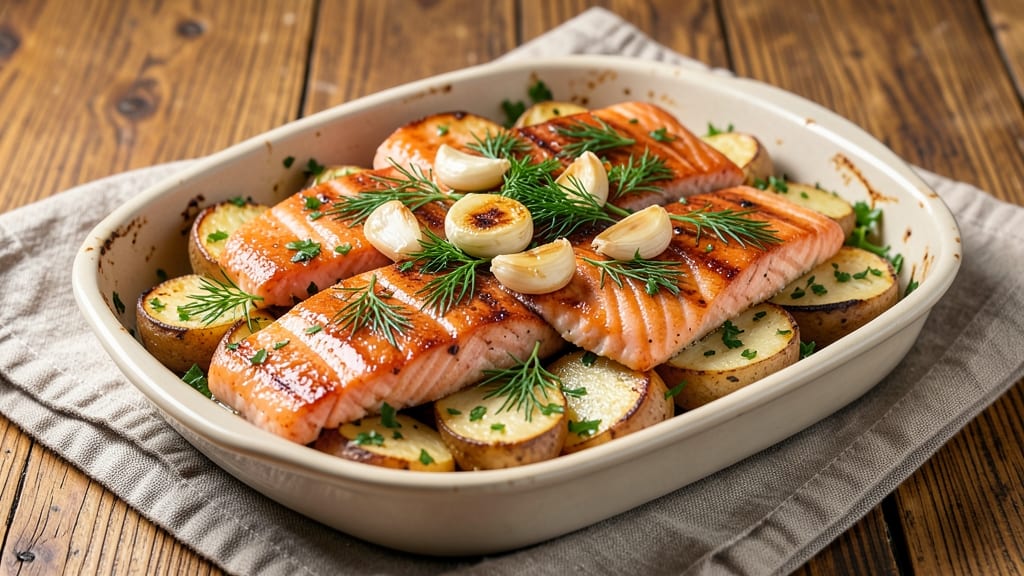
This salmon potato bake recipe transforms simple ingredients into a restaurant-worthy dish with minimal effort. The secret lies in baking salmon and potatoes together—salmon flakes apart with tender perfection while potatoes develop a crispy top and creamy centers.
After years of perfecting this method, I’ve mastered the balance between textures and flavors, ensuring every bite delivers that satisfying contrast.
The beauty of this recipe is its versatility and simplicity. You’ll need just a few high-quality ingredients—fresh salmon, russet potatoes, and a basic seasoning blend—and about 45 minutes in the oven.
The potatoes absorb the salmon’s juices, creating a rich, flavorful base, while the crispy golden crust adds a satisfying crunch. This dish is ideal for weeknight dinners or meal prep, as leftovers reheat beautifully while maintaining texture.
What sets this recipe apart is the harmony of textures: crispy potato tops that shatter with each bite and creamy, fluffy hearts that melt in your mouth, all paired with perfectly cooked salmon.
The dish is elegant enough for company but simple enough for a weeknight, making it a go-to for any occasion. The key is patience—letting the potatoes roast slowly ensures they develop that ideal texture without drying out.
For added depth, consider incorporating a splash of white wine or fresh herbs like dill and parsley into the seasoning. These subtle variations elevate the dish without complicating the process.
Whether you’re serving it as a main course or pairing it with a fresh salad, this salmon potato bake is a foolproof way to impress with minimal effort. Let’s get baking!
Ingredients for salmon potato bake
High-quality salmon and russets create restaurant-worthy texture contrast in this elegant yet simple bake.
| Ingredient | Amount | Notes |
|---|---|---|
| Center-Cut Salmon Fillets 🐟 | 4 whole | Skin-on for crispiness, 6-8 oz each |
| Russet Potatoes 🥔 | 2 lb | Medium size, cut into 1-inch chunks |
| Extra-Virgin Olive Oil 🫒 | ¼ cup | High-quality, fruity variety preferred |
| Fresh Dill 🌿 | ¼ cup | Chopped, stems removed for garnish |
| Fresh Parsley 🌿 | ¼ cup | Chopped, for finishing touch |
| Garlic Cloves 🧄 | 4 cloves | Minced, for aromatic depth |
| Diamond Crystal Kosher Salt 🧂 | 1 ½ tsp | For seasoning, adjust to taste |
| Freshly Ground Black Pepper 🌶️ | ½ tsp | Coarsely ground for texture |
| Dry White Wine 🍷 | ¼ cup | Sauvignon Blanc preferred, optional |
| Heavy Cream 🥛 | ¼ cup | Full-fat for richness, warmed |
| Unsalted Butter 🧈 | 2 tbsp | Cold, cubed for crispy topping |
| Lemon Zest 🍋 | 1 tbsp | Brightens flavors, freshly grated |
| Lemon Juice 🍋 | 1 tbsp | Freshly squeezed, balances acidity |
The salmon fillets are the centerpiece—center-cut, skin-on delivers optimal texture, with skin crisping beautifully while flesh remains tender. Source from a trusted seafood purveyor like Whole Foods or your local fishmonger for the freshest catch. Look for wild-caught Alaskan salmon if possible, as it has superior fat content and flavor. The russet potatoes should be firm and unblemished—avoid those with sprouts or soft spots, as they won't develop the ideal crispy crust. For extra insurance, soak the potato chunks in cold water for 10 minutes before draining to remove excess starch, which prevents gumminess during baking.
Substitutions are possible but may alter texture. Rainbow trout works in a pinch for the salmon, though it has a milder flavor. For potatoes, Yukon Golds will yield slightly creamier results but won't crisp as dramatically. The wine component can be omitted entirely, but if using, ensure it's bone-dry—no sweet Rieslings here. Fresh herbs are non-negotiable for authentic flavor; dried dill at one-third the amount won't cut it. The butter topping can be swapped for olive oil if preferred, though it won't achieve the same golden browning. For a dairy-free version, replace the heavy cream with full-fat coconut milk and use vegan butter.
This bake reheats beautifully—450°F for 10-12 minutes restores crispiness. Store leftovers in an airtight container for up to 3 days, though texture degrades after day two. For meal prep, assemble the dish (without baking) and refrigerate for up to 24 hours before baking—this enhances flavor development. The salmon should be cooked to 125°F internal temperature for perfect doneness. Freeze portions for up to 2 months by wrapping tightly in parchment and foil, though texture may suffer slightly upon reheating.
Why You'll Love This Recipe
- One-Pan Magic: I swear by this trick—just slice potatoes, layer salmon, drizzle olive oil, and pop it in the oven. No chopping boards, no extra pans, and honestly, the cleanup is just wiping one baking sheet. That’s my kind of cooking.
- Herb-Packed Umami Bomb: The dill and parsley aren’t just garnish—they infuse the salmon and potatoes with bright, fresh flavor that cuts through the richness. Between us, I double the herbs because the first time I didn’t, and I missed out on that pop of brightness.
- Lunchbox Champion: This bake keeps beautifully for days, so I make a big batch on Sunday and portion it out. Cold or reheated, it’s a hit—my kids grab it for school lunches, and my partner takes it to work. (Yes, even on a Tuesday night.)
- Budget-Friendly Protein: Salmon fillets feel fancy, but they stretch further when paired with hearty potatoes. I buy them on sale, use the whole fillet (no waste), and end up with a meal that feels restaurant-worthy without the price tag. Not the prettiest, but the taste makes up for it.
Step-by-step instructions for salmon and potato bake
Here's how to create a restaurant-worthy salmon and potato bake with a golden, crispy crust and tender, creamy centers.
Prep and Parboil the Potatoes
Begin by preheating your oven to 425°F. While it heats, peel and cut the 2 lb russet potatoes into 1-inch chunks—consistent size ensures even cooking. Place them in a large pot and cover with cold water by about 1 inch.
Add 1 tsp of the diamond crystal kosher salt and bring to a boil over high heat. Once boiling, reduce to medium-high heat and cook for 8-10 minutes until the potatoes are fork-tender but still hold their shape. Drain thoroughly in a colander, then return them to the pot and toss with 1 tablespoon of the extra-virgin olive oil to prevent drying.
Season and Layer the Salmon and Potatoes
Line a 9x13-inch baking dish with parchment paper, leaving an overhang for easy removal. In a small bowl, whisk together 1 tablespoon lemon juice, 1 tablespoon lemon zest, 1 tablespoon chopped fresh dill, 1 tablespoon chopped fresh parsley, and 1 minced garlic clove. Set aside.
Arrange half of the parboiled potatoes in the baking dish, slightly overlapping them. Place each of the 4 whole center-cut salmon fillets (skin-side down) on top of the potatoes. Season the salmon generously with the remaining 0.5 tsp diamond crystal kosher salt and 0.5 tsp freshly ground black pepper. Spoon half of the lemon-herb mixture over the salmon, then top with the remaining potatoes.
Create the Creamy Wine Sauce
In a small saucepan, combine 0.25 cup dry white wine, 0.25 cup heavy cream, 1 minced garlic clove, and 1 tablespoon chopped fresh dill. Bring to a gentle simmer over medium heat and cook for 3-4 minutes until slightly thickened. Remove from heat and stir in 1 tablespoon lemon zest and 1 tablespoon chopped fresh parsley.
Pour the warm sauce evenly over the potatoes and salmon in the baking dish. Drizzle with the remaining 2 tablespoons extra-virgin olive oil, then dot the top with 2 tablespoons cold cubed unsalted butter for extra richness and crispiness. Sprinkle with the remaining 1 tablespoon chopped fresh dill and 1 tablespoon chopped fresh parsley.
Bake to Crispy Perfection
Transfer the baking dish to the preheated oven and bake for 25-30 minutes until the potatoes are tender and the salmon flakes easily with a fork. The top should be golden brown with a crispy crust, while the salmon should reach an internal temperature of 145°F.
For the final touch, broil on high for 2-3 minutes until the butter melts and the top becomes deeply browned and bubbly. Watch closely to avoid over-browning. Remove from the oven and let rest for 5 minutes before serving—this ensures the juices redistribute for maximum creaminess.
Garnish and Serve
Use the parchment overhang to lift the bake out of the dish onto a serving platter. Garnish with additional chopped fresh parsley and a final sprinkle of freshly ground black pepper. Serve immediately, ensuring each portion has a balance of crispy potato edges, creamy centers, and perfectly cooked salmon.
The result should be a harmonious dish where every bite delivers the crispy, golden top you crave, followed by tender, flavorful salmon and potatoes infused with bright lemon and fresh herbs. This technique guarantees both textures without compromising on taste—just as promised.
Pro Tips For Making Salmon Potato Bake
- Parboil Potatoes First: Toss whole potatoes in cold water before boiling—this keeps them from falling apart when you slice them later. I learned this the hard way after watching my first batch turn into a mushy mess in the oven.
- Salt the Salmon Generously: Don’t skimp—rub the fillets with ½ teaspoon of salt per side at least 20 minutes before baking. This seasoning penetrates better than last-minute sprinkling, and the skin crisps up like a dream.
- Use a Knife, Not Hands: When flaking fresh dill and parsley over the top, use a sharp knife instead of tearing with your fingers. You’ll get finer, more even distribution—and avoid the inevitable herb clump in the center of your plate.
- Bake Salmon Skin-Side Up: Place the salmon fillets skin-side down in the dish, then press them gently into the potatoes. The skin will crisp into a golden shield, protecting the fish from drying out while the edges get that perfect crunch.
Make-ahead tips for this recipe
Prep Ahead Strategy
Assemble the entire bake the night before for maximum flavor development. Toss the parboiled potatoes with olive oil, seasonings, and half the lemon-herb mixture, then store in an airtight container in the fridge.
Place the salmon fillets (seasoned but uncooked) on top, then cover with remaining potatoes and sauce. This layered approach prevents sogginess while allowing flavors to meld overnight. 🌟
Partial Cooking Method
For a 3-day meal prep solution, bake the dish halfway (about 15 minutes at 425°F), then cool completely and refrigerate. When ready to serve, return to the oven at 400°F for 15-20 minutes until the salmon reaches 145°F.
The potatoes will crisp up beautifully during the final bake, and the salmon will finish cooking perfectly. This works especially well for lunch prep on busy mornings.
Freezer-Friendly Assembly
Assemble the bake completely (including sauce and butter topping) but skip the final broil. Wrap tightly in two layers of parchment paper followed by heavy-duty aluminum foil to prevent freezer burn. Freeze for up to 2 months.
When ready to cook, thaw overnight in the fridge, then bake at 425°F for 30-35 minutes (add 5 minutes if fully frozen). The texture may be slightly less crispy, but the flavors remain rich and satisfying. ❄️
Make-Ahead Sauce
Prepare the wine-cream sauce up to 3 days ahead and store in an airtight container. Reheat gently on the stovetop before pouring over the baked potatoes and salmon. For extra richness, whisk in 1 tablespoon of cold butter just before reheating.
This shortcut saves 10 minutes of active prep time without sacrificing flavor—perfect for weeknight dinners when time is limited.
Potato Prep Shortcut
Save time by using a mandoline slicer to cut potatoes into even ½-inch slices instead of chunks. Parboil for 6 minutes (they'll cook faster due to thinner slices), then layer in the baking dish.
This method creates thin, crispy potato "chips" on top while keeping the centers tender. The slices also reheat more evenly when making ahead. 💡
Herb Freshness Hack
If using pre-chopped frozen herbs (like dill or parsley), thaw and drain them completely before adding to the sauce or topping. For best results, mix them into the wine-cream sauce while warm to preserve their vibrant color and flavor.
Fresh herbs can also be blended into the butter for the topping—simply mix 1 tablespoon chopped parsley with the 2 tablespoons cold butter before cubing. This ensures even distribution of flavor in every bite.
Nutrition facts
Frequently asked questions
Can I use frozen salmon for this recipe?
Fresh salmon yields the best texture, but frozen works in a pinch. Thaw it overnight in the fridge first—never at room temperature. Pat completely dry before seasoning to prevent a watery bake. For optimal results, use high-quality frozen salmon labeled "sustainably caught" to maintain flavor quality.
Why do my potatoes turn out soggy instead of crispy?
Sogginess usually happens from overcrowding or insufficient drying after parboiling. Ensure potato chunks are 1-inch thick and spread in a single layer before baking. After parboiling, drain thoroughly and let them air-dry for 5 minutes on a towel before assembling. The butter topping also helps create crispiness when melted during baking.
What's the best way to reheat leftovers?
Reheat at 450°F for 10-12 minutes until the top is crispy again. For extra moisture, tent with foil for the first 5 minutes, then uncover to restore crispness. Microwaving works for quick meals but will make the potatoes gummy—always bake for best texture. The salmon reheats beautifully this way while maintaining its flaky texture.
Can I make this dish without wine?
Skip the wine and replace with 0.25 cup extra chicken or vegetable broth plus 1 tablespoon lemon juice for acidity. The cream base will still create a rich sauce. For extra depth, add 1 teaspoon fish sauce or a pinch of smoked paprika to complement the salmon's flavor. The dish will still be delicious—just slightly lighter.
How do I know when the salmon is perfectly cooked?
Use a meat thermometer to check for 145°F internal temperature at the thickest part. The salmon should flake easily with a fork but remain moist, not dry. If using skin-on fillets, the skin should be crispy and golden brown. For visual cues, look for opaque flesh that's no longer translucent—this indicates perfect doneness.