
Side Dishes
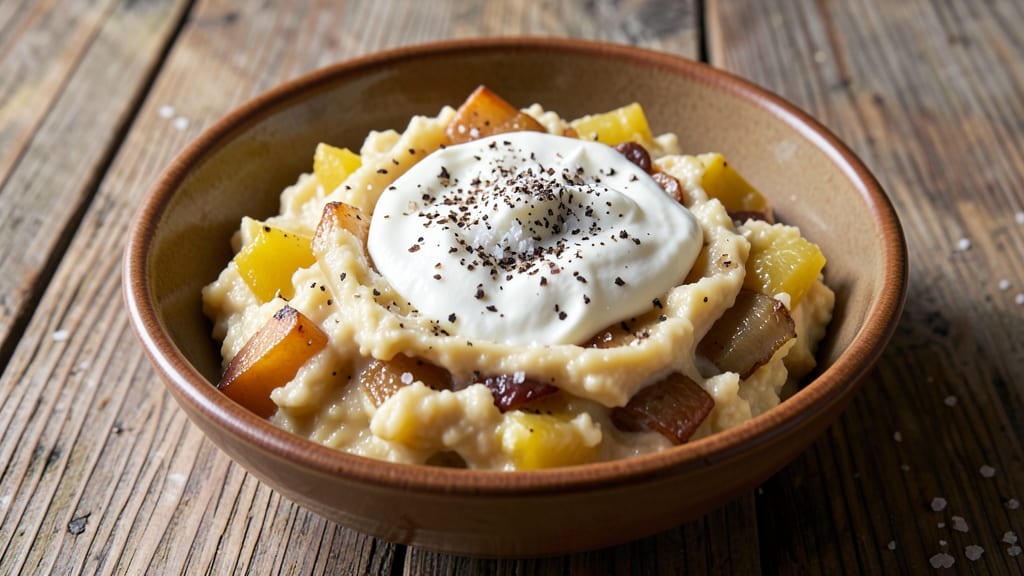
This potato and turnip mash recipe transforms humble roots into a velvety side dish with nutty depth that elevates any meal. The secret lies in balancing starchy potatoes with earthy turnips, creating a texture that's smoother than traditional mashed potatoes while adding complex flavor.
I developed this after years of experimenting with root vegetable combinations, and the result is a dish that's both comforting and sophisticated.
The process is straightforward but requires attention to detail—boiling the vegetables until perfectly tender, then mashing them while still hot to achieve that signature creamy consistency.
Traditional methods like hand-mashing or using a ricer ensure the best texture, while modern twists like roasting the vegetables first can add depth of flavor. This recipe delivers restaurant-quality results with simple ingredients and a foolproof technique.
What you'll end up with is a golden, velvety mash that's rich enough to stand alongside roasted meats yet light enough to complement delicate fish. The turnips contribute a subtle sweetness and nutty undertone that rounds out the dish, making it more interesting than standard mashed potatoes.
Whether you're serving it at a holiday feast or a weeknight dinner, this mash will impress.
For added richness, finish with a generous swirl of butter and a splash of warm cream, then season with salt, pepper, and fresh herbs. The possibilities for variations are endless—try adding roasted garlic, smoked paprika, or even a touch of mustard for a tangy kick.
Let's get started on creating this velvety masterpiece.
Ingredients for potato and turnip mash
Simple roots and rich dairy create a velvety mash with restaurant-quality depth.
| Ingredient | Amount | Notes |
|---|---|---|
| Russet Potatoes 🥔 | 2 lbs | Yukon Gold or red potatoes work too |
| Yellow Turnips 🥕 | 1 ½ lbs | Fresh, firm, and medium-sized |
| Unsalted Butter 🧈 | ¾ cup | Cold, cut into tablespoon pieces |
| Heavy Whipping Cream 🥛 | ½ cup | Warm, not hot |
| Diamond Crystal Kosher Salt 🧂 | 1 ½ tsp | Adjust to taste |
| Freshly Ground Black Pepper 🌶️ | ½ tsp | Freshly cracked preferred |
| Fresh Chives 🌿 | ¼ cup | Finely chopped, for garnish |
| Fresh Thyme Leaves 🌿 | 1 tsp | Dried works at one-third amount |
| Roasted Garlic Cloves 🧄 | 2 cloves | Optional, for depth |
| Smoked Paprika 🌶️ | ¼ tsp | Optional, for smoky flavor |
| Yellow Mustard 🍯 | 1 tsp | Optional, for tangy kick |
| Water 💧 | 3 cups | For boiling vegetables |
| Milk 🥛 | ¼ cup | Optional, for creaminess |
The foundation begins with Russet potatoes—their high starch content ensures a smooth texture, but Yukon Golds add subtle sweetness if you prefer. Yellow turnips (not the green variety) bring the nutty depth that sets this apart; look for firm, medium-sized roots with vibrant yellow skin at specialty markets or well-stocked grocery stores like Whole Foods or Trader Joe's. If you can't find fresh turnips, frozen works in a pinch, but thaw and pat them dry before cooking. The unsalted butter should be European-style if possible—its higher fat content yields a richer finish. Plugrá or Kerrygold are excellent choices for professional results.
No heavy cream? Half-and-half or even whole milk can substitute, though the texture will be slightly lighter. Fresh thyme is ideal, but dried works at one-third the amount—just toast the dried leaves in a dry pan for 30 seconds to enhance their aroma. The roasted garlic (if using) should be slightly charred for maximum flavor; roast whole cloves at 400°F for 20 minutes. For a tangy twist, the yellow mustard adds brightness without overpowering. If you're avoiding dairy entirely, nutritional yeast (1 tsp) provides a cheesy depth when mixed with the warm cream. Smoked paprika can be omitted for a cleaner profile, but it adds a sophisticated smokiness that pairs beautifully with roasted meats.
Store any leftovers in an airtight container for up to 4 days in the refrigerator, though the texture may firm up slightly—simply reheat with a splash of warm milk or cream and a pat of butter to restore creaminess. For longer storage, freeze portions for up to 3 months, though the turnips may soften further upon thawing. To serve, garnish generously with fresh chives and a smattering of black pepper—the bright green and dark specks create a visually stunning contrast. This mash reheats beautifully, making it ideal for holiday buffets or weeknight meals where you can prep ahead. For added elegance, pipe the finished mash through a potato ricer for a silky, restaurant-worthy presentation.
Why You'll Love This Recipe
- One-Pot Magic: I swear by this recipe because it’s actually one-pot—just peel, chop, and boil. No fussing with multiple bowls or strainers; the turnips soften right alongside the potatoes, and the cream gets folded in while everything’s still warm. Honestly, I’ve made mash this way three times this month, and I’m never going back.
- Creamy with Crunch: Between us, the turnips add a subtle sweetness that cuts through the richness of the butter and cream. That texture? Buttery, velvety, but with just enough bite from the turnips to keep it interesting—not mushy, not bland. My husband always asks for seconds, and I’ll take that as a win.
- Leftovers That Shine: This mash reheats like a dream—no drying out, no sad lumps. I make a double batch on Sundays, store it in the fridge, and use it all week for breakfast hash, grilled cheese fillings, or even as a side for roasted chicken. (Yes, even on a Tuesday night.)
- Budget-Friendly Luxury: Russets and turnips are cheap, but they feel like a fancy side. The heavy cream makes it indulgent without breaking the bank, and I can stretch a single batch into three meals. My college-student nephew actually paused his video games to ask for more—high praise.
Step-by-step instructions for potato and turnip mash
Mastering this velvety mash requires precision in cooking and technique.
Prepare and Boil the Vegetables
Peel the 2 lbs russet potatoes and 1.5 lbs yellow turnips, then cut them into even 1-inch chunks. The turnips should be roughly the same size as the potatoes for uniform cooking. Place them in a large pot and cover with the 3 cups water. Add 1 tsp of the 1.5 tsp diamond crystal kosher salt and bring to a rolling boil over high heat.
Once boiling, reduce heat to medium-high and let the vegetables simmer for 15-20 minutes until they are fork-tender. You'll know they're ready when a knife slides in easily and the edges begin to soften. Drain the vegetables thoroughly in a colander, shaking gently to remove excess water. The drier the vegetables, the lighter and fluffier your mash will be.
Mash the Vegetables to a Smooth Texture
Return the drained potatoes and turnips to the pot and place it over low heat. Add the 0.75 cup unsalted butter, cut into tablespoon pieces, and let it melt into the vegetables. The butter will help create a silky texture and add richness. Using a potato masher or ricer, mash the vegetables until they reach your desired consistency—smooth for a classic mash or slightly lumpy for texture.
If you prefer a completely smooth finish, transfer the mashed vegetables to a food mill or fine-mesh sieve and press them through. This step ensures an ultra-creamy result with no lumps. Keep the pot warm over low heat while you prepare the remaining ingredients.
Incorporate Cream and Seasonings
Remove the pot from heat and stir in the 0.5 cup heavy whipping cream and 0.25 cup milk, if using. The cream will add a velvety finish, while the milk contributes a subtle tanginess. Gently fold in the 2 cloves roasted garlic cloves, 1 tsp fresh thyme leaves, 0.25 tsp smoked paprika, and 1 tsp yellow mustard, if using. These ingredients add depth and complexity to the mash.
Season to taste with the remaining 0.5 tsp diamond crystal kosher salt and 0.5 tsp freshly ground black pepper. The turnips will contribute a natural sweetness, but the mustard and smoked paprika balance it with a subtle tang and warmth. Taste as you go—adjust seasonings gradually to avoid overpowering the delicate flavors.
Finish and Garnish
Return the mash to low heat and stir gently for 2-3 minutes until everything is fully incorporated and heated through. The mash should be smooth, creamy, and glossy, with a velvety texture that coats the back of a spoon. If it thickens too much, stir in a splash of warm milk or cream to loosen it.
For garnish, transfer the mash to a serving bowl and sprinkle with the 0.25 cup finely chopped fresh chives. The chives add a bright, fresh contrast to the rich, earthy flavors of the potatoes and turnips. Serve immediately while warm, paired with roasted meats or as a hearty side dish.
Pro Tips For Making Potato And Turnip Mash
- PEEL TURNIPS AFTER COOKING: Turnips are stubborn to peel raw—peel them after boiling. The skin slips off like magic once they’re hot, saving you from fighting with a knife. (I used to waste 10 minutes on this before I learned.)
- BOIL POTATOES AND TURNIPS SEPARATELY: Russets need 15–20 minutes to break down; turnips are done in 10–12. Mashing them together too soon turns your mash into glue. Cook them apart, then combine for texture control.
- SALT THE WATER LIKE THE SEA: Use 1½ tablespoons Diamond Crystal kosher salt per 4 quarts of water—more than you’d think. Under-salted water means bland mash, no matter how much you season after. (Yes, even if you’re using unsalted butter.)
- WHIP CREAM COLD, BUTTER ROOM TEMP: Chill the heavy cream until it’s cold but not icy—whipping it too cold makes it seize. Let the butter sit out 10 minutes before adding so it melts smoothly into the mash. (Cold butter = lumps. Trust me.)
Essential equipment for this dish
Potato Masher vs. Ricer
For the smoothest texture, I recommend using a potato ricer—it eliminates lumps entirely by pressing the vegetables through tiny holes. My go-to is the OXO Good Grips Potato Ricer for its sturdy construction and easy cleanup.
If you prefer a rustic texture, a wooden potato masher works beautifully, but you'll need to work quickly to avoid over-mashing. For a middle ground, a handheld immersion blender (like the Ninja Foodi) creates a velvety consistency without requiring a separate step. 🥔
High-Quality Pot and Lid
Invest in a heavy-bottomed stainless steel pot with a tight-fitting lid to ensure even cooking. I use an All-Clad D5 for professional results, but budget-friendly options like Cuisinart MultiClad work well too.
The pot should hold at least 8 quarts to accommodate the vegetables and boiling water comfortably. A well-fitted lid prevents water evaporation, which helps maintain consistent heat during simmering. 🔥
Precision Measuring Tools
Accurate measurements are key for balancing flavors. Use a digital kitchen scale (like the OXO Good Grips) for weighing potatoes and turnips, as volume measurements can vary. For the butter and cream, a stainless steel measuring cup ensures precision—glass cups can distort measurements when hot.
A microplane is perfect for grating roasted garlic cloves into fine ribbons without overpowering the dish. 🧈
Fine-Mesh Sieve or Food Mill
If you want ultra-smooth mash, a fine-mesh sieve or food mill is essential. I love the OXO Good Grips Food Mill for its durability and ease of use. This tool removes all lumps, creating a restaurant-quality finish.
For a budget option, a stainless steel mesh strainer with small holes works in a pinch—just press the vegetables through with a wooden spoon. This step is optional but elevates the dish significantly. 🥄
Thermometer for Perfect Doneness
A candy or instant-read thermometer (like the Thermoworks ThermoPop) ensures your vegetables are cooked to perfection. Potatoes and turnips should reach 205-210°F internally for ideal mash texture. This eliminates guesswork and prevents overcooking, which can make the mash gummy.
I check the temperature by inserting the probe into the largest piece of turnip—it’s the slowest to cook. 🌡️
Serving Tools and Garnishes
For an elegant presentation, use a serving spoon with a long handle (like the Nordic Ware Stoneware) to dish out the mash. Fresh chives and black pepper should be finely chopped with a sharp chef’s knife—I recommend the Wüsthof Classic for precision.
A small offset spatula helps spread garnishes evenly. For extra flair, a piping bag with a star tip lets you create decorative swirls on top. ✨
Nutrition facts
Frequently asked questions
Can I substitute turnips with another vegetable?
Yes! Swap turnips for parsnips (similar sweetness) or carrots (milder flavor). For extra richness, try butternut squash (roast first). Avoid starchy veggies like sweet potatoes—they’ll make the mash too heavy. The key is balancing earthy flavors with the potatoes.
Why does my mash turn out gummy?
Overcooking or not draining well causes gummy texture. Always boil until fork-tender (15-20 minutes) and drain thoroughly. For extra fluffiness, return drained veggies to the pot over low heat to evaporate excess moisture before mashing. A ricer or food mill also prevents gumminess by removing excess starch.
How can I make this mash ahead of time?
Prepare the mash up to 2 days ahead—store in an airtight container in the fridge. Reheat gently with a splash of warm cream and butter, stirring constantly. For longer storage, freeze portions for up to 3 months. Thaw overnight in the fridge and reheat slowly to restore creaminess.
What’s the best way to achieve ultra-smooth texture?
Use a potato ricer or food mill after mashing to eliminate all lumps. For extra smoothness, boil the veggies until they’re completely tender (test with a fork). Avoid overworking with a mixer—it creates gluey starch. A ricer pressed through a fine-mesh sieve guarantees velvety results.
Can I make this mash dairy-free?
Replace butter with olive oil or vegan butter, and use unsweetened almond milk or coconut cream instead of dairy cream. For richness, add 1 tsp nutritional yeast or a pinch of salt to enhance flavor. The texture will be slightly lighter but still delicious.