
Main Courses
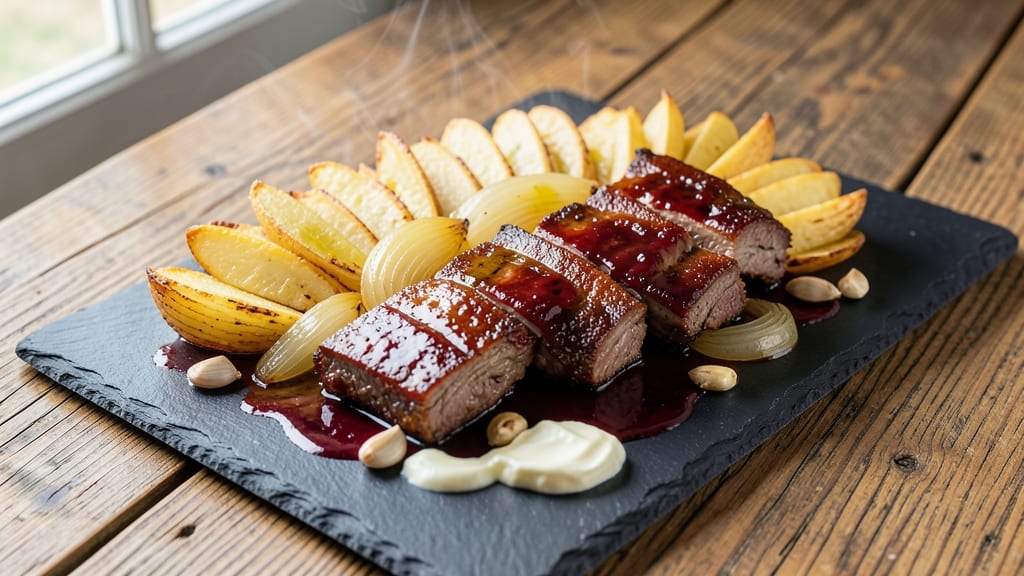
This hasselback potatoes with beef ribs recipe transforms a classic comfort meal into a showstopping centerpiece where crispy potato layers meet fall-apart tender ribs.
The secret lies in precise slicing of the potatoes—thin enough to crisp without falling apart—and a dry rub on the ribs that develops a deep, caramelized crust. I perfected this dish after years of testing different baking techniques, and the results are worth every minute of prep time.
The potatoes bake until their edges are golden and crispy while staying tender inside, creating those signature fan-like layers that make plating beautiful.
Meanwhile, the beef ribs develop a dark, smoky bark from the dry rub, which we then glaze with a sweet and tangy sauce that cuts through the richness. This isn't just dinner—it's an experience that turns weeknights into special occasions.
What makes this recipe truly special is how the two components complement each other: the crispy potatoes soak up the rib sauce beautifully, while the smoky-sweet flavors of the meat elevate the simple potatoes into something extraordinary.
The combination of techniques—precision slicing, proper rib preparation, and careful timing—ensures both elements shine without overpowering each other.
Serve this dish family-style so everyone can build their own plates, or arrange the potatoes and ribs elegantly on a platter for a restaurant-worthy presentation. The leftovers reheat surprisingly well, making this the perfect recipe for feeding a crowd or prepping ahead for busy weeks.
Ingredients for hasselback potato beef ribs
Precision-crafted ingredients for restaurant-quality crispy potato layers and fall-apart ribs with caramelized bark.
| Ingredient | Amount | Notes |
|---|---|---|
| Russet Potatoes 🥔 | 4 whole | Large, unpeeled, evenly sized |
| Beef Ribs 🥩 | 4 lb | Baby back or St. Louis style |
| Unsalted Butter 🧈 | ½ cup | Cold, cubed for potatoes |
| Extra-Virgin Olive Oil 🫒 | ¼ cup | For rib dry rub |
| Yellow Onion 🧅 | 1 whole | Medium, finely chopped |
| Garlic Cloves 🧄 | 8 cloves | Fresh, minced for rub |
| Brown Sugar 🍯 | ¼ cup | Packed, light variety |
| Smoked Paprika 🌶️ | 2 tbsp | For deep smoky flavor |
| Ground Black Pepper 🌶️ | 1 tbsp | Freshly cracked |
| Kosher Salt 🧂 | 1 ½ tbsp | Diamond Crystal preferred |
| Apple Cider Vinegar 🍎 | ¼ cup | For glaze acidity |
| Honey 🍯 | ¼ cup | Wildflower preferred |
| Fresh Rosemary 🌿 | ¼ cup | Chopped, for rib rub |
| Fresh Thyme 🌿 | ¼ cup | Leaves only, chopped |
| Fresh Parsley 🌿 | ⅛ cup | Chopped, for garnish |
The Russet potatoes are non-negotiable for hasselback perfection—their high starch content ensures crisp edges while maintaining tender centers. Local farmers markets often carry fresher potatoes than grocery stores, and the Yukon Gold variety can be substituted for a creamier texture. For the beef ribs, Costco or Whole Foods offer the best quality cuts—look for bright red color and good marbling. Baby back ribs are leaner and cook faster than St. Louis style, but both work beautifully. The key is trimming excess fat to prevent flare-ups during cooking, which is why pre-cut ribs from the butcher counter save time without sacrificing quality.
No smoked paprika? Regular paprika plus a pinch of liquid smoke replicates the depth, though true smoked paprika delivers superior flavor. Substituting brown sugar with maple syrup at half the amount works in a pinch, but the caramelization won't be as rich. For the glaze, balsamic vinegar can replace apple cider vinegar, though it adds a slightly different acid profile. Fresh herbs should be your first choice—their bright notes cut through the richness, but dried herbs at one-third the amount work if you're in a hurry. The olive oil for the dry rub matters: high-quality extra-virgin ensures better flavor transfer than vegetable oil.
Potatoes should be stored in a cool, dark place for up to 2 weeks, while ribs keep for 3-5 days in the fridge if vacuum-sealed. The dry rub ingredients stay potent for 6 months in an airtight container. For meal prep, cook ribs completely and refrigerate—reheat at 300°F for 20 minutes. Potatoes are best made fresh, but reheating at 350°F for 10 minutes restores some crispness. Portion the glaze separately to prevent sogginess when reheating.
Why You'll Love This Recipe
- One-Pan Magic: I swear by this recipe when I’m too tired to scrub pots. The ribs and potatoes share the same sheet pan—no extra dishes, no stress. Just slice, stack, and roast until the kitchen smells like a Sunday dinner.
- Rich, Crispy Contrast: That buttery, caramelized crust on the potatoes? Chef’s kiss. The beef ribs add deep, smoky richness while the onions melt into sweet, jammy pockets. It’s the kind of dish where every bite has texture and flavor.
- Game for Any Gathering: Between us, this feeds a crowd without breaking the bank. My in-laws rave about it at holiday dinners, and I make it for lazy Sundays when I don’t want to fuss. (Yes, even on a Tuesday night.)
- Leftovers That Don’t Suck: Honestly, I always make extra. The ribs stay tender, the potatoes crisp up again when reheated, and the flavors only get better the next day. Perfect for meal prep—or just because I’m greedy and can’t resist seconds.
Step-by-step instructions for hasselback potatoes with beef ribs
Master the art of crispy layers and smoky-sweet balance with this precise technique.
Prepare the Potatoes for Perfect Crispy Layers
Preheat your oven to 425°F for optimal browning. Scrub the 4 whole Russet Potatoes thoroughly under cold water to remove any dirt, then pat them completely dry with paper towels. Place each potato on a cutting board and use a sharp chef's knife to make ¼-inch deep horizontal slices from top to bottom, being careful not to cut all the way through. The slices should fan out slightly when you separate them.
Arrange the potatoes on a parchment-lined baking sheet, spacing them evenly. In a small bowl, melt the 0.5 cup Unsalted Butter until just soft enough to spread. Using your fingers, gently separate the potato slices and brush each one with the melted butter, focusing on the exposed edges. Sprinkle the entire potato with 1.5 tablespoons Kosher Salt and 1 tablespoon Ground Black Pepper, pressing the seasoning into the crevices. This ensures maximum crispiness and flavor penetration.
Here's the thing—don't skip the butter. The fat renders out during baking, creating a golden crust on those delicate potato slices. If your butter separates during melting, simply whisk it back together before brushing. The potatoes are now ready for the oven where they'll develop that signature crispy texture while maintaining tender centers.
Create the Rib Dry Rub and Sear for Maximum Flavor
While the potatoes roast, prepare the 4 lb Beef Ribs by patting them completely dry with paper towels. This step is crucial for developing that coveted bark. In a medium bowl, combine the 2 tablespoons Smoked Paprika, 0.25 cup Brown Sugar, 0.25 cup Fresh Rosemary, 0.25 cup Fresh Thyme, and remaining 0.5 tablespoon Ground Black Pepper. Add the 8 cloves Garlic Cloves and 1 whole Yellow Onion that has been finely chopped.
Mix the ingredients thoroughly, then generously coat the ribs with the dry rub mixture, pressing it firmly into the meat. The rub should adhere completely—this ensures even flavor distribution and that perfect bark. Let the rubbed ribs sit at room temperature for 30 minutes while you prepare the oven. This resting period allows the rub to penetrate the meat and develop deeper flavor.
Heat a large oven-safe skillet over medium-high heat and add the 0.25 cup Extra-Virgin Olive Oil. Once the oil shimmers, carefully add the ribs fat-side down and sear for 4-5 minutes until deeply browned. Flip the ribs and sear the other side for another 4-5 minutes. The Maillard reaction happening here is what creates that irresistible crust. Transfer the seared ribs to a plate and tent loosely with foil to keep warm.
Roast Potatoes and Braise Ribs for Harmonious Flavors
Place the prepared potatoes on the middle rack of your preheated oven and roast for 45-50 minutes, rotating the baking sheet halfway through for even browning. You'll know they're done when the edges are deep golden brown and crispy to the touch, while the centers remain tender when pierced with a fork. The potatoes should hold their shape but still be easily separable.
While the potatoes roast, return the seared ribs to the same skillet you used for searing, placing them fat-side up. Pour in 0.25 cup Apple Cider Vinegar and 0.25 cup Honey, then cover the skillet tightly with a lid or foil. Transfer the skillet to the oven and cook the ribs alongside the potatoes for 2 hours. The ribs are done when they reach an internal temperature of 195°F and the meat pulls apart easily with two forks.
This simultaneous cooking method creates a beautiful harmony of flavors. The potatoes develop their signature crispy layers while the ribs slowly braise in their own juices, creating a tender, fall-apart texture. The vinegar and honey glaze caramelizes beautifully, adding a sweet-tangy contrast to the smoky ribs.
Rest and Garnish for Presentation
Remove both the potatoes and ribs from the oven and transfer them to serving platters. Let the ribs rest for 10 minutes before slicing between the bones. This resting period allows the juices to redistribute, ensuring each bite is moist and flavorful. For the potatoes, sprinkle with the 0.125 cup Fresh Parsley just before serving to add a pop of color and freshness.
The potatoes should be served immediately while still crispy. The contrast between the crispy edges and tender centers, combined with the tender, caramelized ribs, creates a truly memorable dining experience. Each component should be presented separately to showcase their individual textures and flavors while allowing diners to enjoy them together.
This is where the magic happens—when the crispy, buttery potatoes meet the tender, sweet-smoky ribs. The combination delivers on the promise of crispy layers and smoky-sweet synergy that makes this dish truly special. Serve with a simple green salad to complement the richness of the main course.
Pro Tips For Making Hasselback Potato Beef Ribs
- Slice Potatoes Thinly: Use a sharp chef’s knife and cut the Russets into ¼-inch slices—any thicker and they’ll steam instead of crisp up. I learned this the hard way when my first batch turned out soggy; now I take my time and angle the knife for even cuts.
- Salt Ribs Before Browning: Generously coat the beef ribs with salt before searing—this seasoning gets locked in while they brown. I used to salt after, and the crust tasted bland; now I season aggressively and let them rest 10 minutes before cooking.
- Don’t Skip the Onion Base: Sauté the diced yellow onion in olive oil until deeply caramelized (10-12 minutes) before adding the ribs—this builds flavor that butter alone can’t match. My lazy shortcuts here used to make the dish taste flat; now it’s the foundation.
- Baste with Butter Often: Every 15 minutes, spoon melted butter over the potatoes and ribs to keep them moist and add richness. I used to forget, and the potatoes dried out; now I set a timer and treat it like a ritual.
Regional styles of this recipe
Southern BBQ Style
The South Carolina Lowcountry takes this dish to another level by adding a vinegar-based mustard glaze to the ribs—think ¼ cup yellow mustard mixed with 2 tbsp apple cider vinegar and 1 tbsp brown sugar.
Brush this on the ribs during the last 30 minutes of cooking for a tangy kick. Serve with collard greens slow-cooked with smoked turkey necks and a splash of hot sauce. The crispy potatoes soak up the BBQ juices beautifully, making every bite even more flavorful. 🔥
Texas Smokehouse Twist
Texans love their beef ribs, so this version incorporates a chopped onion and garlic rub with 1 tbsp cayenne pepper for heat.
After searing, smoke the ribs in a pellet grill at 250°F for 3 hours before glazing with a mix of ½ cup BBQ sauce and 2 tbsp bourbon. The potatoes get a smoked paprika and chili powder seasoning instead of just salt and pepper.
This method creates a deeper, smokier flavor profile that pairs perfectly with the crispy layers. 🌶️
Midwest German-Inspired
In German-American communities, the ribs are often braised with beer instead of vinegar and honey. Use a light lager or pilsner (about 1 cup) in the glaze, along with 1 tbsp caraway seeds for a unique aromatic twist.
The potatoes are served with a side of sauerkraut and a dollop of Dijon mustard. The beer glaze adds a malty depth that complements the crispy potatoes beautifully, especially during cooler months. 🍺
Pacific Northwest Herb Garden
West Coast chefs elevate this dish with fresh, bright herbs like cilantro and dill in the rib rub, replacing rosemary and thyme. The potatoes get a lemon zest and white pepper seasoning for a citrusy brightness.
For the glaze, swap honey for maple syrup and add 1 tbsp soy sauce for umami. Serve with a miso-ginger dressing> on the side to balance the richness. This version is lighter but packed with complex flavors. 🌿
Italian-Inspired Fusion
For an unexpected twist, Italian-American families might add sun-dried tomatoes and garlic> to the rib rub and finish with a white wine reduction glaze> (simmer ½ cup dry white wine with 1 tbsp tomato paste> and 1 tsp red pepper flakes>).
The potatoes are tossed with grated Parmesan and fresh basil> after baking. This fusion brings a Mediterranean flair while keeping the crispy potato layers intact. 🍷
Nutrition facts
Frequently asked questions
Can I cook the potatoes and ribs separately?
The recipe is designed to cook both components simultaneously for perfect timing, but you can absolutely prepare them separately. Roast the potatoes first (they take 45-50 minutes at 425°F), then cook the ribs separately in a skillet or oven. Just keep the potatoes warm in a 200°F oven while finishing the ribs to maintain crispiness. The potatoes will lose some crispness if left out too long, so plan accordingly.
What's the best way to make the rib glaze stick?
For maximum adhesion, make sure the ribs are completely dry before applying the glaze. Brush on a thin layer of the vinegar-honey mixture while the ribs are still warm from cooking. If the glaze feels too runny, reduce it on the stove until slightly thickened. For extra stickiness, add 1 teaspoon cornstarch to the glaze mixture before applying. This creates a beautiful caramelized crust that won't drip off.
Can I use frozen potatoes for hasselback?
Absolutely not! Fresh Russet potatoes are essential for this technique—their high starch content and moisture balance create the perfect crispy-tender texture. Frozen potatoes contain too much moisture and won't develop the signature crispy edges. If you're short on time, you can parboil fresh potatoes for 5 minutes before slicing, but they won't be as crispy as uncooked potatoes. Always use fresh, firm potatoes for best results.
How do I adjust this recipe for a crowd?
Double the ingredients and use two baking sheets for the potatoes to ensure even cooking. For the ribs, increase cooking time by about 30 minutes when cooking in batches. Use a larger oven-safe skillet or divide the ribs between two skillets. The key is maintaining the same oven temperature and cooking times—just scale up the equipment proportionally. Serve family-style with extra rib sauce on the side for dipping the crispy potato layers.
Why did my potato slices fall apart?
This usually happens when the slices are too thin or the potatoes weren't properly dried before baking. Aim for ¼-inch slices and ensure they're completely dry before seasoning. Also, don't overcrowd the baking sheet—leave space between potatoes for proper air circulation. If using older potatoes, soak them in cold water for 30 minutes before slicing to remove excess starch. The butter helps bind the slices together, so make sure to coat them thoroughly.