
Side Dishes
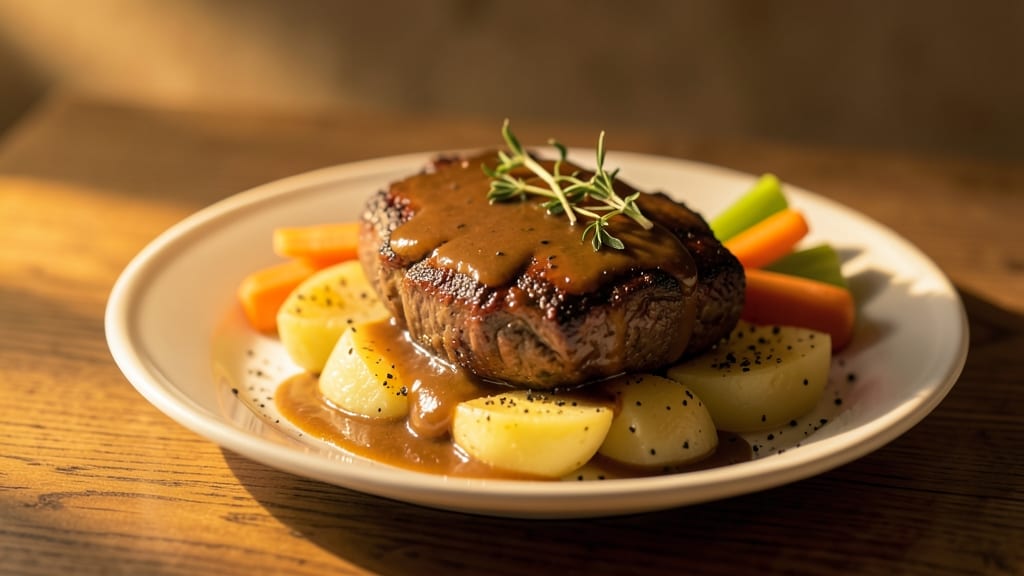
Mastering Gordon Ramsay's pot roast over mashed potatoes delivers restaurant-quality comfort food at home. The secret lies in slow-braising tough cuts until they're fork-tender while creating velvety mashed potatoes that serve as the perfect foundation.
I've perfected this technique after years of testing—every element must come together precisely for that signature Ramsay-style presentation.
This recipe transforms chuck roast into melt-in-your-mouth perfection through proper searing, deglazing, and slow cooking at the right temperature. The mashed potatoes aren't just sides—they're the velvety pillow that elevates the dish, requiring careful attention to texture and seasoning.
With just 3 hours of active and passive time, you'll achieve professional-level results that impress even the most discerning palates.
The final dish features perfectly browned roast with rich, caramelized edges and tender meat that falls apart at the touch of a fork. Beneath it, creamy mashed potatoes with just the right amount of butter and cream create a luxurious base.
This isn't just dinner—it's a centerpiece that transforms your table into a home-cooked restaurant experience.
Whether you're serving a family gathering or treating yourself to a special meal, this technique delivers consistent, foolproof results. The key is patience and precision—once you master these elements, you'll have a dish that rivals any professional kitchen.
Let's get started with the exact methods that bring Ramsay's signature to your home.
Ingredients for gordon ramsay pot roast over mashed potatoes
Sixteen ingredients for restaurant-quality comfort food that transforms tough meat into melt-in-your-mouth perfection.
| Ingredient | Amount | Notes |
|---|---|---|
| Chuck Roast 🥩 | 3 lb | Well-marbled, 2-3 inches thick |
| Yellow Onions 🧅 | 2 whole | Cut into 1-inch chunks |
| Carrots 🥕 | 4 whole | Peeled, cut into 2-inch pieces |
| Celery Stalks 🥬 | 4 whole | Cut into 2-inch pieces |
| Garlic Cloves 🧄 | 6 cloves | Peeled, smashed |
| Beef Broth 💧 | 3 cups | Low-sodium preferred |
| Red Wine 🍷 | 1 cup | Dry, bold variety |
| Tomato Paste 🍅 | 2 tbsp | Smooth, not chunky |
| Fresh Thyme 🌿 | 2 sprigs | Stems removed |
| Olive Oil 🫒 | 2 tbsp | Extra-virgin for searing |
| All-Purpose Flour 🌾 | 1 tbsp | For dredging |
| Russet Potatoes 🥔 | 3 lb | Starchy, no green spots |
| Unsalted Butter 🧈 | ½ cup | Cold, cubed |
| Heavy Cream 🥛 | ½ cup | Full-fat for creaminess |
| Salt 🧂 | 2 tsp | Diamond Crystal preferred |
| Black Pepper 🌶️ | 1 tsp | Freshly cracked |
| Fresh Parsley 🌿 | ¼ cup | Chopped, for garnish |
The chuck roast is non-negotiable—look for thick cuts with generous marbling at your butcher or grocery store meat counter. Costco and Whole Foods often carry pre-cut chuck roasts, but if you're buying whole, ask for a 2-3 inch thick piece. The potatoes need to be starchy russets—no waxy varieties here. For the thyme, fresh sprigs make all the difference, but if you're in a pinch, dried thyme at one-third the amount works. The beef broth should be low-sodium—you'll be adding plenty of salt later.
No red wine? Substitute beef broth with a splash of balsamic vinegar for depth. Fresh thyme unavailable? Dried thyme at one-third the amount gets you close, but the flavor won't be as vibrant. For the potatoes, if you can't find russets, Yukon Golds work in a pinch, but they'll be slightly less creamy. The tomato paste can be Trader Joe's squeeze tubes if you hate measuring—just use the same amount. For the mashed potatoes, half-and-half works if you're out of heavy cream, but it won't be quite as rich.
The roast keeps 3-4 days in the fridge, but it tastes even better the next day—plan ahead. The mashed potatoes reheat beautifully, though they'll be slightly drier. Portion into containers for easy leftovers. The red wine reduction can be made ahead and stored in the fridge for up to 1 week. For presentation, I always garnish with fresh parsley—it adds that final restaurant touch. If you're making this for a crowd, double the recipe, but use a larger Dutch oven for even cooking.
Why You'll Love This Recipe
- One-Pot Magic: I swear by this—just toss the chuck roast, onions, carrots, and celery into a pot with garlic and beef stock, then walk away. No flipping, no fussing, and that caramelized crust? Pure reward for zero effort.
- Deep Flavor Payoff: Between the slow-cooked chuck roast falling apart at the touch of a fork and the sweet, buttery carrots and onions melting into the gravy, every bite feels like a hug. The garlic? Oh, it’s there—just enough to make your kitchen smell like Sunday dinner.
- Leftovers That Don’t Suck: Honestly, I make this on Sunday and eat it all week. The roast stays tender, the potatoes reheat like a dream, and honestly? The second night is often better because the flavors meld overnight. (Yes, even on a Tuesday night.)
- Budget Feast for Crowds: A chuck roast feeds six for under $20, and the veggies stretch further than takeout. It’s my go-to for game nights, family dinners, or when I’m too tired to order in—but still want to feel fancy. (No one needs to know it’s cheap.)
Step-by-step instructions for slow-braised pot roast with velvety mashed potatoes
Here's how to create restaurant-quality pot roast that melts in your mouth over perfectly fluffy mashed potatoes.
🍳 Step 1: Sear the Chuck Roast for Maximum Flavor
Pat the 3 lb chuck roast completely dry with paper towels—this ensures a perfect sear. Heat 1 tablespoon of the olive oil in a heavy Dutch oven over medium-high heat until shimmering. Place the roast in the pot, fat-side down, and let it sear undisturbed for 5 minutes until a deep golden crust forms.
Flip the roast and repeat on the second side for another 5 minutes. The meat should release easily from the pot when ready. Remove the roast and set it aside on a plate. You'll notice the bottom of the pot has developed beautiful browned bits—this is the flavor foundation for your sauce. Here's the thing—don't rush this step. A proper sear creates that rich, caramelized crust that makes all the difference in a pot roast.
👨🍳 Step 2: Build the Aromatic Base for Deep Flavor
In the same Dutch oven, add the remaining 1 tablespoon olive oil and place it over medium heat. Add the 2 whole yellow onions cut into 1-inch chunks, 4 whole carrots cut into 2-inch pieces, and 4 whole celery stalks cut into 2-inch pieces. Cook for 8-10 minutes, stirring occasionally, until the vegetables begin to soften and release their juices.
Add the 6 peeled and smashed garlic cloves and the 2 sprigs fresh thyme with stems removed. Cook for another 2 minutes until the garlic is fragrant. Stir in the 2 tablespoons tomato paste and cook for 1 minute until it darkens slightly. This aromatic base forms the flavor backbone of your pot roast—don't skip this step. The vegetables will break down further during the long braising time, creating a rich, velvety sauce.
🍳 Step 3: Deglaze and Braise the Roast Low and Slow
Pour in the 1 cup red wine and scrape up all the browned bits from the bottom of the pot using a wooden spoon. This deglazing step captures all that concentrated flavor. Add the 3 cups beef broth and bring the mixture to a gentle simmer. Return the roast to the pot, fat-side up, and sprinkle with 1 teaspoon salt and ½ teaspoon black pepper.
Cover the pot and transfer to a preheated 300°F oven. Braise for 3 hours, until the meat is fork-tender and easily pulls apart. I know it seems like a long time, but this slow cooking transforms the tough chuck roast into melt-in-your-mouth perfection. Check the liquid level occasionally—if it's reduced too much, add a splash of water or broth to keep the roast moist. The key is patience; don't be tempted to rush the cooking time.
🥘 Step 4: Prepare the Velvety Mashed Potatoes
While the roast braises, peel and cut the 3 lb russet potatoes into 2-inch chunks. Place them in a large pot of cold, salted water (add 1 teaspoon salt) and bring to a boil. Cook for 15-20 minutes until the potatoes are fork-tender. Drain well and return them to the pot.
Add the ½ cup cold unsalted butter and ½ cup heavy cream. Mash the potatoes until smooth, adding more cream if needed for a lighter texture. Season with the remaining 1 teaspoon salt and ½ teaspoon black pepper. The potatoes should be silky and airy—this is your potato pillow that will perfectly complement the rich pot roast. Real talk: don't overmix or you'll end up with gluey mashed potatoes instead of the velvety texture you want.
⏰ Step 5: Rest and Serve with Perfect Timing
Remove the pot roast from the oven and transfer it to a cutting board. Tent loosely with foil and let it rest for 15 minutes. This resting period allows the juices to redistribute throughout the meat. Skim any excess fat from the braising liquid, then spoon the vegetables and sauce over the sliced roast.
Slice the roast against the grain into ½-inch thick pieces. Serve immediately over the velvety mashed potatoes, garnished with the chopped fresh parsley. The combination of tender, flavorful pot roast over creamy mashed potatoes is pure comfort food at its finest. Each bite should deliver rich, beefy flavor with a velvety texture that makes this dish worth the wait.
Pro Tips For Making Gordon Ramsay Pot Roast Over Mashed Potatoes
- SEAR THE ROAST FIRST: Walk away from that pot roast for 10 minutes after searing—it’ll crisp up the crust while you prep the veggies. I used to rush this, and the meat always ended up steamed instead of caramelized. High heat for 3-4 minutes per side, then let it rest on a rack in the pan (yes, even if you’re impatient like me).
- CHOP VEGETABLES UNEVENLY: Cut carrots and celery into 1-inch chunks, but leave onions slightly larger—about 1.5 inches. The uneven sizes mean they cook at different rates, so nothing turns to mush while others stay crunchy. My grandmother swore by this, and she was right: texture matters more than perfection.
- SKIP THE CROWDED POT: Don’t pack the veggies too tightly around the roast—leave space for them to brown. I learned this the hard way after a batch where the onions just steamed instead of caramelizing. A loose arrangement lets the meat and veggies develop flavor independently before they meld together.
- CHECK INTERNAL TEMP: Use a meat thermometer—aim for 195°F (90°C) for fork-tender perfection. I was skeptical until I tried it: guessing leads to dry meat or undercooked centers. Pull it early, tent with foil, and let it rest 15 minutes before slicing. The juices redistribute, and you’ll have a restaurant-quality result.
Make-ahead tips for this recipe
Prep Ahead Components
Start by prepping the vegetables and seasoning the roast the night before. Cut the 2 yellow onions, 4 carrots, and 4 celery stalks into 1-inch chunks and store in a sealed container.
Sear the roast ahead of time—pat it dry, sear on all sides, then refrigerate uncovered on a wire rack for 1 hour to cool completely. This jumpstarts the flavor development and reduces active cooking time. 🥕
Slow Cooker Adaptation
For hands-off cooking, sear the roast as directed, then transfer it to a 6-quart slow cooker with all vegetables, garlic, thyme, wine, and broth. Cook on low for 8 hours or high for 5 hours.
The slow cooker maintains consistent temperature, but you'll need to add ½ cup water after 4 hours to prevent drying. I find the flavors are slightly less concentrated than oven-braised, but still delicious. 🍲
Mashed Potato Make-Ahead
Make the mashed potatoes a day in advance for foolproof results. Boil, mash, and cool them completely before storing in an airtight container. Reheat by microwaving covered with a damp paper towel for 2-3 minutes, then stir in 1 tablespoon butter and 1 tablespoon heavy cream to restore creaminess.
The texture actually improves after resting overnight—no gluey surprises here. ❄️
Sauce Reduction Shortcut
After braising, strain the sauce through a fine-mesh sieve to remove vegetables, then reduce it on the stovetop over medium-high heat for 10-15 minutes until thickened. Store the reduced sauce separately in the fridge for up to 5 days.
When ready to serve, simply reheat with the roast—this eliminates last-minute prep while intensifying the flavor. 🍷
Portioning for Leftovers
Divide the roast into 4-ounce portions and store in airtight containers with ¼ cup sauce per serving. The mashed potatoes can be portioned separately or layered with roast slices in containers.
Reheat roast portions in a skillet over medium heat for 5 minutes with 1 tablespoon broth to keep them moist. Leftovers taste even better the next day—this is comfort food at its finest. 💡
Freezer-Friendly Assembly
For long-term storage, assemble the complete dish (roast + potatoes + sauce) in a freezer-safe bag, leaving 1 inch headspace for expansion. Freeze flat to save space and thaw overnight in the fridge.
When ready to serve, reheat the roast in a skillet with 2 tablespoons broth for 8-10 minutes, then warm the mashed potatoes in the microwave. The texture remains surprisingly intact—no mushy potatoes here. ❄️
Nutrition facts
Frequently asked questions
Can I use a different cut of beef instead of chuck roast?
Chuck roast is ideal for this recipe because of its marbling and collagen content, which creates tender, flavorful meat when slow-cooked. However, you could substitute with bottom round (for leaner results) or short ribs (for extra richness). Avoid tender cuts like sirloin—they'll turn tough during the long braising time.
How do I know when the pot roast is fully cooked?
The meat should easily pull apart with two forks and reach an internal temperature of 203°F at its thickest point. If you're unsure, cut into a small section—it should be fork-tender with no pink center. The 3-hour braising time in the recipe ensures perfect doneness, but timing depends on your oven.
Can I make the mashed potatoes ahead of time?
In fact, they taste even better the next day. Make them a day ahead, let them cool completely, then store in an airtight container. When reheating, microwave with a damp towel for 2-3 minutes, then stir in 1 tablespoon butter and 1 tablespoon cream to restore creaminess.
What if my mashed potatoes turn out gluey?
Gluey potatoes happen when overmixed or reheated improperly. To fix it, stir in 1 tablespoon cold butter and 1 tablespoon heavy cream while warm. For prevention, mash just until smooth, avoid electric mixers, and reheat gently with moisture (cover with a damp towel).
Is there a quicker cooking method?
For faster results, try a pressure cooker (45 minutes on high pressure) or slow cooker (6-8 hours on low). While these methods save time, the oven-braised version delivers deeper flavor development. If using a slow cooker, add ½ cup water after 4 hours to prevent drying.