
Side Dishes
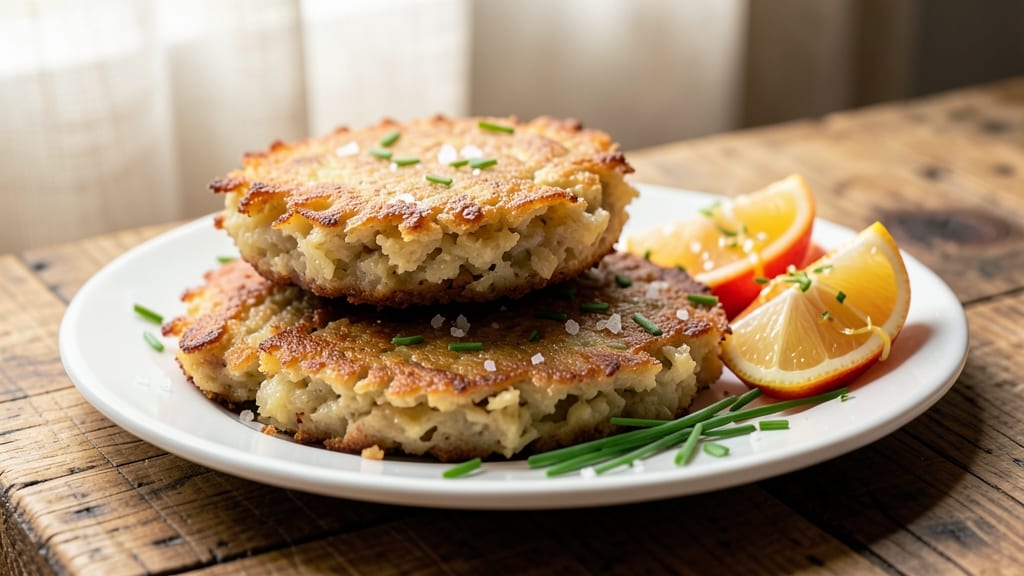
This German potato latkes recipe delivers crispy, golden bites that balance traditional Hanukkah flavors with a modern zesty lemon twist—perfect for both holiday celebrations and everyday meals. The secret lies in grating the potatoes properly and frying them in small batches to maintain that signature crunch.
I developed this version after years of perfecting the technique, ensuring every latke achieves that ideal balance between tender inside and crispy exterior.
What sets these latkes apart is the combination of classic German potato preparation with a bright lemon twist that cuts through the richness. The recipe uses a simple binding of eggs and flour, but it’s the frying technique that transforms ordinary potatoes into restaurant-quality bites.
Serve them with traditional toppings like applesauce or sour cream, or add a modern twist with herbed cream cheese for extra depth.
By the time you’re done, you’ll have a plate of perfectly golden latkes that stay crispy even after cooling—thanks to the precise frying method. The zesty lemon twist adds a refreshing contrast to the savory potatoes, making these latkes a crowd-pleaser for any occasion.
Whether you're celebrating Hanukkah or just craving a comforting side dish, this recipe delivers professional results with simple ingredients.
Pair these latkes with smoked fish, a hearty soup, or even as a standalone appetizer. The beauty of this recipe is its versatility—it works as a traditional holiday dish or a modern twist on a classic. Let’s get started on creating your own batch of crispy, golden potato latkes!
Ingredients for german potato latkes
Crispy, golden latkes start with these simple yet precise ingredients—potatoes, eggs, and a zesty lemon twist.
| Ingredient | Amount | Notes |
|---|---|---|
| Russet Potatoes 🥔 | 2 ½ lb | Cold, peeled, grated fine |
| Large Eggs 🥚 | 2 whole | Room temperature, beaten |
| All-Purpose Flour 🌾 | ¼ cup | Sifted for smooth texture |
| Granulated Sugar 🍚 | 1 tbsp | Balances lemon flavor |
| Salt 🧂 | 1 ½ tsp | Kosher or sea salt |
| Fresh Lemon Zest 🍋 | 1 tbsp | Bright, fine-grade zest |
| Fresh Lemon Juice 🍋 | 1 tbsp | Freshly squeezed |
| Vegetable Oil 🫒 | 2 cups | High smoke point, like canola |
| Fresh Parsley 🌿 | ¼ cup | Chopped, for garnish |
| Ground Black Pepper 🌶️ | ½ tsp | Freshly cracked |
| Onion Powder 🧅 | ½ tsp | Enhances depth |
| Garlic Powder 🧄 | ½ tsp | Freshly ground preferred |
The potatoes are the foundation, and Russet potatoes are ideal for their high starch content. Buy them fresh—Trader Joe's or Whole Foods carry the best quality—and keep them cold until grating. A box grater with fine holes ensures even texture. For the lemon, use a Microplane to get fine zest without the bitter pith. The sugar may seem unusual, but it balances the acidity beautifully. I always measure my spices by weight for consistency—Diamond Crystal kosher salt is my go-to for perfect seasoning.
No fresh parsley? Dried parsley at one-third the amount works, though fresh adds vibrant color. Running short on lemon juice? Substitute lime juice for a tangier twist. For the oil, peanut oil has a higher smoke point than vegetable oil, but either works. The onion and garlic powders can be swapped for 1/4 cup finely chopped fresh onion and 2 cloves minced garlic, but the powders ensure consistent flavor. If your latkes aren't crispy, pat the grated potatoes dry with paper towels before cooking—this removes excess moisture for that perfect crunch.
Latkes keep their crispiness best when fried in small batches—don't overcrowd the pan. Store leftovers in an airtight container for up to 3 days, but they're best reheated in a 350°F oven for 10-15 minutes to restore crispness. For freezing, arrange on a tray first to prevent sticking, then transfer to a bag for up to 3 months. The lemon zest can be stored in the freezer for 6 months in an airtight container, preserving its bright flavor.
Why You'll Love This Recipe
- Here’s what sold me: the sugar in the batter. It caramelizes just enough to balance the salty potatoes, giving them this addictive edge. Serve with applesauce or sour cream, and you’ve got a flavor combo that works for breakfast or dinner.
- Crispy in Minutes: I swear by the stovetop method—no oven needed. Peel, grate, squeeze out the water, mix with egg and flour, then fry in batches until golden. That first bite? Crunchy outside, tender inside, every time.
- Sweet-Savory Magic: Here’s what sold me: the sugar in the batter. It caramelizes just enough to balance the salty potatoes, giving them this addictive edge. Serve with applesauce or sour cream, and you’ve got a flavor combo that works for breakfast or dinner.
- Weeknight Workhorse: Between us, these are my go-to for lazy Sundays or when I need to feed a crowd. Double the batch, freeze half, and reheat in a pan later. They’re hearty enough for a main but light enough for a side—perfect when I’m not deciding what to make.
Step-by-step instructions for German potato latkes
Follow this precise method to achieve perfectly crispy latkes with a golden exterior and tender interior.
Grate and Squeeze Potatoes for Maximum Crispiness
Begin by grating the 2.5 lb russet potatoes using the fine holes of a box grater or food processor. Work in batches if needed to avoid overfilling the machine. Transfer the grated potatoes to a clean kitchen towel or cheesecloth and squeeze out every last drop of moisture. This step is critical—excess water prevents crispiness and leads to soggy latkes.
Spread the grated potatoes evenly across the towel and twist the ends tightly. Gather the towel into a bundle and wring it vigorously over a bowl to collect the released starch. Repeat this process until the grated potatoes feel completely dry to the touch. The bowl will contain a milky liquid—this potato starch is pure flavor and will enhance the crispy texture of your latkes.
Combine Ingredients for the Perfect Batter
In a large mixing bowl, combine the squeezed potatoes with the 2 whole large eggs, 0.25 cup all-purpose flour, 1 tbsp granulated sugar, 1.5 tsp salt, 0.5 tsp onion powder, and 0.5 tsp garlic powder. Use a sturdy wooden spoon or rubber spatula to gently fold everything together until just combined. Be careful not to overmix—the batter should remain slightly lumpy with visible potato flecks.
In a small bowl, whisk together the 1 tbsp fresh lemon zest and 1 tbsp fresh lemon juice until fully incorporated. This bright citrus mixture will cut through the richness of the potatoes and add a refreshing contrast. Pour the lemon mixture into the potato batter and fold it in gently. The batter should be thick but still hold together when pressed between your fingers—if it feels too loose, add an additional 1 tablespoon of flour.
Heat Oil and Fry Latkes in Batches
Pour the 2 cups vegetable oil into a deep, heavy-bottomed skillet or Dutch oven and heat it over medium heat until it reaches 350°F on a deep-fry thermometer. If you don't have a thermometer, test the oil by dropping a small piece of potato batter into it—it should sizzle and float to the surface within 10 seconds. If it browns too quickly, reduce the heat slightly.
Using a tablespoon or small ice cream scoop, portion the batter into 1.5-inch balls and carefully slide them into the hot oil. Work in batches to avoid overcrowding—you want enough space between each latke for even browning. Fry for 3-4 minutes per side, turning carefully with a slotted spoon, until they develop a deep golden brown color and are crispy throughout. The edges should look slightly darker than the centers. If the oil temperature drops below 325°F, add a few more minutes to the cooking time.
Drain and Season Immediately
Transfer the cooked latkes to a paper towel-lined plate or wire rack to drain excess oil. Work quickly to keep them crispy—don't stack them or they'll turn soggy. While they're still hot, sprinkle each latke generously with 0.25 cup chopped fresh parsley and 0.5 tsp freshly cracked ground black pepper. The parsley adds a fresh, vibrant finish that balances the richness of the potatoes.
Serve the latkes immediately while they're at their crispiest. They'll stay warm for about 10 minutes if kept on a wire rack, but their texture will begin to soften quickly. For best results, fry them in small batches and serve directly from the skillet to maintain that perfect crunch.
Pro Tips For Making German Potato Latkes
- GRATE THEM FINE: Russets have more starch than waxy potatoes, but if you’re not careful, you’ll end up with a gluey mess. Use the large holes of a box grater—no food processor, no matter how tempting—and keep the potatoes cold while grating. I learned this the hard way when my first batch turned into a sad, gummy pancake.
- SALT THE WATER LIKE THE SEA: The grated potatoes need a good soak (10-15 minutes) to draw out excess starch, but skip the salt if you’re using it later in the batter. If you must salt the water, use just 1 teaspoon—too much makes the potatoes absorb water like a sponge, and your latkes will be soggy. (Yes, even if you’re impatient like me.)
- DON’T OVERMIX THE BATTER: Once the potatoes drain, squeeze out every last drop of water with a clean kitchen towel—this is non-negotiable. Then, when mixing in the egg, flour, sugar, and salt, stop as soon as everything just comes together. Overmixing develops gluten, and your latkes will turn out dense instead of light and crispy. Stir until combined, then fold gently—like you’re tucking in a baby, not kneading dough.
- COOK IN BATCHES OF 3: German latkes need a screaming-hot pan (350°F oil, tested with a thermometer) and never more than 3 at a time. Crowd them, and they’ll steam instead of crisp. Use a slotted spatula to press down gently on each latke for 10 seconds—this ensures even browning. Flip only when the edges look dry and the underside is golden, not before. (I know, I know—waiting is the hardest part.)
Wine and beer pairings for this dish
Crisp White Wine Pairings
For these zesty lemon latkes, a dry Riesling from Germany’s Mosel region is my go-to choice. The wine’s bright acidity and subtle honeyed notes complement the lemon twist while cutting through the richness of the fried potatoes.
Look for a Dr. Loosen Blue Slate—its crisp finish mirrors the latkes’ crispy texture. Serve slightly chilled to enhance the refreshing contrast. 🍷
Crisp Lager Complements
A German Pilsner like Warsteiner or Krombacher provides a clean, effervescent pairing that refreshes your palate between bites. The malt-forward profile balances the latkes’ crispiness, while the carbonation helps cleanse the richness. For a lighter option, try a Berliner Kindl—its subtle hop bitterness adds depth without overpowering the dish.
Herbal Beer Options
If you prefer something with a bit more character, a German Hefeweizen like Paulaner or Weihenstephaner works beautifully. The banana and clove notes in the beer harmonize with the lemon zest and parsley, creating a delightful flavor interplay.
Just be sure to serve the beer slightly chilled—around 45°F—to preserve its delicate aromas. 🍺
Avoid Heavy Reds
While a bold red might seem tempting, it will overwhelm the delicate lemon and herb notes in these latkes. Skip Cabernet Sauvignon or Merlot—they lack the acidity and brightness needed to complement the dish.
Instead, opt for the lighter, crisp options above to let the latkes shine without competition. The goal is harmony, not dominance.
Nutrition facts
Frequently asked questions
Why do German potato latkes need to be squeezed so thoroughly?
Squeezing removes excess moisture, which is the secret to crispy latkes. Wet potatoes release steam during frying, creating soggy centers instead of that perfect golden crunch. The starch released during squeezing also enhances flavor and texture.
Can I make these latkes ahead of time?
For best results, fry them fresh and serve immediately. However, you can prepare the batter up to 4 hours ahead and refrigerate it. Re-grate potatoes if needed before frying. For leftovers, reheat in a 350°F oven for 10-15 minutes to restore crispiness.
What's the difference between German and traditional Jewish latkes?
German-style latkes often include lemon zest and sugar for brightness, while classic Jewish versions typically feature onions for depth. This recipe blends both traditions with a zesty lemon twist. The frying technique remains similar—both require high heat and proper oil temperature for crispiness.
How do I fix latkes that turned out greasy instead of crispy?
Greasy latkes usually mean the oil was too hot or the potatoes weren't dry enough. For future batches, ensure oil reaches 350°F and squeeze potatoes thoroughly. If you've already fried them, try placing them on a wire rack in a 200°F oven for 10 minutes to evaporate excess oil.
What are the best toppings beyond applesauce?
Try herbed sour cream (mix sour cream with chopped dill and garlic), spicy mustard, or a dollop of Greek yogurt with lemon zest. For a savory twist, add crumbled feta or smoked salmon. The lemon in these latkes pairs especially well with creamy, tangy toppings.