
Side Dishes
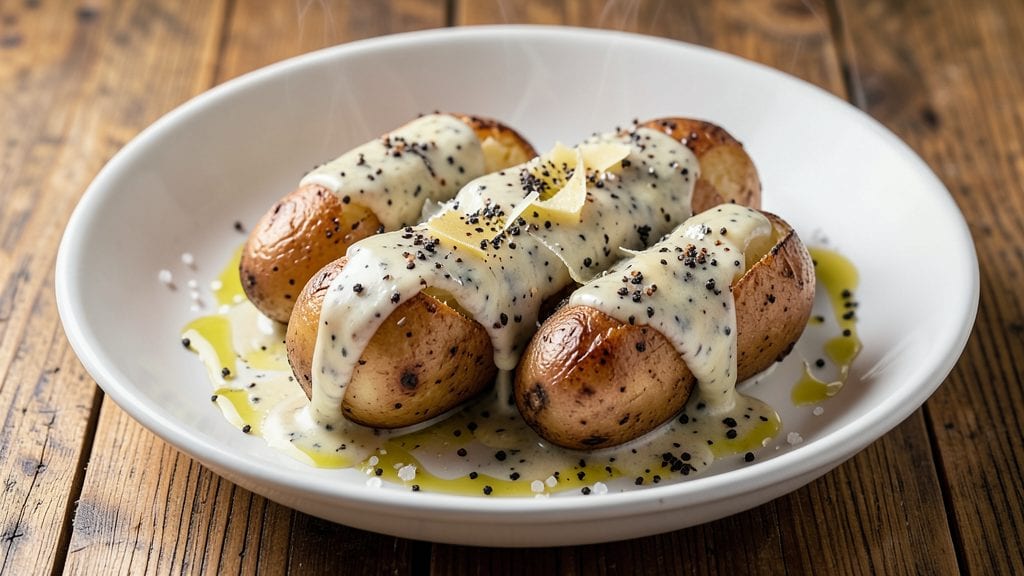
Mastering fondant potatoes with cacio e pepe sauce transforms a simple side into a showstopping centerpiece—creamy, peppery, and impossibly tender. The secret lies in parboiling the potatoes just enough to create that signature fondant texture, then finishing them in a sizzling pan until golden and crisp at the edges.
This technique ensures every bite delivers that perfect contrast between silky interior and crispy exterior, while the cacio e pepe sauce—blended with sharp Pecorino Romano and freshly cracked black pepper—adds a luxurious, umami-rich coating.
What sets this dish apart is the balance between technique and simplicity. You’ll work with just a few high-quality ingredients—Russet potatoes, Pecorino Romano, black pepper, and pasta water—but the method demands precision.
The parboiling step (never skip it!) builds the foundation for those melt-in-your-mouth potatoes, while the sauce relies on emulsifying the cheese with starchy pasta water for that signature velvety consistency. Even beginners can achieve restaurant-quality results with this foolproof approach, as long as you follow the timing and heat control.
The final result is a dish that’s equal parts elegant and comforting: tender, golden potatoes blanketed in a glossy, pepper-infused cheese sauce that clings to every bite. The aroma alone—warm, cheesy, with a hint of black pepper—will have everyone at the table anticipating the first forkful.
This is the kind of side that elevates any Italian meal, whether paired with grilled meats, roasted vegetables, or a simple arugula salad. Let’s get started on creating this timeless classic.
For plating, time the sauce to finish just as the potatoes come out of the pan—toss them together while hot, then garnish with extra grated Pecorino and a sprinkle of fresh pepper flakes for color and a final kick of heat.
Serve immediately, while the sauce is still silky and the potatoes retain their perfect texture. The contrast of crispy edges and creamy centers, paired with the bold peppery sauce, makes this dish unforgettable—and worth every minute of effort.
Ingredients for fondant potatoes with cacio e pepe sauce
Four essential ingredients transform simple potatoes into a restaurant-worthy masterpiece.
| Ingredient | Amount | Notes |
|---|---|---|
| Russet Potatoes 🥔 | 2 lb | Cut into 1.5-inch chunks, peeled |
| Pecorino Romano Cheese 🧀 | 1 ½ cups | Freshly grated, fine grade |
| Freshly Cracked Black Peppercorns 🌶️ | 1 ½ tbsp | Coarsely ground, not pre-ground |
| Extra-Virgin Olive Oil 🫒 | ¼ cup | High-quality, fruity variety |
| Salt 🧂 | 1 ½ tsp | Kosher or sea salt |
| Fresh Pasta Water 💧 | ½ cup | Reserved from cooking pasta |
| Red Pepper Flakes 🌶️ | ½ tsp | For garnish, optional |
| Garlic Cloves 🧄 | 2 cloves | Minced, optional for extra flavor |
The Russet potatoes are non-negotiable—their high starch content creates that signature fondant texture. Russets from Idaho are the gold standard, but any waxy potato will work in a pinch. Look for firm, unblemished potatoes with a vibrant yellow skin. The Pecorino Romano must be freshly grated—pre-shredded cheese lacks the sharpness and emulsifies poorly. Whole Foods or specialty Italian markets carry the best quality, but a deli counter will do if you're in a hurry. For the black pepper, freshly cracked peppercorns make all the difference—pre-ground pepper loses its potency quickly. If you don't have a pepper grinder, toast the whole peppercorns in a dry pan for 30 seconds before grinding for extra depth of flavor.
No Pecorino Romano? Parmigiano-Reggiano works as a substitute, though it’s slightly milder. The sauce relies on starchy pasta water for emulsification—if you don’t have any, simmer potatoes in salted water until tender, then reserve ½ cup of that water. Fresh pasta water is ideal, but if you’re making this without pasta, boil potatoes in extra-salted water to create a starchy liquid. The olive oil should be high-quality—California extra-virgin brands like Corto or Colavita elevate the dish. For extra richness, add a splash of whole milk to the sauce while blending. The red pepper flakes are optional but add a nice visual contrast and subtle heat when garnishing.
Potatoes should be stored in a cool, dark place until ready to use—no refrigeration needed. Once peeled and cut, keep them in cold water to prevent browning. The freshly grated Pecorino will keep for 1 week in an airtight container in the fridge, but it’s best used immediately for peak flavor. The sauce can be made ahead and reheated with a splash of pasta water or milk to restore its creaminess. For best results, serve the potatoes immediately after tossing with the sauce—waiting even 10 minutes can make the sauce separate. If you’re prepping ahead, cook the potatoes and reheat them in the oven at 400°F until crispy, then toss with freshly made sauce.
Why You'll Love This Recipe
- One-Pot Magic: I swear by this—just potatoes, olive oil, and salt in one pan until they’re golden and tender. No chopping, no fuss, and the sauce comes together while you wait. (Yes, even on a Tuesday night.)
- Peppery Cheese Bliss: That first bite of creamy potato topped with sharp Pecorino and cracked pepper? It’s like a warm hug for your taste buds. The pepper isn’t overpowering—just enough to wake up every forkful.
- Leftovers That Don’t Suffer: Unlike some dishes, these potatoes reheat like a dream. Toss them in a pan with a splash of water or microwave them—still crispy edges, still that perfect fondant center. My lunchbox’s new best friend.
- Budget-Friendly Luxury: Russets and Pecorino might sound fancy, but they’re actually affordable staples. A few potatoes and a wedge of cheese stretch across multiple meals, and you’ll feel like you’re dining out without the price tag.
Step-by-step instructions for fondant potatoes with cacio e pepe sauce
This method delivers perfectly creamy, melt-in-your-mouth potatoes with a rich, peppery cheese sauce every time.
Parboil the Potatoes for Structure
Place the 2 lb russet potatoes in a large pot and cover with cold water. Add the 1.5 teaspoons salt and bring to a boil over high heat. Once boiling, reduce to a gentle simmer and cook for 8-10 minutes until the potatoes are partially tender but still firm to the touch.
This initial cooking creates a firm foundation that prevents the potatoes from falling apart later. You'll know they're ready when a knife slides in easily but the center still offers slight resistance. Drain immediately and let them cool slightly before proceeding.
Roast Until Fondant and Golden
Preheat your oven to 425°F. While the oven heats, place the parboiled potatoes on a rimmed baking sheet. Drizzle evenly with the 0.25 cup extra-virgin olive oil and toss gently to coat. Roast for 25-30 minutes, turning halfway through, until the edges are golden brown and the potatoes yield slightly when pressed.
Here's the thing - you want them tender but still holding their shape. If they're browning too quickly, tent with foil for the last 10 minutes. The potatoes should be creamy inside with crispy, caramelized edges by the end.
Create the Cacio E Pepe Sauce
In a large skillet over medium-low heat, combine the 1.5 cups freshly grated pecorino romano cheese and the 1.5 tablespoons freshly cracked black peppercorns. Let the cheese melt slowly, stirring constantly for 2-3 minutes until it forms a thick, creamy paste.
This is where the magic happens - the cheese should melt into a velvety sauce without separating. If it starts to brown too quickly, reduce the heat slightly. The sauce should coat the back of a spoon smoothly when ready.
Combine Potatoes and Sauce
Add the roasted potatoes to the skillet with the cheese sauce. Toss gently to coat each potato evenly. If the sauce becomes too thick, add the 0.5 cup fresh pasta water 1 tablespoon at a time until you reach a creamy consistency that clings to the potatoes.
The sauce should now be silky and enveloping, with each potato perfectly coated. The residual heat from the potatoes will help melt any remaining cheese. Garnish with the 0.5 teaspoon red pepper flakes if desired, and serve immediately while still hot.
Optional Garlic Enhancement
For extra depth of flavor, add the 2 minced garlic cloves to the skillet during the final 30 seconds of tossing. This step is optional but recommended for a more complex flavor profile. The garlic should infuse the cheese sauce without becoming bitter.
Serve these fondant potatoes immediately with the cacio e pepe sauce generously spooned over each portion. The contrast between the creamy potatoes and peppery cheese creates an irresistible combination that pairs perfectly with crusty bread or grilled meats.
Pro Tips For Making Fondant Potatoes With Cacio E Pepe Sauce
- Cut Potatoes in Uniform Size: I learned this the hard way—uneven pieces mean some potatoes turn to mush while others stay rock-hard. Aim for 1.5-inch chunks (about the size of a golf ball) so they cook through at the same time without falling apart.
- Use a Heavy Pan: A nonstick skillet won’t cut it here. A cast-iron or stainless steel pan conducts heat better, so the potatoes crisp up instead of steaming. Trust me, your fondant texture will thank you.
- Grate Pecorino Fresh: Pre-shredded cheese has anti-caking agents that dull the sauce’s sharpness. Use a fine grater and grate it right before tossing—it melts faster and packs more punch.
- Toast the Pepper First: Crack the peppercorns over the pan while the potatoes sizzle—this releases their oils and deepens the flavor. Skip the pre-grinding; fresh cracks add a bright, aromatic kick that jarred pepper can’t match.
Troubleshooting perfect results
Potatoes Too Dry
If your potatoes emerge dry and crumbly instead of fondant, you likely overcooked them during parboiling. Aim for 8-10 minutes in boiling water—they should be partially tender but still firm.
For extra moisture, add 1 tablespoon butter to the roasting pan during the second step. This helps restore creaminess while adding richness. 💧
Sauce Separates
The sauce separates when the cheese melts too quickly or lacks enough starchy liquid. Always use fresh pasta water (or reserved potato water) to emulsify the cheese. If it starts separating, whisk in 1 tablespoon cold water at a time while stirring vigorously.
For extra insurance, blend the sauce briefly with an immersion blender before tossing with potatoes.
Cheese Doesn't Melt
Low-quality cheese or insufficient heat causes unmelted cheese clumps. Use only Pecorino Romano (or Parmigiano-Reggiano) and heat the skillet over medium-low heat until the cheese begins to bubble slightly.
If it still resists, add 1 teaspoon lemon juice—the acidity helps break down the cheese proteins for smoother melting. Stir constantly to prevent burning.
Sauce Too Thick
A thick, gluey sauce happens when you skip the pasta water or overcook the potatoes. Thin with 1 tablespoon reserved pasta water at a time until silky. For extra creaminess, stir in 1 tablespoon whole milk or 1 teaspoon heavy cream while blending.
The sauce should coat the back of a spoon without being watery. 🥄
Potatoes Burn
Burning occurs when roasting at too high a temperature. Lower the oven to 400°F and tent with foil for the last 10 minutes if browning too quickly. For even cooking, rotate the baking sheet halfway through.
If using a skillet instead of oven, keep heat at medium-low and cook covered for the final 5 minutes to prevent darkening.
Sauce Too Peppery
Overpowering black pepper flavor happens when using pre-ground pepper or adding too much. Stick to 1.5 tablespoons freshly cracked peppercorns and taste before serving. For balance, add ½ teaspoon grated lemon zest or 1 teaspoon minced fresh parsley to the sauce.
The acidity cuts through the pepper's intensity while adding freshness. 🌿
Nutrition facts
Frequently asked questions
Can I make these fondant potatoes ahead of time?
Cook the potatoes up to the roasting step, then refrigerate them uncovered for 1-2 hours to develop crispy edges. Reheat in a 400°F oven for 10-15 minutes until warmed through. Make the sauce fresh and toss with reheated potatoes—it won't hold well overnight. The texture suffers if you prep the sauce ahead, but the potatoes keep beautifully for 24 hours.
What's the best substitute for Pecorino Romano?
Use Parmigiano-Reggiano for a milder, slightly sweeter flavor. For extra sharpness, blend equal parts Parmigiano and Pecorino if available. Avoid pre-shredded cheese—it contains anti-caking agents that prevent proper melting. If you must use store-bought, grate Asiago D'Allevo or Gran Padano for the closest texture.
Why do my potatoes turn out mushy instead of fondant?
Overcooking during parboiling or roasting destroys the fondant texture. For parboiling, test doneness with a knife—it should slide in easily but the center should still resist slightly (8-10 minutes). For roasting, use 425°F and check at 25 minutes. If they're mushy, reduce parboiling time by 2 minutes next time and roast uncovered for better browning.
Can I make this dish vegetarian?
The recipe is naturally vegetarian, but you can enhance it with optional add-ins like sautéed mushrooms or roasted cherry tomatoes for extra flavor. For a richer sauce, stir in 1 tablespoon nutritional yeast when blending the cheese. The dish pairs beautifully with a white bean salad or grilled halloumi for a complete vegetarian meal.
How do I fix separated sauce?
Whisk in 1 tablespoon cold water or reserved pasta water while stirring vigorously to re-emulsify. For stubborn separation, blend the sauce briefly with an immersion blender. If it's too thick, add 1 teaspoon whole milk or 1 tablespoon fresh pasta water. The key is patience—work the sauce gently to avoid creating more air bubbles that could cause further separation.