
Soups & Stews
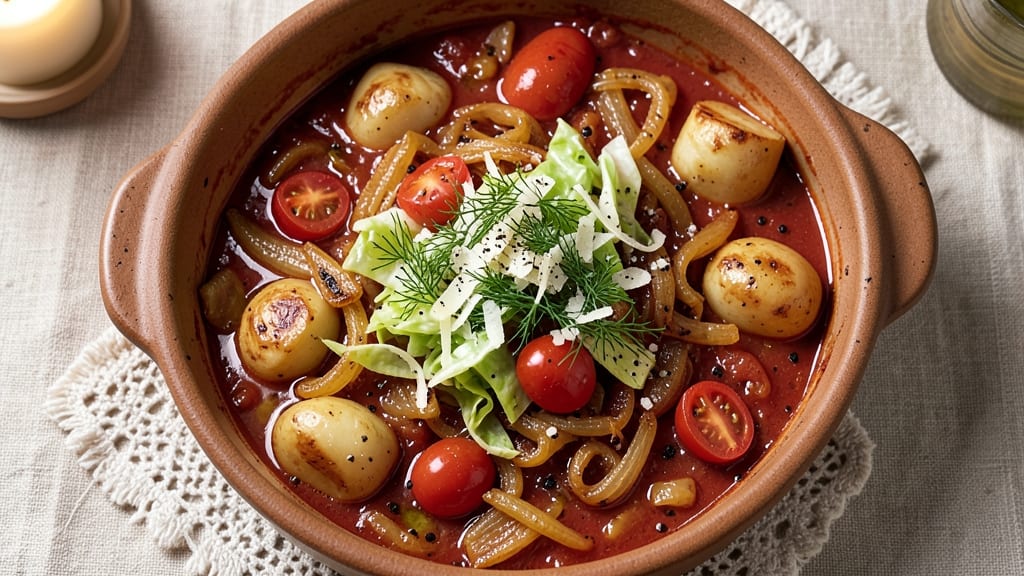
This cabbage potato stew recipe delivers a deeply satisfying one-pot meal that transforms humble ingredients into something extraordinary through slow, intentional cooking. The foundation—a rich, caramelized onion base—builds layers of flavor that linger long after the first bite, while tender potatoes and cabbage absorb every savory note.
I developed this recipe during a particularly chilly winter when I needed something hearty enough to stand up to long evenings indoors, and it’s since become a staple in my rotation.
The beauty of this stew lies in its simplicity combined with professional-level results. You’ll start with a classic braising technique—sautéing onions until deep golden brown—to create that irresistible depth of flavor before adding potatoes and cabbage.
The dish simmers just long enough to soften the vegetables while preserving their texture, resulting in a stew that’s both comforting and elegant. No fancy equipment is needed beyond a sturdy pot and a little patience.
What you’ll end up with is a bowl of stew so rich and flavorful it feels like a restaurant-quality meal, served with crusty bread to soak up every last drop.
The caramelized onions add a touch of sweetness that balances the earthiness of the cabbage, while the potatoes become fork-tender without turning mushy. This is the kind of dish that warms you from the inside out—perfect for weeknight dinners or cozy gatherings when you want something substantial without the fuss.
The best part? This recipe scales effortlessly for larger groups and reheats beautifully, making it ideal for meal prep. Whether you’re adapting it for a slow cooker or following the stovetop method, the principles remain the same: build flavor slowly, and let the ingredients do the work.
Let’s get started on creating a stew that tastes like home.
Ingredients for cabbage potato stew
Simple ingredients, slow cooking, and rich caramelized onions create this deeply satisfying vegetarian stew.
| Ingredient | Amount | Notes |
|---|---|---|
| Yellow Onions 🧅 | 3 large | Thinly sliced for caramelization |
| Russet Potatoes 🥔 | 2 lbs | Cut into 1-inch chunks |
| Green Cabbage 🥬 | 1 medium | Core removed, chopped |
| Vegetable Broth 💧 | 4 cups | Low-sodium preferred |
| Tomato Paste 🍅 | ½ cup | For depth of flavor |
| Extra-Virgin Olive Oil 🫒 | ½ cup | For sautéing onions |
| Garlic Cloves 🧄 | 4 cloves | Minced for aromatic base |
| Fresh Thyme 🌿 | 1 tbsp | Leaves only, chopped |
| Bay Leaves 🍃 | 2 whole | For subtle earthy flavor |
| Salt 🧂 | 1 ½ tsp | Kosher salt preferred |
| Black Pepper 🌶️ | ½ tsp | Freshly ground preferred |
| Apple Cider Vinegar 🍎 | 1 tbsp | Brightens flavors |
| Fresh Parsley 🌿 | ¼ cup | Chopped for garnish |
The onions are the foundation here—yellow onions develop the best caramelization, so don't skip this step. Whole Foods or Trader Joe's carry large yellow onions year-round, but any grocery store's produce section will have them. Look for firm onions with dry skins; avoid any with soft spots or sprouting. For the potatoes, russets—their waxy texture keeps them from turning mushy. If you can't find russets, Yukon Golds work too, but they'll be slightly creamier. The cabbage should be fresh and crisp; green cabbage is ideal, but red or savoy cabbage adds nice color variation. Store all fresh ingredients in the fridge until ready to use, and let the onions sit at room temperature for 30 minutes before slicing for even caramelization.
No fresh thyme? Dried thyme at one-third the amount works in a pinch, but fresh has that bright, floral note that dried can't replicate. Short on vegetable broth? Water plus 1 tbsp soy sauce adds umami depth, though it won't be as rich. The tomato paste can be substituted with 1 cup crushed tomatoes if you prefer, though it won't be as concentrated. For a tangier stew, add an extra 1 tbsp apple cider vinegar. The bay leaves are crucial—they infuse subtle earthy notes that balance the sweetness of the caramelized onions. If you're using dried herbs, make sure they're culinary-grade and haven't lost their aroma. For the parsley, fresh is best, but dried works if you're in a bind—just use half the amount.
This stew tastes even better the next day as flavors meld together. Store leftovers in an airtight container in the fridge for up to 5 days, or freeze portions for 3 months. The caramelized onions can be made ahead and stored separately for up to 3 days in the fridge. When reheating, add a splash of water or broth to prevent drying out. The stew reheats beautifully on the stovetop or in the microwave, making it perfect for meal prep. For a restaurant-quality finish, garnish with fresh parsley and a drizzle of extra-virgin olive oil before serving.
Why You'll Love This Recipe
- One-Pot Magic: I swear by this recipe—just toss everything in a pot, stir, and let it simmer. No fancy gadgets, no stress, just hands-off cooking while you sip tea or scroll through your phone.
- Deep Umami Hug: That tomato paste and vegetable broth combo? It’s the secret weapon here—rich, savory, and just a little tangy. The potatoes soak it all up like a sponge, turning into fluffy, flavor-packed bites.
- Meal Prep MVP: Between us, this stew begs to be made in bulk. Reheats beautifully for lunches, freezes like a dream for lazy nights, and even tastes better the next day (yes, really).
- Pantry Staple Power: Onions, potatoes, cabbage—these are the ingredients that don’t judge your budget. A few dollars buys enough to feed four, with leftovers that’ll have you patting yourself on the back.
Step-by-step instructions for cabbage potato stew
This method delivers a rich, caramelized base that transforms simple ingredients into a comforting stew.
Develop the Caramelized Onion Foundation
Heat the 0.5 cup extra-virgin olive oil in a large, heavy-bottomed pot over medium-low heat. Add the 3 large yellow onions, sliced thinly, and cook for 25-30 minutes without stirring frequently. You're aiming for deep golden caramelization—the onions should look almost syrupy and smell intensely sweet.
Here's the key: resist the urge to stir constantly. Let the onions develop color in patches before gently tossing with a wooden spoon. If they start to brown too quickly, reduce heat slightly. This caramelized base forms the flavor foundation of the stew, so take your time. Once fully caramelized, remove 1 tablespoon of onions to a small bowl for garnish later if desired.
Build the Flavor Base with Aromatics and Potatoes
Add the 4 cloves minced garlic and cook for 30 seconds until fragrant. Stir in the 0.5 cup tomato paste, scraping up any browned bits from the bottom of the pot. This deglazing step captures all the caramelized onion flavor.
Add the 2 lbs russet potatoes, cut into 1-inch chunks, and toss to coat in the onion mixture. Pour in the 4 cups vegetable broth and bring to a gentle boil. Once boiling, reduce heat to medium-low and add the 2 whole bay leaves, 1 tbsp chopped fresh thyme, 1.5 tsp salt, and 0.5 tsp black pepper. The broth should just barely simmer—enough to cook the potatoes gently without breaking them apart.
Incorporate the Cabbage and Simmer
Add the 1 medium green cabbage, core removed and chopped. Stir gently to distribute evenly throughout the stew. The cabbage should be fully submerged in the liquid. Add the 1 tbsp apple cider vinegar and bring to a gentle simmer again.
Cover the pot and simmer for 25-30 minutes until the potatoes are fork-tender and the cabbage has softened but still maintains some texture. You'll know it's ready when a knife slides in easily through the potatoes and cabbage pieces hold their shape when lifted with a fork. Taste and adjust seasoning if needed—you may need a touch more salt depending on your broth.
Finish and Serve
Remove the 2 whole bay leaves and discard. Stir in the 0.25 cup chopped fresh parsley and let the stew sit off heat for 5 minutes to allow flavors to meld. The stew should be thick enough to coat the back of a spoon but still have some body to it.
Ladle the stew into bowls, garnishing each serving with the reserved caramelized onions if using. Serve immediately with crusty bread to soak up every last bit of that rich, caramelized onion broth. The stew will continue to thicken slightly as it sits, so don't worry if it looks a bit loose when first served.
Pro Tips For Making Cabbage Potato Stew
- Par-cook the Potatoes: Russets break down into mush if you toss them raw into the stew. Instead, boil them whole for 8-10 minutes until just fork-tender, then slice them—this keeps their shape and texture. I learned this the hard way after serving a stew where the potatoes had turned to glue.
- Sauté Onions Until Golden: Skip the rush and let those onions caramelize for 5-7 minutes—no broth yet. Deep golden color means flavor, not just color. I used to add broth too soon, and the stew always tasted flat until I fixed this.
- Core the Cabbage Wrong: Cut the cabbage into eighths, then remove the core. This saves time and keeps the wedges intact so they cook evenly. My grandmother swore by this, and she was right: no more chewy centers or uneven cooking.
- Bloom the Tomato Paste: Heat the tomato paste in the pot for 2 minutes before adding broth—this banishes that raw, chalky taste. Sounds weird, but it works: the paste melts into the onions and deepens the flavor instead of sitting like a paste blob.
Pro cooking tips for this recipe
Caramelize Like a Pro
The secret to restaurant-quality flavor starts with perfect caramelization. Use a large, heavy-bottomed pot—I recommend a 5-6 quart Dutch oven—to distribute heat evenly. Slice onions ¼-inch thick for even cooking, and spread them in a single layer at first to prevent steaming.
I like to use yellow onions because their natural sweetness caramelizes beautifully. 🌡️
Keep heat at medium-low and resist stirring for the first 15 minutes—this lets the onions develop deep golden patches. After that, stir gently every 5 minutes to prevent burning.
If onions brown too quickly, reduce to low heat. The goal is deep amber color with a syrupy texture that coats the back of a spoon.
Potato Texture Control
Cut potatoes into 1-inch cubes for even cooking, but don’t go smaller—this prevents mushiness. I use russet potatoes because their high starch content holds up to long simmering. When adding them to the pot, toss them in the caramelized onions first to create a flavorful crust before adding broth.
This simple step makes a huge difference in texture and taste.
Simmer potatoes at a gentle bubble—never a rolling boil. Too much heat breaks down their structure, turning them gluey. If the broth reduces too quickly, add ¼ cup water to maintain moisture.
The potatoes should be fork-tender (piercing with a fork should meet minimal resistance) but still hold their shape.
Cabbage Timing Trick
Add cabbage after potatoes so it doesn’t turn to mush. Chop it into 1-inch wedges—larger pieces stay crispier. The apple cider vinegar is key here: it brightens flavors and helps tenderize the cabbage without overcooking it.
Stir gently to distribute the cabbage evenly, but avoid mashing it against the pot bottom.
For best results, simmer cabbage covered for 20-25 minutes. Check for doneness by piercing a piece—it should be soft but still hold its shape. If cabbage softens too quickly, reduce heat slightly or cover more tightly to trap steam.
The goal is al dente texture that holds up to serving.
Flavor Boost Hacks
Deglaze the pot after caramelizing onions with tomato paste—this captures all those flavorful browned bits. Scrape the bottom vigorously with a wooden spoon to release the fond (those sticky bits are pure flavor).
For extra depth, add 1 tsp smoked paprika when stirring in the potatoes—it adds a subtle smokiness that pairs beautifully with caramelized onions.
Finish with fresh parsley and a drizzle of extra-virgin olive oil for brightness. For a restaurant touch, sprinkle toasted breadcrumbs on top right before serving—they add crunch and soak up excess broth. This simple garnish elevates the dish from homemade to special occasion.
Nutrition facts
Frequently asked questions
Can I make this stew in a slow cooker?
Transfer the caramelized onions, garlic, tomato paste, potatoes, broth, and seasonings to your slow cooker. Cook on low for 6-7 hours or high for 3-4 hours. Add the cabbage and vinegar during the last 30 minutes of cooking to prevent over-softening. The slow cooker method actually enhances the flavors as they meld gradually.
What can I substitute if I don't have fresh thyme?
Use 1 teaspoon dried thyme instead, but reduce the amount by one-third since dried herbs are more concentrated. For a different flavor profile, try 1 teaspoon dried rosemary or ½ teaspoon dried oregano. If you have no dried herbs, a pinch of smoked paprika adds depth while complementing the caramelized onions.
How do I prevent the potatoes from turning mushy?
Cut potatoes into 1-inch chunks (not smaller) and simmer them at a gentle bubble—never a rolling boil. Use russet or Yukon Gold potatoes as they hold up better than waxy varieties. Toss potatoes in caramelized onions before adding broth to create a protective flavor barrier. If broth reduces too quickly, add ¼ cup water to maintain moisture.
Can I make this stew ahead of time?
Yes! This stew tastes even better the next day as flavors deepen. Store in an airtight container in the fridge for up to 5 days or freeze for 3 months. Reheat gently on the stove with a splash of water or broth to restore moisture. The texture actually improves after resting overnight as the vegetables absorb more flavor.
What's the best way to serve this stew?
Pair with crusty bread or sourdough to soak up the rich broth. For a complete meal, serve with a simple green salad dressed with lemon vinaigrette or a side of buttered egg noodles. The stew's hearty texture makes it perfect for cold weather, and the caramelized onions add a touch of elegance that works for both weeknight dinners and special occasions.