Desserts
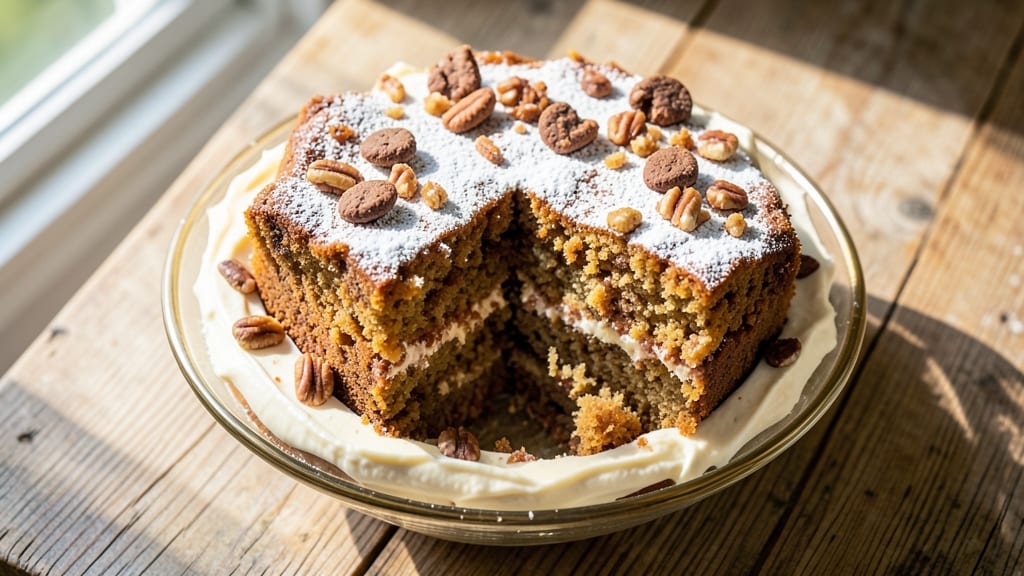
Here’s the Betty Crocker sweet potato cake recipe—your shortcut to moist, spiced layers that taste like autumn in every bite, no fancy techniques required. This recipe captures the brand’s signature approach using oil-based batter and a careful blend of warm spices that keep the cake tender yet rich.
I’ve baked countless versions, and this one consistently delivers that signature Betty Crocker texture: dense enough to hold slices, yet light enough to melt in your mouth.
The secret to success lies in the batter’s structure: pureed sweet potato replaces some of the liquid, while a touch of sour cream ensures moisture that lasts for days.
Cinnamon, nutmeg, and ginger work together to create that signature warm spice profile, while a hint of vanilla rounds out the flavor.
Unlike many sweet potato cakes, this version doesn’t rely on heavy syrup—it gets its natural sweetness from the potato itself, balanced by just enough sugar to enhance the spices.
Once baked, you’ll have a cake with a golden, slightly domed top and a crumb that’s fine yet substantial. Serve it warm with a dollop of whipped cream, or frost it with cream cheese glaze for a classic pairing.
The best part? This cake tastes even better the next day, making it ideal for meal prep or holiday gatherings. Let’s get baking—your kitchen will smell like comfort food in minutes.
For those who love make-ahead convenience, this cake keeps well wrapped at room temperature for up to 3 days or in the fridge for a week.
If you’re planning ahead, you can even bake it a day in advance and store it covered—just reheat slices briefly in the oven to restore that fresh-from-the-kitchen warmth. The recipe’s simplicity makes it perfect for both beginners and seasoned bakers alike.
Ingredients for betty crocker sweet potato cake
Sweet, spiced, and simple—just 13 ingredients for Betty Crocker's signature moist cake.
| Ingredient | Amount | Notes |
|---|---|---|
| Sweet Potatoes 🍠 | 1 ½ cups | Pureed, unsweetened, about 1 large |
| All-Purpose Flour 🌾 | 2 cups | Sifted for light texture |
| Granulated Sugar 🍚 | 1 ½ cups | White sugar preferred |
| Vegetable Oil 🫒 | 1 cup | Light or neutral flavor |
| Sour Cream 🥛 | ½ cup | Full-fat for moisture |
| Large Eggs 🥚 | 2 whole | Room temperature preferred |
| Vanilla Extract 🍯 | 1 tbsp | Pure vanilla for best flavor |
| Ground Cinnamon 🌿 | 2 tsp | Freshly ground for warmth |
| Ground Nutmeg 🌿 | ½ tsp | Freshly grated preferred |
| Ground Ginger 🌿 | 1 tsp | Freshly ground for zing |
| Baking Soda 🧂 | 1 tsp | For proper rise |
| Salt 🧂 | ½ tsp | Fine sea salt preferred |
| Whipped Cream 🥛 | 1 cup | For serving, optional |
The sweet potatoes are the star here. Orange-fleshed varieties like Jewel or Garnet work best—they’re naturally sweet and vibrant. I always grab organic sweet potatoes from Trader Joe's when I can, but any good-quality ones will do. Peel and boil them until tender, then puree until completely smooth. No lumps, or your cake will turn out dense. For the spices, Penzeys Spices or the bulk bins at Whole Foods are my go-to—they’ve got fresh-ground cinnamon and nutmeg that make all the difference. If you’re using pre-ground, toast them lightly in a dry pan for 30 seconds to wake up the flavors.
No sour cream? Plain Greek yogurt at half the amount works in a pinch, though the cake will be slightly tangier. Running short on vanilla? Vanilla bean paste adds specks of flavor magic. The oil is key—don’t substitute butter, or your cake will turn out dry. For a lighter texture, sift the flour twice. Need to cut sugar? Reduce by 2 tbsp and add 1 tbsp applesauce—it keeps the moisture without adding sweetness. And if you’re feeling fancy, swap the whipped cream topping for a cream cheese glaze—just mix 4 oz softened cream cheese with 1 tbsp powdered sugar and 1 tsp vanilla.
This cake keeps beautifully—3 days at room temperature wrapped in foil, or up to a week in the fridge. For leftovers, reheat slices in the oven at 300°F for 5-10 minutes to restore that fresh-baked warmth. I like to freeze portions too—wrap individually and they’ll stay good for up to 3 months. The batter can be prepped ahead and refrigerated for up to 24 hours—just let it sit at room temp for 30 minutes before baking. And trust me, the smell baking in your kitchen? Worth every minute.
Why You'll Love This Recipe
- Sweet Potato Magic: I swear by this recipe when I’m craving something moist but not overly sweet—just the right balance from roasting the sweet potatoes first. That step feels like cheating because you’re basically letting the oven do half the work while you mix up a simple batter.
- No-Bake Leftovers: Between us, this cake keeps beautifully for days. I’ll bake a whole batch on Sunday, slice it up, and stash it in the fridge. The sour cream in the batter keeps it tender, so even reheated, it’s still rich and satisfying—no sad, dry crumbs here.
- Budget Baking Win: Honestly, this is one of those recipes where you’re using pantry staples. Sweet potatoes are cheap, flour and sugar are always on hand, and a can of sour cream (or even plain yogurt) makes it work. For under $5, I’ve got a cake that feels like a treat.
- Crowd-Pleaser Any Day: This isn’t just for holidays or brunch—it’s my go-to for potlucks, book club gatherings, or even a lazy afternoon snack. The texture is light enough for kids to love but hearty enough that adults won’t roll their eyes. (Yes, even my picky husband asks for seconds.)
Step-by-step instructions for Betty Crocker sweet potato cake recipe
Here's how to create that perfect moist, spiced cake with minimal effort.
Prepare the Sweet Potato Puree
Start by peeling and cubing the 1.5 cups of sweet potatoes—about one large potato. Place them in a small pot of water and bring to a boil over medium-high heat. Cook for 10-12 minutes until fork-tender, then drain well.
Transfer the cooked sweet potatoes to a food processor or blender and puree until completely smooth. Let it cool to room temperature before using. The puree should be thick but pourable—no lumps allowed. If it's too thick, add a splash of water to reach the right consistency. This step ensures your cake stays moist and rich.
Mix Wet Ingredients Together
In a large mixing bowl, combine the cooled sweet potato puree with the 1 cup of vegetable oil and the 1.5 cups of granulated sugar. Whisk until fully blended, scraping down the sides of the bowl to incorporate everything evenly. This mixture should be smooth and slightly thick.
Next, add the 2 whole large eggs, the 0.5 cup of sour cream, and the 1 tablespoon of vanilla extract. Mix again until all ingredients are well incorporated. The batter should be creamy and uniform. This step ensures the cake has a tender crumb and stays moist for days.
Combine Dry Ingredients
In a separate bowl, sift together the 2 cups of all-purpose flour, the 2 teaspoons of ground cinnamon, the 1 teaspoon of ground ginger, the 0.5 teaspoon of ground nutmeg, the 1 teaspoon of baking soda, and the 0.5 teaspoon of salt. This helps aerate the flour and prevents lumps in your cake.
Gradually add the dry ingredients to the wet mixture, mixing just until combined. Avoid overmixing—stop as soon as the flour disappears. The batter will be thick but manageable. This step ensures a light, fluffy texture without developing too much gluten.
Bake to Golden Perfection
Preheat your oven to 350°F and grease a 9-inch round cake pan or line it with parchment paper. Pour the batter into the prepared pan and smooth the top with a spatula. Bake for 35-40 minutes, or until a toothpick inserted into the center comes out clean and the edges are lightly golden.
Once baked, remove the cake from the oven and let it cool in the pan for 10 minutes before transferring it to a wire rack to cool completely. This resting period helps the cake set properly and prevents it from falling apart. Serve warm or at room temperature with a dollop of the 1 cup of whipped cream for a delightful finish.
Pro Tips For Making Betty Crocker Sweet Potato Cake
- BOIL ‘EM UNTIL TENDER: Sweet potatoes straight from the bag? Skip it. Poke them with a fork first—if it slides in like butter, they’re ready. I learned this the hard way after a cake that tasted like glue. Boil ‘em skin-on in salted water until a knife glides in without fighting you (about 20-25 minutes). Drain well, then mash them smooth—no lumps, or your cake will be dense.
- WEIGH THE FLOUR: Scooping flour from the bag packs it too tight, and this cake hates extra bulk. Use a kitchen scale for the all-purpose flour—stick to 2 cups by weight (about 250g), not volume. My first few batches were dry and crumbly until I switched; the recipe’s balance of moisture and structure depends on this.
- DON’T OVERMIX THE BATTER: The second you add the sour cream and oil, stop stirring after 10 seconds. Overmixing turns this cake tough and chewy—like eating a rubber band. Fold just until the flour looks combined, then let the eggs and sugar do their job. I now use a spatula to gently lift the batter, and the texture stays light and tender.
- BAKE AT 350°F—NO EXCUSES: Betty Crocker’s recipe isn’t wrong here: 350°F is the sweet spot for even baking without a dome. I used to crank it to 375°F to hurry things up, but the edges burned before the center set. If your oven runs hot, lower the temp to 325°F and add 5-10 minutes. A toothpick with moist crumbs (not wet batter) is your goal.
Essential equipment for this dish
Must-Have Mixing Tools
Start with a large mixing bowl (I use my OXO Good Grips 5-quart bowl) for combining wet ingredients—it’s deep enough to handle the thick sweet potato batter without spills.
A hand mixer (like my KitchenAid KHM5211CP) saves time and effort when whipping eggs and sour cream, but a sturdy whisk works too if you prefer manual mixing.
For the dry ingredients, a fine-mesh sifter (like the Norpro 10-cup sifter) ensures no lumps in your flour-spice blend, which is key for that signature Betty Crocker texture. 🥄
Precision Baking Gear
Your oven’s accuracy matters—use an oven thermometer (I recommend the Thermoworks Oven Thermometer) to confirm it hits 350°F exactly.
For the cake pan, a 9-inch round cake pan (I prefer Wilton Perfect Results pans) with nonstick coating prevents sticking, but grease it with vegetable oil or line with parchment for extra insurance. A lightweight silicone spatula helps smooth the batter evenly in the pan without tearing the edges.
Sweet Potato Prep Essentials
Peeling and pureeing sweet potatoes efficiently requires a sharp chef’s knife (I use Mercer Culinary Genesis) and a food processor (my Ninja FP101 handles the job in seconds). For boiling, a small saucepan with a lid keeps water from splashing while cooking.
Pro tip: Save time by microwaving peeled sweet potato cubes for 5-6 minutes before boiling—they’ll soften faster. A fine-mesh strainer helps drain excess water after boiling for a smoother puree. 🍠
Optional Upgrades
For a cream cheese glaze, grab 4 oz cream cheese (I love Philadelphia brand) and a small saucepan to gently warm it with powdered sugar. A piping bag (like the Ateco 807) makes frosting easy, but a spoon works fine too.
If you’re freezing leftovers, plastic wrap and aluminum foil work best for airtight sealing. For extra spice warmth, a mortar and pestle lets you freshly grind cinnamon and nutmeg—worth it for that restaurant-quality flavor! 🌿
Budget-Friendly Swaps
Skip the hand mixer? Use a balloon whisk for eggs and sour cream—it takes longer but works. No food processor? A potato masher works for pureeing sweet potatoes (just strain out lumps). For the cake pan, a glass pie dish (like Pyrex) can substitute in a pinch.
And if you’re missing a sifter, simply whisk the dry ingredients in the bowl with a fork—it’s not ideal but gets the job done. The key is focus on the oil, sour cream, and proper mixing—those are non-negotiable for moisture! 💡
Nutrition facts
Frequently asked questions
Can I substitute regular potatoes for sweet potatoes in this recipe?
No, sweet potatoes are essential for this cake's signature flavor and moisture. Regular potatoes lack the natural sweetness and vibrant color that make this recipe special. If you're out of sweet potatoes, you can try yams (they're similar in texture), but the flavor will differ slightly. The cake won't have the same rich, spiced profile without them.
Why does my cake turn out dense instead of moist?
Overmixing the batter or using too much flour are common culprits. This recipe relies on the oil and sour cream for moisture, so make sure to measure carefully. Also, avoid overbaking—remove the cake when a toothpick comes out clean (around 35-40 minutes at 350°F). For extra moisture, brush the warm cake with simple syrup or add 1 extra tablespoon of sour cream to the batter.
Can I make this cake in a different pan size?
Yes, but you'll need to adjust the baking time. For a 9x13-inch pan, bake for 30-35 minutes, while a 6-inch pan will take 40-45 minutes. The key is to check for doneness with a toothpick. If using a different shape (like a bundt pan), reduce the baking time by 5-10 minutes and watch closely—these pans often bake faster due to their thinner walls.
How do I store leftovers to keep them fresh?
Wrap the cake tightly in plastic wrap or aluminum foil to preserve moisture. It stays fresh at room temperature for 2-3 days or in the fridge for up to 1 week. For longer storage, freeze slices individually wrapped in plastic for up to 3 months. To reheat, warm slices in the oven at 300°F for 5-10 minutes or microwave for 10-15 seconds to restore freshness.
Can I add nuts or chocolate to this cake?
Fold in 1 cup of chopped walnuts or pecans with the dry ingredients, or melt 1 cup of chocolate chips and swirl into the batter before baking. For a layered effect, press nuts into the batter after pouring it into the pan. Just reduce the flour by 2 tablespoons if adding bulkier mix-ins. Pro tip: Toast nuts for 5 minutes at 350°F before adding to enhance their flavor.