
Side Dishes
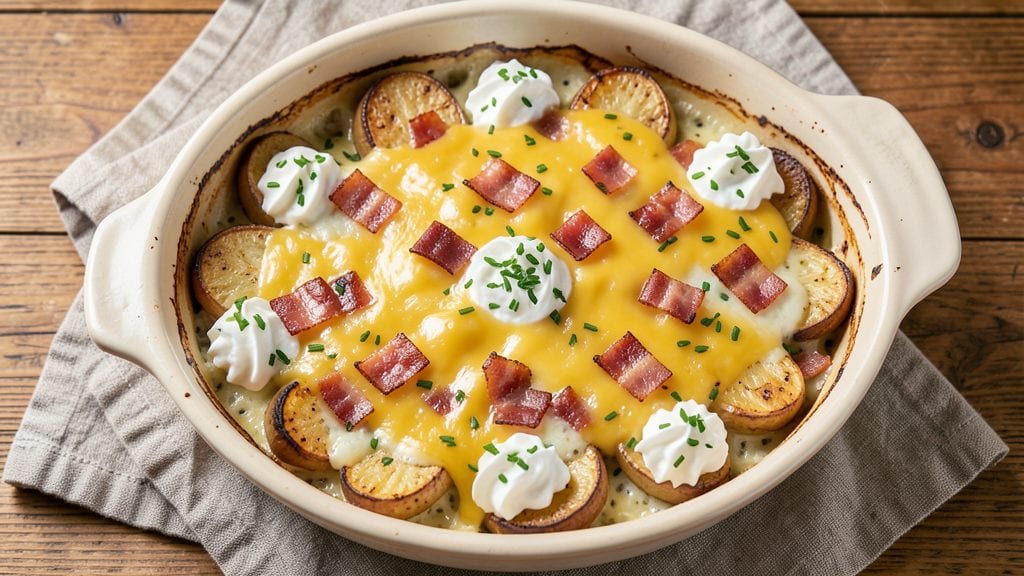
This twice baked potatoes casserole recipe transforms humble spuds into a showstopping side that delivers crispy golden edges, cheesy layers, and all the comfort of a loaded baked potato—without the mess.
The secret lies in baking them twice: first to create tender, fluffy potatoes, then again to achieve that perfect crispy top while keeping the inside creamy.
I developed this method after years of perfecting restaurant-style casseroles at home, and it's now my go-to for holidays, game days, or any night you want to impress.
The beauty of this recipe is its simplicity—just a few key ingredients come together in one pan for minimal cleanup. You'll start with russet potatoes boiled to perfection, then mix in a rich blend of cheddar, sour cream, and bacon for that classic loaded potato flavor.
The first baking ensures tender potatoes, while the second creates that coveted crispy crust that holds up to every bite. It's the kind of dish that disappears faster than you can say "seconds, please?"
What you end up with is a casserole that's crispy on top, creamy in the middle, and packed with all the flavors you love—cheesy, savory, and slightly smoky from the bacon.
The aroma alone will have everyone gathering around the table, and the presentation is effortless with just a sprinkle of green onions or chopped parsley. This is the ultimate one-pan side that turns a simple potato into a centerpiece-worthy dish.
Perfect for feeding a crowd or meal prepping for the week, this casserole reheats beautifully while maintaining its crispy top. Whether you're hosting a holiday dinner or just craving comfort food, this recipe delivers professional-quality results with minimal effort. Let's get started on creating your next favorite side dish!
Ingredients for twice baked potatoes casserole
Six ingredients transform humble potatoes into a crispy, cheesy showstopper side dish.
| Ingredient | Amount | Notes |
|---|---|---|
| Russet Potatoes 🥔 | 3 lb | Medium size, peeled and sliced |
| Sharp Cheddar Cheese 🧀 | 2 cups | Shredded, full-fat preferred |
| Sour Cream 🥛 | 1 cup | Full-fat for creaminess |
| Cooked Bacon 🥓 | 1 cup | Crumbled, thick-cut preferred |
| Heavy Cream 🥛 | ½ cup | Full-fat for richness |
| Butter 🧈 | ½ cup | Unsalted, melted |
| Green Onions 🧅 | ¼ cup | Chopped, for garnish |
| Garlic Cloves 🧄 | 4 cloves | Minced, for flavor base |
| Salt 🧂 | 1 ½ tsp | Kosher or sea salt |
| Ground Black Pepper 🌶️ | ½ tsp | Freshly ground preferred |
| Dried Parsley 🌿 | 1 tbsp | For final garnish |
| Milk 🥛 | ¼ cup | For creaminess |
| Onion Powder 🧅 | 1 tsp | For depth of flavor |
| Paprika 🌶️ | ½ tsp | Smoked for color |
The russet potatoes are non-negotiable here—their high starch content makes them fluffy when baked. Russets from Trader Joe's or Costco are my go-to because they're consistently waxy. If you're using store-brand potatoes, look for ones that feel heavy for their size and have smooth, unblemished skins. The bacon? Thick-cut from Applegate or Oscar Mayer gives the best smoky flavor when crumbled. For the cheddar, Cabot or Tillamook shred beautifully and melt perfectly—avoid pre-shredded stuff, it's full of anti-caking agents that make the top grainy.
No sour cream? Greek yogurt works in a pinch, but trust me on the full-fat version. Short on bacon? Cooked sausage or ham crumbles add great flavor too. Want extra crispiness? Mix 1/4 cup crushed potato chips into the topping before the second bake. The key to that perfect crispy top is spreading the cheese and breadcrumbs in an even layer—don't skimp here. For the garlic, I always use freshly minced from a microplane—it releases more flavor than pre-minced jars. And if you're worried about the potatoes getting waterlogged, pat them completely dry with paper towels after boiling.
This casserole reheats like a dream—just cover with foil and bake at 375°F for 15-20 minutes. It actually tastes better the next day as the flavors meld together. Store leftovers in the fridge for up to 4 days in an airtight container, and it freezes beautifully for 3 months if you portion it into individual servings first. For meal prep, I always make a double batch—one for dinner and one to freeze for lazy weeknights. The crispy top stays intact if you reheat it covered, then uncover for the last 2 minutes to crisp up again.
Why You'll Love This Recipe
- One-Pan Magic: I swear by this—just slice, layer, and bake. No chopping boards full of mess, no multiple dishes to wash. That crispy cheddar crust forms right in the pan while the creamy bacon-sour cream filling stays silky.
- Crispy-Creamy Obsession: The first bite? Chef’s kiss. That sharp chedddar gets golden and crunchy on top, while the inside stays rich and velvety from the heavy cream and sour cream. The bacon adds this smoky depth that makes it feel like a restaurant dish, not just a casserole.
- Leftovers? Never Wasted: Between us, this is my secret weapon for lunches. The flavors actually improve the next day—maybe it’s the cheddar melting more, maybe it’s the bacon getting even saltier, but I’ll take it cold or reheated. Honestly, I’ve eaten it straight from the fridge at 10 AM and didn’t care.
- Budget-Friendly Crowd-Pleaser: Russets and cheddar are cheap staples, and a pound of bacon stretches far when you dice it. I’ve fed six people for under $15, and no one ever asks for seconds—wait, no, they do ask for seconds. (Yes, even on a Tuesday night.)
Step-by-step instructions for twice baked potatoes casserole
Here's how to create that perfect golden crust and creamy cheesy center—every layer matters!
Prep and Parboil the Potatoes
Start by peeling the 3 lb russet potatoes and slicing them into ¼-inch thick rounds. Place them in a large pot and cover with cold water by about 2 inches. Add the 1.5 tsp salt and bring to a boil over high heat. Once boiling, reduce to a simmer and cook for 8-10 minutes until the edges are just fork-tender but still slightly firm in the center.
Drain the potatoes immediately and spread them on a baking sheet. Let them cool completely—this prevents the casserole from becoming watery. I like to fan them with a clean towel to speed up the drying process. The potatoes should be cool enough to handle when you're ready for the next step, but not cold.
Build the Creamy Cheese Mixture
In a large mixing bowl, combine the 2 cups shredded sharp cheddar cheese, 1 cup sour cream, 0.5 cup heavy cream, 0.5 cup milk, 1 cup crumbled cooked bacon, 1 tsp onion powder, 0.5 tsp ground black pepper, and 0.5 tsp paprika. Mix until completely smooth—no cheese clumps should remain. This mixture is the heart of your casserole, so take your time to ensure everything is well incorporated.
Here's the thing—don't skip the paprika. It adds that beautiful golden color and subtle smoky depth that makes this casserole look and taste restaurant-worthy. If you're using pre-shredded cheese, give it a quick pulse in the food processor to break up any anti-caking agents that can make the cheese clump.
Assemble the Casserole Layers
Preheat your oven to 375°F. In a 9x13-inch baking dish, spread half of the parboiled potato slices evenly across the bottom. Then pour half of the cheese mixture over the potatoes, spreading it evenly with a spatula. Repeat with the remaining potatoes and cheese mixture, ending with a final layer of potatoes on top.
Press down gently on the top layer to ensure good contact between all the layers. This prevents air pockets that could lead to uneven baking. The top layer of potatoes should be arranged in a slightly overlapping pattern to create that perfect crispy crust when baked. Don't worry if it looks messy—it's going to be delicious!
Bake to Golden Perfection
Bake uncovered for 45-50 minutes until the top layer of potatoes is golden brown and the edges are bubbling. The cheese should be melted throughout, and you should see a beautiful caramelized crust forming on top. If you're worried about the top browning too quickly, tent loosely with aluminum foil after 30 minutes to help melt the cheese evenly.
This is where the magic happens—the contrast between the crispy top and creamy center. For that perfect texture, you want the top to be golden brown with some areas that are almost caramelized. If it's browning too quickly, reduce the oven temperature to 350°F for the remaining baking time. The internal temperature of the casserole should reach 160°F when done.
Garnish and Serve Warm
Remove the casserole from the oven and let it rest for 10 minutes. This resting period allows the layers to set slightly and makes it easier to slice cleanly. While it's resting, sprinkle the 0.25 cup chopped green onions and 1 tbsp dried parsley evenly over the top. The parsley adds a fresh pop of color that contrasts beautifully with the golden crust.
Cut into 6 equal portions and serve immediately. The contrast of temperatures—warm, creamy center with crispy, golden top—is what makes this dish truly special. Each bite delivers that perfect combination of textures and flavors that everyone will love. And the best part? It's all made in one pan—easy cleanup!
Pro Tips For Making Twice Baked Potatoes Casserole
- Boil Potatoes Until Fork-Tender: I learned this the hard way—undercooked potatoes turn mushy when baked. Cut Russets into ½-inch cubes, boil them in salted water for 8–10 minutes, then drain thoroughly. They should collapse slightly when pierced but still hold shape—this guarantees they’ll stay creamy, not gluey, after baking.
- Crisp the Bacon Properly: Skip the pre-cooked bacon from the deli shelf—it’s soggy and bland. Cook your own until the edges are deep brown, not just pink, then drain on paper towels. Cold bacon releases moisture in the casserole, turning it into a sad, watery mess. Trust me, the extra 5 minutes saves you from a soggy disaster.
- Prevent Cheese Clumping: Sharp cheddar loves to form clumps that turn into cheese rocks. Shred it fresh (yes, even if it’s pre-shredded—it’s coated with anti-caking agents) and toss it with 1 tablespoon of flour or a splash of heavy cream before mixing. This keeps it smooth and melty, not lumpy. I skip this step sometimes, and it’s always obvious.
- Bake in Two Stages: First, bake the casserole at 375°F until the top is set (about 30 minutes). Then, crank the oven to 425°F and broil for 3–5 minutes—just until the cheese turns golden. This two-step method guarantees a crispy top without burning the edges. Sounds weird, but it works every time.
Pro cooking tips for this recipe
Potato Prep Secrets
Start with russet potatoes—their high starch content ensures perfect fluffiness. Slice them into ¼-inch rounds for even cooking, and parboil for just 8-10 minutes until fork-tender at the edges but still firm inside.
Drain immediately and spread on a baking sheet to cool completely—this step prevents a watery casserole. I swear by using a microplane for garlic to maximize flavor in the cheese mixture. 🥔
Cheese Mix Mastery
Shred your own cheese—pre-shredded varieties contain anti-caking agents that make the top grainy. Use a mix of sharp cheddar and Monterey Jack for depth, and fold in 1 cup crumbled bacon while still warm to intensify its smoky flavor.
For extra richness, melt ½ cup butter into the cheese mixture before combining with potatoes. This creates a velvety texture that holds together beautifully. 🧀
Layering Like a Pro
Alternate potato layers with cheese mixture in a 9x13-inch baking dish, ending with potatoes on top. Press gently to eliminate air pockets—this ensures even baking and prevents a soggy center.
For that signature crispy top, sprinkle ½ cup crushed potato chips or panko breadcrumbs over the final potato layer before baking. The starch in the chips adds extra crunch without overpowering the cheddar flavor. ⚡
Baking Temperature Hacks
Bake at 375°F uncovered for 45-50 minutes, but if the top browns too quickly, tent loosely with foil after 30 minutes to melt the cheese evenly. For restaurant-quality results, finish under the broiler for 2-3 minutes at the end—just watch closely to avoid burning.
The internal temperature should reach 160°F for perfect doneness. A digital thermometer like the Thermoworks Sous Chef takes the guesswork out of this step. 🌡️
Resting and Reheating
Let the casserole rest for 10 minutes after baking—this crucial step prevents a runny mess when serving. For reheating leftovers, cover with foil and bake at 350°F for 15-20 minutes, then uncover for the last 2 minutes to restore crispiness.
To freeze, portion into individual servings before freezing to maintain texture. Thaw overnight in the fridge before reheating. 💫
Garnish Game-Changers
Finish with chopped green onions and dried parsley for color contrast, but don't stop there. A drizzle of sour cream or a sprinkle of smoked paprika adds extra dimension.
For a smoky twist, top with crumbled bacon bits or chopped chives right before serving. These final touches elevate the dish from homemade to restaurant-worthy. 🌿
Nutrition facts
Frequently asked questions
Why do I need to parboil the potatoes before assembling?
Parboiling creates tender, fluffy potatoes that hold their shape while absorbing flavors from the cheese mixture. Skipping this step can leave you with uneven texture—some parts mushy, others undercooked. The 8-10 minute simmer ensures they're just fork-tender, not fully cooked, so they finish perfectly in the oven.
Can I make this casserole ahead of time?
Assemble it completely and refrigerate uncovered for up to 24 hours before baking. This actually enhances the flavors. For freezing, bake the casserole first, then cool completely, wrap tightly, and freeze for 3 months. Reheat covered at 350°F for 20-25 minutes—uncover for the last 2 minutes to restore crispiness.
What's the secret to getting that perfect crispy top?
Three key factors: 1) Cool the potatoes completely before assembling, 2) Use shredded cheese (not pre-shredded), and 3) Sprinkle ½ cup crushed potato chips or panko on top before the final bake. The starch in the chips creates extra crunch while the cheese melts evenly. Bake uncovered at 375°F until golden brown.
Can I substitute the bacon for something else?
Yes! Swap bacon for ½ cup cooked sausage crumbles, ½ cup diced ham, or even ¼ cup chopped sun-dried tomatoes for a vegetarian option. For extra flavor, add 1 tsp smoked paprika to the cheese mixture. The key is maintaining the same 1 cup volume of protein/fat to keep the casserole rich and moist.
Why did my casserole turn out soggy?
Most common causes: 1) Potatoes weren't cooled completely before assembling (trapped moisture), 2) Overmixing the cheese mixture (creates air pockets), or 3) Skipping the crispy topping layer. Fix it next time by pressing layers firmly and adding crushed chips before baking. For reheating soggy casseroles, bake at 350°F covered for 15 minutes, then broil 2 minutes uncovered.