
Side Dishes
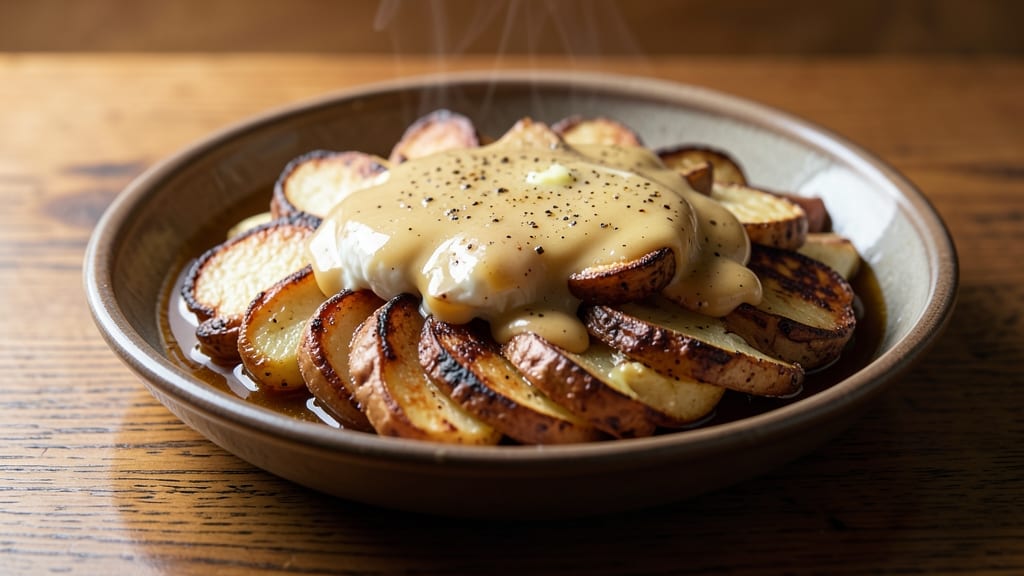
This traditional Delmonico potatoes recipe delivers the signature crispy layers and creamy centers that make it a restaurant classic. After years of perfecting the technique, I’ve cracked the code for achieving that ideal texture—golden, caramelized edges with tender, fluffy interiors that melt in your mouth.
The secret lies in precise timing and layering, ensuring each slice gets the right amount of moisture and browning.
The process begins with thinly sliced potatoes that are parboiled just enough to soften without falling apart. After browning in butter until deeply golden, they’re layered in a baking dish with a rich, creamy sauce—traditionally made with chicken or vegetable broth, cream, and a touch of mustard for depth.
This method transforms simple potatoes into an elegant side that pairs perfectly with roasted meats or holiday feasts.
What sets these apart is the crispy, caramelized crust that forms on the top layer, while the bottom remains tender and moist. The creamy sauce binds everything together, creating a dish that’s both comforting and impressive.
Whether you’re serving a Sunday dinner or a holiday meal, these potatoes will elevate any table with their restaurant-quality texture and flavor.
Ready in about 45 minutes, this recipe requires patience but no advanced skills—just attention to detail. The result is a dish that looks and tastes like it belongs on a fine-dining menu, yet is simple enough to make at home. Let’s get started on mastering this timeless classic.
Ingredients for traditional delmonico potatoes
Twelve ingredients transform simple potatoes into a restaurant-worthy masterpiece with crispy, caramelized layers.
| Ingredient | Amount | Notes |
|---|---|---|
| Russet Potatoes 🥔 | 3 lb | Thinly sliced, uniform thickness |
| Unsalted Butter 🧈 | ¾ cup | Cold, cut into small cubes |
| Heavy Cream 🥛 | 1 cup | Full-fat for optimal texture |
| Chicken Broth 💧 | 1 ½ cups | Low-sodium preferred, homemade or quality store-bought |
| Dijon Mustard 🍯 | 1 tbsp | For depth of flavor |
| Salt 🧂 | 1 ½ tsp | Kosher or sea salt, adjust to taste |
| Freshly Ground Black Pepper 🌶️ | ½ tsp | Freshly ground preferred |
| Garlic Cloves 🧄 | 2 cloves | Minced for sauce |
| Shallots 🧅 | 2 whole | Minced, for sauce |
| Fresh Thyme Leaves 🌿 | ¼ cup | Chopped, for sauce |
| Parmesan Cheese 🧀 | ½ cup | Freshly grated, for topping |
| All-Purpose Flour 🌾 | 2 tbsp | For thickening sauce |
Russet potatoes are non-negotiable here—their high starch content and low moisture yield that signature crispy texture. Buy organic if possible, as the skins stay intact better during slicing. For the best results, grab potatoes that are firm and free from sprouts or soft spots. If you can't find Russets, Yukon Golds will work in a pinch, though they won't be quite as crispy. Slice them uniformly—about 1/8-inch thick—using a mandoline for precision. Most grocery stores carry Russets year-round, but specialty markets like Whole Foods often have fresher stock. Store potatoes in a cool, dark place until ready to use, but avoid refrigeration until after slicing.
No heavy cream? Half-and-half with an extra splash of milk works, though the texture won't be as rich. Substituting chicken broth for vegetable broth adds subtle depth, but the mustard is key—Dijon mustard provides the signature tang, though whole-grain mustard can be used if unavailable. Fresh thyme is ideal, but dried thyme at one-third the amount suffices in a pinch. For the butter, European-style (like Plugrá) adds extra flavor, but unsalted butter from any reputable brand works fine. The Parmesan topping should be freshly grated—pre-grated cheese clumps and lacks the same depth. If you're short on time, Pecorino Romano is a suitable substitute, though it has a sharper bite.
Pre-sliced potatoes should be kept submerged in cold water until ready to cook to prevent browning. The sauce can be made a day ahead and reheated gently—just add a splash of broth or cream to loosen it. Once assembled, these potatoes reheat beautifully in the oven at 375°F for 15-20 minutes, covered with foil to retain moisture. Leftovers keep for 3-4 days in the refrigerator, though they're best enjoyed fresh. For freezing, assemble the dish, cover tightly, and bake as directed before freezing—this preserves the crispy texture better than freezing pre-baked layers. Portion into individual servings for easy reheating later.
Why You'll Love This Recipe
- One-Pot Magic: I swear by this recipe because it’s all in one pan—no chopping boards left sticky, no extra dishes to scrub. Just slice those Russets, layer them with butter and broth, and let the oven do the work while you sip your coffee.
- Rich Without Effort: That creamy Dijon-mustard sauce? It’s where this dish gets its soul. The mustard cuts through the richness of the butter and cream, while the chicken broth keeps it savory without tasting like a recipe. Honestly, the first time I made it, I nearly licked the pan.
- Leftovers That Shine: Between us, this is my go-to for meal prep. The potatoes reheat beautifully—just a quick zap in the microwave or a few minutes in the oven—and they taste just as good the third day as they did fresh. My lunchbox thanks me every time.
- Budget-Friendly Luxury: You’d never guess how affordable this is. Russets are cheap, butter and broth stretch far, and a little Dijon elevates everything. It’s the kind of dish that makes you feel fancy without breaking the bank—perfect for when you want comfort but don’t want to splurge.
Step-by-step instructions for traditional Delmonico potatoes
Master the classic technique for perfectly layered, golden potatoes with creamy sauce.
Prepare and Layer the Potatoes
Preheat your oven to 375°F. Using a mandoline or sharp knife, slice the 3 lb russet potatoes into ¼-inch thick rounds—uniform thickness ensures even cooking. Soak the slices in cold water for 10 minutes to remove excess starch, then drain and pat completely dry with paper towels.
In a 9x13-inch baking dish, arrange the potato slices in a single layer, slightly overlapping if needed. Brush each layer lightly with ½ cup of the melted unsalted butter (melt 0.5 cup and let cool slightly). Season each layer generously with ½ tsp salt and ¼ tsp freshly ground black pepper. Repeat until all slices are layered, ending with a final butter brushing on top.
Bake Until Golden and Tender
Cover the baking dish tightly with aluminum foil and bake for 45 minutes. This steaming phase ensures the potatoes cook through without browning. After 45 minutes, remove the foil and increase the oven temperature to 425°F. Return the dish to the oven and bake uncovered for an additional 15-20 minutes until the edges are deep golden brown and crispy.
Here's the thing—don't skip the foil step. It prevents the potatoes from drying out while they cook through. The final uncovered bake creates that signature crispy exterior we're after. You'll know it's ready when the edges pull away from the dish slightly and develop a rich, caramelized color.
Prepare the Creamy Sauce
While the potatoes bake, prepare the sauce. In a medium saucepan, melt the remaining 0.25 cup unsalted butter over medium heat. Add the 2 minced garlic cloves and 2 minced shallots, cooking for 2 minutes until fragrant but not browned.
Stir in the 2 tbsp all-purpose flour and cook for 1 minute to remove the raw flour taste. Slowly whisk in the 1.5 cups chicken broth and 1 cup heavy cream, bringing the mixture to a gentle simmer. Reduce heat to low and let it thicken for 5-7 minutes, stirring occasionally. Stir in the 1 tbsp Dijon mustard, 0.25 cup chopped fresh thyme leaves, remaining 1 tsp salt, and ¼ tsp black pepper. The sauce should coat the back of a spoon but still be pourable.
Assemble and Serve
Remove the baked potatoes from the oven and pour the warm sauce evenly over the top. Sprinkle the 0.5 cup freshly grated parmesan cheese over the entire dish. Return to the oven for 5-7 minutes to melt the cheese and let the sauce absorb slightly into the crispy layers.
Let the potatoes rest for 10 minutes before serving. This resting period allows the sauce to fully meld with the potatoes, creating that perfect balance of crispy edges and creamy centers. Serve immediately with the sauce spooned over each portion for an authentic restaurant-style presentation.
Pro Tips For Making Traditional Delmonico Potatoes
- Parboil First: Russets stay dry and fluffy when you blanch them in salted boiling water for 5 minutes before roasting—this step is non-negotiable. I learned this after making a batch where the outsides burned before the centers cooked, and now my potatoes never turn out gummy.
- Use Cold Butter: Fold in cold, cubed butter at the end—don’t melt it first. The cold fat creates pockets of richness that blend into the cream sauce without making it greasy. (Yes, it looks weird at first, but it works.)
- Reduce Broth Early: Simmer the chicken broth down to about ½ cup before adding it to the potatoes—this concentrates the flavor and prevents a watery sauce. I used to add it straight from the pot and wondered why my dish tasted bland.
- Whisk Mustard Last: Temper the Dijon mustard with a splash of warm cream before mixing it into the sauce—this prevents curdling and lets the flavor meld smoothly. Skip this, and you’ll get a tangy, lumpy mess.
Troubleshooting this recipe
Uneven Browning
If your Delmonico potatoes develop uneven browning, it’s likely due to inconsistent heat distribution or overlapping slices blocking airflow. I’ve found that using a 9x13-inch baking dish with a glass or ceramic base (like CorningWare) helps distribute heat more evenly than metal pans.
Also, avoid overlapping potato slices by more than 1/4 inch—this creates steam pockets that prevent proper browning. For extra insurance, rotate the dish halfway through the uncovered baking phase. 🌡️
Sauce Too Thin
The sauce might turn out too thin if you rush the thickening process or overestimate the potato absorption. Always reduce the sauce on low heat for at least 5-7 minutes—stirring constantly prevents scorching while allowing the starch to fully activate.
If it’s still too thin after thickening, mix 1 tsp cornstarch with 1 tbsp cold water, then whisk it into the sauce. Let it simmer for 2 more minutes to achieve the perfect consistency. I’ve also had success using arrowroot powder instead of flour for a glossier finish.
Potatoes Too Dry
Dry potatoes usually result from overbaking or insufficient moisture during the initial steaming phase. Never skip the 45-minute covered bake at 375°F—this is where the potatoes develop their tender interior. If you’re worried about drying out, add 2 tbsp broth to the sauce before pouring it over the potatoes.
Another trick? Brush the top layer with an extra 1 tbsp melted butter before the final bake—this creates a protective seal that locks in moisture while promoting browning.
Sauce Separating
Sauce separation happens when dairy and liquid aren’t properly emulsified during cooking. To prevent this, whisk the sauce vigorously while adding the broth and cream, and never let it boil vigorously.
If separation occurs, place the saucepan over low heat and whisk in 1 tbsp cold butter, a few drops at a time, until smooth. For extra insurance, temper the cream by slowly mixing it into the warm broth first before combining with the butter-flour mixture.
This gradual temperature adjustment keeps the sauce stable. 💡
Potatoes Not Cooking Through
Undercooked potatoes often mean the initial baking time was insufficient or the oven temperature fluctuated. Always use an oven thermometer to confirm your oven actually reaches 375°F—many home ovens run 25°F hotter or colder than set.
If the center slices feel firm after baking, tent the dish with foil and return to the oven for 10-15 more minutes. For extra security, I like to test a slice from the middle of the stack—if it’s still slightly resistant, it needs more time.
The edges should pull away from the dish slightly when done.
Grainy Texture
A grainy texture usually stems from overworking the sauce or using potatoes with too much starch. To avoid this, pat the potato slices completely dry before layering—excess moisture creates steam that prevents proper browning.
For the sauce, whisk just until combined after adding flour, and avoid over-stirring once the liquid is incorporated. If you’re using very starchy potatoes, soak the slices in cold water for 15 minutes instead of 10 to remove some of the excess starch before draining.
This simple adjustment makes a noticeable difference in texture. 🥔
Nutrition facts
Frequently asked questions
Why do Delmonico potatoes need two different baking temperatures?
The 375°F phase steams the potatoes gently to cook them through without browning, while the 425°F finish creates that signature crispy crust. This two-stage approach prevents drying while building flavor through caramelization. Think of it as a controlled "browning boost" after the potatoes are tender inside.
Can I make this recipe without heavy cream?
Yes! Replace the heavy cream with 1 cup whole milk plus 2 tbsp sour cream for a lighter texture, or use 1 cup coconut cream for a dairy-free version. The sauce will be slightly less rich, but the technique remains the same. For best results, reduce the sauce longer to compensate for the lower fat content.
What's the best way to reheat leftover Delmonico potatoes?
Cover the dish tightly with foil and reheat at 350°F for 15-20 minutes—this prevents drying while restoring crispiness. For individual portions, microwave for 1-2 minutes covered with a damp paper towel, then finish under the broiler for 2-3 minutes to refresh the crust. Never reheat uncovered in the microwave, or you'll lose that golden texture.
How do I know when the sauce is properly thickened?
The sauce should coat the back of a spoon but still be pourable—like heavy cream. If it's too thin, simmer longer; if too thick, whisk in 1 tsp warm broth to loosen. Test by dipping a spoon in: the sauce should leave a visible trail but not drip off. This consistency ensures perfect absorption into the crispy layers.
Are Delmonico potatoes gluten-free?
The traditional recipe uses flour to thicken the sauce, but you can easily make it gluten-free by substituting 2 tbsp cornstarch or arrowroot powder mixed with 2 tbsp cold water. Whisk this into the sauce after the butter-flour roux to achieve the same velvety texture without gluten. Always check your broth and mustard labels too for hidden gluten sources.