
Side Dishes
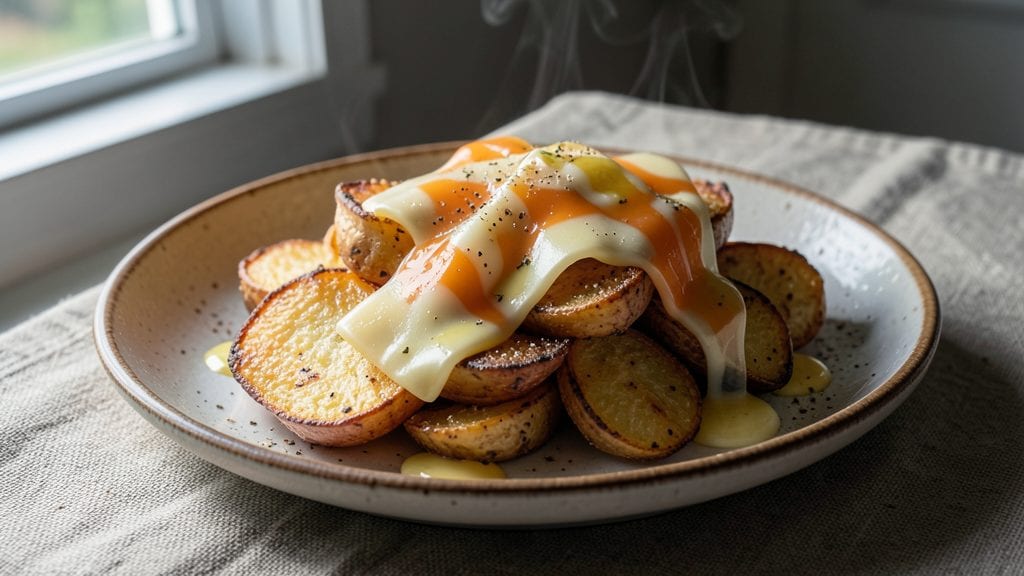
This sinful potatoes recipe delivers the kind of indulgence that turns a simple side dish into the star of the meal. The buttery vinegar-kissed crunch meets melty cheese creates a texture and flavor combination that's impossible to resist.
I developed this recipe after years of testing ways to elevate potatoes beyond the ordinary, and the results are worth every calorie.
The magic happens in the oven, where crispy potato slices transform into golden, vinegar-brushed layers that hold their shape while developing a satisfying crunch. A blanket of melted cheese—sharp cheddar and creamy gouda—bakes into a bubbly, golden crust that seals in all the rich, savory goodness.
The secret lies in the balance of acidity from the vinegar and the depth of the cheese, creating a dish that's both comforting and sophisticated.
What you'll end up with is a dish that's perfect for feeding a crowd or as a hearty main course when paired with a simple salad. The buttery aroma fills your kitchen, and the first bite delivers that perfect contrast of crispy edges and creamy, cheesy centers.
This is the kind of recipe that disappears quickly, so make sure to have extra on hand—or better yet, double the batch.
Whether you're serving it at a holiday gathering or as a weeknight comfort food, these sinful potatoes will become a regular in your rotation. The best part? It's easier to make than you'd think, with just a few simple steps and ingredients you likely already have on hand.
Let's get started on creating this irresistible dish that will have everyone asking for seconds.
Ingredients for sinful potatoes
Pantry staples plus a few key ingredients—these are the stars of your indulgent potato masterpiece.
| Ingredient | Amount | Notes |
|---|---|---|
| Russet Potatoes 🥔 | 3 lb | Thinly sliced, uniform thickness |
| Unsalted Butter 🧈 | ½ cup | Cold, cubed for even coating |
| White Wine Vinegar 🍷 | ¼ cup | Not balsamic, for tangy crunch |
| Sharp Cheddar Cheese 🧀 | 1 ½ cups | Shredded, not pre-shredded |
| Gouda Cheese 🧀 | 1 cup | Smoked or mild, shredded |
| Garlic Powder 🧄 | 1 tsp | Freshly ground preferred |
| Onion Powder 🧅 | 1 tsp | For depth, not fresh |
| Salt 🧂 | 1 ½ tsp | Kosher or sea salt |
| Black Pepper 🌶️ | ½ tsp | Freshly cracked preferred |
| Fresh Thyme Leaves 🌿 | ¼ cup | Chopped, or 1 tsp dried |
| Olive Oil 🫒 | 2 tbsp | For tossing potato slices |
The potatoes are everything here. Grab Russet potatoes—they're the starchy workhorses that crisp up perfectly. Three pounds feeds a crowd, but you can halve it for a smaller batch. Look for firm, blemish-free potatoes at Whole Foods or your local grocery store's produce section. The thinner you slice them (about 1/8-inch), the crispier they'll get. I use a mandoline for even slices, but a sharp knife works too—just be careful with those fingers! Pro tip: Soak the sliced potatoes in cold water for 20 minutes before cooking to remove excess starch, which makes them extra crispy.
No white wine vinegar? Apple cider vinegar or lemon juice works in a pinch—just use the same amount. Pre-shredded cheese? Skip it—it's full of anti-caking agents that prevent proper melting. Want to get fancy? Swap the Gouda for Gruyère—it adds a nutty depth that's worth the splurge. The butter needs to be cold for even coating, so take it out of the fridge while you prep everything else. Fresh thyme is ideal, but dried works at one-third the amount. If you're feeling adventurous, add a pinch of smoked paprika to the cheese mix for a subtle kick.
These potatoes reheat beautifully—just pop them in a 350°F oven for 10-15 minutes until bubbly. They're even better the next day, so make extra! Store leftovers in an airtight container for up to 4 days in the fridge. For a crowd, double the recipe and bake in two pans. The aroma alone will have everyone heading to the kitchen. Trust me, this dish disappears fast—so plan accordingly!
Why You'll Love This Recipe
- One-Pan Magic: I swear by this—no chopping boards, no extra pans, just slice, layer, and bake. The Russets soften perfectly while the cheeses melt into golden pockets, all without a single dish to scrub.
- Cheese Overload Joy: That sharp cheddar and nutty Gouda combo? It’s like a hug for your taste buds. The vinegar cut keeps it bright, so it’s rich but never heavy—trust me, you’ll want seconds.
- Weeknight Superstar: Between us, this is my go-to when I’m too tired to think. Throw it together before work, pop it in the oven on the way home, and dinner’s ready. (Yes, even on a Tuesday night.)
- Budget Win: Russets and cheese stretch far here—no fancy ingredients, just flavor. I’ve made this feed six people for under $15, and honestly? No one ever guesses how cheap it was to make.
Step-by-step instructions for sinful potatoes recipe
Here's how to transform simple russet potatoes into an irresistible, crispy, cheesy masterpiece.
Prep and Slice the Potatoes for Perfect Crispiness
Start by thoroughly washing the 3 lb russet potatoes under cold water to remove any dirt. Use a mandoline slicer or sharp knife to cut them into ¼-inch thick slices—uniform thickness ensures even cooking. I like to slice them lengthwise first, then cut crosswise to maintain consistent size.
As you slice, soak the potato slices in cold water for 10 minutes to remove excess starch, which prevents them from sticking together. Drain well and pat completely dry with paper towels. This step is crucial—wet potatoes steam instead of crisping. Arrange the slices on paper towels in a single layer and let them air-dry for another 10 minutes while you prepare the seasoning.
Season and Toss for Maximum Flavor
In a large bowl, combine the 2 tablespoons olive oil, 1.5 teaspoons salt, 0.5 teaspoon black pepper, 1 teaspoon garlic powder, 1 teaspoon onion powder, and 0.25 cup chopped fresh thyme leaves. Mix well to create an even coating—this ensures every bite packs bold flavor.
Add the dried potato slices to the bowl and toss gently but thoroughly to coat each slice evenly. I like to use my hands for this step—it helps distribute the seasoning more uniformly than a spoon. Let the seasoned potatoes sit for 5 minutes while you prepare the oven. This resting time allows the seasonings to adhere better and enhances flavor penetration.
Create the Buttery Vinegar Coating
In a separate bowl, melt the 0.5 cup unsalted butter until just liquid. Add the 0.25 cup white wine vinegar and whisk until fully combined. The vinegar will create that signature tangy crunch we're after. Transfer this mixture to a large resealable plastic bag and add the seasoned potatoes.
Seal the bag and gently massage the potatoes for 1-2 minutes to coat them thoroughly with the buttery vinegar mixture. The potatoes should look glossy and well-coated. This step is what makes these potatoes truly sinful—the combination of rich butter and bright vinegar creates an irresistible flavor profile. Let the coated potatoes sit for another 10 minutes while you preheat the oven.
Bake Until Golden and Crispy
Preheat your oven to 425°F and line two large baking sheets with parchment paper. Arrange the coated potato slices in a single layer on the prepared baking sheets, leaving ½-inch space between each slice. This prevents them from steaming and ensures maximum crispiness.
Bake for 25-30 minutes, flipping the potatoes halfway through, until they're deep golden brown and crispy on both sides. You'll know they're ready when they release a wonderful buttery aroma and the edges look slightly caramelized. The potatoes should be tender when pierced with a fork but still hold their shape.
Add Cheese and Finish Under the Broiler
Remove the baking sheets from the oven and sprinkle the potatoes evenly with the 1.5 cups sharp cheddar cheese and 1 cup gouda cheese. Use a spatula to gently toss the potatoes, ensuring they're well-coated with the melted cheese mixture from the previous step.
Return the baking sheets to the oven and broil for 2-3 minutes until the cheese is fully melted and bubbly. Watch carefully—you want the cheese to be gooey and golden, not burnt. The potatoes should be perfectly crispy on the outside with melty, stretchy cheese on top. Serve immediately while still hot and crispy for that ultimate sinful experience!
Pro Tips For Making Sinful Potatoes
- CUT THICK, NOT UNIFORM: Russets are stubborn—slice them 1.25 to 1.5 inches thick (yes, uneven is fine) so the edges crisp while the centers stay tender. I used to obsess over even cuts, but thicker slices mean fewer batches in the oven and a better texture contrast.
- SALT THE POTATOES FIRST: Toss the sliced Russets with 1 tsp salt per pound and let them sit in a colander for 20 minutes before roasting. This draws out moisture so they crisp instead of steam into mush—trust me, your future self will notice the difference.
- BAKE IN BATCHES: Overcrowding is the enemy of crispy edges. Roast one layer at a time on the middle rack, leaving at least 1 inch between slices—even if it means two oven loads. I learned this after a sad, soggy batch where I thought "more space" meant "more time," but it actually means "better texture."
- MELT CHEESE LOW AND SLOW: After roasting, sprinkle the cheese and vinegar, then cover with foil and let it sit 5 minutes off the heat. The residual heat melts the cheddar and Gouda perfectly without burning—no peeking, no stirring, just patience. (Yes, even if you’re impatient like me.)
Troubleshooting this dish
Potatoes Too Soft
Overcooking is the #1 reason for mushy potatoes. If your slices feel limp instead of crispy, you likely baked them too long at 425°F. The ideal doneness is when they pierce easily with a fork but still hold their shape.
For extra insurance, remove them 2-3 minutes early—they'll continue cooking slightly while you add cheese. I've found that 25 minutes total (including flipping) gives me perfect texture every time. 🌡️
Cheese Not Melting
Cold cheese is the culprit here. Make sure your cheddar and gouda are at room temperature before adding them to the hot potatoes. If they still resist melting, try broiling for 1-2 minutes longer—but watch closely to avoid burning!
For extra insurance, sprinkle a tiny bit of water (just a teaspoon) over the cheese before broiling—the steam helps create that perfect melt. I've also had success using Parmigiano-Reggiano in the cheese mix for its lower melting point.
Uneven Browning
When some potatoes brown faster than others, it's usually because they weren't arranged evenly on the baking sheet. For consistent results, leave ½-inch space between slices and rotate the pans halfway through baking.
If your oven has hot spots, switch the pans from top to bottom racks at the 15-minute mark. I've also found that using two baking sheets (even if one isn't full) helps with even cooking.
For extra insurance, try baking at 400°F instead of 425°F—lower heat gives you more control over browning.
Potatoes Sticking Together
This happens when excess moisture remains after draining. After soaking, pat your potato slices extremely dry with paper towels—don't skip this step! For extra insurance, arrange them on a wire rack for 10 minutes before baking. If they still stick, your oven might be too hot.
Lower the temperature to 400°F and bake for 35-40 minutes, flipping once. I've also found that using parchment paper with perforations (like Silpat) helps prevent sticking while still allowing crispiness.
Butter-Vinegar Coating Too Greasy
The buttery vinegar mixture should coat the potatoes lightly—not pool in the pan. If yours look overly greasy, you might have used too much butter. Stick to the 0.5 cup measurement and use a food scale for precision. For extra insurance, drain any excess mixture after tossing the potatoes.
If they still seem greasy, try reducing the butter to 0.375 cup next time. I've also found that using light butter (like Land O'Lakes) instead of regular butter reduces fat content while maintaining flavor.
Cheese Getting Burnt
Broiling cheese too long causes those dreaded brown spots. The key is watching closely—when the edges start to bubble and turn golden, that's your cue to remove them.
For extra insurance, try broiling on the middle rack (not top) and use a light-colored baking sheet—dark pans can cause faster browning. I've also found that sprinkling the cheese with a pinch of cornstarch (just ½ teaspoon) helps create a smoother melt with less burning.
If all else fails, cover the potatoes with foil for the last 1 minute of broiling to protect the cheese.
Nutrition facts
Frequently asked questions
Can I make this recipe with sweet potatoes instead of russets?
While you can substitute sweet potatoes, they'll behave differently due to their higher moisture content. For best results, roast them at 400°F for 25-30 minutes (no flipping needed) and reduce the baking time by 5 minutes. The texture will be softer and less crispy, but they'll still pair beautifully with the cheesy topping.
How do I keep these potatoes crispy when reheating?
Reheat leftovers in a 400°F oven for 10-12 minutes until bubbly. The key is high heat and minimal time—microwaving will make them soggy. For extra crispiness, broil for 1-2 minutes at the end. Store in an airtight container for up to 4 days in the fridge.
What's the best way to add protein to this dish?
For a hearty meal, top with crispy bacon bits or crumbled sausage before broiling the cheese. You could also layer diced ham or shredded rotisserie chicken underneath the cheese. Just add protein after the initial baking step to prevent overcooking.
Can I make this recipe without dairy?
Swap the cheddar and gouda for nutritional yeast (½ cup) mixed with dairy-free butter (¼ cup) and a splash of plant-based milk. For extra richness, add dairy-free cheese shreds (like Violife). The buttery vinegar coating remains the same—just omit the cheese in that step.
Why does the vinegar make these potatoes so special?
The white wine vinegar creates a magical contrast—bright acidity cuts through the richness of the butter and cheese. It also helps develop that signature crispy texture by breaking down starches on the potato surface. Without it, the potatoes would be delicious but lack that "sinful" complexity.