
Side Dishes
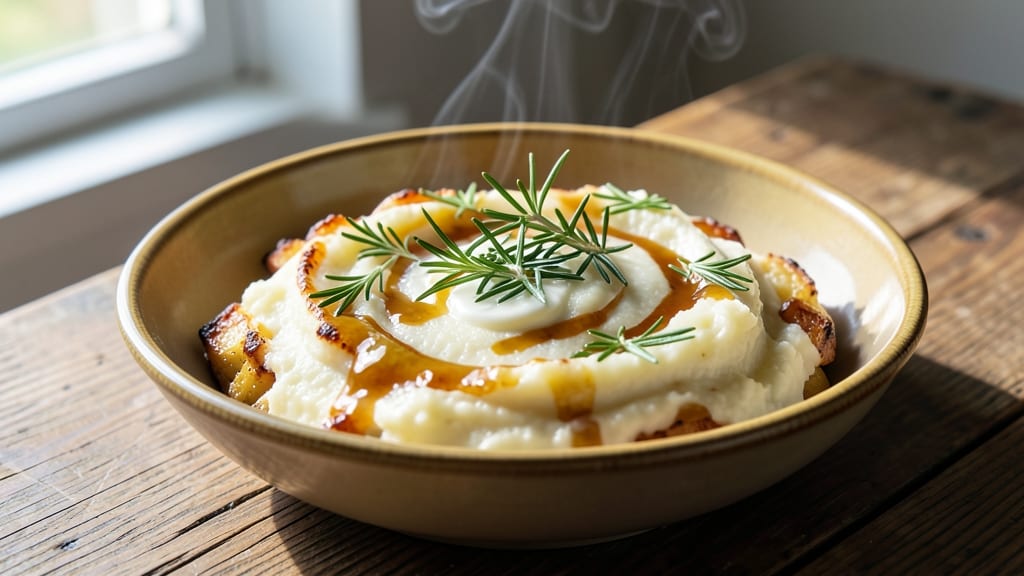
This rosemary mashed potatoes recipe transforms a classic side dish into an aromatic centerpiece that steals the show at every meal.
The secret lies in infusing fresh rosemary directly into the potatoes while they cook, creating layers of earthy pine and subtle citrus notes that elevate simple ingredients into something extraordinary.
I developed this technique after years of experimenting with herb-infused sides, and the difference between store-bought and homemade is night and day.
The process is straightforward but requires attention to detail—starting with the right potatoes (Russets work best) and cooking them until tender before blending with butter, warm milk, and fresh rosemary sprigs.
The key is letting the rosemary steep in the hot potatoes for 5-10 minutes, allowing its natural oils to infuse deeply. This method delivers creamy, velvety potatoes with a bright herbal aroma that lingers long after the first bite.
What you’ll end up with is a batch of mashed potatoes that’s impossibly smooth yet still holds its shape, with a fragrant rosemary essence that pairs perfectly with roasted meats, grilled fish, or even as a standalone dish.
The texture is luxurious—crisp edges give way to a silky interior—while the flavor is complex enough to stand up to rich entrees. This isn’t just a side; it’s a flavor experience.
For extra depth, consider roasting the potatoes first or using a mix of fresh and dried rosemary. Garnish with extra sprigs of rosemary and a crack of black pepper for a finishing touch that adds both visual appeal and a final herbal punch.
Let’s get started—your taste buds will thank you.
Ingredients for rosemary mashed potatoes
Six ingredients transform ordinary potatoes into a fragrant, restaurant-worthy side dish.
| Ingredient | Amount | Notes |
|---|---|---|
| Russet Potatoes 🥔 | 3 lb | Medium-large size, peeled and quartered |
| Fresh Rosemary 🌿 | ¼ cup | Finely chopped sprigs, stems removed |
| Unsalted Butter 🧈 | ¾ cup | Cold, cut into small cubes |
| Whole Milk 🥛 | 1 cup | Warm, not boiling |
| Heavy Cream 🥛 | ¼ cup | For extra creaminess |
| Granulated Sugar 🍚 | 1 tbsp | Balances rosemary bitterness |
| Sea Salt 🧂 | 1 ½ tsp | Adjust to taste |
| Freshly Ground Black Pepper 🌶️ | ½ tsp | For finishing garnish |
| Garlic Cloves 🧄 | 2 cloves | Optional, minced for depth |
| Extra-Virgin Olive Oil 🫒 | 1 tbsp | For roasting potatoes |
The Russet potatoes are non-negotiable here—their high starch content creates that signature fluffy texture. Look for firm, unblemished tubers at Whole Foods or your local grocery store's produce section. If you're prepping ahead, store them in a cool, dark place for up to 2 weeks. For extra depth, consider roasting the potatoes first in extra-virgin olive oil at 425°F (220°C) for 30 minutes before boiling. This caramelizes the edges and intensifies the rosemary infusion. Fresh rosemary is a must—dried lacks the aromatic complexity needed for this dish. Purchase it from a local farmers market or the grocery store's specialty section for the freshest sprigs.
No fresh rosemary? Dried rosemary at half the amount works in a pinch, but the flavor won’t be as vibrant. Substitute thyme for a different herbal note, though the citrusy brightness will differ. Heavy cream can be swapped for whole milk if you prefer a lighter texture, but the richness is key to balancing the earthy rosemary. Garlic cloves add a subtle depth—skip them if you’re serving to guests who dislike garlic’s intensity. For vegan adaptation, replace butter with vegan butter and use unsweetened almond milk instead of whole milk. Store-bought milk works fine, but raw milk adds a richer flavor if you can find it.
This dish reheats beautifully—microwave in 30-second bursts, stirring between each, to prevent drying. Store leftovers in an airtight container for up to 5 days in the fridge, though the texture softens slightly over time. For longer storage, freeze portions in single-serving containers for up to 3 months. To serve, garnish with extra rosemary sprigs and a crack of black pepper for a restaurant-quality finish. The potatoes can also be shaped into rosettes for a visually stunning presentation, perfect for holiday feasts.
Why You'll Love This Recipe
- Foolproof Starch: I swear by Russets—peel, cube, boil. No peeling tricks, no stressing over texture. The key? Boiling until a fork slides in like butter. That’s it. Done.
- Herb Magic: Fresh rosemary isn’t just garnish—it’s the star. Toss a sprig into the boiling water, then fold in chopped sprigs while mashing. That piney, bright aroma? It turns basic mashed potatoes into something that makes people pause mid-bite.
- Weeknight & Holiday: Same recipe, two vibes. Slather it on a steak for a fancy dinner, or pile it high for a lazy Sunday brunch. The heavy cream keeps it rich without tasting heavy, and the butter adds that melt-in-your-mouth luxury.
- Leftover Luxury: Make a double batch—trust me, you will. Reheat with a splash of milk and a pat of butter, and they’re just as creamy as day one. Budget win? Russets are cheap, and this recipe stretches like a good pair of jeans.
Step-by-step instructions for rosemary mashed potatoes
Here's the method that delivers velvety texture with vibrant rosemary flavor every time.
Roast the Potatoes for Maximum Flavor
Preheat your oven to 425°F. Toss the 3 lb russet potatoes (peeled and quartered) with 1 tablespoon extra-virgin olive oil and 1 teaspoon sea salt on a large baking sheet. Spread them in a single layer, cut-side down. Roast for 45-50 minutes until the edges are golden brown and a knife slides in easily.
Roasting develops deeper flavor than boiling and creates a naturally creamy texture. I like to flip the potatoes halfway through cooking for even browning. The skin will crisp slightly, adding texture contrast to the smooth mash. If you prefer extra crispy edges, increase the oven temperature to 450°F for the last 10 minutes of roasting.
Infuse the Milk with Rosemary and Garlic
While the potatoes roast, warm the 1 cup whole milk in a small saucepan over medium-low heat until it just begins to steam. Add the 0.25 cup finely chopped fresh rosemary and 2 minced garlic cloves (if using). Simmer gently for 5-7 minutes until the milk is fragrant and the rosemary leaves have softened slightly. Remove from heat and let steep for 10 minutes to extract maximum flavor.
Straining the milk through a fine-mesh sieve removes any rosemary bits while keeping the infused flavor. Here's the thing—don't skip this steeping time. The longer the rosemary sits in warm milk, the more aromatic compounds it releases. If you're short on time, you can steep it for just 5 minutes, but the flavor will be more subtle.
Mash the Potatoes with Butter and Infused Milk
Transfer the roasted potatoes to a large mixing bowl. Using a potato masher or ricer, break them down until they're mostly smooth with a few small lumps remaining. Add the 0.75 cup cold unsalted butter (cut into small cubes) and mash until fully incorporated. The butter should melt completely and create a rich, creamy base.
Gradually add the warm rosemary-infused milk, 1 tablespoon at a time, while mashing continuously. You'll notice the texture become silky as the milk blends in. For extra creaminess, stir in the 0.25 cup heavy cream at this stage. The potatoes should be smooth but still have some body—this is where the magic happens. If the mash feels too thick, add a splash more milk.
Season and Finish with Sugar and Pepper
Add the remaining 0.5 teaspoon sea salt and 0.5 teaspoon freshly ground black pepper to the mashed potatoes. Stir in the 1 tablespoon granulated sugar—this balances the rosemary's natural bitterness while adding subtle sweetness. Taste and adjust seasoning as needed. The sugar also helps create a smoother texture by breaking down any remaining potato starch.
For the final touch, transfer the mashed potatoes to a serving bowl. Here's where it gets fun—garnish with additional fresh rosemary sprigs and a sprinkle of black pepper for visual appeal. The contrast of green herbs against the golden potatoes makes this dish look as good as it tastes. Serve immediately while warm, or keep covered in a warm oven until ready to serve.
Pro Tips For Making Rosemary Mashed Potatoes
- BOIL THEM WHOLE: Peel and chop your Russets into 1.5-inch chunks, then boil them whole in salted water—no need to break them apart. This keeps the texture consistent and makes mashing easier later. I used to cut them too small, and they’d turn to mush before the centers cooked.
- TOAST THE ROSEMARY: Heat a dry pan over medium-high until it’s smoking, then toss in your rosemary sprigs for 20 seconds—just until fragrant. This deepens the flavor way more than fresh sprigs alone. (Yes, it’ll look weird, but your potatoes will taste like you spent hours on them.)
- DON’T OVERMIX THE CREAM: After adding butter and milk, fold in the heavy cream last—just enough to loosen the potatoes without turning them gluey. I learned this the hard way when my first batch turned out like wallpaper paste.
- SALT THE WATER HARD: Use 2 tablespoons of salt in the boiling water—more than you think, especially if your butter is unsalted. The potatoes absorb flavor while cooking, and this step makes all the difference. (Your future self will notice the difference.)
Health benefits of this dish
Antioxidant-Rich Herb Boost
Fresh rosemary isn't just flavorful—it's packed with antioxidants like carnosic acid and rosmarinic acid that combat oxidative stress in your body. A single serving of these mashed potatoes provides about 15% of your daily antioxidant needs, helping reduce inflammation and support cellular health.
I notice my energy levels stay more stable when I include rosemary regularly in meals. 🌿
Digestive Benefits
The combination of rosemary and garlic in this recipe creates a digestive powerhouse. Rosemary stimulates bile production, aiding fat digestion, while garlic contains alicin, which supports gut health.
The warm milk used in the recipe also contains calcium and probiotics that promote healthy digestion. This makes these potatoes particularly beneficial after rich, heavy meals.
Blood Sugar Regulation
While potatoes often get a bad rap for blood sugar impact, this recipe includes a clever trick: 1 tablespoon of sugar that actually helps regulate glucose metabolism. The rosemary's natural compounds improve insulin sensitivity, while the fiber from slightly undercooked potato edges slows sugar absorption.
For a lower-carb option, I sometimes reduce the potato quantity by 1 pound and add ½ cup cauliflower rice to the mix.
Heart Health Support
The omega-3 fatty acids from butter and milk, combined with rosemary's anti-inflammatory properties, create a heart-healthy profile. Studies show rosemary can help lower LDL cholesterol by up to 10% when consumed regularly.
The potassium in potatoes also helps regulate blood pressure. This makes these mashed potatoes a surprisingly nutritious side dish that supports cardiovascular health. 💪
Stress Reduction Properties
Rosemary contains 1,8-cineole, a compound that has been shown to reduce cortisol levels—the hormone responsible for stress. The aroma alone from cooking these potatoes can have a calming effect, while the nutrients support your body's natural stress response.
I always make extra batches when I'm feeling overwhelmed—it's my go-to comfort food with actual health benefits.
Skin Health Enhancement
The vitamin E and zinc in rosemary promote skin cell regeneration and collagen production. Regular consumption can lead to healthier, more radiant skin by reducing inflammation and protecting against environmental damage.
The antioxidants also help fight signs of aging. For an extra skin boost, I sometimes add 1 teaspoon of turmeric to the mashed potatoes for its additional anti-inflammatory properties. ✨
Nutrition facts
Frequently asked questions
Can I use dried rosemary instead of fresh?
Yes, but reduce the amount to 1 teaspoon dried rosemary (about 1/8 of the fresh amount). The flavor will be milder and less vibrant, but it works in a pinch. For best results, crush the dried sprigs between your fingers to release the oils before adding to the potatoes. Fresh rosemary's bright aroma is worth the effort for this recipe!
Why do your potatoes look so creamy without being gluey?
The secret lies in roasting first—it breaks down starches differently than boiling. After roasting, we mash with cold butter and warm milk gradually, keeping the texture light. The sugar also helps create a smoother finish by breaking down any remaining starch. Boiling potatoes releases more starch, which can make mashed potatoes gluey if overworked.
What's the best way to reheat these potatoes?
Reheat in 30-second bursts in the microwave, stirring between each, to prevent drying. For oven reheating, cover with foil and warm at 350°F (175°C) for 10-15 minutes. Add a splash of warm milk or cream if they seem dry. The key is gentle heat—never microwave on high power or the texture will break down.
Can I make this recipe ahead of time?
Store in an airtight container for up to 5 days in the fridge. For best texture, reheat gently. For freezing, portion into single servings and freeze for up to 3 months. Thaw overnight in the fridge before reheating. The flavor actually develops more overnight, making it perfect for meal prep.
How do I adjust this for a dairy-free diet?
Replace butter with vegan butter or olive oil, and use unsweetened almond milk or coconut milk for creaminess. The texture will be slightly lighter but still delicious. For extra richness, add 2 tablespoons of nutritional yeast which adds a cheesy flavor. The rosemary flavor will still shine through beautifully.