
Main Courses
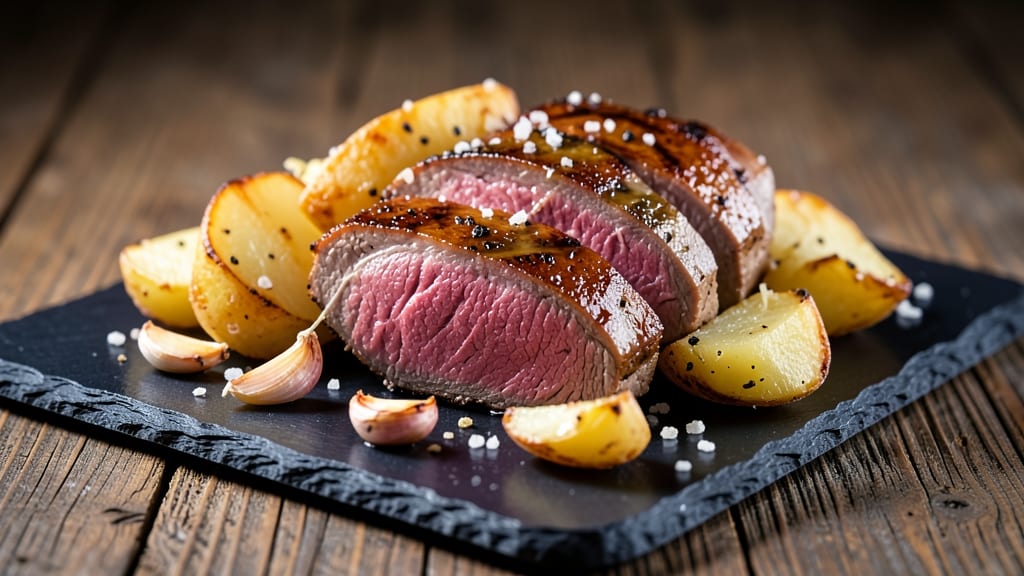
This prime rib and potatoes recipe delivers restaurant-quality results with a rich au jus bath that transforms every slice into a luxurious experience. The secret lies in proper seasoning, precise cooking temperatures, and letting the meat rest—steps that elevate simple ingredients into a showstopping centerpiece.
I’ve perfected this method over years of holiday dinners, ensuring tender beef and perfectly paired potatoes that soak up every drop of flavor.
What sets this recipe apart is the au jus bath, which turns leftover slices into melt-in-your-mouth perfection. The prime rib cooks to medium-rare (125°F internal temp) for maximum tenderness, while the potatoes—whether roasted, mashed, or scalloped—absorb the savory juices for a cohesive, indulgent bite.
This isn’t just dinner; it’s a centerpiece that commands attention and leaves guests asking for seconds.
The process is straightforward but requires patience: searing the rib for a deep crust, roasting it low and slow, and resting it before slicing. The potatoes get equal care, whether you prefer crispy edges on roasted Yukon Golds or velvety mashed potatoes with a touch of butter.
Every element comes together to create a dish that feels special without requiring advanced techniques.
Serve this prime rib with a side of au jus for dipping, and you’ll have a meal that’s as impressive as it is delicious. The leftovers? Even better—reheated slices stay juicy and flavorful, proving this recipe is worth the effort. Let’s get cooking.
Ingredients for prime rib and potatoes
Sixteen ingredients, one luxurious centerpiece—where restaurant-quality prime rib meets perfectly paired potatoes.
| Ingredient | Amount | Notes |
|---|---|---|
| Prime Rib Roast 🥩 | 4 lb | Bone-in, 1-inch thick, trimmed of excess fat |
| Yukon Gold Potatoes 🥔 | 3 lb | Medium size, halved lengthwise |
| Unsalted Butter 🧈 | ¾ cup | Cold, cut into 1-inch cubes |
| Kosher Salt 🧂 | 2 tbsp | Diamond Crystal preferred |
| Freshly Ground Black Pepper 🌶️ | 1 ½ tbsp | Coarse grind for texture |
| Garlic Cloves 🧄 | 8 cloves | Smashed, skin-on |
| Fresh Rosemary 🌿 | ¼ cup | Chopped, stems removed |
| Fresh Thyme 🌿 | ¼ cup | Leaves only, stems discarded |
| Beef Tallow or Olive Oil 🫒 | ½ cup | For searing, high smoke point |
| Red Wine 🍷 | 1 ½ cups | Dry Cabernet Sauvignon |
| Beef Broth 🍲 | 2 cups | Homemade or high-quality store-bought |
| Balsamic Vinegar 🍶 | 1 tbsp | For au jus depth |
| Heavy Cream 🥛 | ½ cup | Full-fat for richness |
| Red Wine Vinegar 🍶 | 1 tsp | To brighten au jus |
| Worcestershire Sauce 🍶 | 1 tbsp | For umami complexity |
The prime rib roast is the centerpiece, and quality starts with the cut. Seek out a bone-in rib roast from a trusted butcher—look for vibrant color and marbling that promises tenderness. Costco and Whole Foods often carry excellent options, but local butchers will have the freshest cuts. The roast should be 1-inch thick to ensure even cooking, and trimming excess fat prevents flare-ups during searing. For herbs, fresh rosemary and thyme from the grocery store’s produce section (not dried) will infuse the dish with aromatic depth—just ensure the stems are removed and leaves are finely chopped. The garlic should be smash-roasted for a sweet, caramelized flavor that complements the beef.
No red wine on hand? Substitute with beef broth and a splash of balsamic vinegar, though the depth of flavor will differ slightly. For the potatoes, Yukon Golds are ideal—their buttery texture absorbs the au jus beautifully—but russets or fingerlings work in a pinch. The heavy cream in the au jus can be swapped for half-and-half if you’re avoiding full-fat dairy, though the richness will be noticeably lighter. If you’re short on time, pre-peeled and halved potatoes from the grocery store save prep work without sacrificing quality. The Worcestershire sauce is non-negotiable for umami—Lea & Perrins is the gold standard, but any reputable brand will do. For the searing, beef tallow is traditional, but high-quality olive oil works just as well.
Prime rib and potatoes reheat beautifully—the au jus bath ensures leftovers stay moist and flavorful. Store the roast, wrapped tightly in butcher paper, in the fridge for up to 4 days, while the potatoes can be reheated separately for 3 days. For long-term storage, freeze the roast in portions for up to 3 months, and the au jus can be frozen in ice cube trays for easy reheating. The au jus itself keeps for 5 days in the fridge and can be reduced further for a thicker consistency. To serve, simply reheat the roast in its juices over low heat, and the potatoes can be roasted or mashed fresh—every bite will taste like it was just sliced.
Why You'll Love This Recipe
- Weeknight Worthy: I swear by this for when I’m too tired to fuss—just sear the prime rib, toss in the potatoes, and let the oven do the rest. No basting, no stress, just golden crust and tender meat by the time I’m done scrolling through my phone.
- Butter-Drenched Magic: That Yukon Golds? They turn into fluffy, buttery clouds while the prime rib develops a rich, caramelized crust. Honestly, the way the butter pools under the meat when you slice it—it’s the kind of dish that makes you slow down and savor every bite.
- Leftovers That Shine: Between us, the second day is often better than the first. Cold slices of prime rib in a sandwich? Yes. Reheated potatoes crisped in the pan again? Absolutely. I meal prep this like it’s my job, and no one complains—because it’s that good.
- Holiday Ready: This isn’t just a Sunday dinner—it’s my go-to for Thanksgiving, Christmas, or even a fancy date night. The potatoes feel special without being pretentious, and the prime rib? It’s the kind of centerpiece that makes guests think you slaved for hours. (Spoiler: You didn’t.)
Step-by-step instructions for prime rib and potatoes
Here's the method that delivers restaurant-quality prime rib with perfectly crisped edges and tender potatoes bathed in rich au jus.
Prepare and Sear the Prime Rib
Remove the prime rib roast from the refrigerator and let it sit at room temperature for 30 minutes before cooking. This ensures even cooking throughout the thick cut. Preheat your oven to 450°F and position a rack in the lower third of the oven.
Heat 0.5 cup beef tallow or olive oil in a heavy oven-safe skillet over medium-high heat until shimmering. Place the prime rib roast fat-side down in the skillet and sear for 8-10 minutes, pressing gently with a meat mallet to ensure even contact. You'll see deep golden-brown crust forming and the fat rendering beautifully. Flip the roast and sear the other side for another 8-10 minutes. The goal is to develop maximum flavor through the Maillard reaction.
Remove the skillet from the heat and transfer it to the preheated oven. Roast the prime rib for 20-25 minutes until the internal temperature reaches 120-125°F for medium-rare. This initial roast creates a perfect foundation for the au jus bath that follows. Remove the roast from the oven and let it rest on a cutting board while you prepare the potatoes.
Roast the Potatoes and Prepare the Herb Butter
While the prime rib rests, preheat your oven to 425°F. Toss the 3 lb Yukon Gold Potatoes with 0.25 cup chopped fresh rosemary, 0.25 cup fresh thyme leaves, 2 tbsp kosher salt, and 1.5 tbsp freshly ground black pepper. Spread them evenly on a parchment-lined baking sheet, cut-side down.
Roast the potatoes for 40-45 minutes, stirring once halfway through, until they're tender when pierced with a fork and develop golden-brown skin. The potatoes should be crispy on the outside but still firm to the touch when you squeeze them gently. Remove them from the oven and keep them warm while you prepare the au jus.
In a small bowl, combine the 0.75 cup unsalted butter with the 8 smashed garlic cloves. Melt this mixture over low heat in a saucepan, stirring occasionally until the butter is completely melted and the garlic is fragrant but not browned. Keep this herb butter warm for later.
Create the Au Jus Bath
Return the prime rib to the skillet and increase the oven temperature to 300°F. Pour 1.5 cups red wine into the skillet, scraping up all the browned fond from the bottom. Add 2 cups beef broth, 1 tbsp balsamic vinegar, 1 tbsp Worcestershire sauce, and 1 tsp red wine vinegar. Bring the mixture to a simmer over medium-high heat on the stovetop.
Simmer the liquid for 10-12 minutes until it reduces by about one-third, creating a rich, flavorful base. The sauce should coat the back of a spoon and have a deep, complex aroma. Strain the sauce through a fine-mesh sieve into a clean saucepan to remove any impurities. Return the sauce to the skillet with the prime rib and transfer everything to the oven.
Roast the prime rib in the au jus bath for 30-40 minutes until the internal temperature reaches 130-135°F for medium-rare. This slow bath ensures the meat stays moist and absorbs the incredible flavor of the sauce. The au jus should be reduced to a syrupy consistency that will cling beautifully to the meat and potatoes.
Finish and Serve
Remove the prime rib from the oven and let it rest for 15-20 minutes before carving. This resting period is crucial for redistributing the juices throughout the meat. While it rests, stir 0.5 cup heavy cream into the au jus and simmer for 2-3 minutes until it's warmed through and slightly thickened. The cream adds a luxurious finish to the sauce.
Carve the prime rib into ½-inch thick slices against the grain and arrange them on a platter. Spoon the au jus generously over the meat and potatoes. Drizzle the herb butter over the top for an extra layer of flavor. Serve immediately with the roasted potatoes, ensuring each portion gets its share of the rich sauce.
This method transforms simple ingredients into an elegant centerpiece. The au jus bath not only keeps the prime rib moist but also creates leftovers that taste just as luxurious as the first serving. Each bite delivers perfectly balanced flavors with a harmonious blend of rich meat, crispy potatoes, and velvety sauce.
Pro Tips For Making Prime Rib And Potatoes
- Dry the Rib First: Pat that prime rib aggressively with paper towels—no wet spots, even if it feels overkill. I learned this the hard way when my crust turned to sad, greasy sludge instead of golden perfection. The butter won’t stick right if there’s moisture lurking.
- Salt Potatoes Twice: Toss Yukon Golds with salt before boiling and again after they’re roasted—first when raw, then again when hot. Sounds weird, but it works: the first salt seasons deep, the second builds that crispy skin. Skip this, and they’ll taste bland even with all that butter.
- Start Hot, End Slow: Sear the rib on maximum heat for that crust, then drop to 300°F (150°C) for the rest. I used to rush the low temp, and the inside stayed tough. Let it crawl to 120°F (49°C) for medium-rare—your meat thermometer is your best friend here.
- Butter the Potatoes Early: Toss the roasted Yukons with butter while they’re still hot—the steam helps it melt into every crevice. I skip this when I’m lazy, but the dish is noticeably better when I don’t. Cold butter just sits on top like a guilty secret.
Creative variations of this recipe
Herb-Infused Variations
Swap the rosemary and thyme for fresh sage and black peppercorns for a Tuscan-inspired twist. Use 2 tbsp chopped sage and 10 cracked peppercorns tied in cheesecloth, adding them to the au jus during the simmer.
The earthy sage pairs beautifully with the beef’s richness, while peppercorns lend subtle heat. For a French bistro vibe, add 1 sprig fresh tarragon and 1 bay leaf to the au jus—remove them before serving. 🌿
Spiced Potato Twists
Transform the potatoes into garlic-parmesan scallops by tossing them with ½ cup grated parmesan, 3 minced garlic cloves, and 1 tsp smoked paprika before roasting.
For a creamy garlic mashed potato variation, mash the cooked potatoes with ½ cup herb butter, ¼ cup warm whole milk, and 1 tsp Dijon mustard for tang. Both versions soak up the au jus like a dream, adding texture contrast to the dish.
Global Flavor Infusions
For a Middle Eastern twist, swap the red wine in the au jus for 1 cup pomegranate juice and add 1 tsp ground cumin and ½ tsp cinnamon to the potatoes. The tart-sweet sauce balances the beef’s richness, while the spices add warmth.
In a Mexican-inspired version, use 1 cup beef broth, ½ cup beer, and 1 tbsp chipotle powder in the au jus, then top the potatoes with crumbled cotija cheese and cilantro. 🌶️
Vegetable Pairings
Elevate the plate with roasted Brussels sprouts tossed in 1 tbsp brown butter and crushed pecans, or caramelized shallots sautéed in 1 tbsp duck fat until golden. Both add sweetness that complements the au jus.
For a lighter touch, serve asparagus blanched for 3 minutes and finished with lemon zest—the bright acidity cuts through the richness of the prime rib.
Leftovers Reinvented
Turn leftover prime rib into au jus-glazed meatballs by mixing shredded beef with 1 egg, ¼ cup breadcrumbs, and 1 tbsp Worcestershire sauce, then simmering in the reserved au jus.
For a prime rib hash, dice the meat and pan-fry with diced potatoes, bell peppers, and onions until crispy. Both ideas repurpose leftovers into entirely new meals without sacrificing flavor. ✨
Nutrition facts
Frequently asked questions
How do I know when the prime rib is cooked to medium-rare?
Use a meat thermometer for precision—125°F internal temp equals perfect medium-rare. For a bone-in rib, insert the probe into the thickest part without touching bone. The au jus bath method ensures even cooking, so don't overcook! The resting period after roasting helps maintain that juicy center.
Can I make this recipe with frozen prime rib?
Not ideal for the best results. Thaw the roast in the fridge overnight (24 hours) for even cooking. If short on time, use the cold-water method (1 hour per pound in sealed bag), but pat it completely dry before searing to prevent steam from blocking the crust. Never thaw at room temperature!
What's the best way to reheat leftover prime rib?
Slice the cold roast into ½-inch thick portions and warm in a skillet with a splash of au jus over low heat for 3-5 minutes. For potatoes, reheat roasted pieces in a 375°F oven for 10-12 minutes until crispy. The au jus bath keeps everything moist—just add a little extra liquid if needed.
Can I substitute red wine in the au jus?
Yes! Use 1.5 cups beef broth plus 1 tbsp balsamic vinegar for depth, or 1 cup beef broth + ½ cup apple cider for a sweeter note. The key is maintaining the 1:1 liquid-to-aromatic ratio—just adjust the reduction time slightly if using more liquid. The sauce will still be rich and flavorful!
Why does my au jus turn out watery?
This usually happens from one of three issues: not reducing long enough, using too much liquid, or not scraping up the fond (browned bits). Simmer uncovered for 15-20 minutes total to concentrate flavors, and always deglaze the pan thoroughly. For extra thickness, whisk in 1 tsp cornstarch mixed with water at the end.