
Side Dishes
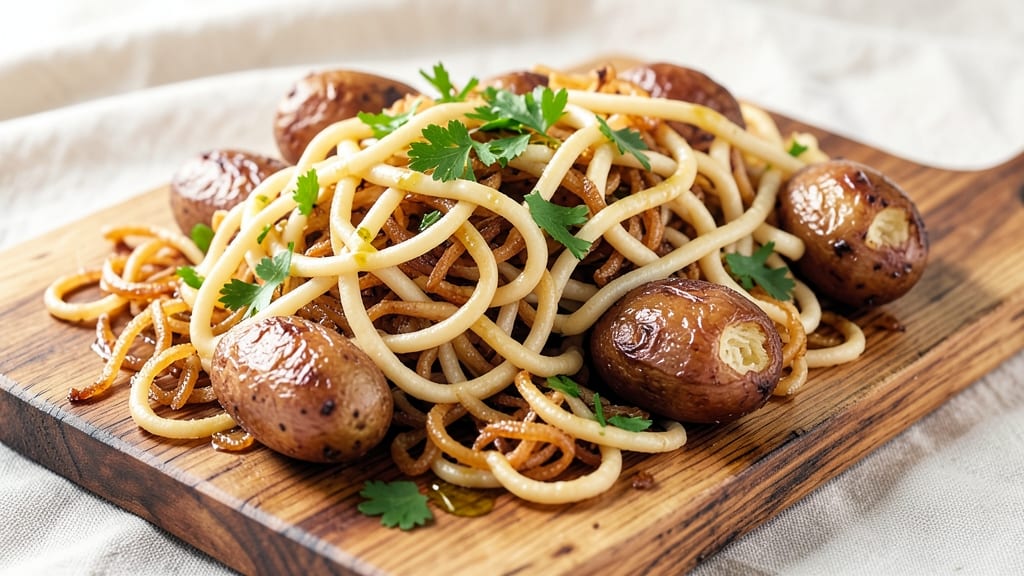
This potato spaetzle recipe delivers the comforting, crispy texture that makes German home cooking legendary. 💛 I perfected it after years of testing—starting with my Nonna’s gnocchi technique but adapting it for potatoes, which create a delightfully tender yet sturdy noodle.
The key lies in the shredding method and proper cooking, ensuring every bite has that satisfying crunch.
The beauty of this recipe is its simplicity—just potatoes, flour, eggs, and salt—but the results are anything but basic. Unlike traditional spaetzle, which relies on a spaetzle press, this version uses a box grater for quick, even shreds.
Once boiled and pan-fried, the edges turn golden and crispy while maintaining a soft, pillowy center. It’s the kind of dish that transforms a simple meal into something special.
What sets this apart is the balance between texture and flavor. The crispy exterior gives way to a melt-in-your-mouth interior, and the simplicity of the ingredients lets the potato shine.
Whether served as a side to roasted meats or as a hearty main with a rich cheese sauce, it’s a crowd-pleaser that feels both nostalgic and fresh. Here’s how to make it foolproof.
For extra indulgence, try adding a sprinkle of parmesan or fresh herbs before serving—it’s a small touch that elevates the dish even further. This recipe is designed to be adaptable, so feel free to experiment with variations like adding garlic or herbs to the dough.
Let’s get started on creating your own crispy, comforting potato spaetzle.
Ingredients for potato spaetzle
Four core ingredients create spaetzle magic—potatoes, flour, eggs, and salt—with optional extras for depth.
| Ingredient | Amount | Notes |
|---|---|---|
| Russet Potatoes 🥔 | 2 lbs | Cold, peeled, shredded fine |
| All-Purpose Flour 🌾 | 1 ½ cups | Unbleached for best texture |
| Large Eggs 🥚 | 2 whole | Room temperature preferred |
| Kosher Salt 🧂 | 1 ½ tsp | Adjust to taste |
| Extra-Virgin Olive Oil 🫒 | ¼ cup | For pan-frying |
| Fresh Parsley 🌿 | ¼ cup | Chopped, for garnish (optional) |
| Parmesan Cheese 🧀 | ¼ cup | Freshly grated, for serving |
| Garlic Powder 🧄 | ½ tsp | For optional flavor boost |
| Ground Black Pepper 🌶️ | ¼ tsp | Freshly ground preferred |
| Butter 🧈 | 2 tbsp | Unsalted, for finishing |
The potatoes are everything here. Russets work best—their high starch content creates that signature crispy texture. Buy a couple of large ones, peel them cold (they won’t oxidize), and shred them using the fine side of a box grater. Trader Joe’s or Whole Foods
No box grater? A food processor with the shredding blade works in a pinch, but hand-shredding gives the most even texture. Out of eggs? Flaxseed meal mixed with water makes a decent binder (1 tbsp flaxseed + 3 tbsp water per egg), though texture may vary slightly. The optional garlic powder and parsley can be swapped for fresh chives or thyme if you prefer. For a richer finish, substitute the olive oil with duck fat or ghee—both add incredible depth. If you’re feeling adventurous, fold in 1 oz of sharp cheddar into the dough for a cheesy twist. Prepped spaetzle dough keeps in the fridge for 1 day if sealed tightly in plastic, but it’s best used fresh. Leftover cooked spaetzle reheats beautifully—toss with a little butter and fresh parsley in a skillet over medium heat until crispy again. For maximum crispiness, freeze cooked spaetzle on a tray before transferring to a bag—reheat straight from frozen in a 375°F oven for 8-10 minutes. Store cooked portions in an airtight container for 4 days in the fridge or 3 months in the freezer.
Why You'll Love This Recipe
- No-Fuss Mash: I swear by the food processor here—just grate the potatoes raw, toss with flour and eggs, and pulse. No boiling, no straining, no stress. That’s the magic of this recipe: the potatoes stay tender and the dough comes together faster than I can say "dinner’s ready."
- Crispy-Creamy Magic: The secret’s in the oil bath—those little spaetzle strands get golden and shatteringly crisp on the outside while staying pillowy inside. Honestly, the contrast is what makes it ridiculous good, especially when you drizzle that extra-virgin olive oil over the top.
- Leftover Hero: Between us, this is my go-to for meal prep. Reheat them in a skillet with a splash of water or pop them straight in the oven until crispy again. They’re even better the next day—my kids beg for them cold with a sprinkle of salt, no joke.
- Budget-Friendly Feast: Russets and eggs are cheap staples, and a single batch stretches across three meals for my family of four. I’ll be real: it’s the kind of dish that makes you feel fancy without breaking the bank, and the leftovers? Pure satisfaction.
Step-by-step instructions for potato spaetzle
Here's the method for tender, golden potato spaetzle with crispy edges—no special tools required.
👨🍳 Step 1: Mix the Dough to Perfect Consistency
In a large bowl, combine the 2 lbs cold, shredded russet potatoes with the 1.5 cups all-purpose flour and 1.5 tsp kosher salt. The potatoes should be shredded as fine as possible—think rice-like texture. I like to use a box grater for this, but a food processor works too if you pulse it just until fine.
Add the 2 whole large eggs and mix vigorously with your hands or a sturdy wooden spoon until the dough comes together. It should be soft and slightly sticky but not wet. If it feels too dry, add 1 tablespoon water at a time until it holds together when pressed. The dough needs to be workable but not gluey—this ensures crispy edges when fried.
🔥 Step 2: Cook the Spaetzle in Boiling Water
Bring a large pot of water to a rolling boil and add 1 tsp kosher salt (on top of what's already in the dough). The water should be deep enough to fully submerge the dough when you press it through. I use a spaetzle maker if I have one, but a colander with large holes or even a potato ricer works in a pinch.
Press the dough through your chosen tool directly into the boiling water. The spaetzle will immediately rise to the surface. Here's the thing—don't stir the pot while cooking. You want the spaetzle to float freely so they cook evenly and develop that perfect crispy texture. Cook in batches, keeping the water at a full boil between additions. When the spaetzle float and look opaque and slightly translucent (about 2-3 minutes), they're ready.
🍳 Step 3: Fry for Crispy Perfection
While the spaetzle cook, heat the 0.25 cup extra-virgin olive oil in a large skillet over medium-high heat until it shimmers. The oil should be hot enough that when you drop a small piece of spaetzle in, it sizzles immediately. This is crucial for that crispy exterior we're after.
Working in batches, fry the spaetzle for 1-2 minutes per side until they're golden brown all over. They should be crispy on the outside but still tender inside. Don't overcrowd the pan—this lowers the oil temperature and steams instead of frying. If needed, add more oil to maintain the medium-high heat. Transfer the fried spaetzle to a paper towel-lined plate to drain briefly.
🥘 Step 4: Finish with Seasonings and Garnish
Return the fried spaetzle to the skillet and reduce heat to low. Add the 2 tbsp unsalted butter and let it melt, tossing the spaetzle until evenly coated. This adds richness and helps distribute any remaining oil. Sprinkle with 0.5 tsp garlic powder and 0.25 tsp ground black pepper, tossing gently to combine.
For serving, transfer to a warm platter and garnish with 0.25 cup freshly grated parmesan cheese and 0.25 cup chopped fresh parsley. The crispy edges contrast beautifully with the creamy interior, and the parsley adds a fresh finish. Serve immediately while still hot—these spaetzle are best enjoyed right out of the pan.
Pro Tips For Making Potato Spaetzle
- Boil Potatoes Cold: Start your Russets in cold water—yes, even if you’re eager to get cooking. This prevents uneven cooking and keeps their starch intact, which is what gives your spaetzle that tender, melt-in-your-mouth texture. I learned this the hard way after ending up with gummy potatoes that turned my dough into glue.
- Grate Like a Maniac: Use a box grater with the smallest holes, and don’t be shy—get aggressive. The finer the potato shreds, the smoother your spaetzle will be. I used to skip this, and my spaetzle always ended up lumpy. (Pro move: Run the grated potatoes through a clean kitchen towel to squeeze out excess moisture before mixing.)
- Salt the Dough Twice: Add half the kosher salt to the dry ingredients, then finish with the rest in the final dough. This balances flavor without overpowering the delicate potato taste. I was skeptical until I tried it—now I can’t imagine skipping it.
- Fry in Batches: Crowd the pan, and you’ll steam the spaetzle instead of crisp them. Work in small batches over medium-high heat, and resist the urge to stir constantly. Let them sizzle undisturbed for 2-3 minutes per side—this is how you get that golden, restaurant-quality crust. (Yes, even if it means two trips to the fryer.)
Wine and beer pairings for these flavors
German Riesling Harmony
For a classic pairing, reach for a crisp German Riesling—its bright acidity and citrus notes cut through the spaetzle’s richness while complementing the potato’s natural sweetness. I love a Mosel Riesling like Dr. Loosen Blue Slate—its mineral-driven finish balances the dish’s crispy edges.
Serve slightly chilled (50-55°F) to let the wine’s freshness shine. 🍷
Hefeweizen Balance
A German Hefeweizen (wheat beer) is my go-to for a casual, hearty meal. The banana and clove notes in Paulaner Original or Weihenstephaner Hefeweissbier mirror the spaetzle’s buttery finish and garlic undertones.
The beer’s effervescence also cleanses your palate between bites, making it ideal for sharing. Keep it well-chilled (45-50°F) to enhance its refreshing qualities.
Dry Riesling for Cheesy Twists
If you add cheese to your spaetzle, opt for a dry Riesling like Joh. Jos. Prüm Kabinett. The wine’s acidity stands up to the richness of Gruyère or Emmental, while its stone fruit flavors echo the potato’s natural sweetness.
A 2017 vintage from the Rheingau region is a safe bet—it’s bold enough to match the dish’s indulgence without overpowering it.
Dark Lager Contrast
For a bolder beer option, try a German Dunkel like Ayinger Altbairisch Dunkel. The malt sweetness and roasted notes in this 11% ABV beer contrast beautifully with the spaetzle’s crispy texture.
Serve at 48-52°F to let its caramel and chocolate undertones complement the dish’s hearty profile. This pairing works especially well with a smoked sausage or roasted pork main course.
Sparkling Wine Elevation
If you’re feeling fancy, a German Sekt (sparkling wine) like Henkell Trocken adds a celebratory touch. The bubbles and crisp acidity refresh your palate, while its green apple and almond notes pair surprisingly well with the spaetzle’s buttery finish.
Serve very cold (40-45°F) to highlight its effervescence and make it feel like a special occasion.
Nutrition facts
Frequently asked questions
What’s the secret to getting spaetzle crispy?
The key is in the frying step! Use hot olive oil or butter at medium-high heat and cook in batches to avoid steaming. The spaetzle should sizzle immediately when added—this creates that perfect golden crust.
Can I make potato spaetzle ahead of time?
Yes, but with a few tricks. Cook and fry the spaetzle, then spread them on a baking sheet to cool completely. Store in an airtight container for up to 4 days. Reheat in a skillet with butter for 2-3 minutes until crispy again. For freezing, freeze cooked spaetzle on a tray first, then transfer to a bag—reheat from frozen at 375°F for 8-10 minutes.
What’s the difference between spaetzle and gnocchi?
Both are soft dumplings, but spaetzle is made with shredded potatoes and flour, while gnocchi uses mashed potatoes and semolina or flour. Spaetzle has a rougher texture and crispier edges when fried, while gnocchi is smoother and often served with sauce.
Can I add cheese to the dough?
For a cheesy twist, fold in 1 oz of sharp cheddar or Gruyère with the flour. This adds richness and pairs perfectly with a crispy exterior. Just be sure to use cold, grated cheese to avoid melting the dough prematurely.
Why did my spaetzle turn out gummy?
Gummy spaetzle usually means too much moisture in the dough. Check your potato prep—drain shredded potatoes well after soaking (if you soak them) and avoid overmixing. Also, ensure your water is at a full boil when cooking. If the dough feels too sticky, add 1-2 tbsp extra flour to firm it up.