
Side Dishes
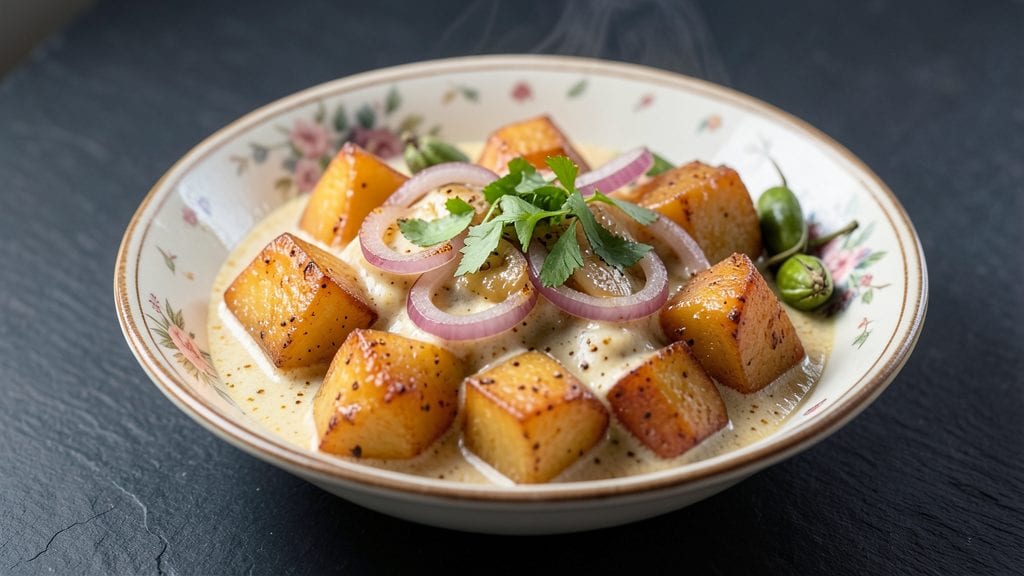
This potato kurma recipe transforms simple potatoes into a velvety, aromatic masterpiece that belongs at every dinner table. The secret lies in slow-cooked coconut milk infused with warm cardamom and cinnamon, creating a sauce so rich it clings to each potato like a silken embrace.
I first made this during a rainy afternoon when I craved something comforting yet sophisticated—what emerged was a dish that tasted like a hug from a South Indian grandmother.
The beauty of this recipe is its balance: sweet coconut milk meets earthy spices, while the potatoes absorb all the flavors without turning mushy. You'll start with a simple tempering of mustard seeds and curry leaves, then let the spices bloom in hot oil before adding onions and ginger.
This foundational step builds the aromatic base that makes the difference between good and extraordinary. The result is a creamy, fragrant potato curry that's hearty enough to stand alone or pair beautifully with steamed rice or fluffy roti.
What makes this dish truly special is how it transforms humble ingredients into something luxurious. The coconut milk creates a naturally creamy texture without needing heavy cream, while the cardamom and cinnamon add depth that lingers on the palate.
Each bite delivers tender potatoes coated in a sauce that's perfectly balanced—sweet, spicy, and rich all at once. It's the kind of recipe that gets better with each reheat, as the flavors meld even more deeply over time.
Perfect for weeknight dinners or special occasions, this potato kurma delivers restaurant-quality comfort with minimal effort. The technique is straightforward but requires patience—letting the spices toast properly and the potatoes cook slowly ensures every element comes together perfectly.
Once you try this version, you'll never settle for anything less than homemade again.
Ingredients for potato kurma
Creamy coconut milk meets aromatic spices in this luxurious potato kurma.
| Ingredient | Amount | Notes |
|---|---|---|
| Russet Potatoes 🥔 | 2 lb | Cut into 1-inch cubes, peeled |
| Coconut Milk 🥥 | 1 can (13.5 oz) | Full-fat for creaminess |
| Vegetable Oil 🫒 | ½ cup | High smoke point preferred |
| Fresh Ginger 🧄 | 2 tbsp | Grated finely for aroma |
| Yellow Onions 🧅 | 1 large | Finely chopped, about 1.5 cups |
| Green Cardamom Pods 🌿 | 6 whole | Lightly crushed, seeds only |
| Cinnamon Sticks 🌿 | 2 whole | Broken into 1-inch pieces |
| Mustard Seeds 🌶️ | 1 tbsp | For tempering, whole seeds |
| Curry Leaves 🌿 | ¼ cup | Fresh, dried if unavailable |
| Ground Turmeric 🌶️ | 1 tsp | Freshly ground preferred |
| Ground Cumin 🌿 | 1 tsp | Toasted for deeper flavor |
| Salt 🧂 | 1 ½ tsp | Adjust to taste |
| Fresh Cilantro 🌿 | ¼ cup | Chopped for garnish |
The coconut milk is the heart of this dish—full-fat canned brands like Thai Kitchen or Goya deliver the richest texture. Look for cans with no additives or preservatives. For the ginger, fresh is non-negotiable—dried lacks the bright punch needed here. Cardamom and cinnamon should be whole pods or sticks; Penzeys Spices or local Indian markets offer the freshest varieties. The potatoes? Russets hold up best—their fluffy texture absorbs the sauce perfectly. Pre-cut them while you prep the spices to save time later. If you can't find fresh curry leaves, dried works at half the amount—just toast them lightly in oil first.
No cardamom pods? Ground cardamom at one-third the amount works, though whole pods release more aroma. Substituting coconut milk? Heavy cream plus 1 tbsp sugar mimics the sweetness, but texture will differ. For the tempering, mustard seeds are essential—they create that signature South Indian crackle. If you're short on time, pre-grated ginger (from the refrigerated section) saves steps, though fresh tastes better. The onions can be swapped for shallots, but yellow onions provide the right sweetness balance. For extra depth, add a pinch of black pepper to the spice mix—it brightens the whole dish.
This curry improves with time—reheat gently on low heat to preserve creaminess. Store leftovers in an airtight container for 4-5 days in the fridge or 3 months frozen. For quick meals, portion into containers with rice—just microwave and serve. The sauce thickens as it cools, so add a splash of water or milk when reheating if needed. Garnish with fresh cilantro just before serving to keep it vibrant. Each reheat deepens the flavors, making this a perfect make-ahead dish for busy weeks.
Why You'll Love This Recipe
- One-Pot Magic: I swear by this recipe when I’m too tired to scrub a million bowls—just potatoes, onions, ginger, and coconut milk in one pot. The oil separates like a dream, and you’re left with golden, tender potatoes swimming in that rich, velvety sauce.
- Ginger-Coconut Bomb: That fresh ginger? It’s the secret weapon—sharp enough to wake up your taste buds but balanced by the coconut milk’s creamy sweetness. Honestly, the first time I made it, I ate straight from the pot (no judgment).
- Leftover Goldmine: This dish actually improves the next day. The flavors meld even more, and it reheats like a dream—perfect for packed lunches or when you’re too lazy to cook again. I’ve fed a crowd with just two batches.
- Budget Stretch: Russet potatoes and coconut milk won’t break the bank, and you’re getting a full meal’s worth of hearty, satisfying flavor. Between us, this is how I feed my family for under $10—no fancy ingredients, just pure comfort.
Step-by-step instructions for creamy coconut-cardamom potato kurma
Master this aromatic dish with perfectly spiced potatoes in a velvety coconut gravy.
Prepare the Potatoes and Spice Base
Peel the 2 lb russet potatoes and cut them into uniform 1-inch cubes. Place them in a large pot and cover with cold water by 2 inches. Add the 1.5 tsp salt and bring to a boil over high heat. Once boiling, reduce heat to medium and cook for 8-10 minutes until the potatoes are fork-tender but not falling apart. Drain thoroughly and set aside.
In a separate heavy-bottomed pot, heat the 0.5 cup vegetable oil over medium heat. Add the 1 tbsp mustard seeds and let them sizzle until they pop and turn golden brown, about 30 seconds. Immediately add the 1 large yellow onions and sauté for 4-5 minutes until softened and translucent. Stir in the 2 tbsp fresh ginger and cook for another 30 seconds until fragrant.
Build the Spice Layer
Add the 6 whole green cardamom pods and 2 whole cinnamon sticks to the pot. Lightly crush the cardamom pods with the back of a spoon to release their seeds while keeping them whole. Cook the spices for 1 minute until the oil becomes fragrant and the spices begin to darken slightly.
Next, add the 1 tsp ground turmeric and 1 tsp ground cumin. Stir continuously for 30 seconds until the spices bloom and fill the kitchen with their warm, earthy aroma. This step is crucial for developing the complex flavor profile that defines this dish. The spices should be evenly distributed and not allowed to burn.
Combine Potatoes and Coconut Milk
Carefully add the cooked potatoes to the spiced oil. Gently toss to coat them evenly with the aromatic spices. Pour in the 1 can (13.5 oz) full-fat coconut milk, stirring well to combine. The mixture should look creamy and well-coated.
Bring the entire mixture to a gentle simmer over medium heat. Reduce the heat to low and let it cook uncovered for 15-20 minutes, stirring occasionally. You want the potatoes to absorb the coconut milk and spices while maintaining their shape. The sauce should thicken slightly but remain creamy, not dry or pasty.
Temper and Finish
While the potato kurma simmers, heat the 0.25 cup curry leaves in a small dry skillet over medium heat for 1 minute until they darken slightly and release their aromatic oils. Immediately add these to the pot and stir well.
Taste and adjust the seasoning with additional salt if needed. The dish should be well-balanced with the warm spices, creamy coconut, and subtle heat from the curry leaves. Remove from heat and let it sit covered for 5 minutes to allow the flavors to meld together.
Garnish and Serve
Transfer the potato kurma to serving bowls. Garnish each serving with the 0.25 cup fresh cilantro, chopped finely. The bright green color will contrast beautifully with the creamy coconut sauce and golden potatoes.
Serve immediately with steamed basmati rice or warm naan bread. The creamy texture should coat each spoonful, with the potatoes remaining tender yet firm. The aroma should be rich with cardamom and cinnamon, balanced by the subtle heat of the curry leaves and mustard seeds. This dish delivers on its promise of creamy, aromatic perfection.
Pro Tips For Making Potato Kurma
- Parboil Potatoes First: Russets break down into mush if you skip this—drop them in boiling salted water for 5 minutes before adding to the curry. The slight softness keeps them from turning to paste later, and the skin stays intact for better texture. (Yes, even if you’re impatient like me, don’t rush this.)
- Sauté Onions Low and Slow: After frying ginger, reduce heat to medium-low for the onions—you’re not making caramel, just building flavor. Cook them until they’re translucent but not brown (about 8-10 minutes), or they’ll taste bitter. I learned this the hard way after burning three batches of kurma.
- Strain Coconut Milk: Skip the canned cream—blend fresh coconut meat with water, then strain through a fine-mesh sieve lined with cheesecloth. The result is richer, less gritty, and the curry won’t separate like it does with store-bought versions. (Your future self will thank you.)
- Simmer Gently After Adding Potatoes: Once potatoes go in, drop the heat to the lowest setting that keeps a bare simmer—no rolling boils. High heat turns them to glue, and the curry loses its velvety texture. This isn’t the prettiest method, but it’s the tastiest.
Flavor customization for this potato kurma
Spice Level Control
Adjust heat by adding ½ tsp cayenne pepper for mild heat or 1 tsp Kashmiri red chili powder for smoky warmth. For extra kick, stir in 1 tbsp gochujang during the final simmer—it adds fermented depth.
I like to toast ½ tsp black peppercorns in the oil with the mustard seeds for a subtle, aromatic heat that lingers. 🌶️
Sweetness Variations
Balance the coconut's natural sweetness by adding 1 tbsp jaggery or 1 tsp brown sugar while simmering. For a tropical twist, fold in ½ cup mango pulp during the last 5 minutes of cooking.
If your coconut milk tastes bland, use Thai Kitchen brand—it's sweeter and creamier than many store varieties.
Creamier Texture Options
For an ultra-rich sauce, stir in ¼ cup plain yogurt at the end or replace ¼ can coconut milk with heavy cream. I also love adding 2 tbsp cashew butter for nutty depth—just whisk it into the warm sauce until silky smooth.
For a vegan version, use coconut cream instead of milk.
Protein Additions
Boost nutrition by adding 1 cup cooked chickpeas or ½ cup shredded chicken during the final 10 minutes of simmering. For a vegetarian twist, fold in ½ cup paneer cubes cooked until golden. The protein absorbs flavors beautifully while adding substance to each bite. 💪
Herb & Aroma Boosts
Infuse extra fragrance by adding 2 bay leaves during the spice toasting phase or 1 tsp fennel seeds with the mustard seeds. For freshness, stir in 2 tbsp chopped mint alongside the cilantro garnish. The combination of mint and cilantro creates a bright, herbaceous finish that cuts through the richness.
Regional Twists
For a Kerala-style version, add 1 tsp grated ginger and 1 tsp curry powder to the tempering oil. In Hyderabadi style, replace cardamom with ½ tsp nutmeg and 1 star anise pod.
Each regional variation transforms the dish while keeping the creamy coconut base intact—experiment to find your favorite! 🗺️
Nutrition facts
Frequently asked questions
Can I use sweet potatoes instead of russet potatoes?
Yes, sweet potatoes work beautifully! Their natural sweetness pairs perfectly with the coconut milk, enhancing the dish's richness. Use the same quantity and cooking time, but expect slightly softer potatoes. For extra depth, add ½ tsp cinnamon directly to the sweet potatoes before simmering.
Why does my potato kurma taste bland?
Bland flavor usually means the spices didn't bloom properly. Toast your whole spices (cardamom, cinnamon) until fragrant before adding other ingredients. For extra punch, add 1 tsp garam masala at the end or a pinch of asafetida (hing) to the oil during tempering. Always taste as you go!
How can I make this dish vegan?
Replace coconut milk with coconut cream and use vegan butter instead of ghee. For the tempering, skip mustard seeds (or use vegan-friendly mustard oil) and add ½ tsp black salt for a tangy kick. The dish remains just as creamy and aromatic!
Can I make potato kurma in an Instant Pot?
Sauté onions, ginger, and spices as directed, then add potatoes, coconut milk, and ½ cup water. Seal the lid and cook on high pressure for 8 minutes, then quick-release. Finish with curry leaves and adjust consistency with extra coconut milk if needed. The pressure cooker cuts prep time by half!
What's the best way to reheat leftovers?
Gently reheat on low heat with a splash of water or coconut milk to restore creaminess. Avoid microwaving—it can make the sauce greasy. For extra flavor, add 1 tsp fresh ginger juice or a pinch of turmeric while warming. Store in airtight containers for up to 5 days.