
Side Dishes
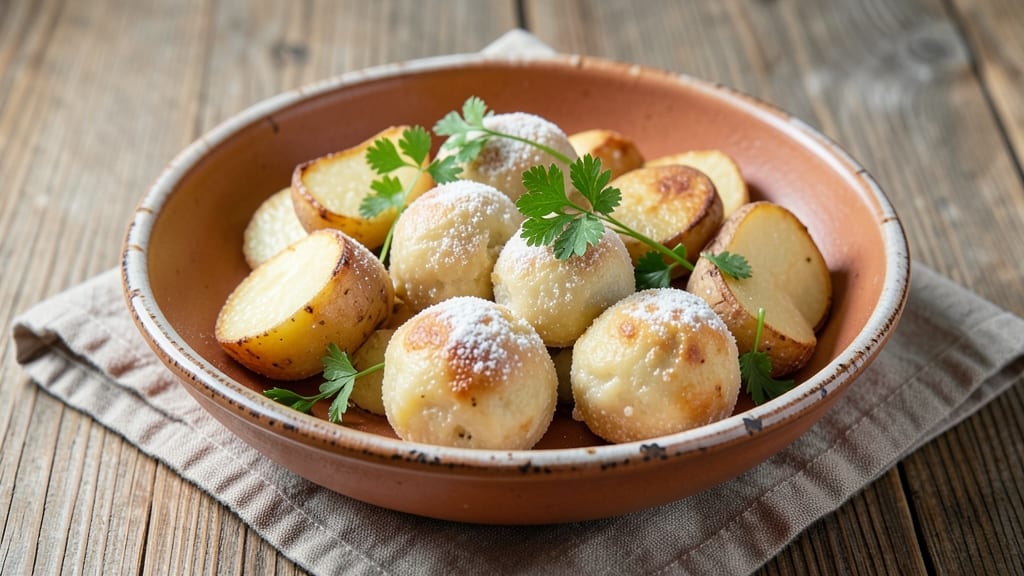
Polish potato dumplings—known as kopytka—are the ultimate comfort food, transforming simple ingredients into light-as-air pillows that melt in your mouth. 💛 I first tasted them in a Polish countryside kitchen, where my grandmother rolled each one by hand, creating those signature pleats that hold just enough butter to make every bite irresistible.
This recipe balances tradition with modern convenience, whether you shape them the old-fashioned way or use a dumpling press for speed.
The secret lies in the dough: a perfect ratio of flour, eggs, and cold butter that creates tender layers while staying firm enough to hold its shape. Boiling them gently ensures they cook through without turning gummy, then frying gives that golden, crisp exterior we all love.
The herby butter drizzle—infused with fresh parsley and chives—elevates them from side dish to star of the meal.
What you’ll end up with is a platter of fluffy, golden dumplings that soak up sauces beautifully, whether you serve them with sour cream, caramelized onions, or a rich mushroom gravy.
The texture is impossible to resist: crisp at the edges, soft in the center, with just enough chew to satisfy. This recipe delivers restaurant-quality results at home, with techniques even beginners can master.
Perfect for holiday tables, family dinners, or as a hearty side to roasted meats, these dumplings are versatile enough for any occasion. Let’s get started on creating your own batch—your taste buds will thank you.
Ingredients for potato dumplings polish
Fluffy, golden clouds start with these 11 simple ingredients—no fancy tools needed!
| Ingredient | Amount | Notes |
|---|---|---|
| All-Purpose Flour 🌾 | 2 ½ cups | Sifted for light texture |
| Cold Unsalted Butter 🧈 | ½ cup | Cut into small cubes |
| Large Eggs 🥚 | 2 whole | Room temperature preferred |
| Russet Potatoes 🥔 | 2 medium | Peeled and grated finely |
| Salt 🧂 | 1 tsp | Fine sea salt preferred |
| Fresh Parsley 🌿 | ¼ cup | Finely chopped for butter |
| Fresh Chives 🌱 | 2 tbsp | Chopped for herby drizzle |
| Melted Butter 🧈 | ¼ cup | For frying dumplings |
| Vegetable Oil 🫒 | ½ cup | For shallow frying |
| Sour Cream 🥛 | ½ cup | For serving (optional) |
| Water 💧 | 1 ½ cups | For boiling dumplings |
The potatoes are the star here—Russets are ideal for their starch content, but Yukon Golds work too. Grab 2 medium (about 1 lb total), peel them, and grate them using the fine holes on your box grater. Costco or Trader Joe's usually have the best prices on Russets, and they keep for weeks in a cool, dark place. Pro tip: squeeze out as much moisture as possible from the grated potatoes with a clean kitchen towel—this keeps your dumplings light and airy instead of dense. My grandmother always used a cheesecloth for this, but a towel works just fine. (And if you're feeling fancy, save those potato scraps for homemade stock later!)
No sour cream? Greek yogurt works perfectly—just thin it slightly with milk. Short on butter? Lard or shortening gives a similar texture, though butter is what makes these dumplings truly special. The herby butter drizzle is non-negotiable though—fresh parsley and chives are a must for that bright, fresh flavor. No fresh herbs? Dried parsley at half the amount will do in a pinch, but it won't be the same. For the flour, King Arthur or Gold Medal brands are my go-tos—they're reliable and give that perfect tender bite. And if you're using a dumpling press, make sure it's well-oiled so the dough doesn't stick.
These dumplings reheat beautifully—just pop them in a 350°F oven for 10-15 minutes until golden. Store leftovers in an airtight container in the fridge for up to 3 days, or freeze them for up to 3 months. (Freezing tip: lay them flat on a baking sheet first, then transfer to a bag—this prevents sticking.) The herby butter drizzle keeps for 1 week in the fridge, so make extra if you're planning to use it on other dishes too. And trust me, you'll want to—it's perfect on roasted chicken or mashed potatoes!
Why You'll Love This Recipe
- No-Knead Magic: I swear by this dough—just flour, butter, and eggs. No rolling, no fuss, and no waiting for it to rest. The cold butter cuts in so smoothly, and the dough comes together faster than I can say "dinner’s saved."
- Russet Gold: Boiled russets mashed into the filling? That’s the secret. They’re starchy, creamy, and hold their shape when steamed—no gummy texture here. The butter in the dough melts into flaky layers that make every bite feel like a hug.
- Weeknight Wonder: Freeze half the dumplings before cooking—steam them straight from frozen when you’re too tired to prep. Or make a double batch for game day: they reheat perfectly and disappear faster than chips at a tailgate.
- Pocketbook Hero: Five ingredients, one of which is potatoes—cheap, filling, and always in season. A single batch feeds four with leftovers that taste just as good cold for lunch the next day. My wallet thanks me every time.
Step-by-step instructions for Polish potato dumplings
Here's how to make these legendary dumplings—light as air with a tender bite!
👨🍳 Step 1: Grate and Cook the Potato Mixture
Peel the 2 medium russet potatoes and grate them using the large holes of a box grater. Place the grated potatoes in a clean kitchen towel and squeeze out every last drop of moisture—this is crucial for fluffy dumplings. Spread the grated potatoes on a baking sheet and microwave for 3 minutes to dry them completely.
Transfer the potatoes to a large bowl and let them cool slightly. Add the 2 whole large eggs and 1 teaspoon salt, then mix gently with a wooden spoon until fully combined. The mixture should be thick but still workable—if it feels too wet, squeeze out more liquid using the towel.
🍳 Step 2: Mix the Dough and Shape the Dumplings
In a separate bowl, combine the 2.5 cups all-purpose flour (sifted) with the 0.5 cup cold unsalted butter cut into small cubes. Use your fingers to work the butter into the flour until you have a crumbly texture with pea-sized butter pieces remaining. This creates pockets of flavor in every bite.
Add the potato-egg mixture to the flour-butter combination and gently fold everything together with a spatula. Be careful not to overmix—just combine until the dough comes together. The dough should be soft but not sticky. If it feels too dry, add 1 tablespoon of water at a time until it holds together when pressed.
Divide the dough into 4 equal portions (about 8 ounces each). Roll each portion into a long rope, then cut into 1-inch pieces. Gently flatten each piece into a disc about ½-inch thick—these will be your dumplings. Keep them covered with a damp towel while you work to prevent drying.
🔥 Step 3: Boil the Dumplings to Perfection
Bring 1.5 cups of water to a gentle boil in a large pot. Add the dumplings in batches, making sure not to overcrowd the pot. They should float to the surface when ready—this usually takes 3-4 minutes after they rise. Use a slotted spoon to carefully transfer them to a plate as they come up.
Here's the secret: once all dumplings are floating, let them cook for another 2 minutes uncovered. This final step ensures they're fully cooked inside while maintaining that pillowy exterior. The dumplings should be tender when pierced with a fork and should not feel dense or raw.
🔪 Step 4: Fry for Crispy Edges (Optional but Recommended!)
Heat 0.5 cup vegetable oil in a large skillet over medium heat until it shimmers but isn't smoking. Add the boiled dumplings in a single layer and fry for 2-3 minutes per side until they turn golden brown and crispy. The oil should sizzle gently—if it's too hot, the dumplings will burn before browning.
Transfer the fried dumplings to a paper towel-lined plate to drain excess oil. This step adds an amazing texture contrast—crispy outside, soft inside—but it's completely optional if you prefer them just boiled.
🥘 Step 5: Serve with Herby Butter and Sour Cream
In a small bowl, combine the 0.25 cup melted butter, 0.25 cup finely chopped fresh parsley, and 2 tablespoons chopped fresh chives. Mix until well combined and let it cool slightly. This herby butter is what makes these dumplings truly special—it adds a bright, fresh finish to every bite.
Arrange the dumplings on a serving platter and drizzle generously with the herby butter mixture. For an extra touch, serve with the 0.5 cup sour cream on the side. The contrast of cool sour cream with the warm, buttery dumplings is pure magic. Enjoy immediately while they're still warm and fluffy!
Pro Tips For Making Potato Dumplings Polish
- Boil Potatoes Until Fork-Tender: Don’t skimp on the cooking time—these dumplings need potatoes that mash into a smooth, starchy paste, not a gritty mess. Test with a fork: if it slides in like butter, you’re golden. Overcooked? They’ll turn gluey. Undercooked? You’ll taste raw starch. Aim for 15-20 minutes in salted water, then drain completely—no one likes soggy dough.
- Cut Butter into Flour Like Snow: Use your fingers or a pastry cutter to work cold butter into the flour until it resembles coarse crumbs, not a greasy paste. This creates pockets for steam to escape, giving you flaky, not dense, dumplings. I learned this the hard way—once I used a food processor and ended up with hockey pucks instead of clouds.
- Rest Dough Before Rolling: Give the dough a 10-minute chill in the fridge before shaping. Cold butter behaves better, and the gluten relaxes so it doesn’t shrink when boiling. Skip this, and your dumplings might pucker or tear. Trust me, even if you’re impatient—your future self will notice the difference.
- Boil in Batches, Don’t Crowd: Drop dumplings into simmering (not boiling) water one layer deep, then add more as they rise. Crowding drops the temp, making them steam instead of cook evenly. Use a slotted spoon to nudge them apart if needed. Yes, it takes longer, but mushy dumplings are a crime against Polish cuisine.
Perfect pairings for potato dumplings polish
Classic Polish Pairings
Serve these dumplings with sauerkraut and smoked sausage for a traditional Polish meal that brings together tangy, smoky, and buttery flavors. I love pairing them with kielbasa or smoked pork shoulder—the fat from the meat melts into the dumplings, creating an irresistible combination.
For a lighter option, try mushroom gravy made with wild mushrooms, onions, and a splash of cream. 🥓
Herb-Infused Sauces
Elevate your dumplings with dill sour cream sauce—whisk ½ cup sour cream with 1 tbsp chopped fresh dill, 1 tsp lemon zest, and a pinch of salt. This bright, herby sauce cuts through the richness beautifully.
Another favorite is caramelized onion jam—simmer 2 cups thinly sliced onions with 1 tbsp brown sugar and 1 tbsp apple cider vinegar until deep golden. Drizzle over the dumplings for a sweet-savory contrast.
Protein Pairings
These dumplings shine alongside roasted chicken thighs or pan-seared pork chops—the crispy skin and savory meat complement the pillowy texture perfectly. For a vegetarian option, pair them with grilled eggplant or stuffed bell peppers.
I also love serving them with beef goulash or bigos (Polish hunter’s stew) for a hearty, warming meal that feels like a hug in bowl form. 🍗
Beverage Matchups
A Polish-style wheat beer like Żywiec or Tyskie is the ideal match—its light, crisp profile balances the richness of the dumplings without overpowering them. For a non-alcoholic option, sparkling apple cider or ginger beer adds a refreshing zing.
If you prefer wine, a dry Riesling with its citrus notes provides a lovely contrast to the buttery dumplings. 🍺
Global Twists
For a fusion approach, try serving these dumplings with kimchi and bulgogi beef for a Korean-Polish mashup that’s bold and flavorful. Another fun idea is pairing them with harissa-spiced lamb and tahini sauce for a Middle Eastern-inspired twist.
The dumplings’ neutral flavor makes them incredibly versatile—don’t be afraid to experiment! 🌍
Sweet Endings
Yes, you read that right! For dessert, drizzle warm dumplings with honey and cinnamon, then top with whipped cream and a sprinkle of toasted nuts. This sweet version is a hit at Polish holiday tables and pairs perfectly with black coffee or mulled wine.
It’s a fun way to repurpose leftovers into a decadent treat. 🍯
Nutrition facts
Frequently asked questions
Why do Polish potato dumplings need to be boiled first?
Boiling first creates the signature light-as-air texture by cooking the potato center completely while keeping the exterior tender. This prevents gummy dumplings and ensures they stay pillowy when fried. The boiling step also removes excess starch that could make them dense.
Can I make these dumplings ahead of time?
Shape the dumplings up to 1 day ahead and store them in an airtight container in the fridge. For best results, boil them fresh when ready to fry. If freezing, shape and boil first, then freeze on a tray before transferring to a bag—this prevents sticking. Thaw overnight in the fridge before frying.
What's the difference between boiled and fried potato dumplings?
Boiled dumplings are soft and tender with a smooth texture, perfect for soups or as a side. Fried dumplings get a golden, crispy exterior while staying fluffy inside—ideal for serving as a main dish. The frying step adds texture contrast but isn't required if you prefer them just boiled.
Why did my dumplings turn out dense instead of fluffy?
Dense dumplings usually mean too much moisture in the potato mixture. Always squeeze out excess liquid after grating and microwaving. Also, overmixing the dough or using warm butter can develop gluten, making them tough. Keep everything cold and work quickly to maintain that signature light texture.
What's the best way to reheat leftover dumplings?
For best results, reheat in a 350°F oven for 10-15 minutes until warmed through. Avoid microwaving as it can make them soggy. If you fried them, you can quickly reheat in a pan with a little butter for that crispy texture again. Store leftovers in an airtight container for up to 3 days.