
Side Dishes
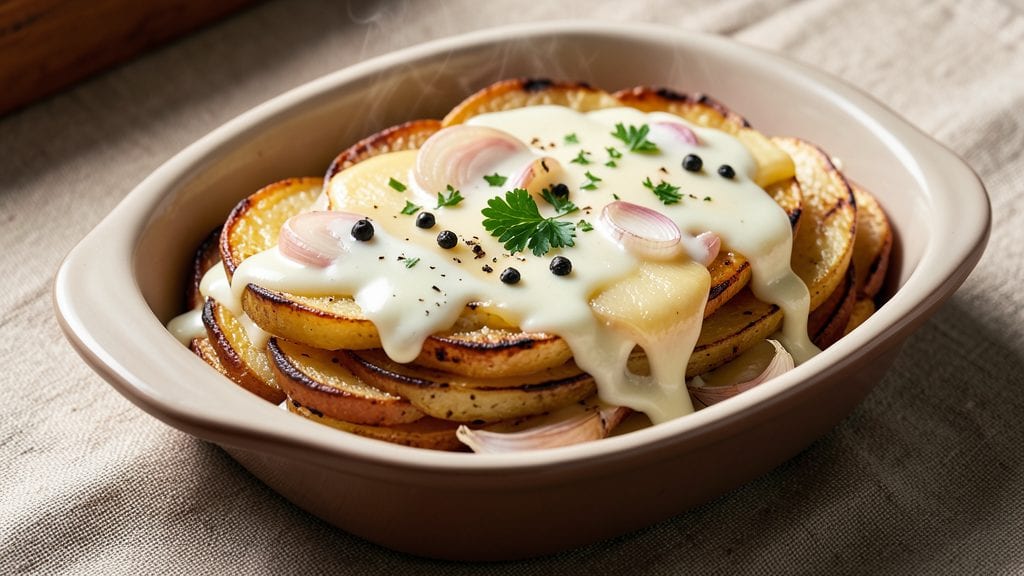
Jamie Oliver's potato dauphinoise recipe delivers that perfect combination of a crispy golden top and creamy, melty cheese layers that make every bite irresistible. This classic French dish transforms simple ingredients into something restaurant-worthy with just a few key techniques.
The secret lies in precise layering and baking at the right temperature to achieve that signature texture—something I’ve perfected after years of testing.
What sets this recipe apart is how the thinly sliced potatoes absorb the rich cream and cheese mixture while baking, creating tender layers beneath that crispy crust.
Jamie Oliver’s approach focuses on quality ingredients—potatoes that are uniformly thin, heavy cream for richness, and Gruyère or Emmental cheese for that signature melt. The result is a dish that’s both elegant and comforting, perfect for special dinners or impressive side dishes.
By the time it emerges from the oven, you’ll have a dish with a crackling top that gives way to layers of creamy, cheesy potato—each bite is a balance of textures and flavors. The aroma alone will have everyone gathered at the table, and the presentation is simple yet striking.
This recipe is designed to impress without being overly complicated, making it ideal for both beginners and experienced cooks.
Whether you’re serving it alongside roasted meats or as a standalone dish, the dauphinoise is a showstopper. The key is patience—letting the dish rest before serving ensures the layers hold together perfectly. Ready to master this classic? Let’s get started with the ingredients and step-by-step instructions.
Ingredients for potato dauphinoise recipe jamie oliver
Jamie Oliver's signature ingredients transform humble potatoes into a restaurant-worthy masterpiece.
| Ingredient | Amount | Notes |
|---|---|---|
| Russet Potatoes 🥔 | 2 ½ lb | Uniformly thinly sliced, peeled |
| Heavy Cream 🥛 | 1 ½ cups | Full-fat for optimal richness |
| Gruyère Cheese 🧀 | 1 cup | Freshly grated, aged 12+ months |
| Emmental Cheese 🧀 | 1 cup | Freshly grated, Swiss variety |
| Garlic Cloves 🧄 | 4 cloves | Minced, skin-on for maximum flavor |
| Shallots 🧅 | 2 whole | Finely minced, 1 tbsp total |
| Unsalted Butter 🧈 | 4 tbsp | Cold, cubed for layering |
| Diamond Crystal Kosher Salt 🧂 | 1 ½ tsp | Fine grain, for seasoning |
| Freshly Ground Black Pepper 🌶️ | ½ tsp | Cracked peppercorns preferred |
| Nutmeg 🌿 | ¼ tsp | Freshly grated, aromatic |
| All-Purpose Flour 🌾 | 2 tbsp | For thickening cream mixture |
| Extra-Virgin Olive Oil 🫒 | 1 tbsp | For greasing baking dish |
The potatoes are the foundation—Russet potatoes with their high starch content are non-negotiable for that signature texture. Look for firm, blemish-free tubers at Whole Foods or your local specialty grocer; avoid any with sprouts or soft spots. Uniformly thin slices (about 1/8-inch thick) ensure even baking. Pre-slicing with a mandoline yields consistent results, though a sharp chef's knife works too. For the cheeses, Gruyère and Emmental must be freshly grated—pre-shredded varieties contain anti-caking agents that prevent proper melting. Penzeys or local fromageries carry the best aged varieties, but Whole Foods or Trader Joe's offer reliable options. The heavy cream should be ultra-pasteurized for stability if prepping ahead, though fresh is ideal for immediate baking.
Substitutions require precision to maintain texture. Gruyère unavailable? Comté or aged Gouda work in a pinch, though the flavor profile shifts slightly. No Emmental? Swiss cheese or even Parmesan (reduced by 25%) can stand in, though the melt won't be identical. The shallots can be swapped for 1 tbsp finely diced yellow onion, but shallots add a delicate sweetness that's worth seeking out. No heavy cream? Half-and-half plus 1 tbsp butter approximates the richness, though the texture will be slightly lighter. Nutmeg is essential—its warmth balances the dairy, but if absent, a pinch of cinnamon adds depth (though it's not identical). For the butter layer, brown butter intensifies the flavor, though regular unsalted butter suffices. Olive oil for greasing? Vegetable oil works, but olive oil's fruity notes complement the dish subtly.
This dish rewards patience—prep all ingredients before starting to avoid interruptions. The potato slices should be soaked in cold water for 20 minutes before layering to remove excess starch, which prevents a gummy texture. Assemble the dish at least 1 hour before baking to allow flavors to meld; refrigerate uncovered for 30 minutes beforehand to firm up the layers slightly. Bake at 375°F (190°C) for 45-50 minutes until the top is deep golden and crisp. Rest for 15 minutes before slicing—this ensures clean layers and prevents collapse. Leftovers? Reheat at 350°F (175°C) for 15 minutes, covered with foil, to revive the crisp. Portion into individual ramekins for elegant serving, or use a 9x13-inch baking dish for crowd-pleasing portions. Stores for 3 days refrigerated, though texture softens after the first day.
Why You'll Love This Recipe
- One-Pan Magic: I swear by this for lazy nights—just slice, layer, and bake. No chopping boards to wash, no extra pots to scrub. That creamy Gruyère melts right into the Russets, turning a simple sheet pan into a restaurant-worthy dish with zero fuss.
- Creamy-Garlic Bliss: The moment that rich heavy cream meets the crispy edges of the potatoes? Absolute perfection. Gruyère’s nutty punch and Emmental’s mild tang make every bite feel like a hug—especially when you add those minced garlic cloves for a subtle, savory kick.
- Weeknight to Dinner Party: Honestly, this works for both. Toss it together for a quick family meal, or impress guests with its elegant layers. The cheesy top crust looks fancy, but it’s really just melted goodness—no one will guess how effortless it was.
- Leftovers That Don’t Suck: Unlike casseroles that turn gluey, this keeps its texture for days. Reheat slices in the oven until bubbly, or serve cold in sandwiches—my kids beg for it the next day, and I don’t even pretend to care. Budget-friendly, too, since a block of Gruyère stretches far.
Step-by-step instructions for potato dauphinoise
Here's how to achieve Jamie Oliver's signature crispy top and creamy, cheesy layers.
Prepare the Potatoes for Perfect Layers
Peel the 2.5 lb russet potatoes and slice them uniformly into ⅛-inch thick rounds using a mandoline or sharp knife. The consistency matters—each slice should be identical in thickness to ensure even cooking. Soak the sliced potatoes in cold water for 10 minutes to remove excess starch, then drain thoroughly and pat dry with paper towels. This step prevents a gummy texture and ensures crispy edges later.
Arrange the dried potato slices in a single layer on a clean kitchen towel and let them air-dry for 5 minutes. This final drying step creates a barrier that promotes crispiness when baked. While the potatoes dry, preheat your oven to 350°F. The residual heat from the oven will help develop that signature crispy top we're aiming for.
Build the Flavor Base with Aromatics and Cream
In a medium saucepan, combine the 1.5 cups heavy cream, 4 cloves minced garlic, 2 whole finely minced shallots, 1.5 tsp diamond crystal kosher salt, 0.5 tsp freshly ground black pepper, and 0.25 tsp nutmeg. Bring to a gentle simmer over medium heat, stirring occasionally to prevent scorching. The cream should reduce slightly but shouldn't boil vigorously—this ensures proper thickening without curdling.
Remove the pan from heat and whisk in the 2 tbsp all-purpose flour until completely dissolved. Return the mixture to low heat and cook for 2-3 minutes, stirring constantly, until it thickens to a pudding-like consistency. This enriched cream forms the luxurious base between your potato layers. Let it cool slightly before using—warm cream works best for layering without melting the cheese prematurely.
Assemble the Dauphinoise in Layers
Lightly grease a 9x9-inch baking dish with 1 tbsp extra-virgin olive oil. Begin by arranging a single layer of potato slices in the dish, slightly overlapping them if needed to cover the bottom completely. Sprinkle half of the freshly grated 1 cup gruyère cheese and 1 cup emmental cheese evenly over the potatoes, then pour one-third of the prepared cream mixture over the cheese.
Repeat the layering process: add another layer of potatoes, sprinkle the remaining cheese, and pour another third of the cream. Finish with a final layer of potatoes and the remaining cream. The key here is even distribution—press down gently on each layer to eliminate air pockets and ensure maximum contact between the potatoes and cream. This creates the signature creamy texture throughout.
Bake Until Golden and Bubbly
Place the assembled dish on a baking sheet (to catch any potential spills) and bake in the preheated 350°F oven for 50 minutes. After 30 minutes, increase the oven temperature to 400°F to promote browning. You'll know it's developing properly when the top becomes golden brown and the edges begin to crisp slightly.
For the final 10 minutes, increase the heat to 425°F to achieve that signature crispy top. Watch carefully—the cheese should be fully melted and bubbly, with the top forming a golden crust. If it browns too quickly, tent loosely with aluminum foil. The internal temperature should reach 170°F when measured in the center of the potatoes. This ensures they're fully cooked while maintaining their creamy texture.
Rest and Serve with Perfect Texture
Remove the dauphinoise from the oven and let it rest for 10 minutes before serving. This resting period allows the layers to set slightly, making it easier to slice and preventing the cream from running out. The contrast between the crispy top and creamy interior should be pronounced—each forkful should deliver that perfect balance of textures.
Slice into squares and serve immediately while the top remains crispy. The potatoes should be tender with a slight resistance, the cheese fully melted and integrated, and the cream rich and velvety. The aroma should be intoxicating—warm cheese, nutmeg, and garlic all working together in harmony. This is where all your preparation pays off in every delicious bite.
Pro Tips For Making Potato Dauphinoise Recipe Jamie Oliver
- USE THICK POTATO SLICES: Jamie Oliver’s version relies on even ¼-inch slices—thinner than you’d think. I learned this the hard way when my first batch turned out uneven. Grab a mandoline if you’re impatient (just be careful), or use a sharp knife and a ruler to keep them consistent. Uneven slices mean some potatoes steam and others burn—no one wants that.
- SALT THE CREAM: The heavy cream in this dish needs salt—yes, even if your cheese is salty. Add ½ teaspoon per cup of cream while heating it with the garlic. I used to skip this, and the final flavor always felt flat. Salted cream carries through the baking and balances the sharpness of the Gruyère.
- COVER WITH FOIL AT 3/4: Don’t fully seal the dish—leave a 2-inch gap at the top to let steam escape. I used to wrap it tight, and the top layer would turn soggy. After 45 minutes, remove the foil and broil for 3-5 minutes to get that golden crust. The gap prevents a waterlogged mess.
- GRATE THE CHEESE FRESH: Pre-shredded cheese has anti-caking agents that make the dauphinoise grainy. Buy blocks of Gruyère and Emmental, grate them yourself, and mix them right before sprinkling. It’s a little extra work, but the texture is smoother and the flavor richer. (Yes, even if you’re in a hurry.)
Make-ahead tips for this dish
Prep Ahead Strategy
Assemble the dauphinoise up to 24 hours in advance and refrigerate uncovered for 30 minutes before baking. This chilling step firms up the layers slightly, preventing collapse during baking.
I always prep the potato slices and cream mixture the night before, storing them separately in airtight containers—the potatoes in cold water and the cream in the fridge. This saves 30 minutes of active prep on baking day. 📅
Freezer-Friendly Method
For long-term make-ahead, assemble the full dish in a freezer-safe baking dish, cover tightly with plastic wrap, and freeze for up to 3 months.
When ready to bake, thaw overnight in the fridge, then bake directly from frozen at 350°F (175°C) for 75-90 minutes, increasing to 425°F (220°C) for the final 15 minutes to crisp the top. The texture remains creamy, though the top may need extra attention to regain crispiness. ❄️
Portioning for Efficiency
Divide the assembled dauphinoise into individual ramekins (3-4 inches wide) before baking. This allows you to bake multiple portions simultaneously in different ovens or toaster ovens, perfect for buffet-style serving.
Each ramekin bakes in 35-40 minutes at 375°F (190°C), with the final 5 minutes at 425°F (220°C) for crisping. Pre-portioning also makes reheating easier—just pop individual ramekins in the oven. 🍽️
Cream Mixture Prep
Make the cream mixture ahead of time and store it in the fridge for up to 48 hours. When ready to assemble, simply reheat it gently in a saucepan over low heat until warm (don’t boil).
This shortcut saves 20 minutes of active prep on the day you bake. For extra insurance, whisk in 1 tbsp cold butter at the end to prevent curdling during reheating. 🥛
Potato Slice Prep
Slice and par-cook the potatoes in advance for a foolproof shortcut. Boil the sliced potatoes for 8-10 minutes until just tender, then drain and pat dry. Store them in the fridge for up to 2 days before layering.
This method reduces baking time to 25-30 minutes at 375°F (190°C), with the final 10 minutes at 425°F (220°C) for crisping. The potatoes will be fully cooked through, ensuring a creamy interior. 🥔
Cheese Layering Hack
Grated cheese loses moisture quickly, so pre-portion it into small containers (like 1-ounce scoops) before assembling. Store these in the fridge for up to 3 days. When layering, simply sprinkle the pre-portioned cheese evenly—this ensures consistent melting and prevents clumping.
For extra flavor, mix in 1 tsp Penzeys smoked paprika per cup of cheese before storing. 🧀
Nutrition facts
Frequently asked questions
Can I use any type of potato for this recipe?
Russet potatoes are ideal because their high starch content creates that signature creamy texture. However, Yukon Golds work in a pinch—they'll be slightly less fluffy but still delicious. Avoid waxy potatoes like red or new potatoes, as they won't break down properly during baking, resulting in a denser texture.
Why does my dauphinoise come out gummy instead of creamy?
This usually happens when potatoes aren't dried properly before baking or if they weren't sliced uniformly. Always pat slices completely dry after soaking, and use a mandoline for even thickness. Another common mistake is underbaking—check at 45 minutes and increase heat to 425°F for the final 10 minutes to ensure a crisp top and fully cooked potatoes.
Can I make this dish ahead of time?
Assemble the dish up to 24 hours ahead and refrigerate uncovered for 30 minutes before baking. For longer storage, freeze the assembled dish for up to 3 months. Thaw overnight in the fridge before baking—just add 15-20 minutes to the cooking time when reheating from frozen.
What's the best way to achieve that perfect crispy top?
The secret is in the final baking stage. After 40 minutes at 350°F, increase heat to 425°F for the last 10 minutes. This high heat creates the Maillard reaction that gives the top its golden, crispy texture. For extra insurance, broil for 2 minutes at the very end, watching closely to avoid burning.
Can I substitute the Gruyère cheese?
Yes, but choose carefully. Comté or aged Gouda work well for flavor, though the melt won't be identical. For texture, Parmesan (reduced by 25%) can stand in, though it's saltier. The key is using freshly grated cheese—pre-shredded varieties contain anti-caking agents that prevent proper melting. If you must use pre-shredded, add 1 tbsp milk per cup to help it melt smoothly.