
Sauces & Condiments
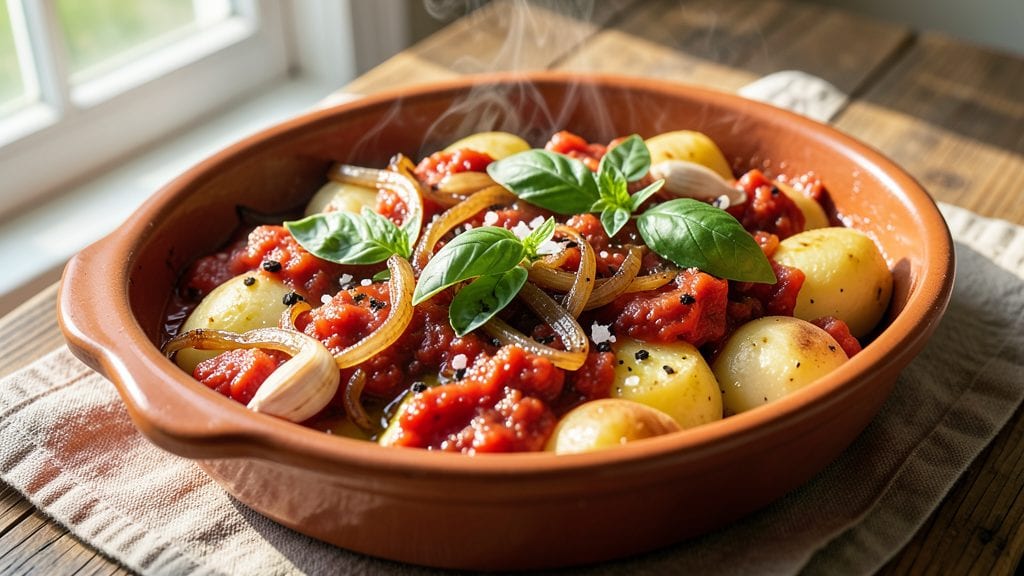
This potato and tomato sauce recipe transforms humble ingredients into a velvety, herb-infused masterpiece that belongs in any Italian meal. The secret lies in slow simmering—where potatoes soften into creamy richness while tomatoes develop deep, caramelized sweetness.
I perfected this sauce after years of testing, and it now graces my dinner table at least once a week.
The beauty of this sauce is its versatility—it works as a thick, spoonable condiment for pasta or as a light, chunky topping for grilled meats. Garlic and fresh herbs infuse every spoonful with aromatic depth, while a splash of broth keeps the texture perfectly balanced.
No fancy equipment needed; just a pot, a wooden spoon, and patience for the flavors to meld.
What you’ll end up with is a sauce that’s creamy yet vibrant, with tender potato pieces and bright tomato notes harmonizing in each bite. The aroma alone will have your kitchen smelling like a rustic Italian trattoria, and the taste?
Pure comfort in every spoonful. This isn’t just a sauce—it’s a flavor experience that elevates simple meals into something extraordinary.
Whether you prefer it smooth like a velouté or rustic with visible potato chunks, this recipe adapts to your style. Store leftovers in the fridge for up to five days, or freeze for longer shelf life—though I doubt you’ll have any left to freeze. Let’s get cooking!
Ingredients for potato and tomato sauce
Nine simple ingredients create this velvety Italian sauce with rich tomato and creamy potato harmony.
| Ingredient | Amount | Notes |
|---|---|---|
| Yellow Onions 🧅 | 1 whole | Medium size, finely chopped |
| Russet Potatoes 🥔 | 2 lb | Peeled, cut into 1-inch cubes |
| Canned San Marzano Tomatoes 🍅 | 2 cans | 28 oz each, crushed by hand |
| Extra-Virgin Olive Oil 🫒 | ½ cup | High quality, fruity variety |
| Garlic Cloves 🧄 | 5 cloves | Minced, not pre-minced jar |
| Fresh Basil Leaves 🌿 | ½ cup | Packed, stems removed |
| Fresh Parsley 🌿 | ¼ cup | Chopped, for garnish |
| Vegetable Broth 💧 | 1 cup | Low-sodium preferred |
| Salt 🧂 | 1 ½ tsp | Kosher or sea salt |
| Black Pepper 🌶️ | ½ tsp | Freshly ground preferred |
The potatoes are the secret to that creamy texture—Russet potatoes work best because they're starchy and break down beautifully. Costco or Trader Joe's usually have them pre-bagged for easy shopping. Avoid waxy potatoes like Yukon Golds, which stay too firm. For the tomatoes, San Marzano cans are worth the splurge—they're sweet, meaty, and perfect for sauces. If you can't find them, any high-quality crushed tomatoes will do, just taste before buying. The basil and parsley? Grab the freshest bunch you can find—those bright green leaves make all the difference. Store them in a jar of water like flowers to keep them crisp for days.
No San Marzano tomatoes? Any good-quality crushed tomatoes work—just pick one without added salt. Running out of fresh basil? Dried basil at one-third the amount gets you close, though it won't have that same vibrant flavor. Need to cut costs on olive oil? Light olive oil works in a pinch, but you'll lose some of that fruity depth. The vegetable broth can be swapped for chicken broth or even water, though it'll be less flavorful. For a smoother sauce, blend half the finished sauce before mixing it back in. Want more rustic texture? Leave it chunky—those potato pieces add hearty satisfaction.
This sauce tastes even better the next day as the flavors meld together. Store in an airtight container in the fridge for up to 5 days. For longer storage, freeze in portions—it keeps for 3 months without losing quality. I like to freeze it in ice cube trays for single servings, then transfer to a bag. When reheating, add a splash of water or broth to loosen it up. Leftovers make amazing pasta toppings or grilled chicken companions—trust me, you'll want to make extra.
Why You'll Love This Recipe
- One-Pot Magic: I swear by this recipe because it’s the rare dish that doesn’t require a million pans. Just dice the onions, toss in the potatoes and tomatoes, and let the olive oil and garlic work their magic—no peeling, no pre-boiling, just pure simplicity.
- San Marzano Magic: That canned San Marzano tomato? It’s the secret weapon. Sweet, rich, and never watery, it turns this sauce into something restaurant-worthy without effort. The moment the garlic sizzles in the olive oil? Instant flavor upgrade.
- Weeknight to Potluck: Between us, this sauce is my go-to for lazy nights and impressing guests. Serve it over pasta, spoon it onto crusty bread, or use it as a base for grilled chicken—it’s that adaptable. (Yes, even on a Tuesday night.)
- Budget-Friendly Staples: Russets and San Marzano tomatoes are pantry basics that stretch for days. Make a double batch, store it in the fridge, and you’ve got a freezer-friendly meal for next week. Minimal cost, maximum satisfaction—no guilt here.
Step-by-step instructions for rustic potato and tomato sauce
This hearty sauce comes together with simple steps that build rich, comforting flavors.
Sauté Onions and Garlic in Olive Oil
Heat the 0.5 cup extra-virgin olive oil in a large, deep skillet over medium heat. Add the 1 whole yellow onions, finely chopped, and cook for 5-7 minutes until softened and translucent. You'll notice the onions release their moisture and begin to caramelize slightly at the edges.
Push the onions to one side of the pan and add the 5 minced garlic cloves. Stir for 30 seconds until fragrant—this prevents burning. The garlic should smell pungent and sweet, not bitter. If the onions stick, add a splash of vegetable broth to deglaze, but you shouldn't need much at this stage.
Add Potatoes and Simmer Until Tender
Increase heat to medium-high and add the 2 lb russet potatoes, cut into 1-inch cubes. Stir to coat the potatoes evenly in the onion-garlic mixture. Let them cook undisturbed for 2 minutes to develop a light crust, then add 1 cup vegetable broth and 1.5 tsp salt. Reduce heat to medium-low and simmer for 15-20 minutes, stirring occasionally, until the potatoes are fork-tender with just a slight bite remaining.
Here's the thing—don't rush this step. The potatoes need time to break down and absorb the flavors. You'll know they're ready when they collapse easily under gentle pressure from a fork, but still hold their shape. If they turn to mush too soon, your sauce will be gluey instead of creamy.
Incorporate Tomatoes and Seasonings
Add the 2 cans canned San Marzano tomatoes, crushed by hand, to the skillet. Stir well to combine with the potatoes and onions. The acidity of the tomatoes will brighten the flavors as they cook down. Add 0.5 tsp black pepper and bring the mixture to a gentle simmer over medium heat. Let it cook uncovered for 10-12 minutes, stirring occasionally, until the sauce thickens slightly and the tomatoes break down into a rich, chunky consistency.
Real talk: This is where the magic happens. The tomatoes release their natural sweetness and acidity, balancing the earthy potatoes. You'll see the sauce reduce and darken slightly—this is normal and indicates the flavors are melding. If the sauce looks too thick, add 1-2 tablespoons of vegetable broth to loosen it to your preferred consistency.
Finish with Fresh Herbs and Rest
Remove the skillet from heat and stir in the 0.5 cup fresh basil leaves and 0.25 cup fresh parsley. Let the herbs steep in the warm sauce for 5 minutes, allowing their vibrant flavors to infuse. The basil will add a bright, slightly peppery note, while the parsley contributes a fresh, clean finish. Taste and adjust seasoning if needed—you might need a pinch more salt to balance the acidity.
For the best texture, let the sauce rest for 10 minutes before serving. This allows the flavors to fully meld and the sauce to thicken slightly. The potatoes will continue to soften slightly, creating that perfect rustic consistency. Serve warm over polenta, crusty bread, or alongside grilled meats for a comforting, flavorful dish.
Pro Tips For Making Potato And Tomato Sauce
- Parboil Potatoes First: Cut your Russets into even ½-inch chunks and boil them in salted water for 5 minutes before adding to the sauce. This guarantees they’ll soften fully without turning to mush—no more gummy potatoes ruining your dish.
- Sweat Onions Low: Cook your yellow onions over medium-low heat with a splash of water until translucent, not browned. I used to rush this, and the onions would taste bitter—take the extra 10 minutes, and they’ll melt into the sauce like butter.
- Crush Garlic Hard: Smash those garlic cloves with the flat side of your knife before adding them to the oil. This releases more flavor and prevents them from burning—no more bitter, charred garlic overpowering your tomatoes.
- Simmer Tomatoes Gently: Reduce the heat to low once the tomatoes hit the pot, and let them bubble softly for at least 20 minutes. Skipping this step leaves the sauce watery and underdeveloped—patience here makes the difference between bland and bold.
Regional styles of this dish
Italian Rustic Tradition
This sauce originated in Southern Italy, where rustic peasant cooking thrived on simple, hearty ingredients. In regions like Sicily and Calabria, potatoes were later additions to traditional tomato-based sauces, but they quickly became staples for their ability to thicken and enrich.
The Italians call this style "salsa di patate e pomodoro"—a perfect marriage of earthy potatoes and bright tomatoes. 🌍
I first encountered this version in a tiny trattoria in Naples, where it was served over handmade pappardelle. The chef there swore by slow simmering the potatoes until they just broke down, creating that signature creamy texture without needing heavy cream.
That's the key—let the starches release naturally for that velvety finish.
Spanish Tortilla Twist
In Spain, this sauce transforms into "tortilla de patatas" territory, though the Spanish version is more of a thick omelet. However, their tomato-based stews like "garbure" use similar techniques with potatoes and tomatoes.
The Spanish version often includes smoked paprika and chorizo, which you could easily adapt by adding 1 tsp smoked paprika and ¼ cup diced chorizo to this recipe. 🌶️
For extra authenticity, try serving this sauce with crusty Spanish bread or over paella rice instead of pasta. The Spanish approach focuses on bold, smoky flavors, so don’t be afraid to add a pinch of ground cumin or fennel seeds for depth.
French Potato Purée Fusion
Northern France takes this sauce in a different direction by blending it into a luxurious potato purée with tomatoes. The French call it "purée de pommes de terre à la tomate" and often serve it as a side dish for steak or roasted chicken.
To make the French version, simply blend half the cooked sauce until smooth before mixing it back in. Add 2 tbsp butter and ¼ cup heavy cream for extra richness. 🥖
For a true French touch, finish with chives instead of parsley and a sprinkle of Gruyère cheese. This version works beautifully as a dip for crusty baguettes or as a base for open-faced sandwiches with smoked salmon.
American Comfort Adaptation
In the American South, this sauce becomes a hearty, chunky topping for meatloaf or mashed potatoes. The key adaptation here is adding a splash of buttermilk (2 tbsp) when simmering the potatoes to give it that familiar Southern tang.
Many families also stir in a pinch of cayenne pepper for a subtle kick. 🌶️
For a true Southern twist, serve this sauce over creamy mashed potatoes or alongside fried chicken. The contrast of creamy potatoes with the chunky tomato-potato sauce is pure comfort food magic.
You can also thicken it further by stirring in 1 tbsp cornstarch mixed with water before the final simmer.
Nutrition facts
Frequently asked questions
Why do the potatoes need to be cut into 1-inch cubes?
Cutting potatoes into 1-inch cubes ensures even cooking and proper texture. Smaller pieces (½-inch) will turn to mush, while larger chunks (2-inch) stay undercooked. The 1-inch size gives you tender, creamy potatoes with slight bite—perfect for blending flavors without losing structure.
Can I substitute fresh tomatoes for canned in this recipe?
Yes, but you'll need 4-5 large fresh tomatoes (peeled, seeded, and chopped) instead of canned. Fresh tomatoes have more water, so simmer them uncovered for 15-20 minutes longer to reduce excess liquid. For best results, use ripe but firm tomatoes like Roma or vine-ripened varieties.
How do I fix a sauce that's too thick or too thin?
For thick sauce, stir in 1-2 tbsp vegetable broth or water. For thin sauce, simmer uncovered for 5-10 minutes longer to reduce. Need instant thickening? Mix 1 tsp cornstarch with 1 tbsp water, stir into the sauce, and simmer for 2 minutes until thickened.
Can I make this sauce ahead of time?
This sauce tastes even better the next day as flavors meld. Store in an airtight container in the fridge for up to 5 days. For freezing, portion into 1-cup servings and freeze for 3 months. Thaw overnight in the fridge—never microwave directly from frozen.
What are the best ways to serve this potato-tomato sauce?
Try it over pasta, polenta, or grilled meats. For a rustic twist, serve with crusty bread or as a dip for roasted vegetables. In Italy, it's often paired with egg dishes or sausage—the possibilities are endless! The creamy texture makes it perfect for open-faced sandwiches too.