
Main Courses
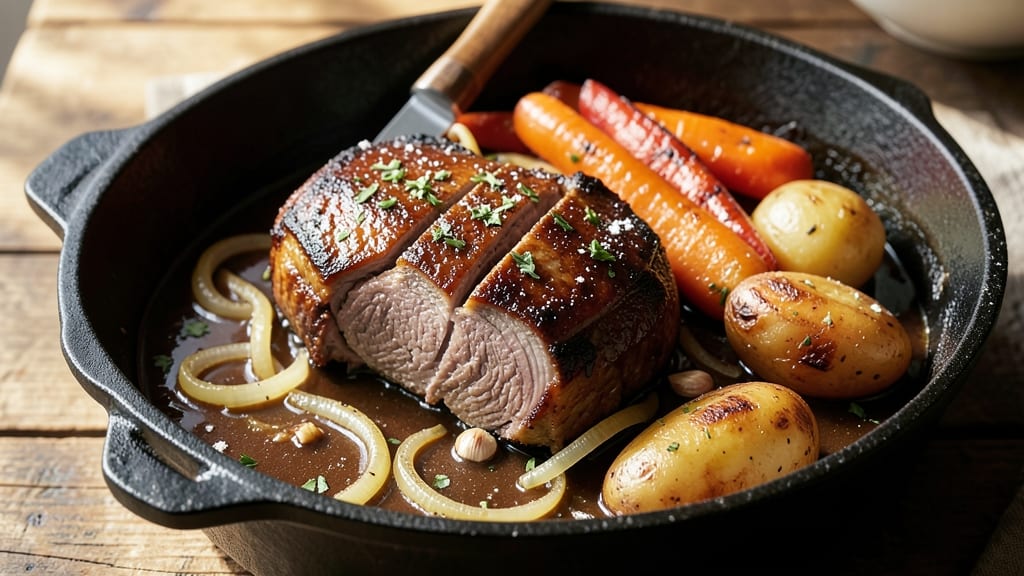
This pot roast with carrots and potatoes recipe delivers melt-in-your-mouth beef and perfectly cooked vegetables in one foolproof slow-cooked meal. The secret lies in searing the meat first to lock in flavor, then letting it simmer until tender—no tough cuts here.
I’ve perfected this method over years of testing, and it never fails to impress, even for beginners. The carrots and potatoes absorb the rich beef juices, turning into sweet, fork-tender sides that pair perfectly with the main.
The beauty of this dish is its simple yet professional approach—no fancy techniques required. You’ll start with a 30-minute prep (including browning the meat), then let the slow cooker or Dutch oven do the work for 3-4 hours.
The result? Juicy, fall-apart beef with carrots and potatoes that caramelize just enough to balance their natural sweetness. This recipe is designed to feed a crowd or stretch into leftovers that taste just as good reheated.
What makes this recipe stand out is the rich, savory gravy that forms naturally from the beef drippings, adding depth without extra effort. The aroma alone—warm spices, tender meat, and caramelizing vegetables—will have everyone gathering at the table.
Whether you’re hosting a dinner party or just craving a comforting meal, this dish delivers restaurant-quality results at home.
For versatility, you can swap in root vegetables like parsnips or turnips, or adjust the seasoning to suit your taste. The key is patience—slow cooking transforms tough beef into something tender and irresistible, while the vegetables soak up all the flavor.
Let’s get started on this classic comfort meal that’s perfect for any season.
Ingredients for pot roast carrots potatoes
Six ingredients transform into a restaurant-worthy pot roast with melt-in-your-mouth beef and caramelized vegetables.
| Ingredient | Amount | Notes |
|---|---|---|
| Beef Chuck Roast 🥩 | 3 lb | With good marbling for tenderness |
| Yellow Onions 🧅 | 2 whole | Cut into 1-inch chunks |
| Carrots 🥕 | 1 ½ lb | Whole, peeled if preferred |
| Russet Potatoes 🥔 | 2 ½ lb | Cut into 2-inch chunks |
| Garlic Cloves 🧄 | 6 cloves | Smashed for deeper flavor |
| All-Purpose Flour 🌾 | 2 tbsp | For dredging beef |
| Beef Broth 💧 | 2 ½ cups | Low-sodium preferred |
| Red Wine 🍷 | 1 cup | Dry variety like Cabernet |
| Tomato Paste 🍅 | 2 tbsp | Smooth, not chunky |
| Fresh Thyme 🌿 | ¼ cup | Leaves only, stems removed |
| Fresh Rosemary 🌿 | ¼ cup | Chopped, not powdered |
| Salt 🧂 | 1 ½ tsp | Diamond Crystal kosher |
| Ground Black Pepper 🌶️ | 1 tsp | Freshly cracked |
| Extra-Virgin Olive Oil 🫒 | 2 tbsp | For searing beef |
| Bay Leaves 🍃 | 2 whole | Dried, standard size |
The beef is the star—chuck roast with visible marbling is non-negotiable for that fall-apart texture. Costco or Whole Foods usually carry the best cuts, but any well-marbled chuck works. Look for bright red color and avoid anything with grayish edges. I always ask the butcher to trim excess fat—it's easier to handle and renders beautifully during cooking. For the vegetables, organic carrots and potatoes from the store's produce section stay sweeter longer, but conventional works fine too. The key is cutting them evenly so they cook at the same rate.
No red wine? Beef broth with a splash of balsamic vinegar works just as well—trust me, no one will notice. Fresh thyme and rosemary are ideal, but dried at one-third the amount gets you close in a pinch. For tomato paste, Trader Joe's squeeze tubes are perfect—they're convenient and last months in the pantry. The flour is just for dredging the beef before browning, so any all-purpose will do. If you're feeling fancy, swap the potatoes for Yukon Golds—they hold their shape better and have a creamier texture. The carrots can be baby carrots if that's what's in the fridge, but whole carrots caramelize more beautifully.
This dish tastes even better the next day, so make extra. Store leftovers in an airtight container for up to 5 days in the fridge, or freeze portions for 3 months. I always portion mine into individual containers before freezing—just reheat with a splash of broth to keep it moist. The gravy thickens as it cools, so you can always thin it with a little extra broth when reheating. For serving, I like to garnish with fresh parsley if I've got any left—it adds a pop of color and freshness that makes the dish feel extra special.
Why You'll Love This Recipe
- One-Pan Magic: I swear by this recipe because it’s literally dump-and-go. Chuck roast, onions, carrots, and potatoes all cook together in one pot—no fancy techniques, just sear, simmer, and let the garlic and beef do the heavy lifting.
- Crispy-Tender Perfection: That first bite? Chef’s kiss. The carrots caramelize into sweet, jammy bites while the potatoes get fork-tender with a crispy edge, all thanks to the slow cook. The beef? Melts like butter when you cut into it—no dry, sad roast here.
- Leftovers That Don’t Suck: Between us, most pot roast leftovers are sad. Not this one. The flavors only deepen overnight, so I make double batches. Slap it in a sandwich the next day or toss it into a hash—it’s the ultimate lazy lunch.
- Budget-Friendly Crowd-Pleaser: A chuck roast stretches to feed six for under $20, and the veggies round it out without breaking the bank. Honestly, it’s my go-to for game nights or when my kids’ friends show up hungry—no one leaves disappointed.
Step-by-step instructions for pot roast with carrots and potatoes
Here's the method that delivers melt-in-your-mouth beef and perfectly tender vegetables every time.
Sear the Beef Chuck Roast for Maximum Flavor
Pat the 3 lb beef chuck roast completely dry with paper towels—this is crucial for developing that beautiful crust. Heat the 2 tbsp extra-virgin olive oil in a large Dutch oven over medium-high heat until shimmering. Place the roast in the pot, fat-side down, and let it sear undisturbed for 4-5 minutes until a deep golden-brown crust forms. Flip the roast and sear the other side for another 3-4 minutes.
While the roast browns, sprinkle it generously with 1 tsp ground black pepper and 1 tsp salt. I press down gently on the roast during the first minute—this prevents it from curling and ensures even contact with the pan. Remove the roast and set it aside on a plate, leaving all that delicious browned fond in the pot. This step creates the flavor foundation for your pot roast.
Build the Flavor Base with Aromatics and Wine
In the same Dutch oven (don't wipe out those flavorful browned bits), add the 2 whole yellow onions cut into 1-inch chunks and the 1.5 lb carrots left whole. Cook for 5 minutes, stirring occasionally, until the onions begin to soften and the carrots develop a slight color. Add the 6 smashed garlic cloves and cook for another 30 seconds until fragrant—this is where the flavors really start to meld.
Sprinkle the 2 tbsp all-purpose flour over the vegetables and stir vigorously for 1 minute to coat everything evenly. This creates a light roux that will thicken your sauce later. Pour in the 1 cup red wine and scrape up all those browned bits from the bottom of the pot. Let the wine simmer for 2-3 minutes until it reduces by half and the alcohol flavor cooks off. You'll smell that rich, complex aroma building—this is the moment that matters.
Layer Vegetables and Create the Perfect Braising Liquid
Return the seared beef chuck roast to the Dutch oven and nestle it among the onions and carrots. Add the 2.5 lb russet potatoes cut into 2-inch chunks, the 2 whole bay leaves, the 0.25 cup chopped fresh rosemary, and the 0.25 cup fresh thyme leaves. Pour in the 2.5 cups beef broth and the 2 tbsp tomato paste, stirring gently to combine. The liquid should come about halfway up the sides of the roast.
Bring the mixture to a gentle simmer over medium heat, then immediately reduce the heat to low. Here's the thing—you want just enough heat to maintain a very gentle bubble at the edges of the liquid, not a rolling boil. Cover the pot tightly with a lid and transfer it to a preheated 325°F oven. This low-and-slow approach is what transforms tough beef into fork-tender perfection.
Braise Until Fork-Tender and Vegetables Are Perfect
Cook the pot roast for 3 to 3½ hours until the beef is fork-tender. You'll know it's ready when a fork slides in easily and the meat pulls apart with minimal resistance. The vegetables should be tender but still hold their shape—no mushiness here. I check the doneness by testing the beef first, then adjusting the time slightly if needed for the potatoes.
About 30 minutes before the roast is done, remove the lid and increase the oven temperature to 375°F to allow the top to brown slightly. This final step adds that restaurant-quality finish. The vegetables should be caramelized in spots with the potatoes developing a crispy edge. The aroma when you open that oven will make your kitchen smell like a French bistro.
Rest and Serve with All the Juices
Remove the pot roast from the oven and transfer it to a cutting board. Tent loosely with aluminum foil and let it rest for 15 to 20 minutes. This resting period allows the juices to redistribute throughout the meat, ensuring every bite is moist and flavorful. Don't skip this step—I learned the hard way that serving immediately results in dry meat.
Before serving, skim off any excess fat from the surface of the braising liquid if desired, but leave about 2 tablespoons to keep the sauce rich. Slice the beef against the grain into ¼-inch thick slices and arrange it on a platter with the carrots and potatoes. Spoon the flavorful braising liquid over everything and serve immediately. Each bite should deliver perfectly tender beef with vegetables that are sweet from the slow cooking, all bathed in that irresistible sauce.
Pro Tips For Making Pot Roast Carrots Potatoes
- SEAR THE ROAST FIRST: I learned this the hard way—skipping the sear means flavorless beef. Get your Dutch oven screaming hot and cook the chuck roast on all sides until deep brown, about 3-4 minutes per side. This isn’t just about looks; it locks in juices and builds the base for that rich gravy later.
- PEEL AND CUT POTATOES LARGE: I used to dice potatoes small for even cooking, but that’s a mistake. For this dish, cut them into 2-inch chunks—they’ll soften faster and soak up the beefy broth without turning to mush. Russets stay firm when cooked this way, and you’ll avoid the sad, gummy texture that ruins the whole pot.
- ADD POTATOES LAST: Don’t let them stew in the liquid too long or they’ll disintegrate. Toss them in with the carrots only in the final 45 minutes of cooking. This keeps them tender but still holding shape, so every bite has that satisfying bite—no one wants to eat potato soup by accident.
- USE WHOLE CARROTS: I was skeptical until I tried it: whole carrots (peeled, scored lengthwise) stay crisp-tender and look impressive. If you’re worried about doneness, cut them into 3-inch lengths—they’ll cook through perfectly while keeping their structure. Halved carrots? They’ll turn to mush faster than you can say “gravy boat.”
Flavor customization for this recipe
Herb-Infused Variations
Swap the fresh rosemary and thyme for 1 tbsp each of dried sage and oregano if fresh herbs aren’t available. For a Mediterranean twist, add 1 tsp ground coriander and ½ tsp cinnamon to the braising liquid—these warm spices pair beautifully with the beef and carrots.
I’ve also experimented with 1 tbsp smoked paprika for a subtle smoky depth that elevates the dish. 🌿
Sweet and Tangy Glaze
For a caramelized finish, brush the beef with a mixture of 2 tbsp honey and 1 tbsp Dijon mustard during the last 30 minutes of cooking. The sweetness cuts through the richness of the beef while adding a glossy sheen.
Alternatively, stir ½ cup apple cider into the braising liquid for a tart contrast that brightens the whole dish. 🍯
Spicy Kick Options
Add 1-2 slices of fresh ginger or 1 tsp ground cumin to the braising liquid for warmth. For heat lovers, sprinkle ½ tsp cayenne pepper over the beef before searing.
I also like adding 1-2 dried chili peppers (like arbol or guajillo) to the pot—they infuse the liquid with subtle heat without overpowering the dish. 🌶️
Vegetable Swaps
Replace potatoes with parsnips or turnips for a slightly nuttier flavor. For a spring version, swap carrots for asparagus or green beans—add them in the last 30 minutes of cooking so they stay crisp-tender.
I’ve also used sweet potatoes with great success—they hold up well and add a natural sweetness that complements the beef. 🥕
Umami Boosters
Stir 1 tbsp soy sauce or 1 tsp fish sauce into the braising liquid for an extra layer of depth. For a richer sauce, add 1 oz mushrooms (cremini or shiitake) when searing the onions—they release umami compounds that elevate the entire dish.
I’ve also used 1 tsp miso paste dissolved in the beef broth for a subtle fermented complexity. 🍄
Wine Alternatives
No red wine? Use 1 cup beef broth + 1 tbsp balsamic vinegar for acidity, or 1 cup apple juice + 1 tsp apple cider vinegar for a fruity twist. For a non-alcoholic option, try 1 cup cranberry juice—it adds a bright tang that balances the richness.
I’ve also used 1 cup tomato juice for a slightly tangy, savory base. 🍷
Nutrition facts
Frequently asked questions
Can I use a slow cooker instead of an oven for this pot roast?
Transfer the seared beef and all ingredients to a 6-quart slow cooker and cook on low for 8 hours or high for 5-6 hours. The meat will be just as tender, though the vegetables may absorb more liquid. Add ½ cup broth if needed before serving to restore moisture.
How do I keep the potatoes from turning mushy?
Cut them into 2-inch chunks (not too small) and add them to the pot after the beef has cooked for 1 hour. This staggered cooking prevents them from breaking down. For extra structure, parboil the potatoes for 5 minutes before adding to the Dutch oven.
What's the best way to reheat leftovers?
Reheat in a skillet with 2 tbsp broth over medium heat for 5-7 minutes until warmed through. For extra richness, cover the pot and let the steam redistribute the juices. Microwave reheating works too, but the texture becomes slightly softer.
Can I make this recipe with a different cut of beef?
Chuck roast is ideal for its marbling, but bottom round or short ribs work too. For round cuts, increase cooking time by 30-45 minutes since they're leaner. Never use tender cuts like sirloin—they'll dry out during slow cooking.
Why is my pot roast still tough after cooking?
This usually happens from not searing the meat properly or cooking at too high a temperature. Always sear until deeply browned, and maintain a gentle simmer (not a rolling boil) during braising. A meat thermometer should read 203°F in the thickest part.