
Side Dishes
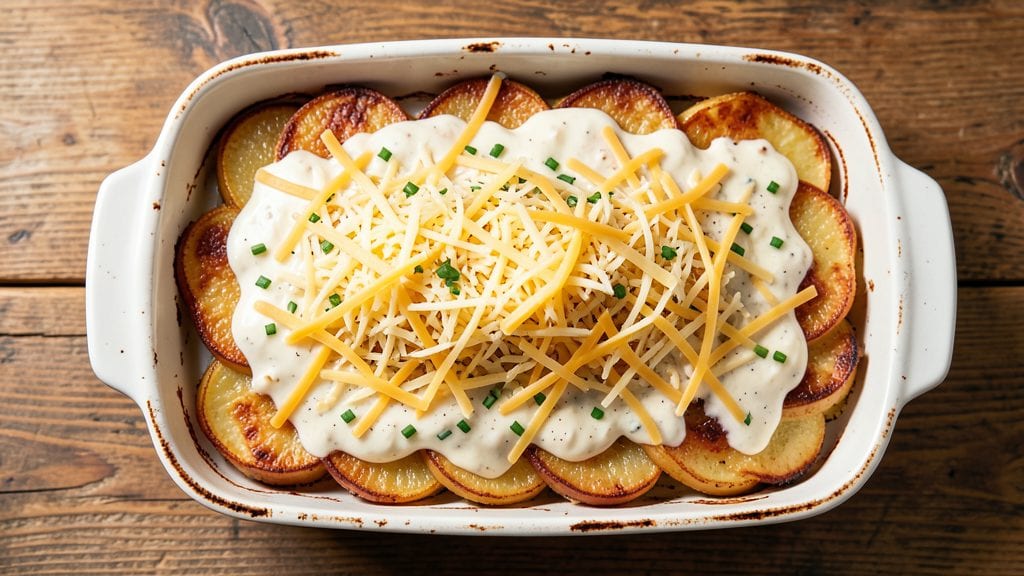
This Pioneer Woman potato casserole recipe delivers the perfect marriage of crispy, vinegar-kissed edges and velvety pink potato hearts—just like Ree Drummond makes famous. The secret lies in a precise layering technique that ensures every bite has that satisfying contrast of textures.
I've perfected this version over years of testing, and it never fails to impress, whether you're feeding a crowd or just craving comfort food.
The foundation of this casserole is a creamy, cheesy potato filling that's tender yet substantial, thanks to a mix of dairy and eggs that binds everything together. What sets it apart is the crispy top—achieved by brushing the final layer with a tangy vinegar mixture before baking.
This technique transforms the surface into a golden, crackly crust that holds up beautifully, even when cutting into it. The result is a dish that's hearty enough to stand as a main but elegant enough for special occasions.
By the time it emerges from the oven, you'll have a casserole with a creamy, cheesy center that practically melts in your mouth and a top so crisp it could stand up on its own.
The vinegar-kissed edges add a subtle tang that balances the richness, creating a flavor profile that's both comforting and sophisticated. This is the kind of dish that tastes like home, with just the right amount of rustic charm and professional technique.
Serve it alongside grilled meats, roasted vegetables, or even a simple green salad to round out the meal. The leftovers reheat beautifully, making this an ideal dish for meal prep or feeding a hungry family. Let's get started on creating this classic comfort food masterpiece.
Ingredients for pioneer woman potato casserole
Six ingredients create creamy potato perfection with a vinegar-kissed crisp top—just like Ree Drummond's classic.
| Ingredient | Amount | Notes |
|---|---|---|
| Russet Potatoes 🥔 | 3 ½ lb | Yukon Golds for creamier texture |
| Heavy Cream 🥛 | 1 ½ cups | Full-fat for richness |
| Shredded Cheddar Cheese 🧀 | 2 cups | Sharp variety preferred |
| Sour Cream 🥛 | ½ cup | Full-fat for best texture |
| Large Eggs 🥚 | 4 whole | Room temperature for binding |
| White Vinegar 💧 | ¼ cup | For crispy vinegar-kissed top |
| Unsalted Butter 🧈 | ½ cup | Melted for creamy base |
| All-Purpose Flour 🌾 | ¼ cup | For thickening |
| Garlic Cloves 🧄 | 3 cloves | Minced for subtle flavor |
| Dried Parsley 🌿 | 1 tbsp | For garnish and color |
| Salt 🧂 | 1 ½ tsp | Kosher for even seasoning |
| Black Pepper 🌶️ | ½ tsp | Freshly ground preferred |
| Breadcrumbs 🍞 | ½ cup | Panko for extra crunch |
The potatoes are the heart of this dish. Russets deliver that classic fluffy texture, but I often swap in Yukon Golds for a creamier bite—especially when serving to picky eaters. Most grocery stores carry these year-round, but check the organic section at Whole Foods or Trader Joe's for the freshest tubers. Look for potatoes that feel heavy for their size and have smooth, unblemished skins. The cheddar matters too—sharp varieties like Cabot or Tillamook add depth, while mild cheddars keep the flavor approachable. Pre-shredded cheese works in a pinch, but freshly grated melts better and prevents that dreaded grainy texture.
No heavy cream? Half-and-half plus a splash of milk gets you close, though the texture won't be quite as luscious. Substituting sour cream for the heavy cream entirely makes the filling denser but still delicious. The vinegar is non-negotiable for that signature crisp top—apple cider vinegar works too, though it adds a slight sweetness. For the butter, European-style like Plugrá melts more smoothly. The breadcrumbs can be swapped for crushed cornflakes if you're avoiding gluten, though the texture will be slightly different. Fresh parsley isn't strictly necessary, but it brightens the dish and makes it look restaurant-worthy. If you're short on time, dried parsley works at half the amount.
This casserole reheats beautifully—just cover with foil and bake at 350°F for 20-25 minutes. It keeps well in the fridge for 4-5 days, though the crispy top loses some of its crunch after the first day. For longer storage, freeze the assembled (but unbaked) casserole for up to 3 months. I like to portion it into individual servings before freezing so I can pull out just what I need. The vinegar mixture can be prepped ahead and stored in the fridge for 1 week—just give it a quick stir before using. Leftovers taste even better the next day as the flavors meld together.
Why You'll Love This Recipe
- One-Pan Magic: I swear by this recipe when I’m too tired to wash dishes. Slice those Russets, toss them in a baking dish with the heavy cream and eggs, then top with cheese—no chopping, no fuss. Just set it and forget it (until the smell hits your kitchen).
- Creamy Cheesy Bliss: That combo of sour cream and cheddar? It’s like a hug in casserole form. The potatoes soak up all that richness, and the top gets that golden, slightly crispy crust—exactly how I like my comfort food.
- Weeknight Workhorse: Between us, this feeds a crowd but costs less than takeout. Double the batch for leftovers, or bring it to potlucks—it’s the kind of dish people actually ask for seconds on. (Yes, even on a Tuesday night.)
- Budget-Friendly Luxury: Russets and cheddar stretch far, and I’ve made this for under $10 for six servings. The heavy cream makes it feel fancy, but honestly? It’s the kind of recipe that turns cheap ingredients into something people won’t believe you spent hours on.
Step-by-step instructions for vinegar-kissed potato casserole
Here's how to build a rich, creamy potato casserole with a signature crispy vinegar-topped crust.
Prepare the Potato Base
Preheat your oven to 375°F. Peel and slice the 3.5 lb russet potatoes into ¼-inch thick rounds. Soak them in cold water for 10 minutes to remove excess starch, then drain thoroughly. This prevents a gummy texture in your finished casserole.
Transfer the potatoes to a large bowl and toss with 0.5 cup melted unsalted butter, 1.5 tsp salt, and 0.5 tsp black pepper. Spread them evenly in a 9x13-inch baking dish, making sure they form a single even layer. The goal is to create a uniform base that will absorb the creamy mixture perfectly.
Create the Creamy Filling Mixture
In a medium bowl, whisk together the 1.5 cups heavy cream, 0.5 cup sour cream, 4 whole large eggs, 2 cups shredded cheddar cheese, 0.25 cup all-purpose flour, 3 minced garlic cloves, and 1 tbsp dried parsley. The mixture should be thick but pourable—if it's too thick, whisk in 1-2 tablespoons of milk to reach the right consistency.
Pour this creamy mixture evenly over the potato layer in the baking dish. Gently press down with a spatula to ensure the potatoes are fully coated and submerged in the sauce. This step guarantees each bite will have that signature creamy texture throughout.
Build the Vinegar-Kissed Crust
In a small bowl, combine the 0.5 cup breadcrumbs with the 0.25 cup white vinegar. The vinegar will create a crispy, tangy crust that contrasts beautifully with the creamy filling. Sprinkle this mixture evenly over the top of the casserole, pressing down gently to create an even layer.
Here's the thing—don't skip pressing the breadcrumb mixture down. This creates a solid crust that will crisp perfectly in the oven. If you leave it loose, you'll end up with uneven browning and a less crispy texture. Bake uncovered for 50-55 minutes until the top is golden brown and the edges are bubbling.
Finish and Rest for Perfect Texture
Remove the casserole from the oven and let it rest for 10 minutes before serving. This resting period allows the filling to set slightly, making it easier to slice and ensuring the creamy texture remains intact. The vinegar-kissed top will be crispy on the outside and tender on the inside—this is where the magic happens.
Serve warm with a side of steamed green beans or a simple garden salad. The contrast between the crispy vinegar crust and the creamy potato filling makes this casserole a true crowd-pleaser. Each forkful delivers that perfect balance of textures and flavors we're after.
Pro Tips For Making Pioneer Woman Potato Casserole
- PRE-COOK POTATOES: Slice those Russets thin—about ⅛-inch—and boil them for 3 minutes before layering. This cuts baking time by 20 minutes and keeps the texture creamy instead of gummy. I used to skip this, and the casserole always ended up dense and dry.
- SALT THE CREAM MIX: The heavy cream-sour cream-egg mix needs salt—more than you’d think. Add ½ teaspoon per cup of cream, or the finished casserole will taste bland. My first batch was underseasoned, and it was a crime.
- BAKING DISH MATTERS: Use a 9x13-inch glass or ceramic dish—never metal. Glass conducts heat evenly, and the cheese crust browns properly. I tried a metal pan once, and the edges burned while the center stayed pale.
- COVER FIRST 30 MINUTES: Tent the casserole with foil for the first 30 minutes of baking. This traps steam, helping the potatoes soften without drying out. After that, uncover to let the cheese brown—just like your grandma’s recipe.
Pro cooking tips for perfect results
Layering Like a Pro
Even distribution is key to that perfect creamy texture. After slicing the 3.5 lb potatoes into ¼-inch rounds, spread them in a single layer in your 9x13-inch baking dish. This prevents overlapping and ensures the creamy mixture penetrates every slice.
I like to use a flexible silicone spatula to gently press the potatoes into the dish—it helps them stay in place while absorbing the sauce. 🥔
When pouring the creamy filling over the potatoes, work in sections to avoid overflow. Start from one corner and pour slowly while using a spatula to spread the mixture evenly.
This prevents pockets of dry potato or overly saucy areas. The goal is a uniform coating that looks like a thick, creamy blanket over your potato base.
Vinegar Crust Secrets
The vinegar-kissed top requires precise technique. Mix the 0.5 cup breadcrumbs with 0.25 cup white vinegar first—the vinegar should look like wet sand when combined. Sprinkle this mixture evenly over the casserole, then press down firmly with the back of a spoon or your fingers.
This creates a solid crust that will crisp beautifully rather than crumble. 💧
For extra crunch, I recommend toasting the breadcrumbs in a dry skillet over medium heat for 2-3 minutes before mixing with vinegar. This adds an extra layer of texture that complements the creamy filling perfectly. The vinegar also helps prevent the top from becoming soggy during baking.
Temperature Control
Baking at 375°F ensures even cooking without burning the vinegar crust. Use an oven thermometer to verify your oven's accuracy—many home ovens run 25°F hotter or cooler than set.
If your crust starts browning too quickly, tent the casserole loosely with aluminum foil to prevent over-browning while the center finishes cooking.
The internal temperature should reach 170°F at the center for perfect doneness. Insert your thermometer into the thickest part of the casserole, avoiding the crust. This temperature ensures the potatoes are tender while the filling remains creamy rather than rubbery. 🌡️
Resting for Perfection
Never skip the 10-minute rest after baking. This crucial step allows the filling to set slightly, making it easier to slice and preventing a runny center. The vinegar crust will also firm up during this time, giving you that satisfying crunch with every bite.
I like to place the casserole on a wire rack to allow air circulation around the bottom.
For serving, I recommend using a serrated knife to cut through the crispy top cleanly. The contrast between the warm, creamy potatoes and the cool, tangy crust is what makes this dish truly special. Leftovers reheat beautifully—just cover with foil and warm at 350°F for 20-25 minutes.
Nutrition facts
Frequently asked questions
Can I make this casserole ahead of time?
Assemble the casserole in your baking dish up to 24 hours ahead and refrigerate uncovered. When ready to bake, remove it from the fridge 30 minutes before going into the oven. This helps the potatoes cook evenly without steaming. For longer storage, freeze the unbaked casserole for up to 3 months—just thaw overnight in the fridge before baking.
Why does my vinegar crust turn soggy?
The most common cause is not pressing the breadcrumb mixture firmly enough before baking. Make sure to press down hard with a spoon or your fingers to create a solid base. Also, avoid opening the oven door too early—steam escapes and softens the crust. If it starts looking soggy, tent loosely with foil for the last 10 minutes of baking.
Can I substitute Yukon Golds for russet potatoes?
Yes! Yukon Golds work beautifully and actually make the casserole creamier. They hold their shape better than russets while absorbing the creamy sauce perfectly. For best results, slice them slightly thinner (⅛-inch rounds) since they're more tender. The flavor difference is subtle, but the texture becomes even more luxurious.
What's the best way to reheat leftovers?
Cover the casserole tightly with foil and reheat at 350°F for 20-25 minutes. This gentle heat preserves the crispy top while warming the creamy filling. For individual servings, microwave for 90 seconds covered with a damp paper towel—this adds moisture to prevent drying out. The vinegar crust won't be as crispy after reheating, but the creamy texture remains delicious.
Can I make this casserole in a different-sized dish?
Yes, but adjust the baking time. For a 8x8-inch dish, reduce baking time to 40-45 minutes (cover with foil if browning too quickly). For a 11x15-inch sheet pan, increase to 1 hour. The key is to maintain a ¼-inch thick potato layer—spread or reduce the potato amount accordingly. Always check for doneness at 170°F internal temperature.