
Side Dishes
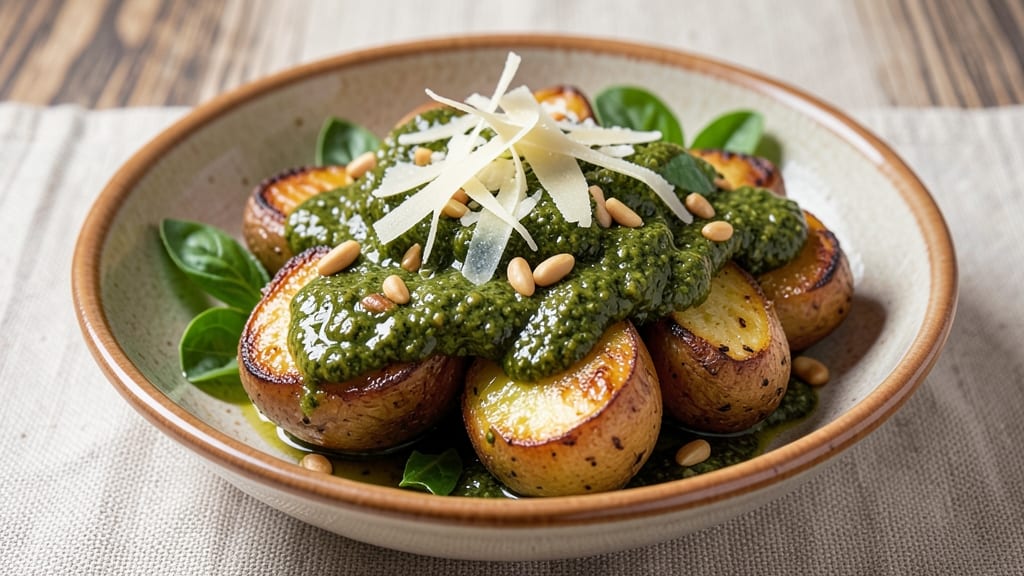
This pesto potatoes recipe transforms simple spuds into herb-packed, crispy bites that steal every meal’s spotlight. The secret lies in tossing baby potatoes with vibrant pesto, garlic, and a touch of parmesan before roasting until golden—no boiling required.
I’ve perfected this one-pan method over countless weeknight dinners, and it never fails to deliver restaurant-quality results with minimal effort.
The magic happens when olive oil and pesto create a flavorful crust on the potatoes while they roast, developing crispy edges and tender interiors. Fresh basil, garlic, and lemon in the pesto brighten the dish, while parmesan adds a salty depth that balances everything.
This recipe works as a standalone side or pairs beautifully with grilled meats, fish, or even as a vegetarian main.
What you’ll end up with is a pan of golden, herb-infused potatoes that are impossible to resist—crispy on the outside, fluffy inside, and bursting with pesto flavor in every bite.
The aroma alone will have everyone gathering around the table, and the best part? It’s ready in under 30 minutes with just one pan to clean. Let’s get cooking!
These pesto potatoes shine at picnics, barbecues, or as a quick weeknight side. For extra richness, sprinkle with toasted pine nuts before serving, or swap the pesto for sun-dried tomato basil for a different twist. The possibilities are endless, but the method remains foolproof—every time.
Ingredients for pesto potatoes
Herb-packed potatoes meet crispy perfection with these vibrant ingredients—simple yet restaurant-quality.
| Ingredient | Amount | Notes |
|---|---|---|
| Baby Potatoes 🥔 | 1 ½ lb | Halved for even cooking |
| Fresh Basil Leaves 🌿 | 1 ½ cups | Packed, stems removed |
| Pine Nuts 🥜 | ½ cup | Toasted for depth of flavor |
| Garlic Cloves 🧄 | 4 cloves | Peeled, roughly chopped |
| Extra-Virgin Olive Oil 🫒 | ½ cup | High-quality for roasting |
| Parmesan Cheese 🧀 | ½ cup | Freshly grated from block |
| Lemon Juice 🍋 | 1 tbsp | Freshly squeezed |
| Sea Salt 🧂 | 1 tsp | Diamond Crystal preferred |
| Freshly Ground Black Pepper 🌶️ | ½ tsp | For seasoning |
| Rosemary Sprigs 🌿 | 2 whole | Fresh, for aromatic depth |
| Thyme Leaves 🌿 | ½ tsp | Fresh, chopped |
The baby potatoes are non-negotiable for this recipe—their small size ensures even cooking and maximum crispiness. Trader Joe’s and Whole Foods carry excellent pre-washed varieties, but any organic baby potatoes will work. Avoid those with soft spots or sprouts, as they won’t roast evenly. For the pesto base, fresh basil leaves are essential—dried simply won’t cut it. Look for vibrant green leaves with no yellowing, and remove the stems before processing. The pine nuts should be toasted lightly in a dry pan until fragrant; this enhances their nutty flavor significantly. If you’re on a budget, walnuts or almonds work as a substitute, though the texture will differ slightly.
No fresh basil? Sun-dried tomato pesto or store-bought basil pesto (like Primal Kitchen) can be used, though homemade always tastes superior. Swapping pine nuts for walnuts requires a one-to-one ratio, but toast them first to mimic the pine nut’s richness. For a dairy-free option, omit the Parmesan or use nutritional yeast. The garlic can be roasted ahead of time for a sweeter flavor—simply wrap whole cloves in foil and bake at 400°F for 20 minutes. If you’re short on time, the pre-chopped garlic in jars works, though fresh is always preferred. The rosemary sprigs add an aromatic touch; if unavailable, a pinch of dried rosemary will suffice, but fresh is far more potent.
Store the fresh basil leaves in a damp paper towel-lined container for up to 5 days to maintain freshness. The toasted pine nuts should be kept in an airtight container at room temperature for up to 2 weeks, though they’re best used within a few days. The roasted potatoes reheat beautifully—simply warm in a 350°F oven for 10-15 minutes until crispy again. For meal prep, store the pesto separately and toss with the potatoes just before serving to preserve texture. This dish also freezes well; portion the potatoes into airtight containers and freeze for up to 3 months. Thaw overnight in the fridge before reheating.
Why You'll Love This Recipe
- One-Pan Magic: I swear by this recipe because it’s literally one pan, one bowl, and done. Toss halved baby potatoes in olive oil, roast until golden, then smother them in that bright green pesto—no extra dishes, no fuss. The kind of meal that makes me feel like I’ve outsmarted my own laziness.
- Garlic-Basil Bomb: That first bite? Crispy potatoes with a punch of garlic and fresh basil so vibrant it feels like summer in a forkful. The pine nuts add a crunch that makes it taste fancy, even though I’m just chopping herbs in my kitchen at 6:30 PM.
- Weeknight & Weekend: Between us, this works for everything. A quick weeknight dinner? Check. A side for grilled chicken or fish? Done. Even a picnic-friendly dish if you pack it right. Honestly, the only time it doesn’t fit is when I’m craving pasta—then I make extra.
- Budget Bright Spot: Baby potatoes and basil are affordable staples, and a little olive oil goes a long way here. I’ve stretched this into three meals by reheating leftovers with a sprinkle of cheese or a fried egg on top. Not the prettiest, but the taste makes up for it every time.
Step-by-step instructions for herb-packed crispy potatoes
Master this one-pan technique for golden, aromatic potatoes with perfect texture every time.
Prep and Parboil the Baby Potatoes
Begin by halving the 1.5 lb baby potatoes lengthwise. I use a sharp chef's knife for clean cuts—this ensures even cooking and maximum surface area for crisping. Place them in a medium pot and cover with cold water by about 1 inch. Add the 2 whole rosemary sprigs and bring to a boil over high heat.
Once boiling, reduce to a gentle simmer and cook for exactly 8 minutes. You'll know they're ready when a paring knife slides in easily with just slight resistance—they should be tender but not falling apart. Drain immediately in a colander and give them a vigorous shake to remove excess moisture. This step prevents soggy potatoes later, which is critical for achieving crispy results.
Toast the Pine Nuts and Make the Pesto Base
While the potatoes cook, toast the 0.5 cup pine nuts in a dry skillet over medium heat for 3-4 minutes. Stir constantly to prevent burning—they're done when they're fragrant and just beginning to turn golden. Remove from heat immediately and set aside to cool slightly.
In a food processor, combine the 1.5 cups fresh basil leaves, 4 peeled garlic cloves, the toasted pine nuts, 0.5 cup extra-virgin olive oil, 0.5 cup freshly grated parmesan cheese, 1 tbsp lemon juice, 0.5 tsp freshly ground black pepper, and 0.5 tsp chopped thyme leaves. Pulse until you achieve a thick, vibrant green paste with just a few visible flecks of pine nut—this texture ensures perfect coating without making the potatoes mushy.
Roast to Crispy Perfection
Preheat your oven to 425°F. Return the drained potatoes to the same pot and toss with 1 tsp sea salt. Spread them evenly in a single layer on a rimmed baking sheet, cut sides up. This orientation maximizes surface area for crisping.
Roast for 20 minutes, then remove from the oven and toss the potatoes with the pesto mixture, coating each piece thoroughly. Return to the oven and roast for another 15-20 minutes until the potatoes are deeply golden brown with crisp edges. The key is watching for that perfect balance—when the edges are crisp but the centers remain tender when pierced with a fork.
Finish with Fresh Herbs and Serve Immediately
Remove the potatoes from the oven and transfer to a serving platter. Garnish with additional chopped fresh basil leaves if desired, though the pesto already provides ample flavor. Here's the thing—these potatoes are best served immediately while still crisp. If you must hold them, tent loosely with foil to prevent drying out.
The final result should be potatoes with paper-thin crispy edges that give way to tender, herby centers. The pesto should cling beautifully, adding layers of garlic, pine nut, and parmesan flavor with each bite. Serve as a side dish or as a vegetarian main with a simple green salad for a complete meal.
Pro Tips For Making Pesto Potatoes
- Parboil First: Toss halved baby potatoes in boiling water for 5-6 minutes before roasting—this guarantees even cooking and prevents the outsides from burning while the centers stay raw. I learned this the hard way after pulling out a tray of undercooked potatoes that looked perfect but tasted like flour.
- Toast Pine Nuts: Dry-toast pine nuts in a separate pan over medium-low heat for 2-3 minutes before blending into the pesto—this prevents them from turning bitter and adds a nutty depth. Sounds weird, but it works: the texture becomes rich and buttery instead of harsh.
- Skip the Crowding: Spread potatoes in a single layer on the baking sheet, even if it means two trays—this ensures crispy edges and even browning. I used to cram them together, and the result was always soggy in the middle, no matter how long I baked them.
- Blend Basil Cold: Pulse basil leaves in the food processor with a splash of olive oil before adding garlic and nuts—this keeps the pesto vibrant and prevents it from turning into a sad, watery paste. Cold basil also makes the sauce cling better to the potatoes.
Troubleshooting perfect results
Uneven Cooking Fix
If your potatoes finish with some pieces undercooked while others are burnt, the issue is likely crowding on the baking sheet. Spread them in a single layer with at least ½ inch between each potato.
I’ve found that using a half-sheet pan (13x18 inches) works best for 1.5 lbs of potatoes—any smaller pan leads to overcrowding. For extra insurance, rotate the pan halfway through roasting to ensure even heat exposure. 🌡️
Soggy Potatoes Solution
Soggy potatoes happen when excess moisture steams them instead of crisping. The fix starts with proper draining after parboiling—shake the colander vigorously for 30 seconds to remove all water. Then, pat them dry with a clean kitchen towel before roasting.
For added crispiness, I recommend tossing the drained potatoes with 1 tbsp cornstarch before adding pesto—this creates a light barrier that prevents moisture from escaping during roasting.
Pesto Too Thin?
If your pesto ends up runny and clings poorly to the potatoes, you likely used too much olive oil or didn’t pulse the ingredients long enough.
For a thicker, more stable pesto, reduce the olive oil to ¼ cup and pulse the basil and garlic first until finely chopped before adding the remaining ingredients. Another trick: add 1 tbsp nutritional yeast to the pesto—it thickens the mixture naturally while adding a cheesy depth. 💡
Burnt Edges Problem
Burnt edges usually mean your oven runs hotter than 425°F or the potatoes are too close to the heating element. First, verify your oven temperature with an oven thermometer—many ovens run 25-50°F hotter than set.
If your oven is accurate, position the baking sheet on the middle rack (not the top) and reduce the temperature to 400°F for the final 10 minutes of roasting. This gives you more control over the browning process.
Pesto Not Sticking
If the pesto slides off instead of clinging, your potatoes might be too dry or the pesto too thick. For a better grip, toss the potatoes with 1 tsp Dijon mustard before adding pesto—the acidity helps the pesto adhere.
Alternatively, lightly brush the potatoes with extra olive oil after the initial roast to create a sticky surface. I also recommend using room-temperature pesto—cold pesto clings less effectively to hot potatoes.
Overly Dry Potatoes
Dry potatoes often result from over-roasting or insufficient moisture during cooking. To prevent this, parboil the potatoes for exactly 8 minutes (no longer) and drain thoroughly.
For extra moisture, toss the roasted potatoes with 1 tbsp warm water or lemon juice before adding pesto—this keeps them tender while allowing the pesto to crisp the edges. If they’re still dry after roasting, tent them with foil for 5 minutes to steam slightly before serving. ✨
Nutrition facts
Frequently asked questions
Can I use regular potatoes instead of baby potatoes?
Regular potatoes work, but baby potatoes are ideal for this recipe because their small size ensures even cooking and maximum crispiness. If using regular potatoes, cut them into 1-inch cubes and parboil for 12 minutes instead of 8 to ensure they're fully tender before roasting. The texture will be slightly less delicate but still delicious.
How do I make this recipe dairy-free?
Swap the Parmesan for nutritional yeast (2 tbsp) or omit it entirely for a dairy-free version. Use a dairy-free pesto base (like sun-dried tomato pesto) and ensure your olive oil is certified vegan. The dish will still be rich and flavorful without cheese.
Can I prep these potatoes ahead of time?
Parboil and drain the potatoes up to 2 days ahead, then store them in an airtight container in the fridge. Toss with pesto just before roasting to maintain crispiness. For a fully made-ahead option, bake the potatoes without pesto (until tender), cool, then refrigerate. Reheat in a 400°F oven for 15 minutes and add pesto fresh.
What's the best way to reheat leftover pesto potatoes?
Reheat in a 400°F oven for 10-15 minutes on a baking sheet to restore crispiness. For a quick option, use the air fryer at 375°F for 5-7 minutes, shaking halfway. Microwaving works for texture but may soften the edges—spritz with water and cover with a damp paper towel first.
Can I make this recipe without fresh basil?
Yes, but the flavor will differ. Use 1 tbsp dried basil (not dried basil leaves) or 2 tbsp sun-dried tomato pesto as a substitute. For a stronger flavor, add 1 extra garlic clove and ½ tsp red pepper flakes to compensate for the missing herb brightness.