
Side Dishes
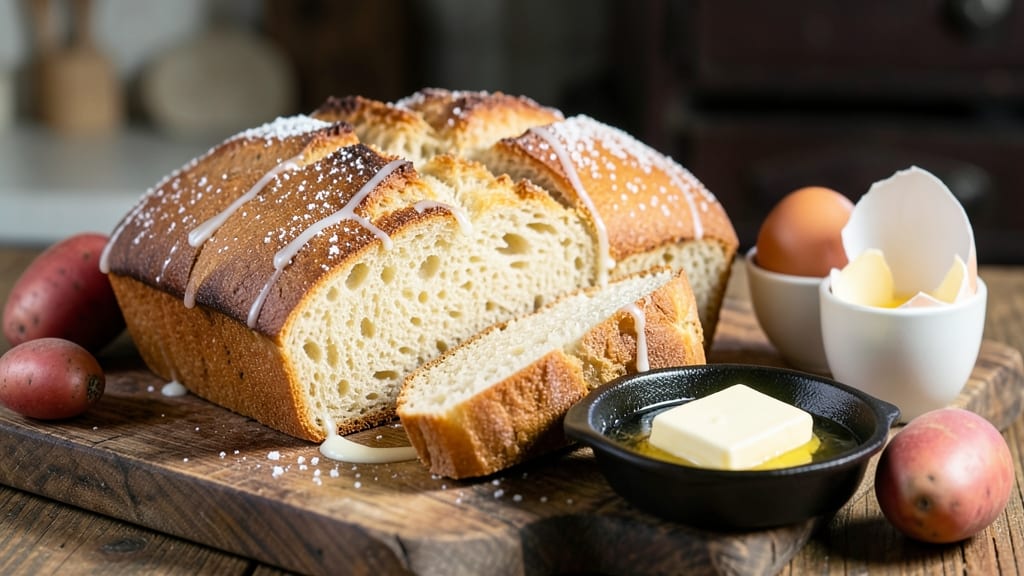
This old-fashioned potato bread recipe delivers the nostalgic comfort of a buttery crust and fluffy pink hearts that taste like Sunday dinner. The secret lies in the perfect balance of grated potato, warm milk, and a touch of sugar—elements that create a tender crumb and golden crust.
I first tried this recipe after realizing store-bought potato bread couldn't match the homemade version my grandmother made, and it quickly became a staple in my kitchen.
The dough comes together with simple ingredients but requires patience—kneading develops the gluten for that signature texture, while proofing ensures fluffy, airy hearts.
Baking at the right temperature guarantees a crisp crust without drying out the interior, and the result is a bread that's equally delicious toasted with butter or served alongside roasts. This recipe stays true to tradition while being adaptable for modern kitchens.
What makes this bread special is its versatility—it works as a side dish, breakfast toast, or even a base for open-faced sandwiches. The flavor is subtly sweet, with a hint of potato that disappears after the first bite, leaving behind a buttery, satisfying taste.
Once you try this version, you'll understand why it's been a family favorite for generations.
Ready in about two hours from start to finish, this potato bread recipe is ideal for meal prep or special occasions. The process is straightforward, but the results are anything but ordinary. Let's get started on creating your own batch of this timeless classic.
Ingredients for old fashioned potato bread
Simple ingredients that transform into nostalgic potato bread with a buttery crust and tender hearts.
| Ingredient | Amount | Notes |
|---|---|---|
| Russet Potatoes 🥔 | 2 cups | Finely grated, no liquid drained |
| All-Purpose Flour 🌾 | 3 cups | Plus 2 tbsp for dusting |
| Unsalted Butter 🧈 | ½ cup | Cold, cubed for dough |
| Whole Milk 🥛 | ½ cup | Warm, not hot |
| Granulated Sugar 🍚 | ¼ cup | Light brown sugar works too |
| Large Eggs 🥚 | 1 whole | Room temperature |
| Active Dry Yeast 🍞 | 2 ¼ tsp | 1 packet |
| Salt 🧂 | 1 tsp | Kosher or sea salt |
| Baking Powder 🍳 | 1 ½ tsp | Aluminum-free preferred |
| Vanilla Extract 🌸 | 1 tsp | Pure vanilla preferred |
| Cornmeal 🌽 | ¼ cup | For dusting baking sheet |
| Coarse Sugar 🍚 | 2 tbsp | For topping crust |
The potatoes are non-negotiable for that signature texture. Russets are best—they're starchy and hold moisture well. If you're buying pre-grated, squeeze out excess liquid; if grating yourself, use a box grater (the fine side) and work quickly to avoid browning. Whole Foods or Trader Joe's often carry pre-grated potatoes in the baking aisle, but I always grate mine fresh for better flavor. The yeast? Fresh is ideal, but the little packets work fine if stored properly. Check the expiration date—yeast loses potency fast once opened. For the flour, King Arthur or Gold Medal brands are my go-tos—they're consistent and reliable.
No vanilla extract? Vanilla bean paste at half the amount gives you those little specks. Short on coarse sugar? Turbinado sugar works too, but it's coarser so pulse it in a food processor first. The baking powder is crucial—don't skip it. If you only have double-acting, use the same amount. For the butter, Plugrá or Land O'Lakes unsalted melt beautifully, but any good-quality brand will do. The milk should be warm to the touch (like bathwater), not hot—you don't want to kill the yeast. If you're making this ahead, you can grate the potatoes and store them in the fridge for up to 24 hours before mixing with the dough.
This dough is best used fresh, but you can shape and refrigerate it overnight for easier morning baking. Wrap tightly in plastic and let it come to room temp before shaping. The baked loaves keep well at room temperature for 3 days in a bread bag, or you can freeze them for up to 3 months. To reheat, wrap in foil and warm in a 350°F oven for 10 minutes. I always make two loaves—one for toasting with butter, one for sandwiches. The crust gets crunchier as it sits, so slice it fresh if you want that perfect texture.
Why You'll Love This Recipe
- No Boil, No Fuss: I’ll admit, I was skeptical about grating potatoes instead of boiling them—until I tried this. The texture stays perfectly tender without the extra step, and honestly? The difference is zero effort for me.
- Butter-Soft Magic: That creamy center? It’s all thanks to the milk and butter working their way into the flour-potato mash. The outside gets just enough browning to hold its shape, but one bite and you’re in cloud territory—no dry crumbs here.
- Breakfast to Dinner: Between us, this bread saves my mornings and my weeknights. Toast it for breakfast with jam, or serve warm with dinner alongside roasted chicken. (Yes, even on a Tuesday night.)
- Pantry Goldmine: Russets and flour are cheap staples, and a single batch feeds four with leftovers that reheat like a dream. I make it twice a month, freeze half, and still forget I have it—until I’m desperate for something soft and familiar.
Step-by-step instructions for old fashioned potato bread
Here's how to make this classic bread with its signature pink hue and tender crumb.
Prepare the Potato Base
Begin by grating the 2 cups of russet potatoes using the fine holes of a box grater. I like to use a mandoline for even grating, but a box grater works fine if you take your time. The goal is to get fine, even shreds without pressing too hard—this prevents excess liquid from releasing. Transfer the grated potatoes to a clean kitchen towel and squeeze out any excess moisture by gently twisting and wringing the towel. You want the potato mixture to be dry but still hold its shape when pressed.
Place the drained potato shreds in a large mixing bowl. Add the 0.5 cup of unsalted butter, cubed, and the 0.5 cup of warm whole milk. Let this mixture sit for 5 minutes while you prepare the yeast mixture. The warm milk helps activate the yeast later, and the butter will create that signature rich flavor and tender crumb.
Activate the Yeast
In a separate small bowl, combine the 0.5 cup of warm whole milk with the 2.25 teaspoons of active dry yeast. Let this mixture sit for 5-7 minutes until it becomes frothy. You'll know it's ready when you see small bubbles forming on the surface and the mixture smells slightly sweet. If it doesn't bubble, your yeast might be old—start with a fresh packet next time.
Once the yeast is active, add it to the potato mixture along with the 0.25 cup of granulated sugar, 1 teaspoon of salt, and 1 teaspoon of vanilla extract. Mix everything together with a wooden spoon until the butter is fully incorporated and you have a smooth, thick batter. The batter should be sticky but manageable—this is normal for potato bread dough.
Mix and Knead the Dough
Gradually add the 3 cups of all-purpose flour to the potato mixture, mixing with the wooden spoon until the dough begins to come together. Switch to your hands and knead the dough on a lightly floured surface for about 5 minutes. You're looking for a smooth, elastic dough that's slightly tacky but not sticky. If it feels too dry, add 1 tablespoon of warm milk at a time until it reaches the right consistency.
Real talk: This dough is different from regular bread dough. It's softer and stickier because of the potatoes. Don't worry if it doesn't look like traditional bread dough—it's supposed to be more like a dense, moist cake batter. Once the dough is smooth, place it back in the bowl, cover with a clean kitchen towel, and let it rise in a warm place for 1 to 1.5 hours, or until it has nearly doubled in size. You'll know it's ready when you poke it gently and the indentation stays put.
Shape and Second Rise
Once the dough has risen, punch it down gently to release the air. On a lightly floured surface, shape the dough into a round loaf about 8 inches in diameter. Place it on a baking sheet dusted with 0.25 cup of cornmeal. Cover loosely with the kitchen towel and let it rise again for another 30 to 45 minutes. This second rise gives the bread its final fluffiness and helps it maintain its shape in the oven.
While the dough is rising, preheat your oven to 375°F. Sprinkle the 2 tablespoons of coarse sugar evenly over the top of the dough. The sugar will create a beautiful caramelized crust that contrasts perfectly with the soft interior. This is the moment that matters: the sugar needs to melt and caramelize during baking, so don't skip this step.
Bake to Golden Perfection
Bake the potato bread for 35 to 40 minutes, until the top is golden brown and the internal temperature reaches 190°F. You'll know it's done when you tap the top gently and it sounds hollow. The bread should have a beautiful golden crust with a slightly crisp exterior and a soft, tender interior. If the top browns too quickly, tent the bread with aluminum foil to prevent over-browning.
Let the bread cool on a wire rack for 10 minutes before slicing. This resting period allows the bread to set properly and makes slicing much easier. The result should be a bread with a buttery crust, a tender crumb, and those beautiful pink hearts throughout—classic old-fashioned potato bread at its best. Serve warm with butter or jam for the ultimate experience.
Pro Tips For Making Old Fashioned Potato Bread
- Boil Potatoes Until Fork-Tender: I learned this the hard way—overcooked potatoes turn to mush in the dough, and undercooked ones leave you with a dense, chewy loaf. Aim for potatoes that collapse just under a fork’s pressure, not a knife’s ease. Drain them immediately and shock in ice water for 5 minutes to stop cooking; this keeps them firm for mixing.
- Use Cold Butter: Cut the butter into small cubes and chill them for at least 30 minutes before mixing into the dough. Cold butter creates flaky layers—if you skip this, you’ll end up with a greasy, dense bread instead of that classic flaky texture. (Yes, even if you’re impatient like me.)
- Don’t Overmix the Dough: The moment the flour and potatoes come together, stop stirring. Overworking the dough develops gluten, which turns your potato bread into a tough, bread-like brick. Mix just until combined—lumpy is fine, fluffy is the enemy here.
- Bake in a Preheated Dutch Oven: This isn’t the prettiest method, but it’s the tastiest. Place your shaped loaf in a cold Dutch oven, then slide it into a 425°F (220°C) oven for the first 20 minutes. The steam builds a crisp crust while keeping the inside tender. Skip the Dutch oven, and you’ll fight a soggy bottom or uneven browning.
Flavor customization for old fashioned potato bread
Sweet vs. Savory Twist
For a sweet variation, swap the ½ cup granulated sugar for ¾ cup brown sugar and add 1 teaspoon cinnamon to the dough. Top with ½ cup chopped pecans or walnuts before baking for a potato bread French toast or dessert loaf.
The extra sugar caramelizes beautifully, creating a sticky, sweet crust perfect for dipping in coffee or pairing with vanilla ice cream. 🍯
Herb-Infused Variations
Boost the dough with 1 tablespoon fresh rosemary or thyme (finely chopped) for a herb-infused twist. These herbs pair wonderfully with the buttery richness, adding an earthy depth that works perfectly alongside roasted meats or soups.
For a stronger flavor, infuse the ½ cup warm milk with herbs by steeping them for 10 minutes before mixing. Strain before using to avoid gritty texture.
Cheesy Potato Bread
Add 1 cup shredded sharp cheddar or Gruyère to the dough for a cheesy twist. Fold the cheese into the dough after kneading—this creates pockets of melted cheese throughout the loaf. For extra decadence, sprinkle ½ cup grated Parmesan on top before baking.
The cheese enhances the buttery flavor and adds a salty contrast to the sweet crust. This version is ideal for hearty breakfasts or as a side for grilled cheeses. 🧀
Spiced Pumpkin Version
Incorporate 1 cup pumpkin puree (not pumpkin pie filling) and reduce the milk to ¼ cup. Add 1 teaspoon pumpkin pie spice and ½ teaspoon ginger for a fall-inspired twist. The pumpkin adds moisture and a subtle sweetness, while the spices create warmth.
Top with an extra sprinkle of coarse sugar for a festive holiday bread that’s perfect for Thanksgiving or Christmas mornings. 🎃
Everything Bagel Flavor
Transform this into an everything bagel-style bread by adding 1 tablespoon everything bagel seasoning (or mix 1 teaspoon sesame seeds, 1 teaspoon poppy seeds, ½ teaspoon dried garlic, and ½ teaspoon dried onion). Roll the seasoning into the dough after kneading for even distribution.
Brush the baked loaf with melted butter and sprinkle extra seasoning on top for a crunchy, savory crust that’s perfect with cream cheese or smoked salmon. 🥯
Gluten-Free Adaptation
For a gluten-free version, replace the 3 cups all-purpose flour with a 1:1 gluten-free flour blend (like Bob’s Red Mill or King Arthur). Add 1 tablespoon xanthan gum to improve elasticity. Reduce the milk to ¼ cup** to balance the moisture from the potatoes.
The texture will be denser but still tender—ideal for those with gluten sensitivities who still want that classic potato bread experience. 🌾
Nutrition facts
Frequently asked questions
Why does this potato bread have pink hearts?
The signature pink hearts come from the natural pigments in russet potatoes. When baked, the starches and sugars caramelize while the pigments create those beautiful flecks throughout the bread. This is why russets work best—other potato varieties lack the same vibrant color.
Can I make this bread without yeast?
Yes! For a quick version, replace the yeast with 1.5 teaspoons baking soda and 1 teaspoon cream of tartar. Mix dry ingredients first, then combine with wet ingredients. The bread will be denser but still delicious—great for when you're short on time.
How do I store leftover potato bread?
Wrap cooled loaves tightly in plastic wrap or a bread bag. Store at room temperature for up to 3 days or freeze for 3 months. To reheat, wrap in foil and warm at 350°F for 10 minutes. The crust stays crispy even after reheating!
What if my dough doesn't rise properly?
Check your yeast first—it must be fresh. Warm milk should be 100-110°F (like bathwater). If using an oven for warmth, turn it to 200°F with a bowl of hot water inside. Let dough rise in a draft-free spot for 1.5-2 hours. If still flat, your yeast may be dead—start fresh with a new packet.
Can I make this bread in a Dutch oven?
Shape the dough into a round and place it in a greased Dutch oven. Bake at 375°F for 40-45 minutes. The Dutch oven traps steam, creating an even more tender crumb. Just be sure to preheat it first for best results.