
Side Dishes
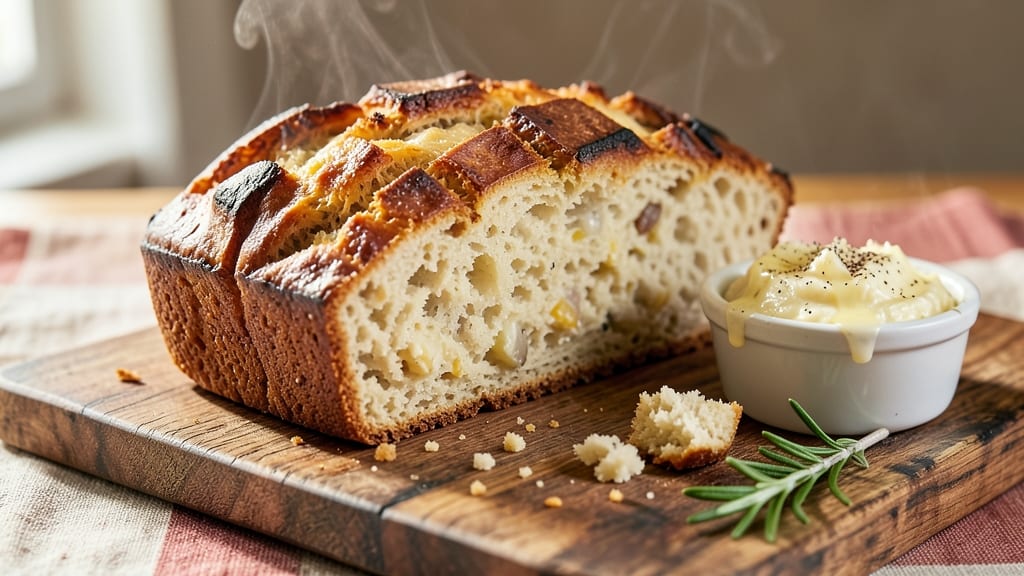
This mashed potato bread recipe transforms humble mashed potatoes into a fluffy, golden loaf with a surprise creamy center that will change how you think about potato-based baking.
The secret lies in blending perfectly seasoned mashed potatoes directly into the dough, creating a tender crumb that stays moist while developing a crisp exterior. I developed this recipe after years of experimenting with dense potato breads that never quite lived up to expectations—until I discovered this foolproof method.
The beauty of this recipe is its versatility. You can customize it with sharp cheddar, garlic powder, or fresh herbs for extra flavor, or keep it simple with just salt and butter for a classic taste.
The dough comes together in 15 minutes, then bakes for 30-35 minutes at 375°F, delivering a loaf that's both comforting and impressive. The hidden mashed potato filling adds richness without overpowering the bread's natural flavor, making every slice a revelation.
What you'll end up with is a creamy-textured loaf that's perfect for sandwiches, toast, or serving alongside soups and stews. The exterior develops a golden-brown crust with a satisfying crunch, while the interior remains soft and pillowy—like a cross between sourdough and mashed potato casserole.
This isn't just a side dish; it's a restaurant-quality centerpiece that's surprisingly easy to make at home.
For extra indulgence, brush the baked loaf with melted butter and sprinkle with coarse salt while still warm. The aroma alone will have everyone at the table asking for seconds. Here's how to make it—step by step—for a loaf that's as satisfying to prepare as it is to eat.
Ingredients for mashed potato bread
Fluffy dough meets creamy potato filling—this loaf delivers restaurant-quality texture with simple pantry staples.
| Ingredient | Amount | Notes |
|---|---|---|
| Russet Potatoes 🥔 | 2 lbs | Peeled and boiled until tender |
| Unsalted Butter 🧈 | ½ cup | Cold, cut into small cubes |
| Milk 🥛 | ¼ cup | Whole milk preferred |
| All-Purpose Flour 🌾 | 3 cups | Sifted for lighter texture |
| Granulated Sugar 🍚 | ½ cup | Light brown sugar works too |
| Active Dry Yeast 🍞 | 2 ¼ tsp | 1 packet, dissolved in warm milk |
| Large Eggs 🥚 | 2 whole | Room temperature for best rise |
| Diamond Crystal Kosher Salt 🧂 | 1 ½ tsp | Adjust to taste |
| Fresh Garlic 🧄 | 2 cloves | Minced for extra flavor |
| Sharp Cheddar Cheese 🧀 | ½ cup | Shredded, optional for depth |
| Fresh Chives 🌿 | 2 tbsp | Chopped, for freshness |
| Cornmeal 🌽 | ¼ cup | For dusting bread pan |
| Melted Butter 🧈 | 2 tbsp | For brushing after baking |
The potatoes are the heart of this bread, so Russet potatoes are your best bet—they're starchy enough to create that signature creamy texture. Costco or Trader Joe's often have them pre-washed, which saves time. If you're using store-bought mashed potatoes, Libby's or Bob Evans work well, but homemade always tastes better. The butter should be cold and cubed when you mix it into the dough—this helps create pockets of air for that fluffy rise. For the yeast, always check the expiration date—it's the difference between a loaf that rises and one that flops.
No milk? Heavy cream or half-and-half works just as well, though the texture might be slightly richer. Short on flour? Substitute half with whole wheat, but the crumb will be denser. The cheddar is optional but adds a nice tang—sharp cheddar like Cabot or Tillamook works best. Fresh herbs like chives or parsley can replace the garlic if you're not a fan, but I always keep a little garlic in there for that savory kick. The cornmeal isn't just for dusting—it adds a subtle crunch to the bottom of the loaf. If you don't have it, semolina or all-purpose flour will do in a pinch.
This dough needs time to rise—at least 1 hour in a warm spot—so plan ahead. The baked loaf keeps well for 3 days at room temperature, wrapped in a clean kitchen towel. For longer storage, slice and freeze portions—up to 3 months—just thaw at room temperature before serving. The best part? It reheats beautifully. Pop a slice in the toaster or warm in the oven for 5 minutes at 350°F to revive that fresh-baked flavor. Leftovers make killer French toast, too—worth making extra.
Why You'll Love This Recipe
- No Fuss, Same Day: I’ll bet you didn’t think you could make bread with mashed potatoes—but it’s true. Just boil, mash, mix with flour and butter, and bake. No yeast, no waiting, no stress. My kids think it’s magic.
- Buttery-Sweet Magic: That sugar in the dough? It caramelizes just enough to give the crust a golden crunch while keeping the inside fluffy and rich. Honestly, the first time I bit into it, I nearly dropped the loaf.
- Leftovers? No Problem: This bread freezes like a dream—slice it, wrap it, and reheat straight from frozen. I’ve fed my book club with these thawed slices for weeks, and no one ever guesses they’re not fresh.
- Pantry Goldmine: Russets and flour are cheap staples, and you’re probably already using butter and milk. Between us, this is the kind of recipe that turns grocery money into something ridiculously satisfying—no fancy ingredients required.
Step-by-step instructions for mashed potato bread
Here's how to craft a loaf with that magical creamy surprise in every bite.
Prepare the Potato Base for Maximum Creaminess
Peel the 2 lbs of russet potatoes and cut them into even 1-inch chunks. Place them in a pot of cold, salted water (add about 1 teaspoon of diamond crystal kosher salt) and bring to a boil over high heat. Once boiling, reduce to a simmer and cook for exactly 15 minutes - they should be fork-tender but not falling apart.
Drain the potatoes thoroughly and return them to the pot. Add the 0.5 cup of cold unsalted butter and the 0.25 cup of milk. Mash until completely smooth with no lumps - this is your secret weapon for that creamy texture. Let the potato mixture cool to room temperature before using; this prevents the yeast from dying when mixed in later.
Here's the thing - don't skip the cooling step. Warm potatoes will kill your yeast and leave you with a dense loaf instead of that light, airy texture you're after. The potato mixture should be warm to the touch but not hot when you mix in the yeast.
Mix the Yeast Dough with Perfect Technique
In a large mixing bowl, combine the 3 cups of sifted all-purpose flour, 0.5 cup of granulated sugar, 1.5 teaspoons of diamond crystal kosher salt, and the 2.25 teaspoons of active dry yeast. Make a well in the center and add the cooled potato mixture, 2 room-temperature large eggs, and the 2 cloves of minced fresh garlic.
Mix with a wooden spoon until a shaggy dough forms, then turn it out onto a lightly floured surface. Knead for about 8-10 minutes until the dough is smooth and elastic. You'll know it's ready when it springs back slowly when poked. The dough should be slightly tacky but not sticky - if it's too sticky, add a little more flour, 1 tablespoon at a time.
This kneading step develops gluten, which gives your bread that perfect rise and chewy texture. Don't rush it - each fold builds structure that will support that massive expansion in the oven. The dough should feel like soft modeling clay when you're done.
Incorporate the Cheese and Let It Rise Properly
Transfer the dough back to your mixing bowl and stir in the 0.5 cup of shredded sharp cheddar cheese and the 2 tablespoons of chopped fresh chives. The cheese adds depth while the chives bring freshness that cuts through the richness. Cover the bowl with a damp towel and let it rise in a warm place for about 1-1.5 hours, or until it has nearly doubled in size.
Here's where patience pays off - the dough should be light and airy, with just a few small bubbles visible on the surface. If it rises too quickly (in under an hour), your oven might be too warm. If it takes longer than 2 hours, your yeast might be old or your environment too cool. The ideal rise creates that perfect balance of structure and airiness.
Once risen, punch down the dough gently to release air bubbles, then shape it into a loaf. Place it in a greased 9x5-inch loaf pan that's been dusted with 0.25 cup of cornmeal. This creates that beautiful crust while preventing sticking. Let it rise again for 30-45 minutes until it domes slightly above the pan.
Bake to Golden Perfection with Crispy Crust
Preheat your oven to 375°F while the dough rises for the final time. When ready, brush the top of the loaf with the 2 tablespoons of melted butter and sprinkle with additional cornmeal if desired. Bake for 40-45 minutes until the top is deep golden brown and the internal temperature reaches 190°F when measured with an instant-read thermometer.
This is the moment that matters: the bread should have a crisp crust that gives way to that creamy potato center. If the top browns too quickly, tent it with foil after 25 minutes to prevent over-browning while allowing the center to cook through. The sides should pull away from the pan slightly, indicating proper baking.
Remove from the oven and let cool in the pan for 10 minutes before transferring to a wire rack. This resting period allows the moisture to redistribute, ensuring that creamy texture throughout each slice. The bread will be warm to the touch but not hot when ready to serve.
Pro Tips For Making Mashed Potato Bread
- BOIL POTATOES UNTIL FORK-TENDER: Russets stay firm if you cut them too big—aim for 1.5-inch chunks, no bigger. They should collapse like wet socks when pierced, not bounce back. I learned this the hard way after serving a batch that was still slightly springy; the bread turned dense instead of light.
- USE COLD MASHED POTATOES: Let your mashed potatoes cool completely before mixing with flour—warm potatoes make the dough sticky and gummy. Spread them on a tray and refrigerate for 20 minutes if you’re impatient. Trust me, your hands (and your mixer) will thank you.
- WEIGH YOUR FLOUR—DON’T SCOOP: Scooping flour from the bag packs it down, and this recipe is not forgiving. Use a scale and measure by weight (about 3 cups for 450g). My first attempt with scooped flour turned out dry and crumbly—now I double-check every time.
- DON’T OVERWORK THE DOUGH: Once you add the flour, mix just until combined—overmixing develops gluten, and this bread needs to stay tender. Stop when there are a few dry spots; they’ll disappear when the butter melts. I used to knead like I was making bread, and the result was tough.
Troubleshooting your mashed potato bread
Dense, Heavy Loaf
If your mashed potato bread turns out dense instead of light and airy, the issue is usually under-kneaded dough or over-mixed potatoes. Knead the dough for the full 8-10 minutes—this develops gluten, which creates that signature fluffy texture.
For the potatoes, mash them until completely smooth with no lumps, but avoid overworking them, which releases excess starch and makes the bread gummy. 💡
Poor Rise or Flat Top
A flat or poorly risen loaf often means yeast issues or improper proofing. First, check your yeast—it should be fresh (not expired) and dissolved in warm (110°F) milk, not hot.
If your kitchen is too cold, place the bowl near a warm spot like the oven with the light on. For the final rise, ensure the dough domes slightly above the pan—this indicates proper fermentation.
Gummy or Sticky Texture
Gumminess usually stems from excess moisture in the dough or potatoes. To fix this, reduce the milk by 2 tablespoons and ensure your potatoes are fully drained after boiling.
If the dough feels too sticky during kneading, add flour 1 tablespoon at a time until it’s just tacky but not sticky. Overworking the dough can also release starch, so knead gently but firmly.
Burnt Exterior, Raw Center
An uneven bake—where the crust burns while the inside stays raw—happens when the oven runs too hot. Tent the loaf with aluminum foil after 25 minutes to trap heat and finish baking.
Use an instant-read thermometer to check the internal temperature—it should reach 190°F. If your oven runs hot, reduce the temperature to 350°F for the last 10 minutes of baking.
Cracked or Split Loaf
Cracks often appear when the dough rises too quickly or the oven is too hot. To prevent this, let the dough rise in a warm (not hot) environment—a turned-off oven with the light on works perfectly.
If cracks form during baking, simply brush them with melted butter after baking for a golden finish. These cracks are harmless and add character to the loaf!
Dry or Crumbly Bread
Dryness usually means the dough was over-mixed or under-proofed. Ensure you knead just until the dough is smooth and elastic, not until it feels tough. For proofing, give the dough enough time to nearly double in size—this ensures proper moisture distribution.
If the bread still feels dry, brush slices with melted butter before serving for extra richness. 🥖
Nutrition facts
Frequently asked questions
Can I make this bread without yeast?
Yes! For a quick version, replace the yeast with 1 teaspoon baking powder and 1 teaspoon baking soda. Mix the dry ingredients first, then add the potato mixture and eggs. Bake immediately at 375°F for 35-40 minutes—no rising needed. The texture will be denser but still delicious, perfect for sandwiches or toast.
How do I store leftovers to keep them fresh?
Wrap the cooled loaf tightly in a clean kitchen towel or aluminum foil, then store at room temperature for up to 3 days. For longer storage, slice and freeze portions in a sealed bag for up to 3 months. To revive, thaw at room temperature or warm slices in a 350°F oven for 5 minutes with a sprinkle of water for extra moisture.
What’s the best way to reheat slices?
For crispy toast, use a toaster or toaster oven until golden. For softer texture, wrap slices in foil and warm in a 350°F oven for 8-10 minutes. Microwaving works in a pinch—place slices on a plate with a damp paper towel and heat for 20-30 seconds. Avoid direct high heat to prevent drying.
Can I add other vegetables to the dough?
Finely chopped carrots, zucchini, or sautéed mushrooms work well—they blend into the texture without altering the bread’s structure. For heartier loaves, try 1 cup of cooked, drained veggies mixed into the potato base. Avoid watery veggies like tomatoes or cucumbers, as they can make the dough too sticky.
Why does my bread have a strong potato smell?
The aroma comes from raw potato starch and can be reduced by fully cooking and cooling the potatoes before mixing. For a milder taste, use instant mashed potatoes (like Bob Evans) instead of fresh. If the smell persists, add 1 extra teaspoon of baking powder to neutralize the earthiness. The flavor mellows as the bread bakes!