
Side Dishes
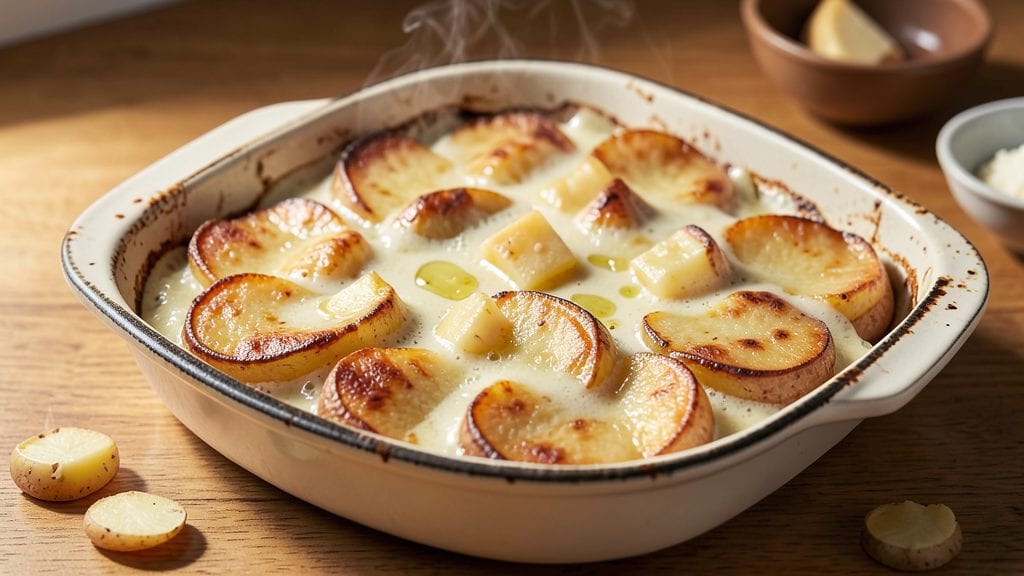
Julia Child's scalloped potatoes bring French bistro elegance to your dinner table with their creamy, velvety layers and crispy vinegar-kissed tops—a technique she perfected in her iconic cookbook. The secret lies in thin, even slices layered with rich béchamel and melted cheese, baked until golden and bubbling.
I first tried this recipe during a chilly Parisian winter, and it became my go-to side dish for holiday feasts and family dinners.
What makes this recipe special is Julia's precision in layering—each slice must be uniform to ensure even cooking and that signature crispy crust. The vinegar added to the béchamel creates a subtle tang that balances the richness, while Gruyère cheese adds a nutty depth.
Unlike many modern adaptations, this version stays true to Julia's original method, delivering restaurant-quality results without shortcuts.
The final dish emerges from the oven with golden, crackly tops that shatter at the slightest touch, revealing layers of creamy potato and cheese beneath. The aroma alone—warm, buttery, with a hint of vinegar—transforms any meal into something special.
This is comfort food at its finest, a dish that feels both indulgent and refined.
Serve alongside roasted chicken, beef, or even as a vegetarian main with a fresh green salad. The leftovers reheat beautifully, making it perfect for meal prep. Let's recreate Julia's masterpiece in your kitchen—crispy, creamy, and impossible to resist.
Ingredients for julia child's scalloped potato
Precision-cut potatoes, velvety béchamel, and Gruyère cheese create Julia's signature crispy, creamy masterpiece.
| Ingredient | Amount | Notes |
|---|---|---|
| Russet Potatoes 🥔 | 3 lbs | Uniform size, peeled and thinly sliced |
| Unsalted Butter 🧈 | ¾ cup | Cold, cut into small cubes |
| All-Purpose Flour 🌾 | ½ cup | Sifted for smooth béchamel |
| Whole Milk 🥛 | 2 ½ cups | Full-fat for creamy texture |
| Gruyère Cheese 🧀 | 1 ½ cups | Freshly grated, nutty flavor |
| White Wine Vinegar 🍶 | 1 tbsp | For signature tangy balance |
| Diamond Crystal Kosher Salt 🧂 | 1 ½ tsp | Fine grain preferred |
| Freshly Ground Black Pepper 🌶️ | ½ tsp | Coarsely cracked |
| Nutmeg 🌿 | ¼ tsp | Freshly grated for warmth |
| Heavy Cream 🥛 | ¼ cup | For extra richness |
| Garlic Cloves 🧄 | 2 cloves | Minced for subtle depth |
The potatoes are the foundation—Russet is ideal for its starch content and even slicing. Buy a 3-pound bag and slice them uniformly (about 1/8-inch thick) using a mandoline for consistency. Julia insisted on peeling to ensure even cooking, though some modern adaptations leave skins on for texture. For the butter, European-style unsalted like Plugrá melts more smoothly. The flour must be sifted to prevent lumps in the béchamel, which is critical for that signature silky texture. Whole milk is non-negotiable—skim milk will yield a thinner sauce. And the Gruyère? Imported from France if possible, or a high-quality American version like Murray's—pre-shredded loses its melt and flavor.
No white wine vinegar? Apple cider vinegar works in a pinch, though it adds a slightly fruity note. Substituting Gruyère? Comté or Emmental offer similar nutty profiles, but avoid cheddar—it lacks the necessary melt. For the béchamel, if you're short on butter, replace up to 2 tbsp with olive oil, though the flavor will shift slightly. The garlic cloves can be omitted entirely if you dislike their presence, but Julia's original included them for subtle depth. Freshly grated nutmeg is essential—pre-ground loses potency quickly. For a dairy-free adaptation, coconut milk can replace the milk and cream, though the texture will differ significantly.
Layer the potatoes in a 9x13-inch baking dish (glass or ceramic) and refrigerate uncovered for 30 minutes before baking to crisp the tops. The béchamel should be piped between layers for even distribution. Bake at 375°F for 50-60 minutes until the top is golden and crackly. Leftovers reheat best in a 350°F oven for 15 minutes—microwaving makes them soggy. Store covered in the fridge for up to 4 days, though the texture degrades after 2. For make-ahead prep, assemble the dish, refrigerate overnight, then bake straight from the fridge for 10-15 minutes longer to account for the cold start.
Why You'll Love This Recipe
- Foolproof Layers: I swear by this method—just thinly slice those Russets (no mandoline? A sharp knife works) and stack them like a Jenga tower. The butter and flour roux melts into every crevice, so you don’t even need to stir. Honestly, the hardest part is waiting for the Gruyère to bubble into golden perfection.
- Creamy-Crisp Magic: That crispy top crust with the buttery, melt-in-your-mouth center? It’s the kind of contrast that makes you close your eyes. The Gruyère adds a nutty depth, while the milk keeps it rich without feeling heavy—like a hug from a French grandmother.
- Weeknight or Holiday: Between us, this is my go-to for lazy Sundays and Thanksgiving leftovers. Double the batch, freeze half, and reheat straight from the fridge—no one will guess it’s not fresh. My kids grab seconds at potlucks, and my in-laws think I slaved for hours.
- Budget Luxury: Russets and Gruyère might sound fancy, but this feeds six for under $15. The butter and flour are the only splurges, and the rest? Pantry staples. I’ll be real: it’s the kind of dish that makes basic ingredients feel like a restaurant-worthy treat without breaking the bank.
Step-by-step instructions for Julia Child's scalloped potatoes
Mastering this classic French technique delivers creamy layers with crispy, vinegar-kissed tops every time.
Prepare the Potatoes for Perfect Layers
Peel the 3 lbs russet potatoes and slice them into uniform ⅛-inch thick rounds using a mandoline or sharp knife. I find consistency in thickness is critical—this ensures even cooking and prevents some slices from becoming mushy while others stay underdone. Soak the sliced potatoes in cold water for 10 minutes to remove excess starch, then drain and pat completely dry with paper towels. This step prevents a gluey texture in your final dish.
Arrange the potato slices in a single layer on a baking sheet, ensuring they don't overlap. This allows them to dry thoroughly before assembly. The goal is to create layers where each potato slice absorbs the béchamel evenly without steaming. Let them sit uncovered at room temperature for 30 minutes while you prepare the sauce. This drying process is what creates that signature crispy top in Julia Child's method.
Make the Signature Béchamel Sauce
In a medium saucepan, melt the 0.75 cup unsalted butter over medium heat until it foams but doesn't brown. Whisk in the 0.5 cup all-purpose flour all at once and cook for exactly 2 minutes, stirring constantly. This creates a roux that forms the foundation of your sauce. The flour should be fully incorporated with no visible lumps, and the mixture should smell nutty and toasty.
Slowly pour in the 2.5 cups whole milk while whisking vigorously to prevent lumps from forming. Return the heat to medium and cook for 5-7 minutes, stirring frequently, until the sauce thickens enough to coat the back of a spoon. This is your béchamel base. Season immediately with the 1.5 tsp diamond crystal kosher salt, 0.5 tsp freshly ground black pepper, and 0.25 tsp nutmeg. The nutmeg adds that classic French warmth that Julia Child always emphasized in her dishes.
Assemble the Potatoes in Layers
Preheat your oven to 375°F. In a 9x13-inch baking dish, spread a thin layer of the béchamel sauce on the bottom. Arrange a single layer of potato slices on top, slightly overlapping them. Sprinkle half of the 1.5 cups freshly grated gruyère cheese evenly over the potatoes, then pour half of the remaining béchamel sauce. Repeat with another layer of potatoes, cheese, and sauce. Finish with the final layer of potatoes, then pour the remaining sauce over the top.
This layering technique is essential—each layer should be no more than 3-4 potato slices thick to ensure even cooking. The cheese should be distributed evenly throughout, not clumped in one spot. The sauce should come up about halfway to the top of the potatoes, allowing room for expansion as they cook. Press down gently on each layer to help the potatoes absorb the sauce and prevent air pockets from forming.
Bake Until Golden and Creamy
Bake uncovered for 45 minutes. After 30 minutes, stir the 2 cloves minced garlic into the sauce on top of the potatoes. This subtle addition brings depth that complements the richness. The potatoes should be tender when pierced with a knife, but the top layer should still have some resistance. This is when you add the 1 tbsp white wine vinegar and 0.25 cup heavy cream, spreading them evenly over the top.
Return to the oven for an additional 15-20 minutes until the top is deeply golden brown and crispy in spots. The contrast between the creamy interior and crispy top is what makes this dish truly special. If the top browns too quickly, tent loosely with foil for the last 5 minutes to prevent burning. The vinegar creates that signature tangy balance that cuts through the richness, while the cream adds luxurious body.
Rest and Serve with Confidence
Remove from the oven and let the scalloped potatoes rest for 10 minutes before serving. This resting period allows the layers to set and the flavors to meld. The potatoes should be fork-tender with a creamy sauce that clings to each slice. The top should be crispy in places with that beautiful golden-brown color, while the interior remains velvety smooth.
Serve immediately while warm. The contrast between the crispy top and creamy interior is what makes this dish so satisfying. Each bite should deliver that perfect balance of textures and flavors that Julia Child made famous. For an extra touch, garnish with additional freshly grated gruyère cheese and a sprinkle of freshly cracked black pepper just before serving.
Pro Tips For Making Julia Child'S Scalloped Potato
- Peel Thin, Slice Even: Russets are forgiving, but uneven slices mean uneven cooking—some mushy, some dry. Use a mandoline for consistency, or if you’re doing it by hand, aim for ⅛-inch slices. I learned this the hard way when my first batch had thick chunks that stayed raw inside while the edges overcooked.
- Toast the Flour: Dry-toasting the flour-butter mix in the oven (or stovetop) before adding milk deepens the nutty flavor and thickens the sauce better than just whisking. Skip this, and your sauce will taste bland—trust me, it’s worth the extra 3 minutes.
- Don’t Overmix the Cheese: Gruyère melts beautifully, but folding it in too roughly creates clumps. Sprinkle it in layers and gently press it down with a spoon—no stirring needed. Overmixing turns your creamy sauce into a cheesy slurry, and nobody wants that.
- Cover Early, Uncover Late: The first 20 minutes should be covered to steam the potatoes evenly, but the last 15 minutes uncovered lets the top brown and crisp. Resist peeking—the moisture escape is what gives that golden crust. (Yes, even if you’re impatient like me.)
Wine and beer pairings for this julia child's scalloped potato
Classic French Wine
Julia Child's scalloped potatoes pair beautifully with a crisp Burgundy—specifically a Chardonnay from the Mâconnais region. The wine's buttery texture and subtle acidity mirror the dish's creamy layers while the mineral notes cut through the richness.
I reach for a Louis Jadot Mâcon-Villages—its bright citrus and almond undertones complement the vinegar's tang and Gruyère's nuttiness perfectly. 🍷
Dry Sparkling Wine
A chilled French sparkling wine like Crémant de Loire elevates the dish's elegance. The effervescence cleanses your palate between bites, while its green apple and brioche notes harmonize with the potatoes' caramelized edges.
For a budget-friendly option, Prosecco from Veneto works surprisingly well—just ensure it's brut to avoid sweetness clashing with the vinegar.
Rich Red Wine Option
If you prefer red, a light-bodied Pinot Noir from Burgundy's Côte de Nuits (like Domaine Drouhin) offers earthy notes that pair surprisingly well. The wine's cherry and mushroom undertones contrast the potatoes' creaminess without overpowering. Avoid heavy Cabernets—they'll compete with the dish's richness.
Beer Pairings
For beer lovers, a Belgian witbier like Hoegaarden brings refreshing citrus and coriander notes that cut through the dish's richness. The slight tartness mirrors the vinegar's tang. Alternatively, a German Helles lager (like Weihenstephaner) offers a clean, malty balance that won't overpower the potatoes' delicate flavors. 🍺
Non-Alcoholic Options
Don't drink alcohol? A sparkling apple cider (like Woodchuck Hard Cider's Sparkling) provides effervescence and subtle sweetness. For a savory match, try sparkling mineral water with a squeeze of lemon—it enhances the dish's acidity without adding sweetness. Chill both options well before serving.
Serving Temperature
Wine should be served chilled (around 50-55°F) to preserve its acidity and crispness. Beer should be 40-45°F—too warm beer loses its refreshing qualities. I always let my wine breathe for 10 minutes before pouring to enhance its aromas, which makes the pairing experience even more refined. ✨
Nutrition facts
Frequently asked questions
Why does Julia Child's recipe call for vinegar in the sauce?
The 1 tablespoon white wine vinegar creates the signature tangy contrast that balances the richness of the butter, cream, and cheese. It also helps develop that beautiful golden-brown crust while preventing the top from becoming too heavy. Julia's technique uses vinegar to brighten the flavors and create the perfect texture contrast between the crispy top and creamy interior.
Can I make this recipe ahead of time?
Yes! Assemble the dish completely, cover tightly, and refrigerate for up to 24 hours before baking. When ready to cook, bake at 375°F for 60-70 minutes (10-15 minutes longer than fresh) since it starts cold. The flavors actually develop better overnight, making this perfect for holiday meals. Just add 5-10 minutes extra baking time to ensure the top crisps properly.
What's the best way to reheat leftovers?
Never microwave—it turns the potatoes soggy! Instead, cover with foil and reheat at 350°F for 15-20 minutes until warmed through. For extra crispiness, broil for 2-3 minutes at the end. Leftovers keep well for 3-4 days in the fridge, though the texture degrades after 2 days. The cheese may separate slightly when reheated, but a quick stir restores creaminess.
Can I substitute Gruyère with another cheese?
Gruyère's nutty flavor and excellent melt are key, but you can use Comté or Emmental for similar results. Avoid pre-shredded cheese—it contains anti-caking agents that prevent proper melting. For a sharper taste, try Parmesan mixed with Gruyère (50/50 ratio). If you're lactose intolerant, nutritional yeast adds a cheesy flavor without dairy, though the texture will differ.
Why did my top turn out soggy instead of crispy?
This usually happens from one of three issues: not drying the potatoes before layering, overcrowding the layers (more than 3-4 slices per layer), or covering too early. Julia's method requires the potatoes to dry uncovered for 30 minutes before baking. Also, ensure your oven rack is in the middle position—heat distribution is critical for even browning. For next time, broil for 2-3 minutes at the very end to reset the crust.