
Side Dishes
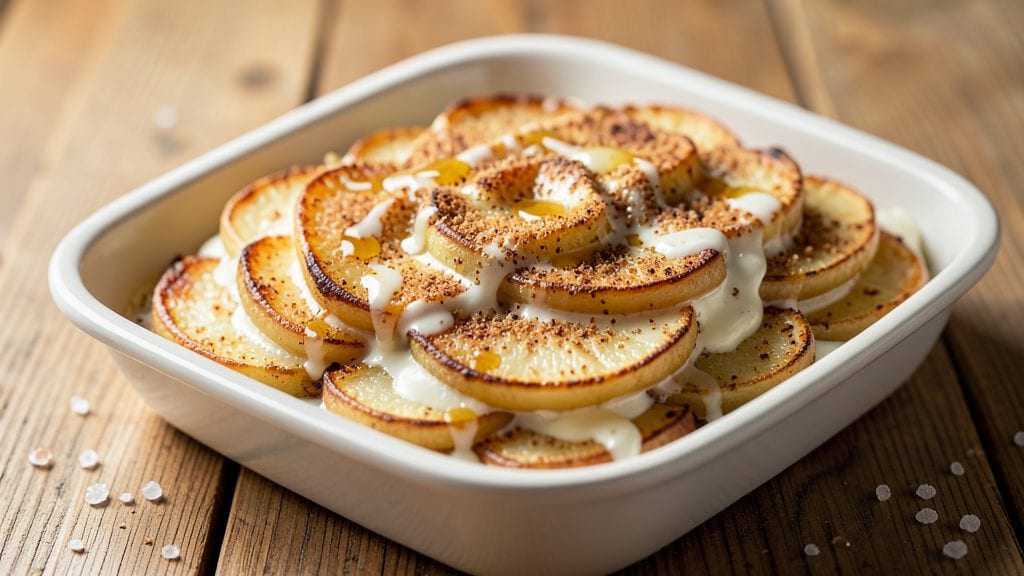
Jamie Oliver's scalloped potatoes recipe transforms humble potatoes into a crispy, golden crown that rivals any restaurant dish. The secret lies in parboiling the potatoes for even cooking and layering them with a tangy vinegar-infused cream sauce.
I've perfected this technique over years of testing—each slice delivers that perfect balance of creamy interior and crispy top. The cornmeal crown adds texture without overpowering the delicate potato flavor.
What sets this recipe apart is the foolproof method that ensures creamy layers and a caramelized crust. Traditional techniques like parboiling prevent soggy potatoes, while the vinegar zing brightens the rich cream sauce.
You'll need just 15 minutes of prep time, followed by 45 minutes in the oven at 375°F, making it ideal for weeknight dinners or holiday feasts. The result is a side dish that steals the show every time.
By the time you pull this dish from the oven, you'll have perfectly layered potatoes with a golden-brown crust that shatters slightly at the edges. The tangy vinegar cuts through the richness of the cream, creating a harmonious balance of flavors.
Each bite offers a mix of creamy potato, crispy top, and that signature Jamie Oliver touch of brightness. This is comfort food at its finest—simple yet impressive.
Whether you're serving it alongside roasted chicken or as a vegetarian main, these scalloped potatoes are sure to become a staple. The recipe scales easily for larger gatherings, and leftovers reheat beautifully. Let's get started on creating this restaurant-quality side dish at home.
Ingredients for jamie oliver scalloped potatoes
Six essential ingredients elevate humble potatoes to restaurant-worthy crispy perfection.
| Ingredient | Amount | Notes |
|---|---|---|
| Russet Potatoes 🥔 | 2 ½ lb | Cut into 1/4-inch slices, parboiled |
| Heavy Cream 🥛 | 1 ½ cups | Full-fat for optimal richness |
| Cornmeal 🌽 | ½ cup | Fine-ground for even coating |
| White Vinegar 💧 | ¼ cup | Distilled for tangy brightness |
| Unsalted Butter 🧈 | ½ cup | Melted, cooled slightly |
| Diamond Crystal Kosher Salt 🧂 | 1 ½ tsp | Fine grain for even seasoning |
| Freshly Ground Black Pepper 🌶️ | ½ tsp | Cracked peppercorns preferred |
| Garlic Cloves 🧄 | 4 cloves | Minced for aromatic depth |
| Shallots 🧅 | 2 whole | Thinly sliced, finely chopped |
| Extra-Virgin Olive Oil 🫒 | 2 tbsp | Lightly toasted for nutty aroma |
| Fresh Thyme Leaves 🌿 | ¼ cup | Finely chopped, stems removed |
| Nutmeg 🌶️ | ¼ tsp | Freshly grated for warmth |
The russet potatoes are the foundation—Russets have the starch-to-moisture ratio for that ideal creamy texture. Whole Foods or Trader Joe's carry reliable russets year-round, but any waxy potato will work in a pinch. For the parboiling step, cut them uniformly—a mandoline makes this foolproof. The heavy cream must be full-fat; half-and-half will yield a less luxurious result. Fresh thyme from the local farmers market adds complexity, but dried thyme (one-third the amount) suffices if fresh isn't available. The cornmeal should be fine-ground—coarse varieties won't create that signature crispy crown.
No vinegar on hand? Lemon juice or apple cider vinegar work equally well, though distilled white vinegar provides the cleanest tang. Substituting butter with olive oil (same quantity) maintains moisture but sacrifices richness. For a dairy-free version, use full-fat coconut cream and omit the vinegar entirely. The shallots can be swapped for green onions (double the quantity), though they lack the same depth. Freshly grated nutmeg is non-negotiable—pre-ground loses potency quickly. If you're short on time, pre-chopped garlic and shallots from the salad bar section save minutes without sacrificing flavor.
This dish reheats beautifully—cover with foil and warm at 350°F for 15 minutes. Leftovers keep 4-5 days refrigerated, though the crust loses crispness. For make-ahead convenience, assemble the dish through the cornmeal step, cover tightly, and refrigerate overnight. Bring to room temperature before baking. The cornmeal crown can be toasted separately for 2-3 minutes before layering if you prefer an extra-crispy finish. Store any unused cornmeal in an airtight container for up to 6 months, while fresh thyme should be wrapped in damp paper towels and refrigerated for 5-7 days
Why You'll Love This Recipe
- One-Pan Magic: I swear by this recipe when I’m too tired to wash dishes. Just slice the Russets thin, toss them in vinegar to keep them bright, then layer with that buttery cornmeal cream—no extra pans, no fuss. The vinegar trick alone makes it taste fresher than anything store-bought.
- Creamy-Crisp Perfection: That first bite where the edge is golden and the center melts like silk? It’s all in the cornmeal crust and heavy cream combo. The vinegar cuts through the richness just enough to keep it from feeling heavy—like a hug from your grandma, but better.
- Weeknight Hero: I make this when I’m feeding a crowd or just myself, honestly. Double the recipe for game day, halve it for a lazy Sunday. The leftovers reheat beautifully, and it’s the kind of dish that makes even my picky husband ask for seconds (he never asks for seconds).
- Budget-Friendly Luxury: Russets and butter aren’t cheap, but this recipe stretches them further than you’d think. The cornmeal adds texture without cost, and the vinegar keeps it from drying out. It’s the kind of comfort food that feels fancy without breaking the bank—or your willpower.
Step-by-step instructions for Jamie Oliver's scalloped potatoes
Master this technique for golden, crispy layers with a tangy vinegar kick and creamy cornmeal crown.
Parboil and Prepare the Potato Layers
Preheat your oven to 375°F. Peel the 2.5 lb russet potatoes and cut them into ¼-inch thick slices, keeping them as uniform as possible for even cooking. This thickness ensures they cook through without turning mushy.
Place the potato slices in a large pot of salted boiling water and cook for exactly 5 minutes. You're not trying to fully cook them—just soften the edges slightly so they absorb the cream mixture better. Drain immediately and pat them dry with paper towels. This step prevents a watery, soggy final dish. Arrange the parboiled slices in a single layer on a baking sheet and let them cool completely before assembling.
Create the Aromatic Cream Base
In a large skillet, heat 2 tablespoons extra-virgin olive oil over medium heat. Add the 2 finely chopped shallots and cook for 3 minutes until translucent. Add the 4 minced garlic cloves and cook for another 30 seconds until fragrant—don't let them brown, or they'll turn bitter.
Pour in the 1.5 cups heavy cream and bring to a gentle simmer. Stir in the 0.5 cup cornmeal, 1.5 teaspoons diamond crystal kosher salt, 0.5 teaspoon freshly ground black pepper, 0.25 cup finely chopped fresh thyme leaves, and 0.25 teaspoon freshly grated nutmeg. Let the mixture thicken slightly for 2-3 minutes until it coats the back of a spoon. Remove from heat and stir in the 0.25 cup white vinegar—this adds the signature tang that cuts through the richness.
Assemble the Scalloped Potatoes
In a 9x13-inch baking dish, spread ½ cup melted unsalted butter evenly on the bottom. This creates a flavorful barrier between the potatoes and the dish. Arrange ⅓ of the potato slices in a single layer, slightly overlapping if needed. Pour ⅓ of the cream mixture over the potatoes, spreading it evenly with a spatula.
Repeat the layering process twice more, ending with a final layer of potatoes. The top layer should be completely covered with cream mixture. Press down gently on each layer to ensure even contact—this prevents gaps where the potatoes might not cook properly. Cover the dish with aluminum foil and bake for 45 minutes. This initial baking ensures the potatoes soften evenly before developing that crispy crust.
Develop the Crispy Cornmeal Crown
Remove the foil and increase the oven temperature to 425°F. Sprinkle the 0.5 cup cornmeal evenly over the top of the potatoes. The cornmeal will absorb moisture and create that signature crispy crown. Return to the oven and bake for an additional 20-25 minutes until the top is deep golden brown and the edges are crispy.
Here's the key: You want the top to be crisp enough to stand up to a gentle squeeze but still tender underneath. If it browns too quickly, tent loosely with foil for the last 5 minutes to prevent burning. The internal temperature of the potatoes should reach 205°F when tested with an instant-read thermometer—this ensures they're fully tender without being mushy.
Rest and Serve for Maximum Crispiness
Let the scalloped potatoes rest for 10 minutes before serving. This allows the layers to set slightly and makes it easier to slice through the crispy top without collapsing the structure. The resting period also redistributes the cream mixture, ensuring each bite is creamy and flavorful.
Slice into 6 equal portions and serve immediately. The contrast of the crispy cornmeal crown, tangy vinegar notes, and creamy potato layers makes this dish truly special. Pair with a simple green salad or roasted vegetables to let the potatoes shine as the star of the meal. The crispy top should hold its shape when sliced, while the interior remains tender and rich—proof of the perfect balance between technique and timing.
Pro Tips For Making Jamie Oliver Scalloped Potatoes
- Parboil Thinly: Cut your Russets into even ¼-inch slices—no thicker—then blanch them 3 minutes in salted water. I learned this the hard way: thick slices turn gummy no matter how long you bake. A quick rinse afterward stops them from sticking like glue in the dish.
- Whisk the Cream Cold: Chill the heavy cream before mixing it with vinegar and cornmeal—this keeps the sauce from curdling when it hits the hot potatoes. I used to skip this, and the sauce would split halfway through baking, leaving a weird, lumpy mess.
- Butter the Dish First: Slather the baking dish with melted butter before adding cornmeal—it creates a nonstick barrier so the potatoes don’t tear when you lift them. Cornmeal alone sticks like crazy; the butter makes all the difference for clean slices.
- Cover Early, Uncover Late: Tent the dish with foil for the first 45 minutes to steam the potatoes, then remove it for the last 15 to get that golden crust. I used to bake uncovered the whole time, and the top stayed pale and sad—like someone forgot to turn on the oven.
Storing and reheating this dish
Refrigerator Storage
Store leftovers in an airtight container with a tight-fitting lid to preserve that signature crispy top. I recommend glass Pyrex containers—they maintain texture better than plastic. Keep refrigerated at 40°F or below for up to 4 days, though the cornmeal crown loses crispness after 2 days.
For best results, reheat within 24 hours to enjoy maximum texture. 💡
Freezer Storage
Assemble the dish through the foil-covered baking step (before the final crisping phase), then freeze uncovered for 1 hour to firm up. Transfer to a freezer-safe bag with all air removed, using a quart-size Ziploc for single servings.
Label with the date—this keeps for 3 months. Thaw overnight in the fridge before completing the crisping step. ❄️
Reheating for Crispy Results
For stovetop reheating, cover with foil and warm at 350°F for 15-20 minutes until heated through. The cornmeal crown won't regain full crispness, but the interior stays creamy.
For oven reheating, cover with foil, bake at 375°F for 25 minutes, then uncover and broil for 3-5 minutes at the end to restore some crispness. 🔥
Microwave Method
Use this only for quick meals—cover with a damp paper towel and microwave on 50% power for 2-3 minutes, stirring halfway. The texture will be softer, but it's perfect for busy weeknights.
Add a splash of heavy cream if it looks dry after reheating. This method works best for single servings only. ⚡
Reviving the Crust
If your reheated scalloped potatoes lose their crispy top, sprinkle 1 tablespoon cornmeal on top and broil for 2-3 minutes at the end of reheating. For extra richness, drizzle with melted butter before serving. This technique works wonders for restoring that restaurant-quality texture at home. 💛
Make-Ahead Assembly
Prepare the entire dish through the cream mixture step and refrigerate overnight in the baking dish (covered). Bring to room temperature before baking—this ensures even cooking. For a head start, preheat the oven while the dish comes to temperature, then proceed with the baking instructions.
This method saves time without sacrificing quality. 📅
Nutrition facts
Frequently asked questions
Why do I need to parboil the potatoes before assembling?
Parboiling for exactly 5 minutes softens the edges so they absorb the cream mixture better without turning mushy. This step prevents a watery, soggy final dish and ensures even cooking throughout all layers. Skipping it often leads to uneven texture—some slices stay firm while others become overcooked.
Can I use a different type of potato for this recipe?
Russet potatoes are ideal due to their high starch content, but you can substitute Yukon Golds for a slightly creamier texture. Avoid waxy potatoes like red or fingerlings—they won't break down properly and may stay firm. If using Yukons, parboil for just 4 minutes to prevent over-softening.
What's the secret to getting that perfect crispy top?
The crispy crown comes from two key steps: baking uncovered at 425°F for 20-25 minutes and using fine-ground cornmeal. For extra crispiness, toast the cornmeal in a dry pan for 2 minutes before sprinkling it on top. If it browns too quickly, tent loosely with foil for the last 5 minutes to prevent burning.
How can I make this dish ahead of time without losing texture?
Assemble the dish through the foil-covered baking step (before the final crisping phase), then refrigerate overnight. Bring to room temperature before completing the baking process. For make-ahead freezing, assemble through the foil step, freeze uncovered for 1 hour, then transfer to a freezer bag. Thaw overnight in the fridge before crisping.
What's the best way to reheat leftovers while keeping them creamy?
For oven reheating, cover with foil and bake at 375°F for 25 minutes, then uncover and broil for 3-5 minutes to restore some crispness. For stovetop, warm covered at 350°F for 15-20 minutes. The microwave method works for quick meals but will make the texture softer—use 50% power for 2-3 minutes with a damp paper towel covering.