
Side Dishes
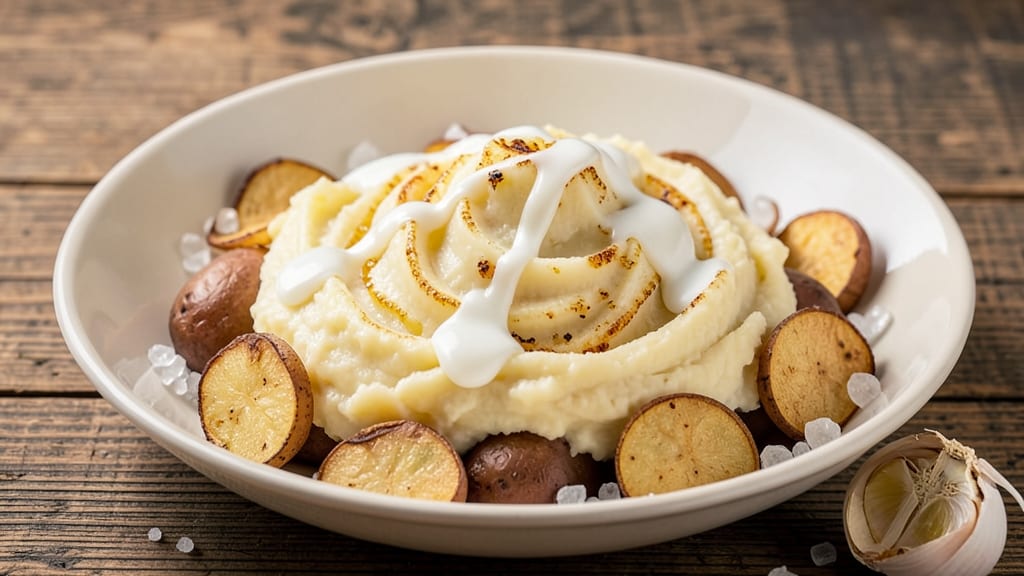
This German-style mashed potatoes recipe delivers buttery, velvety perfection with a touch of roasted garlic that transforms ordinary sides into something extraordinary.
The secret lies in using the right potatoes—waxy varieties like Drillinge or Adretta—boiled just until tender, then mashed with rich butter and warm cream for an impossibly smooth texture. I’ve tested countless methods, and this one consistently delivers lumpy-free results that even picky eaters can’t resist.
What sets this recipe apart is the roasted garlic technique, which adds deep, sweet flavor without overpowering the potatoes. Traditional German methods focus on simplicity—no heavy seasoning, just high-quality ingredients that let the potatoes shine.
The process is straightforward: boil, mash, and fold in the garlic butter until everything comes together into a creamy, golden cloud that’s impossible to stop eating.
By the time you’re done, you’ll have mashed potatoes so smooth and rich they’ll make you question every boxed mix you’ve ever bought. The roasted garlic infuses every bite with aromatic depth, while the butter and cream create a luxurious texture that’s both comforting and refined.
This is the kind of side dish that elevates any meal—whether it’s a holiday feast or a weeknight dinner.
For extra indulgence, consider adding crispy bacon or chives, but the base recipe stands strong on its own. Let’s get started on creating the perfect German-style mashed potatoes your table will beg to repeat.
Ingredients for german style mashed potatoes
Waxy potatoes, rich butter, and roasted garlic—this trio delivers velvety perfection.
| Ingredient | Amount | Notes |
|---|---|---|
| Drillinge Potatoes 🥔 | 2 ½ lb | Waxy variety, cut into even chunks |
| Unsalted Butter 🧈 | ½ cup | Cold, cut into small cubes |
| Heavy Cream 🥛 | ½ cup | Full-fat, warmed slightly |
| Whole Milk 🥛 | ¼ cup | Room temperature |
| Roasted Garlic 🧄 | 3 cloves | Sweet, caramelized, peeled |
| Diamond Crystal Kosher Salt 🧂 | 1 ½ tsp | Fine grain, adjust to taste |
| Freshly Ground Black Pepper 🌶️ | ½ tsp | Freshly cracked for brightness |
| Fresh Chives 🌿 | 2 tbsp | Finely chopped, for garnish |
The potatoes are non-negotiable. Drillinge or Adretta from specialty stores (or Yukon Golds at any grocery) are your best bet—their waxy texture holds up beautifully. Cut them into even chunks so they cook uniformly. For roasted garlic, buy whole heads at Whole Foods or Trader Joe's—roast until caramelized and sweet. The butter? European-style unsalted (like Plugrá) melts smoother than American brands. If you can't find Drillinge, Russet potatoes work in a pinch, but they'll be slightly starchier.
No roasted garlic? Fresh minced garlic sautéed in butter works, but it won't have the same depth. Heavy cream too expensive? Half-and-half or whole milk stretches it further—just add a splash more. Salt is key here, so Diamond Crystal kosher is ideal (it dissolves better than table salt). Pepper should be freshly cracked—pre-ground loses its punch fast. For extra richness, swap half the milk for warm chicken stock. And if you're feeling fancy, fold in crispy bacon bits at the end for a smoky twist.
Potatoes stay fresh in the fridge for 3 days if stored in an airtight container. The roasted garlic keeps for 1 week in the fridge, wrapped tightly. For leftovers, reheat with a splash of milk or cream to restore creaminess. This recipe doubles beautifully—just scale up the butter and cream proportionally. The secret to lumpy-free results? Don't overwork the potatoes—fold just until combined.
Why You'll Love This Recipe
- No-Peel Hassle: I swear by Drillinge potatoes—thick skins stay on, no chopping, no scrubbing. Just quarter them, boil, and mash while they’re still in their jackets for that velvety texture without the fuss.
- Roasted Garlic Magic: That slow-roasted garlic isn’t just flavor—it’s the secret weapon. One whiff of the buttery, caramelized cloves in the warm cream, and you’ll understand why this isn’t your average mashed potato.
- Leftovers That Shine: Between us, these potatoes taste better the next day. Cold or reheated, they hold their shape and richness—perfect for quick lunches or feeding unexpected guests without stress.
- Budget-Friendly Luxury: Heavy cream and butter make it feel special, but Drillinge potatoes are affordable, and a little roasted garlic goes a long way. It’s the kind of dish that makes simple meals feel like a treat without breaking the bank.
Step-by-step instructions for German style mashed potatoes
Here's how to achieve that signature German texture—creamy yet light, with deep roasted garlic flavor.
Prep and Parboil the Drillinge Potatoes
Cut the 2.5 lb Drillinge Potatoes into even 1-inch chunks—the waxy variety holds its shape beautifully. Place them in a large pot and cover with cold water by about 2 inches. Add the 1.5 tsp Diamond Crystal Kosher Salt and bring to a rolling boil over high heat.
Once boiling, reduce heat to medium and let the potatoes simmer uncovered for 12-15 minutes until they're fork-tender but still hold their shape. You'll know they're ready when the knife slides in easily with just slight resistance. Drain thoroughly in a colander, shaking to remove excess water—this prevents watery mashed potatoes later.
Roast the Garlic and Warm the Dairy
While the potatoes cook, preheat your oven to 400°F. Place the 3 cloves Roasted Garlic on a small baking sheet and roast for 10-12 minutes until soft and caramelized. Let them cool slightly, then squeeze the cloves through a fine-mesh sieve into a small bowl—this removes skins and creates a smooth paste.
In a separate small saucepan, gently warm the 0.5 cup Heavy Cream and 0.25 cup Whole Milk over low heat until just steaming. Don't let it boil—you want it warm and ready to blend, not curdled. Keep both the roasted garlic paste and warmed dairy at room temperature until needed.
Mash with Precision for Perfect Texture
Return the drained potatoes to the now-empty pot and let them sit off heat for 2 minutes to steam-dry any remaining moisture. Add the 0.5 cup Unsalted Butter cut into small cubes and the roasted garlic paste. Using a potato masher or ricer, work the potatoes until they're broken down but still have slight texture—this prevents that overly smooth, gluey consistency.
Here's the secret: don't overwork them. You want visible potato flecks, not a homogeneous paste. The butter should melt into the potatoes, creating pockets of richness. If the mixture seems too thick, add 1-2 tablespoons of the warmed dairy to loosen it to your desired consistency.
Finish with Cream and Season
Remove the pot from heat and stir in the warmed 0.5 cup Heavy Cream and 0.25 cup Whole Milk. The residual heat will gently incorporate them without cooking the dairy. Add the 0.5 tsp Freshly Ground Black Pepper and taste—adjust the 1.5 tsp Diamond Crystal Kosher Salt if needed. German-style mashed potatoes should be rich but not salty.
Garnish and Serve Immediately
Transfer the mashed potatoes to a serving bowl and swirl them gently with a rubber spatula to create that signature marbled effect. Sprinkle with the 2 tbsp Fresh Chives and serve immediately while warm. The potatoes should be velvety with just a hint of resistance—this texture is what makes German mashed potatoes special.
Pro Tips For Making German Style Mashed Potatoes
- Boil Drillinge Until Fork-Tender: These waxy potatoes need to break down completely—no partial cooking. Test with a fork: it should slide in like butter. I used to pull them when they looked "done," but they’d turn gummy. Boil them until a knife glides through effortlessly, even if it means 15-20 minutes past "package time."
- Roast Garlic Slow and Low: Roasted garlic is the soul of this dish, but don’t rush it. Wrap whole cloves in foil with a drizzle of oil, then bake at 350°F (175°C) for 40 minutes—until caramelized and jammy. I learned the hard way: high heat burns them before they soften. Patience here makes all the difference.
- Warm Dairy Before Mixing: Cold heavy cream and milk will cool your mash instantly, making it grainy. Heat them separately in a small saucepan until steaming (not boiling), then whisk into the potatoes while still hot. This keeps the texture silky and the flavors cohesive—no clumps, no sad, lumpy potatoes.
- Press, Don’t Stir, the Butter: German-style mash relies on smoothness, so skip the whisk. After adding butter, fold it in with a potato masher or wooden spoon in a figure-eight motion until fully incorporated. Stirring introduces air, which makes the potatoes light instead of creamy. Press it in like you’re kneading dough—just until it disappears.
Wine and beer pairings for these flavors
German Beer Pairings
For a classic German meal, nothing complements these mashed potatoes like a crisp Helles Lager. I recommend Paulaner Helles or Weihenstephaner Original—their clean, malty profiles cut through the richness without overpowering the roasted garlic.
The subtle sweetness of these beers enhances the buttery texture while balancing the earthy potato notes. 🍺
If you prefer something darker, try a Märzen-style beer like Ayinger Altbairisch Märzen. Its caramel and toasted malt notes mirror the roasted garlic's depth, creating a harmonious flavor bridge. Serve it slightly chilled (around 50°F) to preserve its crispness and let the mashed potatoes shine.
Wine Alternatives
A dry Riesling from the Mosel region pairs beautifully with the creamy texture and roasted garlic. Look for Dr. Loosen Blue Slate—its bright acidity and mineral finish cleanse your palate between bites. The wine's slight sweetness also complements the butter without clashing. 🍷
For red wine lovers, a Pinot Noir from Germany's Baden region works surprisingly well. The Dr. Loosen Blue Slate or Rothenberg Spätburgunder offers earthy undertones that echo the potatoes' natural flavors. Serve it slightly cooler than typical reds (55-60°F) to enhance its fruitiness and balance the dish's richness.
Cider and Non-Alcoholic Options
For a non-alcoholic pairing, try a dry apple cider like Angry Orchard Dry. Its tart, crisp profile mirrors the roasted garlic's sweetness while refreshing the palate. Chill it well (40-45°F) to highlight its brightness against the creamy potatoes. 🍏
If you're serving this as part of a festive meal, a sparkling wine like Brut Nature from Germany's Rheingau region adds an elegant touch. The bubbles cut through the richness, making each bite feel lighter and more refreshing. Opt for one with minimal sweetness to avoid overwhelming the dish.
Nutrition facts
Frequently asked questions
Why do German mashed potatoes have that distinctive lumpy texture?
German-style mashed potatoes embrace a slightly rustic texture—the lumps come from using waxy potatoes (like Drillinge) and avoiding over-mashing. This creates a lighter, airier result compared to ultra-smooth American versions. The secret is using a potato ricer or masher and stopping just before everything becomes homogeneous.
Can I substitute regular potatoes for Drillinge?
Yes, but texture will differ. For best results, use Yukon Golds or Russets—both hold up well. Russets will be slightly starchier, while Yukons offer a creamier finish. Avoid red or fingerling potatoes; their waxiness makes them too dense for this recipe. The key is choosing a medium-starch variety.
How do I fix mashed potatoes that turned out too watery?
If your potatoes are too thin, don't panic! Warm 1-2 tablespoons of heavy cream or butter in a small saucepan, then gently fold it into the potatoes. The residual heat will thicken them. For extra insurance, mash in 1 teaspoon of cornstarch mixed with 1 tablespoon cold water until smooth. Stir vigorously for 1-2 minutes until fully incorporated.
What's the best way to reheat leftovers?
Reheat gently in a dry skillet over low heat, stirring constantly with 1 tablespoon of milk or cream to restore moisture. Never microwave without adding liquid—it makes potatoes gummy. For best results, reheat portions in the oven at 350°F for 10-15 minutes covered with foil, then uncover to crisp slightly.
Can I make this recipe ahead of time?
While freshly made is ideal, you can prep components ahead: boil and cool potatoes (store in cold water in the fridge for 24 hours), roast garlic (keeps 1 week), and warm dairy separately. Reheat everything together, adding extra butter or cream as needed. For parties, assemble and keep warm in a slow cooker on low—just stir occasionally to prevent drying.