
Side Dishes
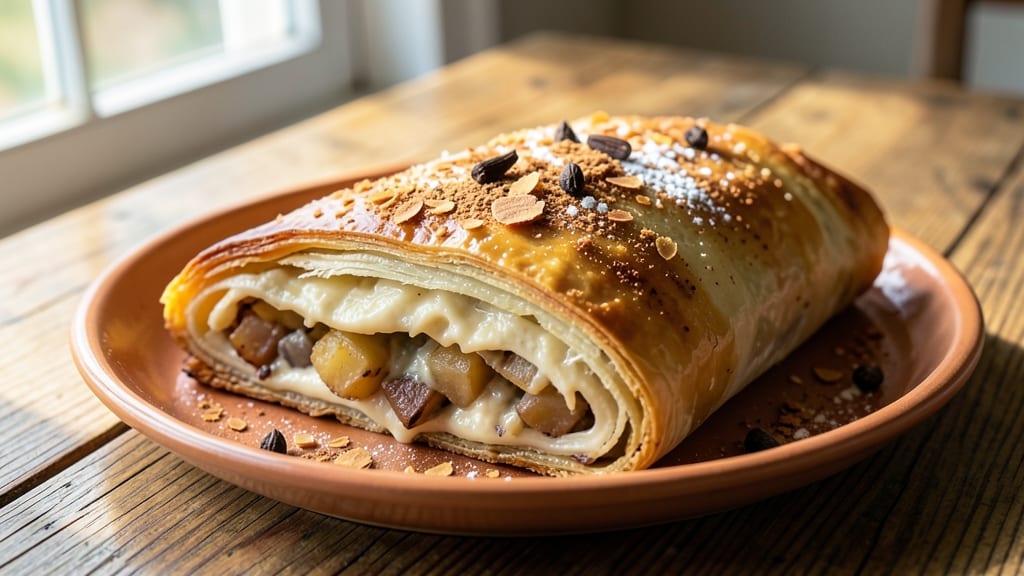
This German potato strudel recipe delivers the flaky, golden layers and aromatic spiced filling that make it a centerpiece of Bavarian tables. The secret lies in thin, stretched dough that encases tender potatoes, onions, and warm spices like cinnamon and nutmeg—each bite reveals crisp edges and tender centers.
I’ve perfected this technique over years of baking, ensuring the strudel stays true to tradition while being approachable for home cooks.
The dough requires patience—rolling it paper-thin is essential—but the reward is worth it. You’ll layer it with a filling of boiled potatoes, sautéed onions, and a blend of spices that infuse every bite with warmth.
Baking at high heat creates that signature crispy crust while keeping the filling moist and flavorful. This isn’t just a side dish; it’s a showstopper that pairs beautifully with roasted meats or stands alone as a hearty meal.
What sets this recipe apart is the balance of textures: the dough’s delicate crispness contrasts perfectly with the soft, spiced potato filling. The aroma alone—warm spices mingling with caramelized onions—will fill your kitchen and draw everyone to the table.
Whether you’re serving it at a family gathering or treating yourself to a taste of Germany, this strudel delivers restaurant-quality results with a homemade touch.
Ready in about 45 minutes of active prep (plus baking time), this recipe is designed for precision without fuss. The dough stretches easily with practice, and the filling comes together in minutes.
Once you master the technique, you’ll have a dish that’s as impressive as it is delicious—one that captures the essence of German comfort food in every bite.
Ingredients for german potato strudel
Thin dough, tender potatoes, and warm spices—just seven core ingredients transform into a showstopper.
| Ingredient | Amount | Notes |
|---|---|---|
| Russet Potatoes 🥔 | 3 lbs | Boiled until tender, peeled |
| Yellow Onions 🧅 | 2 whole | Sliced thinly, caramelized |
| Unsalted Butter 🧈 | ½ cup | Cold, cubed for dough |
| All-Purpose Flour 🌾 | 2 cups | Plus extra for dusting |
| Large Eggs 🥚 | 1 whole | Room temperature preferred |
| Ground Cinnamon 🌿 | 1 tbsp | Freshly ground for warmth |
| Ground Nutmeg 🌿 | ½ tsp | Freshly grated preferred |
| Salt 🧂 | 1 ½ tsp | Kosher or sea salt |
| Ground Black Pepper 🌶️ | ½ tsp | Freshly ground preferred |
| Granulated Sugar 🍚 | ¼ cup | For caramelizing onions |
| Vegetable Oil 🫒 | 1 tbsp | For brushing dough |
| Raisins 🍇 | ½ cup | Optional, for sweetness |
| Toasted Almonds 🥜 | ¼ cup | Chopped, optional crunch |
The potatoes are the heart of this strudel, so Russet potatoes are your best bet—they hold their shape and soak up the spices beautifully. Boil them until fork-tender, then mash or chop them into small, even pieces. King Arthur or Bob’s Red Mill flour works best for the dough, but any all-purpose will do. The butter matters too—European-style (like Plugrá) gives the most flavor, but unsalted butter works fine. For the onions, caramelizing them slow and low is key—about 20 minutes until they’re golden and sweet. Skip the pre-sliced onions; fresh cuts release more flavor.
No raisins? Dried apricots or applesauce works just as well. Short on almonds? Toasted walnuts or pecans add a different but equally delicious crunch. The spices are non-negotiable though—freshly ground cinnamon and nutmeg make all the difference. If you’ve got Penzeys or Spicewalla spices, grab them. The dough needs to be rolled paper-thin, so if you’re new to strudel, practice on a clean kitchen towel first—it’s easier to handle than bare countertops. And trust me, don’t skip the vegetable oil brush—it keeps the dough from sticking and adds a subtle richness.
This strudel reheats beautifully—just 10 minutes at 350°F wrapped in foil to revive the crisp. Keeps for 3 days in the fridge, though it’s best fresh. For leftovers, slice and reheat portions individually. Freezes well too—up to 3 months if you wrap it tightly in plastic wrap and foil. I always make two, one for the table and one for snacks later. The aroma alone will have your kitchen smelling like a Bavarian bakery.
Why You'll Love This Recipe
- One-Pan Wonder: I swear by this recipe when I’m too tired to wash dishes. Russet potatoes and onions roast together in the same pan where the dough gets its golden crust—just scrape everything into the oven and walk away.
- Buttery Magic: That first bite of crispy, buttery dough wrapped around tender, caramelized potatoes? It’s like a hug from a German grandmother. The butter in the dough and the onions makes every forkful feel indulgent without being heavy.
- Meals for Days: Make a big batch on Sunday, and you’ve got lunch or dinner covered for the week. The strudel reheats beautifully—either crispy straight from the oven or soft and comforting with a side of applesauce for a quick meal.
- Budget-Friendly Feast: Russets and onions are cheap staples, and you only need a handful of other ingredients. I’ve fed six people for under $10, and they’ll all ask for seconds. Plus, leftovers taste even better the next day.
Step-by-step instructions for German potato strudel
Here's how to create those signature flaky layers and fragrant spiced filling.
Prepare the Perfect Potato Filling
Start by boiling the 3 lbs of russet potatoes until they're fork-tender, about 20-25 minutes. Drain them well, then peel and mash until completely smooth—no lumps should remain. This texture is crucial for the filling's consistency.
While the potatoes are still warm, mix in the 0.5 cup unsalted butter, 1 tbsp ground cinnamon, 0.5 tsp ground nutmeg, 1.5 tsp salt, and 0.5 tsp ground black pepper. The butter should melt completely into the potatoes, creating a rich, aromatic base. Fold in the 0.5 cup raisins and 0.25 cup toasted almonds last—this keeps them plump and adds delightful texture contrasts.
Set the filling aside to cool slightly while you prepare the onions. In a large skillet, melt 0.25 cup granulated sugar with 1 tbsp vegetable oil over medium heat. Add the 2 whole yellow onions, sliced thinly, and cook for 15-20 minutes until deep golden brown and caramelized. This step develops the filling's sweet complexity. Stir occasionally to prevent burning.
Make the Signature Strudel Dough
Create a well on a clean surface and combine the 2 cups all-purpose flour with 1.5 tsp salt. Make a small indentation in the center and add the 1 whole large egg, allowing it to soak into the flour. Gradually add the 0.5 cup cold cubed unsalted butter, working it into the flour with your fingertips until the mixture resembles coarse crumbs.
Slowly add ice water, 1 tablespoon at a time, mixing gently with a fork until the dough just comes together. The key here is to handle it minimally—overworking develops gluten, which would make the strudel tough instead of flaky. Once formed, wrap the dough in plastic and refrigerate for 30 minutes to firm up.
After chilling, roll the dough out on a lightly floured surface into a 12-inch circle, about 1/16-inch thick. This is where precision matters—too thick and it won't bake properly; too thin and it may tear. I like to use a rolling pin and re-roll it once to ensure even thickness throughout.
Assemble and Bake the Strudel
Preheat your oven to 375°F. Spread the potato filling evenly over the rolled-out dough, leaving a 1-inch border around the edges. This border prevents the filling from leaking out during baking. Fold the edges inward first, then continue rolling tightly from one side to the other, creating a compact log shape.
Place the strudel seam-side down on a parchment-lined baking sheet. Brush the top generously with melted butter (about 2 tablespoons) for that signature golden finish. Bake for 45-50 minutes until the strudel is deep golden brown and the internal temperature reaches 190°F. If it browns too quickly, loosely cover with foil.
For the perfect test, tap the bottom lightly—it should sound hollow. Let it rest for 10 minutes before slicing into 6 equal servings. The strudel will continue steaming, making it easier to cut clean slices. Serve warm with a dollop of whipped cream or a dusting of powdered sugar for an authentic touch.
Pro Tips For Making German Potato Strudel
- Boil Potatoes Until Fork-Tender: I used to pull them out when they looked "done," only to have them fall apart when slicing. Russets need to be fork-tender—press a knife in, and it should slide through with barely any resistance. Overcooking just a little (3-5 extra minutes) makes all the difference when shredding.
- Shred Onions Cold, Not Warm: Freshly cooked onions release moisture like crazy, turning your filling into a soggy mess. Let them cool completely before shredding—even 10 minutes in the fridge helps. Cold onions also caramelize better later when you sauté them with butter.
- Don’t Overmix the Dough: I’ve seen strudels turn out dense because someone overworked the dough. Once the butter’s incorporated, handle it just enough to combine—maybe 10-12 folds max. The dough should look shaggy, not smooth, or it’ll be tough instead of tender.
- Use Room-Temp Eggs for Even Coating: Cold eggs from the fridge create pockets of uneven moisture in the dough, leading to spots that won’t crisp. Let them sit out for 30 minutes before mixing—this guarantees a consistent, golden-brown crust every time. (Yes, even if you’re impatient like me.)
Flavor customization for german potato strudel
Sweet & Spiced Variations
Swap the raisins for dried cranberries or chopped dates to add a tart contrast to the warm spices. I like using ½ cup cranberries with an extra pinch of cinnamon—they soak up the filling’s moisture beautifully.
For a deeper sweetness, fold in ¼ cup applesauce into the potato mixture, which also keeps the strudel extra moist during baking. 🥜
Savory Twist
Transform this into a savory strudel by omitting the sugar and raisins, then adding ½ cup sautéed mushrooms and 2 tbsp chopped fresh dill to the potato filling. A sprinkle of freshly cracked black pepper and a pinch of smoked paprika elevates the earthy flavors.
This version pairs perfectly with roasted chicken or as a hearty vegetarian main.
Nutty Crunch Options
Toast ½ cup walnuts or pecans in a dry skillet until fragrant, then chop them finely for a richer, nuttier crunch. For a decadent touch, fold in ¼ cup chopped candied pecans—their caramelized sweetness complements the warm spices wonderfully.
I also love adding 1 tbsp poppy seeds for an extra layer of texture and subtle earthiness.
Herb-Infused Filling
Boost the filling’s depth by adding 1 tbsp chopped fresh thyme or rosemary while sautéing the onions. The herbs infuse the filling with an aromatic brightness that cuts through the richness.
For a brighter twist, stir in 1 tsp lemon zest into the potato mixture—it adds a refreshing contrast to the warm spices. 🌿
Gluten-Free Adaptation
Replace the all-purpose flour with a 1:1 gluten-free flour blend (like Bob’s Red Mill or King Arthur) for the dough. To improve texture, add 1 tbsp xanthan gum to the flour mixture.
The filling remains the same, but the dough will need slightly more ice water to bind. Roll it gently to avoid tearing, and brush with extra oil to prevent cracking during baking.
Extra-Cheesy Version
For a luxurious touch, fold ½ cup shredded Gruyère or sharp cheddar into the potato filling before rolling. The cheese melts into the filling during baking, creating pockets of creamy richness.
Sprinkle an additional ¼ cup shredded cheese on top before baking for a golden, bubbly crust. This version is a crowd-pleaser at holiday gatherings! 🧀
Nutrition facts
Frequently asked questions
Why does the dough need to be so thin?
The ultra-thin layers are essential for that signature crispy texture while keeping the inside tender. A 1/16-inch thickness ensures even baking and maximum flavor from the filling. Too thick, and you’ll end up with a dense, chewy strudel instead of the delicate flakes you want.
Can I make this strudel ahead of time?
Assemble the strudel, wrap tightly in plastic, and refrigerate for up to 24 hours before baking. For longer storage, freeze the unbaked strudel for up to 3 months. Thaw overnight in the fridge before baking as directed.
What if my dough cracks while rolling?
Don’t panic—just patch it with extra dough or use a bit of flour to seal small tears. The key is to keep your work surface and rolling pin well-floured, and avoid stretching the dough too thin too quickly. If it tears badly, you can still bake it—just cover any exposed filling with extra dough scraps.
How do I reheat leftovers without drying them out?
Wrap slices in foil and reheat at 350°F for 10-12 minutes until warm through. For extra moisture, add a splash of water to the foil before sealing. Microwaving works too—just 30 seconds on medium power—but it won’t give you that crispy crust.
Can I use sweet potatoes instead of russets?
Yes, but expect a slightly different texture and flavor. Sweet potatoes add natural sweetness and moisture, so you might reduce the sugar in the filling to 1-2 tablespoons. They also hold their shape better, so you can use slightly larger chunks. The strudel will still be delicious—just more vibrant in color!