
Side Dishes
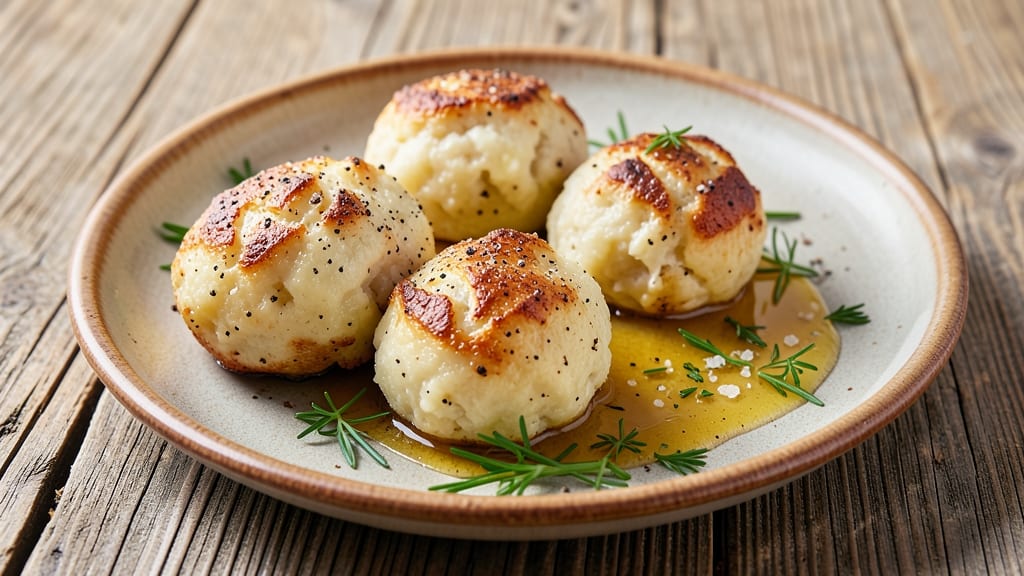
German potato dumplings bring hearty comfort to the table with their light, pillowy texture that soaks up sauces like a dream. Standing on a step stool in my grandmother’s kitchen in Sicily, I first learned how simple ingredients—mashed potatoes, flour, and eggs—could transform into something extraordinary.
This recipe delivers that same magic, with a method so straightforward it becomes second nature after the first try.
The secret lies in the dough’s gentle handling—overmixing leads to tough dumplings, while proper boiling ensures they stay fluffy. With just five simple ingredients and 20 minutes of active time, you’ll have tender, golden bites that pair perfectly with roast pork or rich gravy.
The texture is what makes them unforgettable: soft inside, just firm enough to hold shape when served.
What sets these apart is their versatility—serve them alongside Sunday roasts, nestled in creamy sauces, or even as a standalone side with butter and herbs. The dough’s lightness comes from resting it briefly before shaping, a small step that makes all the difference.
Once you try them, you’ll understand why they’re a staple in German kitchens.
Ready in 30 minutes total, this recipe is perfect for weeknight dinners or holiday feasts. The key is patience—letting the dough rest and boiling the dumplings gently ensures they rise just enough to be cloud-like on the plate. Here’s how to make them perfectly every time.
Ingredients for german potato dumplings
Five simple ingredients transform into cloud-like bites perfect with rich sauces or roasts.
| Ingredient | Amount | Notes |
|---|---|---|
| Russet Potatoes 🥔 | 2 lb | Yukon gold or similar waxy variety |
| All-Purpose Flour 🌾 | 2 cups | Sifted for light texture |
| Large Eggs 🥚 | 2 whole | Room temperature preferred |
| Unsalted Butter 🧈 | ¼ cup | Cold, cubed for dough |
| Diamond Crystal Kosher Salt 🧂 | 1 tsp | Fine grain for delicate seasoning |
| Freshly Ground Black Pepper 🌶️ | ¼ tsp | For subtle seasoning |
| Water 💧 | ½ cup | Room temperature for dough |
| Butter (for boiling) 🧈 | 1 tbsp | Melted for dumpling bath |
The potatoes are the foundation—waxy varieties like Yukon Gold break down beautifully without turning gluey. Organic potatoes from a local farm often have better texture, but any russet will work if you peel them thoroughly and boil them until fork-tender. The dough’s lightness comes from sifting the flour and incorporating cold butter in small cubes—this prevents overdevelopment. For the best results, use Diamond Crystal kosher salt (it dissolves more evenly than table salt), and always measure flour by spooning it into the cup rather than scooping directly from the bag. The eggs should be at room temperature to blend smoothly into the dough.
No all-purpose flour? Whole wheat flour at 50% substitution works but makes the dumplings denser. Short on butter? Olive oil at equal volume keeps them tender, though they’ll lack richness. The water measurement is approximate—add just enough to bring the dough together without making it sticky. For extra fluffiness, let the dough rest for 15 minutes before shaping. This allows the gluten to relax, ensuring pillowy results. If you’re making these ahead, the dough can be refrigerated for up to 2 days—just bring it to room temperature before shaping.
Freshly made dumplings are best, but they reheat beautifully. Boil in salted water until they float (about 3 minutes), then transfer to the butter bath for 1 minute to set the exterior. Store cooked dumplings in an airtight container with a sprinkle of melted butter to keep them moist for up to 3 days. For longer storage, freeze them before boiling—thaw in the fridge overnight and reheat in butter or sauce. The dumplings absorb flavors like a sponge, so pair them with gravy, roasted meats, or sautéed mushrooms for maximum impact.
Why You'll Love This Recipe
- No-Fuss Ingredients: I swear by this recipe because it uses what’s already in my pantry—flour, eggs, butter, salt—and a couple of potatoes I forgot about. Honestly, the simplicity is half the charm; no specialty items or last-minute grocery runs.
- Buttery Pillowy Magic: That first bite? The outside gets just crisp enough from the butter, while the inside stays soft and fluffy—like a hug from your grandma’s kitchen. The eggs bind it all together so it holds shape without falling apart.
- Weeknight Wonder: I make these when I’m too tired to think, and they’re ready before the kids even finish their homework. They pair with anything—soup, gravy, even just melted butter and salt—and turn a basic meal into something special.
- Budget Stretch: A single batch feeds four for dinner and leaves enough for lunch the next day. Between us, this is my go-to when I’m trying to make groceries last longer, and no one ever complains about seconds.
Step-by-step instructions for German potato dumplings
Here's the precise method for achieving authentic, fluffy potato dumplings every time.
Boil and Mash the Potatoes
Place the 2 lb russet potatoes in a large pot and cover with cold water by 2 inches. Add the 1 tbsp butter for boiling. Bring to a boil over high heat, then reduce to a steady simmer for 15-20 minutes until fork-tender. The potatoes should collapse easily when pierced with a fork but still hold their shape.
Drain the potatoes thoroughly, then return them to the pot. Using a potato masher, mash until completely smooth with no lumps remaining. The texture should be silky and free of any resistance. Let the mashed potatoes cool slightly to room temperature before proceeding—this prevents the dough from becoming gummy when mixed with cold butter.
Prepare the Dough Mixture
In a large mixing bowl, combine the cooled mashed potatoes with the 2 cups sifted all-purpose flour, 1 tsp diamond crystal kosher salt, and 0.25 tsp freshly ground black pepper. Mix using a wooden spoon or rubber spatula until just combined. The mixture should resemble coarse crumbs with some potato pieces still visible.
Add the 2 whole large eggs and 0.5 cup room-temperature water. Mix gently until incorporated, then fold in the 0.25 cup cold, cubed unsalted butter. The dough should come together into a soft, pliable mass that holds when pressed. If it crumbles excessively, add 1 tablespoon of water at a time until cohesive. Avoid overmixing to maintain a light texture.
Shape and Boil the Dumplings
Bring a large pot of salted water to a gentle boil. Using a small ice cream scoop or tablespoon, portion the dough into 16 equal balls, each about 1.5 inches in diameter. Roll each ball between your palms to create a smooth surface—this ensures even cooking and prevents cracking.
Carefully lower the dumplings into the boiling water in batches, leaving room for them to expand. They're ready when they float to the surface and develop a delicate, translucent skin, typically after 3-4 minutes. Remove with a slotted spoon and transfer to a platter. The dumplings should be light and airy, not dense or heavy.
Serve Immediately with Classic Pairings
Serve the dumplings immediately while still warm, as they continue to cook slightly from residual heat. Traditionally, they're paired with braised meats, gravy, or fresh butter. The interior should be tender with a slight resistance when cut, and the exterior should have a delicate, almost gelatinous sheen.
For optimal texture, serve within 10 minutes of boiling. If needed, keep them warm in a low oven (200°F) for up to 15 minutes, but the texture will begin to firm up. The dumplings should complement rather than compete with richer dishes, offering a neutral canvas that absorbs surrounding flavors beautifully.
Pro Tips For Making German Potato Dumplings
- Boil Potatoes Until Fork-Tender: Don’t rush the boiling—Russets need 15-20 minutes until they’re soft enough to mash with minimal resistance. I learned this the hard way when my first batch turned out gummy and gluey, no matter how much butter I added.
- Use Cold Butter for Dough: Cut that unsalted butter into cubes and chill it first—this keeps the dough from turning greasy when mixing. Cold butter also prevents the dumplings from getting too soft during boiling, which is the thing that matters most when they hit the pot.
- Don’t Overmix the Dough: Once the flour and egg are combined, fold in the potatoes gently—just until everything sticks. Overworking it makes the dumplings dense and tough, and nobody wants that. Think "just combined," not "perfectly smooth."
- Boil in Salted Water: Use 1 tablespoon of kosher salt per 4 cups of water—enough to taste it if you took a sip. The dumplings absorb the flavor, and skipping this step leaves them bland, no matter how rich the butter is. (Yes, even if you’re impatient like me.)
Regional styles of german potato dumplings
Bavarian Kartoffelknödel
In Bavaria, these dumplings are called Kartoffelknödel and are often served with sauerkraut and roasted pork. The dough here includes 1 extra egg for extra binding, and I like to add 1 tbsp grated nutmeg to the dough for warmth.
The dumplings are boiled in salted water with a pinch of baking soda—just ½ tsp—to help them rise beautifully. Serve with a creamy mushroom gravy for the ultimate hearty meal. 🌟
Silesian Potato Dumplings
In Silesia, the dumplings are often pan-fried after boiling in butter for a crisp exterior. The dough here uses ½ cup rye flour mixed with the all-purpose flour for a nuttier flavor. After boiling, I pan-fry them in 2 tbsp butter until golden brown on both sides.
They’re traditionally served with sour cream and chives or as a side to goulash. The crispy texture is a game-changer! 🔥
Austrian "Kartoffelklöße"
Austrian Kartoffelklöße are slightly larger—about 2 inches in diameter—and often served with apple sauce or sweetened cream. The dough here includes 1 tbsp sugar and ½ tsp vanilla extract for a subtle sweetness.
They’re boiled in lightly salted water with a bay leaf for fragrance. For a festive touch, I garnish them with powdered sugar and serve with warm apple compote. 🍏
Swabian "Spätzle" Variations
In Swabia, these dumplings are sometimes made with egg noodles for a hybrid texture. The dough here combines ½ cup mashed potatoes with 1.5 cups egg noodle dough (homemade or store-bought).
After boiling, they’re tossed in butter and parsley and served with lentil stew or roasted vegetables. The egg noodle addition gives them a chewier bite while keeping the lightness. 🌱
Northern German "Pommes Purée"
In northern Germany, these dumplings are called Pommes Purée and are often mashed into a thick purée before shaping. The dough here uses ½ cup mashed potatoes mixed with 1 cup boiled potatoes for extra moisture.
They’re boiled in salted water with a splash of milk for extra tenderness. Serve them as a thick, creamy side with smoked fish or herring—a classic northern German pairing. 🐟
Nutrition facts
Frequently asked questions
Why do German potato dumplings turn out dense instead of fluffy?
Overmixing the dough or using warm butter creates dense dumplings. Always use cold, cubed butter and mix just until combined. Let the dough rest for 15 minutes before shaping to relax the gluten. Also, boil them gently—they're done when they float, not before!
Can I make these dumplings ahead of time?
Yes! Shape the dough balls and refrigerate them for up to 2 days before boiling. For longer storage, freeze shaped dumplings on a tray, then transfer to a bag. Boil from frozen (add 1 minute to cooking time) or thaw overnight in the fridge. They reheat beautifully in butter or gravy.
What's the best way to reheat leftover dumplings?
Place them in a skillet with 1 tbsp butter per serving over medium heat for 2-3 minutes, turning gently until warmed through. For oven reheating, cover with foil and bake at 350°F for 10 minutes. Never microwave—they'll turn gummy. A quick pan-fry adds crispy edges!
Are these dumplings gluten-free?
Traditional versions contain wheat flour, but you can substitute with 1:1 gluten-free flour blend plus ½ tsp xanthan gum. The texture will be slightly denser, but still delicious. For best results, use a blend designed for baking like Bob's Red Mill 1-to-1. Keep an extra 1 tbsp water handy as GF flours absorb differently.
How do I prevent dumplings from cracking while boiling?
Roll the dough balls between your palms to create smooth, tight surfaces before boiling. Don't overcrowd the pot—leave 2 inches between dumplings. Add them to the water gently to avoid air bubbles forming. If cracks appear, they're still edible—just pan-fry them to seal the exterior.