
Side Dishes
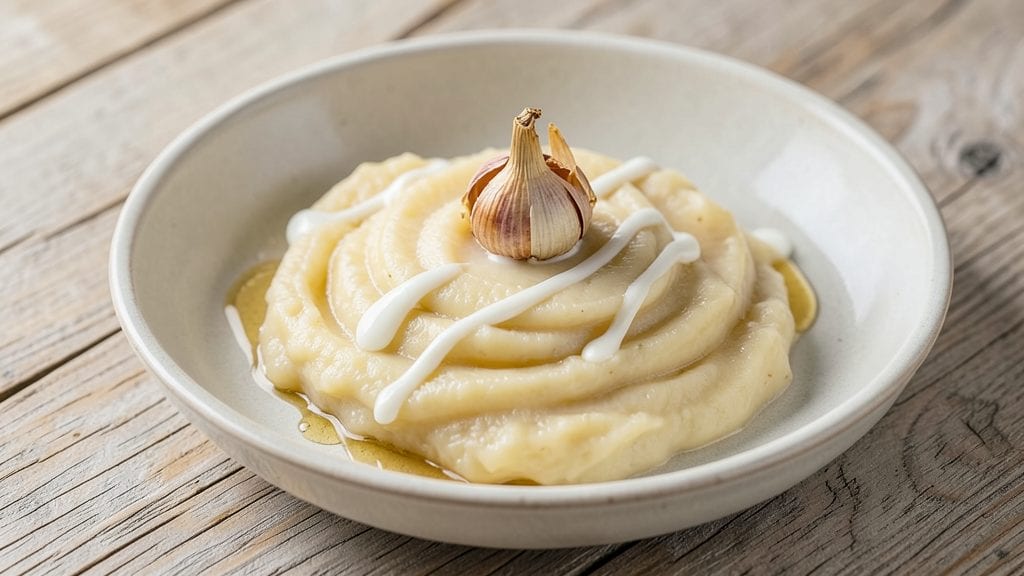
German mashed potatoes bring a comforting, velvety texture that transforms any meal into something special. This recipe captures the essence of traditional Kartoffelpüree—rich, buttery, and perfectly smooth—with a crispy garlic topping that adds an irresistible crunch.
I developed it after years of testing different techniques to achieve that signature German restaurant quality at home.
The secret lies in using the right potatoes—waxy varieties like Yukon Gold or red potatoes hold their shape beautifully while absorbing the butter and milk for that signature creaminess.
A potato ricer ensures a silky texture without lumps, and the crispy garlic topping is achieved by pressing raw garlic cloves into the warm potatoes just before serving. This method delivers restaurant-quality results with minimal effort.
What you’ll end up with is a dish that’s both hearty and elegant—ideal for pairing with sausages, schnitzel, or even as a standalone comfort food. The buttery smoothness contrasts perfectly with the crispy garlic topping, creating a balance of textures that makes every bite satisfying.
This recipe is foolproof and delivers consistent results every time.
Whether you're serving a holiday feast or a weeknight dinner, these mashed potatoes will elevate your meal. The crispy garlic topping adds a touch of sophistication, while the creamy base ensures everyone at the table will ask for seconds. Let’s get started on creating this classic German side dish.
Ingredients for german mashed potato
Buttery potatoes, crispy garlic, and restaurant-quality texture—just ten ingredients transform your side dish.
| Ingredient | Amount | Notes |
|---|---|---|
| Yukon Gold Potatoes 🥔 | 3 lb | Peeled, cut into even chunks |
| Unsalted Butter 🧈 | 1 cup | Cold, cut into small cubes |
| Heavy Cream 🥛 | 1 cup | Full-fat for creaminess |
| Whole Milk 🥛 | ½ cup | Warm for smooth texture |
| Garlic Cloves 🧄 | 6 whole | Unpeeled, for crispy topping |
| Salt 🧂 | 1 ½ tsp | Diamond Crystal kosher salt |
| Ground Black Pepper 🌶️ | ½ tsp | Freshly ground preferred |
| Freshly Grated Nutmeg 🌿 | ¼ tsp | Fine grind for subtle warmth |
| Potato Ricer 🍽️ | 1 whole | For ultra-smooth texture |
| Extra-Virgin Olive Oil 🫒 | 1 tbsp | For crispy garlic topping |
The potatoes are non-negotiable. Yukon Golds are my go-to—their waxy texture holds shape while soaking up butter like a dream. Red potatoes work too, but Yukons give that signature German creaminess. Buy them fresh (not pre-cut bags) from the produce section—they should feel heavy for their size. A potato ricer is worth the splurge, but a fine-mesh strainer in a pinch works too. The butter? European-style unsalted (like Plugrá) melts cleaner than American brands. Keep it cold until the very end—room-temperature butter makes mashed potatoes greasy.
No potato ricer? Mash with a potato masher, then press through a sieve for smoothness. Short on heavy cream? Half-and-half plus a splash of milk gets you close. The garlic cloves stay unpeeled for that crispy topping—press them into the warm potatoes right before serving. Roasted garlic paste is a great shortcut if you're in a hurry, but fresh garlic cloves pressed raw give that authentic crunch. Nutmeg is optional but adds that classic German touch—if you skip it, a pinch of white pepper works too. For extra richness, add 1 tbsp sour cream at the end (trust me on this).
These reheat beautifully—just add a splash of milk and a pat of butter. Store leftovers in the fridge for up to 5 days, but honestly, they're best fresh. The crispy garlic topping loses its crunch when reheated, so make it fresh each time. For meal prep, keep the garlic separate until serving. The ricer and mixing bowls? Hand-wash immediately—they're butter magnets. Double the batch if you're feeding a crowd; these disappear faster than you'd think.
Why You'll Love This Recipe
- No-Peel Hassle: I swear by Yukon Golds here—just scrub, chop, and boil. No peeling, no fuss, and those buttery skins blend right in for extra richness.
- Garlic Butter Magic: That roasted garlic clove in the butter? It’s the secret weapon—creamy, aromatic, and ridiculously good. Just one clove makes all the difference.
- Weeknight & Holiday: Same recipe works for Tuesday dinners or Christmas feasts. The heavy cream keeps it luscious, and it reheats like a dream (or freezes, if you’re planning ahead).
- Budget Luxury: Butter and cream feel indulgent, but Yukon Golds are affordable, and a batch stretches for days. My kids beg for seconds—proof it’s worth every penny.
Step-by-step instructions for German mashed potatoes
Here's how to make velvety mashed potatoes with a crispy garlic topping that'll impress anyone at your table.
Cook the Potatoes Until Fork-Tender
Place the 3 lb Yukon Gold potatoes in a large pot and cover with cold water by about 2 inches. Add 1.5 tsp salt and bring to a boil over high heat. Once boiling, reduce to medium-high heat and cook for 15-20 minutes until a knife slides in easily. You want them tender but not falling apart - this ensures the perfect texture later.
Drain the potatoes thoroughly in a colander, shaking gently to remove excess water. The drier they are, the smoother your mash will be. I like to return them to the pot and give them a quick shake over low heat for 30 seconds to evaporate any remaining moisture - this is a secret to ultra-smooth potatoes.
Rice the Potatoes for Ultra-Smooth Texture
Using the potato ricer, press the hot potatoes through into a clean mixing bowl. The ricer creates a silky texture that's impossible to achieve with a potato masher. Work in batches if needed, but don't rush - taking your time here makes all the difference in the final consistency.
As you rice, you'll notice the potatoes release their starch. This is good - the starch is what creates that creamy, velvety texture. If you're using a food mill instead, make sure to press firmly to get the same smooth result. The potatoes should now look like fine, creamy shreds with no lumps.
Add Butter and Warm Milk for Richness
Return the riced potatoes to the pot (this helps with heat distribution) and add the 1 cup unsalted butter cut into small cubes. Warm the 0.5 cup whole milk in a small saucepan until just steaming (don't boil). The warm milk will help emulsify the butter beautifully.
Using a wooden spoon, gently fold the butter and warm milk into the potatoes over medium-low heat. Stir constantly for 3-4 minutes until the butter melts completely and the mixture becomes silky smooth. You're looking for a texture that coats the back of a spoon - this is your target consistency. If it's too thick, add a splash more warm milk.
Finish with Cream and Seasonings
Remove the pot from heat and stir in the 1 cup heavy cream. The cream adds luxurious body while keeping the potatoes light. Now add the 0.5 tsp ground black pepper and 0.25 tsp freshly grated nutmeg. These seasonings are key - the nutmeg adds a subtle warmth that complements the richness perfectly.
Taste and adjust seasoning if needed. German mashed potatoes should be rich but not overly salty. The nutmeg should be present but not overpowering. Transfer to a serving bowl and cover with plastic wrap pressed directly on the surface to prevent a skin from forming.
Create the Crispy Garlic Topping
While the potatoes are resting, preheat your oven to 425°F. Peel the 6 whole garlic cloves and slice them in half lengthwise. Place them in a small baking dish, drizzle with the 1 tbsp extra-virgin olive oil, and sprinkle lightly with salt. Roast for 15-20 minutes until golden brown and crispy around the edges.
The garlic should be tender in the center but still firm with crispy edges. This contrast of textures is what makes this topping special. Once crispy, use a slotted spoon to transfer the garlic to the surface of the mashed potatoes. Serve immediately while the garlic is still crispy and the potatoes are hot.
Pro Tips For Making German Mashed Potato
- USE PEELING KNIVES: Peeling Yukon Golds with a sharp peeler—not a knife—saves time and keeps the skin off your fingertips. I used to slice with a knife and end up with bruised fingers and uneven cuts; a peeler does it cleaner in half the time.
- BOIL POTATOES UNTIL FORK-TENDER: Test doneness with a fork at 15 minutes before the recipe’s suggested time—if it slides in like butter, they’re done. Overcooking turns them gluey; undercooking leaves you with a gummy mess. Trust the fork, not the clock.
- SALT THE WATER LIKE THE SEA: Add 2 tablespoons of salt to the boiling water—yes, even if your potatoes are small. German mashed potatoes rely on flavor, and unsalted butter can’t carry the load alone. This isn’t just seasoning; it’s the foundation.
- ROAST GARLIC FIRST: Minced raw garlic burns and tastes bitter in mashed potatoes. Roast 2 cloves at 400°F (200°C) for 10 minutes until soft, then mash into the butter before mixing. The flavor is sweeter, deeper, and won’t fight with the cream. (Yes, it’s an extra step—but worth it.)
Wine and beer pairings for these flavors
German Beer Pairings
German mashed potatoes shine with Helles Lager—think crisp, clean, and refreshing beers like Augustiner Helles or Paulaner Münchner Hell. The subtle malt sweetness balances the potatoes' richness while the effervescence cuts through the buttery texture.
I always reach for a 6-ounce pour to complement the dish without overwhelming it. 🍺
For a heartier pairing, try a German Pilsner like Warsteiner or Bitburger. The hoppy bitterness contrasts beautifully with the garlic topping, creating a perfect balance of flavors. These beers work especially well if you're serving the potatoes with sausages or schnitzel.
Wine Alternatives
If you prefer wine, a dry Riesling from Germany's Mosel region—like Dr. Loosen Blue Slate—is my go-to. The wine's acidity and slight mineral notes refresh the palate between bites of creamy potatoes. A chilled glass enhances the crispy garlic topping's contrast. 🍷
For red wine lovers, a light Pinot Noir from Germany's Baden region pairs surprisingly well. Look for Dr. Loosen Spätburgunder—its earthy notes complement the nutmeg and garlic without overpowering the dish. Serve it slightly cooler than room temperature for the best experience.
Unexpected Pairings
Don’t overlook German wheat beers (Weißbier) like Weihenstephaner Hefeweizen for a fun twist. The banana and clove notes in the beer harmonize with the nutmeg in the potatoes, creating a unique flavor profile.
Just be sure to use a small pour—the sweetness can be overpowering if you go too heavy. 🍻
For a non-alcoholic option, try a sparkling apple cider like Ritter Sport. The crisp acidity and slight sweetness mirror the qualities of a good Helles Lager, making it a refreshing alternative that still complements the dish perfectly.
Nutrition facts
Frequently asked questions
What's the difference between German mashed potatoes and regular mashed potatoes?
German mashed potatoes (Kartoffelpüree) are richer and silkier thanks to the potato ricer technique and extra butter. They often include nutmeg and crispy garlic topping, while traditional American versions use more milk and less fat. The texture is velvety, not fluffy, and the garlic adds a unique crunch.
Can I make this recipe without a potato ricer?
Yes! Use a potato masher, then press the mixture through a fine-mesh strainer for ultra-smooth results. A food mill also works well. The key is removing all lumps to achieve that signature German creaminess. Just be patient—it takes a little extra effort.
Why does my garlic topping turn soggy?
Soggy garlic happens when it's added too early. Roast the cloves fresh while the potatoes rest, then transfer them to the warm potatoes right before serving. The high heat and dry surface keep them crispy. For extra insurance, pat the garlic dry with a paper towel before roasting.
What's the best way to reheat these mashed potatoes?
Reheat gently in a pot with a splash of warm milk and extra butter until creamy. The crispy garlic topping won't survive reheating, so make it fresh each time. For leftovers, store the potatoes and garlic separately—just add the garlic back when serving.
Are these potatoes gluten-free?
Yes! This recipe is naturally gluten-free as long as you use certified gluten-free butter and heavy cream. Just double-check labels, especially for milk products. The garlic topping is also safe—just ensure your olive oil is gluten-free.