
Side Dishes
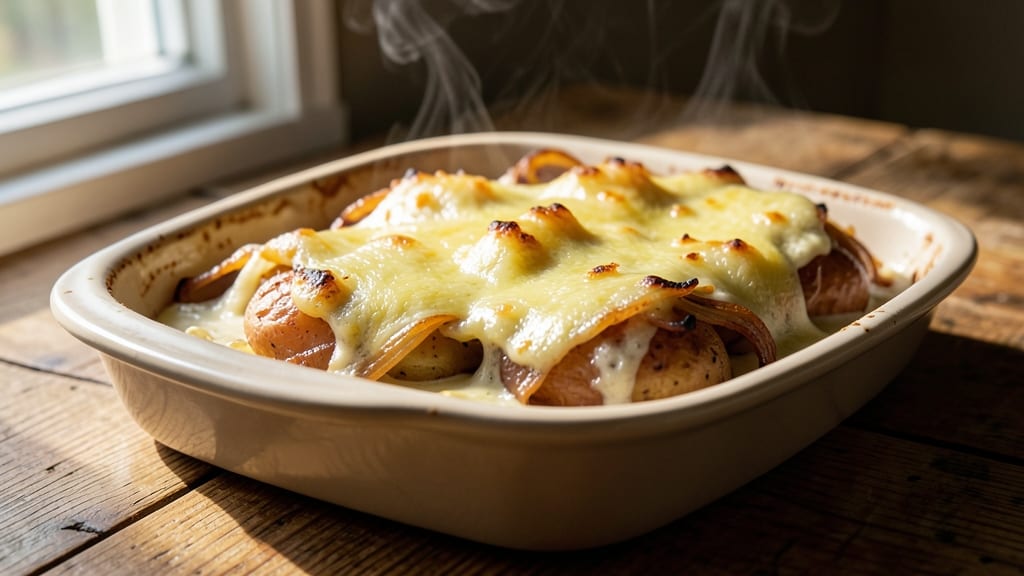
French onion scalloped potatoes transform humble ingredients into a showstopping side dish that rivals any restaurant classic. The secret lies in perfectly caramelized onions layered between tender potatoes and melted cheese—each bite delivers crispy golden edges and creamy, savory depths. After years of testing, I’ve refined this recipe to ensure those coveted crispy layers without drying out the potatoes.
This dish builds flavor through slow cooking and precise layering. You’ll start with onions caramelized until deep amber, then alternate potato slices and cheese in a buttery baking dish. The result? A dish that’s rich, comforting, and crispy on top, with tender layers beneath.
It’s the kind of side that elevates any meal—whether paired with steak, roasted chicken, or served as a hearty vegetarian main.
The baking process is where the magic happens: high heat for the first 15 minutes creates that signature crispy crust, while the remaining time melts the cheese into a silky blanket.
The aroma alone will have everyone gathering at the table—this isn’t just a side dish, it’s a flavor experience. Ready to master the technique?
Perfect for holiday dinners, family gatherings, or weeknight meals when you crave something special. The recipe scales easily, too—just adjust the baking dish size. Let’s get started on creating layers of flavor that’ll impress even the most discerning eaters.
Ingredients for french onion scalloped potatoes
Transform humble ingredients into restaurant-worthy layers with these precise measurements.
| Ingredient | Amount | Notes |
|---|---|---|
| Yellow Onions 🧅 | 3 large | Thinly sliced for even caramelization |
| Russet Potatoes 🥔 | 2 ½ lb | Thinly sliced, uniform thickness |
| Gruyère Cheese 🧀 | 1 ½ cups | Freshly grated, nutty flavor |
| Heavy Cream 🥛 | 1 cup | Full-fat for richness |
| Unsalted Butter 🧈 | ½ cup | Cold, cubed for even melting |
| Garlic Cloves 🧄 | 4 cloves | Minced for subtle depth |
| Dijon Mustard 🍯 | 1 tbsp | For tangy balance |
| Chicken Broth 💧 | 1 cup | Low-sodium preferred |
| Salt 🧂 | 1 ½ tsp | Kosher or sea salt |
| Black Pepper 🌶️ | ½ tsp | Freshly ground preferred |
| Fresh Thyme Leaves 🌿 | ¼ cup | Chopped, aromatic touch |
| All-Purpose Flour 🌾 | 1 tbsp | For thickening cream |
The onions are the foundation—yellow onions work best for their sweetness and texture. Look for firm, dry specimens at Whole Foods or your local market; avoid any with sprouting or soft spots. For caramelization, patience is key: slow cooking develops deep, amber hues. The Gruyère cheese is non-negotiable here—its nutty, melty profile elevates everything. Purchase a wedge from the deli counter for the freshest, most flavorful shavings. Potatoes should be Russet variety, as their high starch content ensures creamy layers without gumminess.
No Gruyère? Comté or Emmental work in a pinch, though flavor will differ slightly. Fresh thyme unavailable? Dried thyme at one-third the amount suffices, but fresh is ideal. The heavy cream must be full-fat—light cream or half-and-half won't deliver the same richness. For the onions, sugar isn't necessary if you cook them slowly enough; the natural sweetness emerges. The Dijon mustard adds brightness, but whole-grain mustard works too if you prefer a coarser texture. Prefer a dairy-free option? Swap the cream for unsweetened coconut milk, though texture will vary.
This dish reheats beautifully—350°F for 15 minutes restores crispiness. Store leftovers in an airtight container for 4-5 days; the flavors deepen overnight. For make-ahead convenience, assemble the dish (without baking) up to 24 hours ahead, then bake straight from the fridge. The cheese sauce thickens as it cools, so a splash of warm milk may be needed before serving. Portion into individual ramekins for elegant serving—each bite reveals the perfect balance of crispy, creamy, and caramelized.
Why You'll Love This Recipe
- One-Pan Magic: I swear by this recipe when I’m too tired to scrub a million dishes—just slice, layer, and bake. The onions caramelize right in the pan while the potatoes soften, and honestly? That’s my kind of effortless dinner.
- Cheese Pulls Hard: That Gruyère melts into a golden, gooey blanket over creamy potatoes and sweet onions—it’s like a hug in a casserole dish. I’ll be real: the first time I tasted it, I nearly licked the pan.
- Weeknight to Holiday: Serve it with a simple green salad for a fancy-feeling dinner, or double the batch and freeze half for lazy Sundays. My in-laws think it’s "fancy," but I just call it "cheat’s French bistro night."
- Budget Buster: Russets and onions are cheap, and a little cheese stretches far when baked into layers. I make this when grocery money’s tight, and no one ever complains—leftovers reheat beautifully, too. Win.
Step-by-step instructions for French onion scalloped potatoes
Here's how to build layers of caramelized onions and crispy potatoes with a rich, nutty cheese finish.
Caramelize the Onions to Perfection
Heat a large skillet over medium-low heat and add the 0.5 cup unsalted butter. Allow it to melt completely, then add the 3 large yellow onions that have been thinly sliced. Cook for 30 minutes, stirring occasionally, until the onions turn deep golden brown and their edges begin to crisp slightly. This slow process develops their natural sweetness.
Here's the thing—don't rush this step. You'll know they're ready when they look like a thick, jammy layer rather than distinct slices. Add the 4 cloves minced garlic cloves and cook for an additional 1 minute until fragrant. Remove from heat and stir in the 1 tbsp Dijon mustard and 0.25 cup fresh thyme leaves, letting the flavors meld together.
Prepare the Potato and Cheese Layers
Preheat your oven to 375°F. In a large bowl, combine the 2.5 lb russet potatoes that have been thinly sliced with uniform thickness, the 1.5 tsp salt, and 0.5 tsp black pepper. Toss gently to coat. Spread half of the potatoes in an even layer in a 9x13-inch baking dish, making sure they overlap slightly but don't pile up.
Spread the caramelized onions evenly over the potatoes, then sprinkle half of the 1.5 cups freshly grated gruyère cheese on top. Repeat with another layer of potatoes, then the remaining onions and cheese. The final layer should be potatoes topped with cheese to create that signature crispy crust.
Create the Creamy Sauce Base
In a medium saucepan, melt the remaining 0.25 cup unsalted butter over medium heat. Whisk in the 1 tbsp all-purpose flour and cook for 1 minute until lightly golden. Slowly pour in the 1 cup chicken broth while whisking constantly to prevent lumps from forming. Add the 1 cup heavy cream and bring to a gentle simmer, stirring frequently.
Remove from heat and stir in the remaining 0.25 cup fresh thyme leaves. The sauce should be smooth and slightly thickened. Pour this sauce evenly over the top layer of potatoes in the baking dish, making sure it reaches all the edges for even browning.
Bake Until Golden and Bubbly
Transfer the baking dish to the preheated oven and bake for 45 minutes. The potatoes should be tender when pierced with a fork, and the top should be bubbling with golden brown patches forming. If the top isn't browning enough after 45 minutes, increase the oven temperature to 400°F and broil for 2-3 minutes until crispy.
This is the moment that matters: the contrast between the crispy top and creamy interior. Let the scalloped potatoes rest for 10 minutes before serving to allow the layers to set properly. The cheese should be melted but not runny, and each bite should deliver that perfect combination of caramelized onions, creamy sauce, and crispy potato edges.
Pro Tips For Making French Onion Scalloped Potatoes
- CARAMELIZE ONIONS LOW: Skip the high-heat rush—cook those onions on medium-low for 45-60 minutes. I used to blast them and end up with burnt bits that made the whole dish taste bitter. Slow and steady gives you that deep, sweet base the cheese clings to.
- SLICE POTATOES THIN: Aim for ¼-inch slices—any thicker and the center stays raw. Use a mandoline if you’re impatient, but if you’re slicing by hand, go slow. Uneven slices = uneven cooking, and no one wants a cheesy potato casserole with a sad, gummy middle.
- SALT THE CREAM: Heavy cream needs salt—about ½ teaspoon per cup—before mixing it with the cheese. Gruyère’s already salty, and unsalted butter won’t cut it here. Taste it first; you’ll regret skipping this if your dish ends up bland.
- BAKE COVERED THEN UNCOVERED: Start with foil on for 45 minutes to melt the cheese, then uncover for the last 15. This guarantees a golden top without a soggy mess. I learned this after a batch turned out like a cheese pudding—no one wants that.
Wine and beer pairings for this recipe
Rich Red Wine
For this dish's deep, savory flavors, I always reach for a Burgundy wine like Domaine Drouhin or Louis Jadot. Their earthy, mushroomy notes complement the caramelized onions beautifully, while the acidity cuts through the richness.
Serve slightly chilled—55-60°F—to let the wine's complexity shine alongside the creamy, cheesy layers. 🍷
Crisp White Wine
A Chardonnay from Burgundy (like Louis Latour) works surprisingly well, especially if it's unoaked or lightly oaked. The wine's bright citrus and apple notes balance the dish's richness without overpowering it.
For a budget-friendly option, try a California Chardonnay from Kendall-Jackson—just avoid overly buttery styles that might clash with the Gruyère.
Malbec for Bold Pairings
If you prefer reds with more body, a Malbec from Argentina (like Catena Zapata) brings a juicy, dark fruit profile that stands up to the dish's depth.
The wine's slight smokiness echoes the caramelized onions, while its velvety texture complements the creamy sauce. Serve at 65-68°F for optimal balance. 🍇
Beer Pairings
For beer lovers, a Belgian witbier (like Hoegaarden) is my go-to—its coriander and orange peel notes refresh the palate between rich bites. Alternatively, a German Hefeweizen (such as Weihenstephaner) adds a light, effervescent contrast. Avoid heavy stouts or IPAs, which would overpower the delicate layers. 🍺
Seasonal Adaptations
For summer versions, swap the Gruyère for feta and pair with a Sancerre (crisp white wine) to highlight the dish's brightness. In winter, a Pinot Noir (like Meiomi) complements the dish's hearty, comforting qualities.
The key is matching the wine's intensity to the meal's richness—never let the drink compete with the dish's star ingredients. ❄️
Nutrition facts
Frequently asked questions
Can I use sweet onions instead of yellow onions?
Sweet onions like Vidalia will caramelize faster but lack the deep, savory flavor of yellow onions. For authentic results, stick with yellow onions—their natural sweetness develops during slow cooking, creating that signature jammy texture. If you must use sweet onions, reduce cooking time to 20-25 minutes and add a pinch of sugar (1/2 teaspoon) to enhance depth.
How do I prevent soggy potatoes in the middle?
Uniform slicing (1/8-inch thick) and proper layering are key. Toss potato slices with salt and pepper before assembling, then let them sit for 10 minutes to release moisture. Pat dry gently with a paper towel. Also, avoid overcrowding layers—potatoes should touch but not pile up. The crispy top comes from baking at 375°F for 45 minutes before broiling for 2-3 minutes.
Can I make this dish ahead of time?
Assemble the dish (up to the sauce step) and refrigerate for up to 24 hours before baking. For best results, bake straight from the fridge—add 5-10 minutes to the baking time. The flavors deepen overnight, and the cheese sauce thickens beautifully. To reheat leftovers, cover with foil and bake at 350°F for 15 minutes to restore crispiness.
What's the best cheese substitute if I can't find Gruyère?
For a similar nutty flavor, try Comté or Emmental (both melt well). If you prefer sharper cheese, Parmesan mixed with mozzarella works in a pinch. Avoid pre-shredded cheese—the anti-caking agents prevent proper melting. Freshly grate your substitute for the best texture. For a dairy-free option, use nutritional yeast mixed with cashew cream, though texture will differ.
Why did my top layer turn mushy instead of crispy?
This usually happens from over-baking or insufficient sauce coverage. The crispy crust forms when the top layer dries slightly—don't over-bake past 45 minutes. For extra crispiness, broil for 2-3 minutes at the end. Also ensure the sauce reaches all edges of the dish. If the potatoes are still undercooked, cover with foil and bake 10 more minutes at 350°F before crisping the top.