
Main Courses
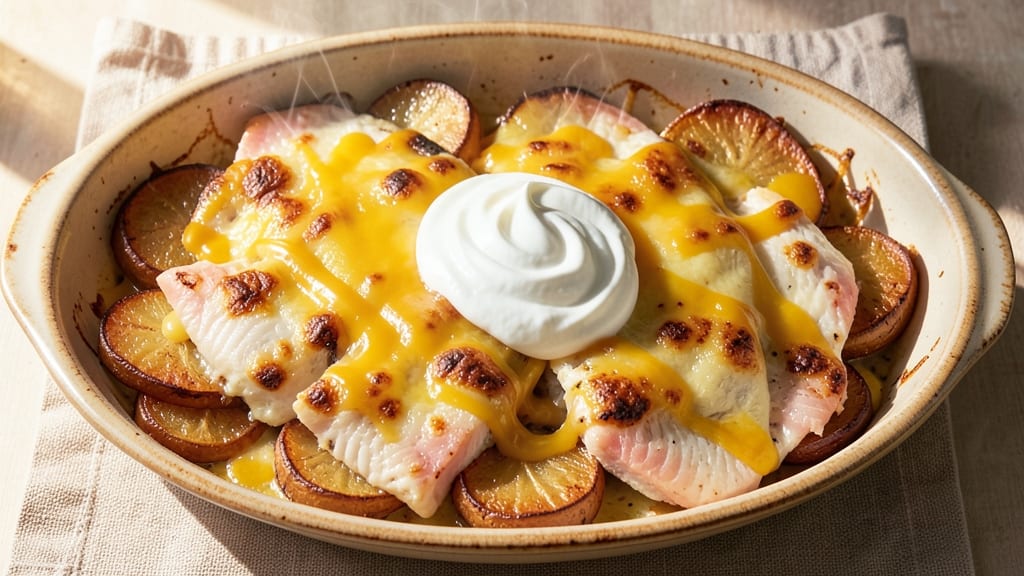
This fish and potato casserole recipe delivers the perfect balance of crispy golden edges and creamy, cheesy layers that bring comfort to every bite. The secret lies in layering potatoes and fish just right, then topping it with a buttery, cheesy crust that transforms into a satisfying crunch.
I developed this version after years of testing—it’s the one that finally earned me compliments instead of questions about the texture.
The foundation starts with thinly sliced potatoes and flaky white fish, both seasoned to perfection and arranged in a baking dish. A rich béchamel sauce binds everything together, while a final layer of breadcrumbs and sharp cheddar creates that coveted crispy top.
The result? A dish that’s hearty enough for a family dinner but simple enough for a weeknight, with just 30 minutes of prep and 375°F baking time to deliver restaurant-quality comfort.
What makes this casserole truly special is how the textures work together—creamy, tender fish and potatoes contrast beautifully with the crispy, golden crust. Each forkful delivers layers of flavor: savory fish, earthy potatoes, and the sharp tang of melted cheese.
The aroma alone will have everyone gathering around the table before it even comes out of the oven.
Serve with a simple green salad or steamed vegetables to round out the meal, or enjoy it on its own as the star of the dinner. The leftovers reheat beautifully, making it ideal for meal prep. Here’s how to build this classic dish with professional results every time.
Ingredients for fish and potato casserole
Thinly sliced potatoes and flaky fish create the perfect base for this crispy, cheesy casserole masterpiece.
| Ingredient | Amount | Notes |
|---|---|---|
| Russet Potatoes 🥔 | 2 lb | Thinly sliced, peeled preferred |
| White Fish Fillets 🐟 | 1 ½ lb | Cod, haddock, or tilapia |
| All-Purpose Flour 🌾 | ¼ cup | For dredging fish |
| Unsalted Butter 🧈 | ½ cup | Full-fat for richness |
| Heavy Whipping Cream 🥛 | 1 cup | Full-fat preferred |
| Sharp Cheddar Cheese 🧀 | 1 ½ cups | Shredded, not pre-shredded |
| Panko Breadcrumbs 🍞 | ½ cup | For crispy topping |
| Milk 🥛 | ½ cup | Whole milk preferred |
| Garlic Cloves 🧄 | 3 cloves | Minced for flavor |
| Lemon Juice 🍋 | 2 tbsp | Freshly squeezed |
| Salt 🧂 | 1 ½ tsp | Kosher or sea salt |
| Ground Black Pepper 🌶️ | ½ tsp | Freshly ground preferred |
| Dried Parsley 🌿 | 1 tbsp | For garnish |
The potatoes are the backbone here. Russet potatoes slice the thinnest—mandoline slicer if you've got one, or ask your butcher to slice them. Look for firm, unblemished potatoes at the store; those soft spots turn mushy. For the fish, cod or haddock hold up best—tilapia works too if that's what's on sale. Buy it fresh from the seafood counter, not frozen unless it's vacuum-sealed. The breadcrumbs? Panko gives that perfect crunch, but regular breadcrumbs work in a pinch.
No panko? Crushed cornflakes or cracker crumbs add texture without tasting off. Fresh parsley wilt fast—dried works fine, but add it at the end. The cheese should be sharp cheddar—Kraft won't cut it. For the béchamel, butter and cream are non-negotiable—half-and-half makes it watery. Want extra flavor? Add a pinch of nutmeg to the cheese sauce. The fish can be pre-cooked or raw—both work, but pre-cooked saves time. Just make sure it's fully cooked before baking the casserole.
This reheats beautifully—cover with foil to keep it moist. Keeps 4-5 days in the fridge, freezes for 2 months. I always make a double batch because the leftovers taste even better the next day. Store in airtight containers with a paper towel on top to absorb any moisture. The crispy top gets soggy fast, so eat it fresh or reheat uncovered at 350°F for 10 minutes.
Why You'll Love This Recipe
- One-Pan Magic: I swear by this for nights when I’m too tired to wash another dish. Slice the potatoes, layer them with the fish, and dump the creamy sauce on top—boom. Done. The butter and cream melt into that golden crust while the fish stays flaky, all without a single extra pot.
- Creamy Crisp Contrast: Here’s what sold me—the buttery flour topping turns irresistibly crispy, while the inside stays tender and rich from the heavy cream. The fish doesn’t dry out, and the potatoes? They’re so buttery they practically melt in your mouth. (Yes, even on a Tuesday night.)
- Leftovers for Days: Between us, this casserole tastes better the next day. The flavors meld into this perfect harmony, and it reheats like a dream. I make a double batch on Sundays—one for dinner, one for lunches—and no one ever complains. (My daughter picks out the fish first, but still asks for seconds.)
- Budget-Friendly Luxury: Russets and white fish fillets are cheap staples, but this dish feels fancy. The flour-butter sauce adds richness without breaking the bank, and the cream makes it feel indulgent. Honestly, it’s my go-to when I want comfort food that doesn’t require a grocery haul.
Step-by-step instructions for fish and potato casserole
Here's how to create a perfect balance of crispy, golden topping and rich, cheesy layers.
Prepare the Potato and Fish Layers
Preheat your oven to 375°F. Peel and thinly slice the 2 lb russet potatoes into ⅛-inch thick rounds using a mandoline or sharp knife. You'll want about 6-8 slices per potato—consistent thickness ensures even cooking.
In a large bowl, combine the sliced potatoes with the 2 tbsp lemon juice, 1.5 tsp salt, and 0.5 tsp ground black pepper. Toss gently to coat evenly. This acidity helps tenderize the potatoes while adding brightness that cuts through the richness of the cheese. Let the potatoes sit for 10 minutes while you prepare the fish.
Create the Crispy Fish Topping
Pat the 1.5 lb white fish fillets dry with paper towels—this is crucial for that crispy crust. Place the fillets in a shallow dish and lightly dredge each side in the 0.25 cup all-purpose flour, shaking off any excess. The flour creates a light barrier that helps the fish cook evenly without falling apart.
In a separate bowl, whisk together the 0.5 cup milk and 1 tbsp dried parsley. Dip each floured fish fillet into the milk mixture, letting any excess drip off. Then press each fillet into the 0.5 cup panko breadcrumbs, coating both sides completely. Arrange the breaded fillets on a parchment-lined baking sheet and refrigerate for 15 minutes—this chilling step prevents the breadcrumbs from falling off during baking.
Assemble the Casserole Layers
Grease a 9x13-inch baking dish with 2 tbsp unsalted butter (melted). Arrange half of the potato slices in the bottom of the dish, slightly overlapping. Sprinkle with ¾ cup sharp cheddar cheese, then add the remaining potato slices, overlapping them slightly. This layering creates pockets for the creamy sauce to nestle into.
In a small bowl, mix the 1 cup heavy whipping cream with the 3 minced garlic cloves. Pour this mixture evenly over the potato layers. The cream will infuse with the garlic flavor as it bakes, creating a fragrant base. Top with the remaining ¾ cup sharp cheddar cheese, pressing it down gently to help it melt smoothly.
Add the Crispy Fish Topping
Carefully place the chilled, breaded fish fillets on top of the cheese layer, arranging them in a single layer. The fish should sit directly on the cheese—this ensures they cook through while the cheese melts beneath. Bake uncovered for 25 minutes until the cheese begins to bubble and the fish is just opaque.
Here's the key moment: sprinkle the remaining 0.5 cup panko breadcrumbs evenly over the fish. Return to the oven and bake for an additional 10-12 minutes until the breadcrumbs turn deep golden brown and the fish flakes easily with a fork. The breadcrumbs should be crispy to the touch—this is your signal that the casserole is ready.
Rest and Serve with Confidence
Remove from the oven and let the casserole rest for 5 minutes before serving. This resting period allows the cheese to set slightly and the fish to redistribute its juices, preventing them from pooling at the bottom. The result should be a crispy, golden crust on top with creamy, cheesy layers beneath—each bite delivering that perfect harmony of textures.
Garnish with additional dried parsley if desired, and serve immediately with a simple side salad or steamed green beans. The contrast of crispy, creamy, and tender elements makes this casserole a standout dish that's perfect for family dinners or meal prep.
Pro Tips For Making Fish And Potato Casserole
- PARBOIL POTATOES FIRST: I learned this the hard way—skipping the 5-minute parboil in salted water means your potatoes turn to mush instead of staying firm. After draining, give them a quick cold shower to stop cooking, then pat very dry before layering. This keeps the casserole from getting soggy later.
- SEAR FISH IN BATCHES: Crowding the pan to save time? Don’t. Cook fish fillets in single layers over medium-high heat for 2–3 minutes per side—just until golden. If you’re doing more than two fillets, work in batches or your butter will turn into a greasy mess instead of a flavor base.
- SALT THE CREAM: That heavy cream needs seasoning before it goes in the casserole. Mix in ½ teaspoon salt (and a pinch of black pepper) while warming it—it makes a real difference in the final taste. I used to forget, and the dish always felt flat.
- COVER WITH FOIL EARLY: The first 20 minutes are critical—cover the casserole tightly with foil to trap steam and cook the potatoes evenly. After that, uncover to let the top brown. Skipping this step means dry, uneven cooking or a gummy texture. (Yes, even if you’re impatient like me.)
Wine and beer pairings for this fish and potato casserole
Crisp White Wine
For this rich, cheesy casserole, a Sauvignon Blanc from New Zealand or Loire Valley is my go-to choice. The bright acidity and citrus notes—think grapefruit and lime—cut through the creaminess while complementing the lemon in the dish.
Look for a wine with 12-13% ABV to match the meal's heartiness without overpowering it. A chilled bottle at 48-50°F enhances the crispy breadcrumb topping's texture. 🍷
Light-Bodied Beer
A wheat beer like Blue Moon or Hoegaarden provides a refreshing contrast to the casserole's richness. The banana and spice notes in wheat beers balance the dish's savory elements, while their effervescence cleanses the palate between bites.
Serve at 45-48°F to preserve the beer's delicate carbonation. For a local option, any Belgian-style witbier works beautifully.
Bold Red Alternative
If you prefer red wine, a Pinot Noir from Oregon or Burgundy offers a lighter option that won't clash with the fish. Look for red fruit and earthy undertones—these wines pair especially well with the sharp cheddar in the recipe.
Decant for 15-20 minutes to soften tannins, then serve at 60-62°F. Avoid heavy Cabernets, as their bold tannins can overpower the delicate flavors.
Non-Alcoholic Pairings
For a non-alcoholic option, try sparkling apple cider like Martinelli's or a ginger beer such as Feather's. The tartness and effervescence mimic wine's acidity, while ginger beer's spice complements the dish's savory notes.
Serve the cider chilled to 40°F and the ginger beer at 38-40°F for the best experience. Both options add a refreshing contrast to the creamy casserole.
Regional Beer Twist
In coastal regions, a local IPA with hops-forward bitterness can surprisingly work—just choose one with citrus or pine notes to complement the lemon and garlic. Pair it with a light, crisp lager like Corona on the side to balance the meal's richness.
The IPA's bitterness helps cleanse the palate, while the lager provides a smooth finish. 🍺
Nutrition facts
Frequently asked questions
Can I use frozen fish in this casserole?
Yes, but thaw it properly first! Place frozen fish fillets in a sealed bag and submerge in cold water for 20-30 minutes. Never thaw at room temperature—this promotes bacteria growth. For best texture, use vacuum-sealed frozen fish that's been flash-frozen. If using pre-cooked frozen fish, bake the casserole 5-7 minutes longer to ensure the topping gets crispy.
Why did my casserole turn out soggy instead of crispy?
Three common causes: overcrowding in the baking dish, insufficient breadcrumbs, or opening the oven too early. Use a 9x13-inch dish for this recipe—larger dishes spread heat too thin. For extra crispiness, sprinkle extra panko on top before the final baking. Let the breadcrumbs bake 10-12 minutes uncovered at 375°F without peeking.
What's the best way to reheat leftovers?
Reheat covered with foil at 350°F for 15-20 minutes to preserve moisture. For extra crispiness, broil for 2-3 minutes at the end—watch closely to avoid burning. Leftovers keep well for 4-5 days in the fridge. Freeze portions in airtight containers for up to 2 months, thawing overnight in the fridge before reheating.
Can I make this casserole ahead of time?
Assemble the casserole (without the final breadcrumb topping) up to 24 hours ahead and refrigerate uncovered. When ready to bake, add the breadcrumbs and bake as directed. For make-ahead freezing, assemble completely (including topping), cover tightly with foil, and freeze for up to 2 months. Thaw overnight before baking—add 5-10 minutes to baking time.
What fish works best for this recipe?
Flaky white fish holds up best: cod, haddock, or tilapia are ideal choices. Avoid firm fish like salmon or tuna—they won't flake as nicely. For extra flavor, try halibut or sea bass. If using frozen fish, choose vacuum-packed varieties for the best texture. The fish should be about 1-inch thick to cook evenly in the casserole.