
Main Courses
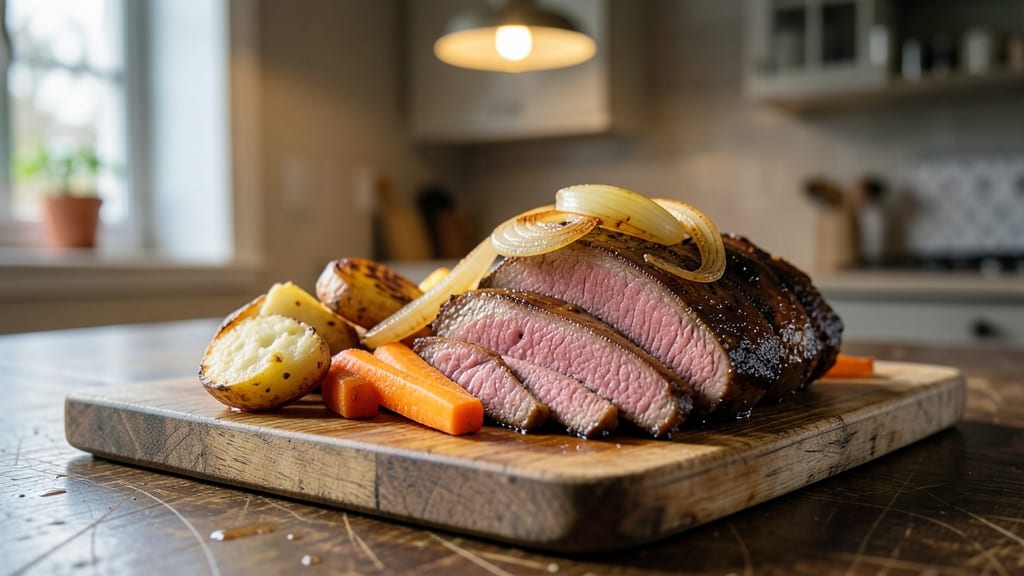
This beef brisket recipe with carrots and potatoes delivers a one-pot wonder that transforms tough cuts into melt-in-your-mouth tenderness while delivering crispy, golden spuds and caramelized carrots—all in a single dish.
The secret lies in slow-roasting the brisket until fork-tender while letting the vegetables develop deep, smoky sweetness through the same process. After years of testing, I’ve perfected a method that requires minimal prep but yields restaurant-quality results.
The beauty of this approach is the one-pot simplicity—no complicated layering or separate timers to track. A well-seasoned brisket roasts alongside potatoes and carrots, absorbing flavors from the pan drippings while developing a crispy exterior that contrasts perfectly with its tender interior.
The vegetables get their signature caramelization from the same heat source, creating harmony in every bite without extra effort.
By the time you pull this dish from the oven, you’ll have perfectly cooked brisket that slices easily, potatoes with crispy edges and fluffy centers, and carrots that are sweet and tender with just a hint of char.
The aromas alone—smoky, savory, and earthy—will have everyone gathered around the table before the first bite is even taken. This is comfort food at its finest, elevated by technique without sacrificing ease.
Serve with a simple green salad or crusty bread to soak up the rich juices. The leftovers reheat beautifully, making it ideal for meal prep or feeding a crowd. Let’s get started on this foolproof, one-pot masterpiece that delivers professional-quality results with minimal fuss.
Ingredients for beef brisket recipe with carrots and potatoes
Six ingredients transform tough brisket into melt-in-your-mouth perfection with crispy spuds and caramelized carrots.
| Ingredient | Amount | Notes |
|---|---|---|
| Beef Brisket 🥩 | 3 lb | Flat cut, trimmed of excess fat |
| Russet Potatoes 🥔 | 2 lb | Cut into 2-inch chunks |
| Carrots 🥕 | 1 ½ lb | Whole, scrubbed, halved lengthwise |
| Yellow Onion 🧅 | 1 whole | Cut into wedges |
| Garlic Cloves 🧄 | 8 cloves | Smashed, skin on |
| Extra-Virgin Olive Oil 🫒 | ⅓ cup | For searing and basting |
| Beef Broth 💧 | 2 cups | Low-sodium preferred |
| Dry Red Wine 🍷 | ½ cup | Bold variety like Cabernet |
| Tomato Paste 🍅 | ¼ cup | Smooth, not chunky |
| Smoked Paprika 🌶️ | 2 tbsp | For deep smoky flavor |
| Ground Black Pepper 🌶️ | 1 tbsp | Freshly cracked |
| Diamond Crystal Kosher Salt 🧂 | 1 ½ tbsp | For seasoning and brining |
| Fresh Rosemary 🌿 | ½ oz | Finely chopped sprigs |
| Fresh Thyme 🌿 | ½ oz | Leaves only, stems removed |
| Bay Leaves 🍃 | 2 whole | For aromatic depth |
The brisket is the star—look for flat-cut with good marbling at Costco or Whole Foods. Trim excess fat but leave some for flavor. Butcher shops often have the best cuts for this dish. Potatoes should be Russets or Yukon Golds—their starchiness holds up to roasting. Carrots? Organic if possible—they caramelize better without dirt. The onions and garlic get tossed in with the brisket first to build flavor, so don't skip smashing those garlic cloves—they release more aroma. Fresh herbs? Trader Joe's has great bundles, but any grocery store's produce section works.
No red wine? Beef broth with a splash of balsamic works just as well. Short on smoked paprika? Regular paprika plus a pinch of liquid smoke gets you close. Fresh thyme? Dried at one-third the amount is fine in a pinch. The tomato paste can be from a tube—Trader Joe's sells them in single-serve sizes, which is perfect. If your brisket is lean, add an extra 1/4 cup beef broth to keep it moist. The bay leaves? Remove them before serving—they're for flavor, not eating.
This dish reheats like a dream—350°F for 20 minutes with a splash of broth. Keeps 5 days in the fridge or 3 months frozen. I always make double batches because the leftovers are even better. Store in an airtight container with the juices to keep everything moist. For serving, slice the brisket against the grain for tender bites. The potatoes and carrots? Toss them in the pan drippings before serving—pure magic.
Why You'll Love This Recipe
- One-Pan Magic: The brisket, potatoes, and carrots all roast together—no chopping boards, no extra pots. Just slice the onion, peel the potatoes, and toss everything on a sheet pan. My lazy Sundays thank me.
- Deep, Caramelized Crust: The brisket develops that perfect charred edge while staying tender inside, and the potatoes? They turn golden and fluffy, almost like they’ve been slow-cooked. Here’s what sold me—the way the garlic and onions melt into the meat, turning every bite into a rich, savory hug.
- Budget Feeds Five: A single brisket stretches across meals, and the potatoes and carrots stretch my grocery budget further. Honestly, I’ve made this for date nights, family dinners, and even a potluck—no one ever leaves hungry.
- Leftovers for Days: The flavors only get better after resting. I’ll pull out slices of brisket for sandwiches or toss the veggies into a frittata the next morning. Between us, this is my secret weapon for avoiding takeout.
Step-by-step instructions for beef brisket with carrots and potatoes
This method delivers deep flavor and crispy vegetables in one pot—no fancy equipment needed.
Sear the Brisket and Build Flavor Layers
Heat a heavy Dutch oven over medium-high heat until very hot. Add the 3 lb beef brisket (flat cut) and sear on all sides until deeply browned, about 8-10 minutes total. Press down gently on the brisket during the first minute—this prevents it from curling and ensures even contact with the pan.
Remove the brisket and set aside. In the same pot, add the 0.33 cup extra-virgin olive oil and swirl to coat. Add the 1 whole yellow onion (wedges) and 1.5 lb carrots (halved lengthwise), cooking for 5 minutes until slightly softened. Stir in the 8 cloves smashed garlic cloves, 2 tbsp smoked paprika, 1 tbsp ground black pepper, and 1.5 tbsp diamond crystal kosher salt, cooking for 1 minute until fragrant.
Deglaze and Layer Aromatics
Pour in the 0.5 cup dry red wine and scrape up all the browned bits from the bottom of the pot—this is where all the flavor lives. Let it simmer for 3 minutes until the wine reduces by half. Stir in the 0.25 cup tomato paste and cook for 2 minutes until it darkens slightly.
Return the brisket to the pot, then add the 2 lb russet potatoes (cut into 2-inch chunks), 2 cups beef broth, 0.5 oz fresh rosemary, 0.5 oz fresh thyme, and 2 whole bay leaves. Bring to a gentle simmer and cover tightly with a lid.
Slow Braise Until Tender
Transfer the Dutch oven to a preheated 325°F oven and braise for 3 hours, uncovered. After the first hour, flip the brisket to ensure even cooking. Check for doneness by inserting a meat thermometer—the brisket should reach 195-203°F internally, and the potatoes should be fork-tender.
Here's the thing—this low-and-slow approach is key. The brisket will develop that signature tender texture while the vegetables absorb all that rich, smoky flavor. If the liquid reduces too much before the brisket is done, add a splash of water or broth to maintain moisture.
Crisp the Potatoes and Finish
Once the brisket reaches the target temperature, increase the oven temperature to 425°F. Uncover the pot and let it crisp for 15-20 minutes—this is where the magic happens. The potatoes will develop a golden, crispy exterior while staying creamy inside.
Watch closely during this final stage. You want the potatoes to be deep golden brown and slightly caramelized, not burnt. The brisket should have a glossy, mahogany bark. Let the entire pot rest for 10 minutes before serving—this allows the juices to redistribute.
Pro Tips For Making Beef Brisket Recipe With Carrots And Potatoes
- Trim the Fat First: Slice off that thick white fat cap from the brisket before cooking—it’s the secret to even browning and crispy edges. I learned this the hard way when my first batch turned into a greasy mess instead of golden perfection.
- Parboil Potatoes Roughly: Cut potatoes into 2-inch chunks and boil them for 8 minutes before adding to the pot—just until they’re fork-tender but still hold shape. This guarantees they’ll finish cooking without turning to mush, even if you’re distracted (like I always am).
- Don’t Overcrowd the Pan: If you’re searing the brisket and veggies together, work in batches—too many carrots and onions at once will steam instead of caramelize. I used to rush this and ended up with sad, pale vegetables every time.
- Use a Meat Thermometer: Brisket’s tricky—it needs to hit 195°F internally for that fall-apart texture, not just look done. I skipped this for years and always ended up with tough, overcooked meat. Now I set a timer and check religiously.
Dietary considerations for these flavors
Gluten-Free Adaptations
This recipe is naturally gluten-free, but watch for hidden sources in ingredients like beef broth or tomato paste. I always use Whole Foods 365 low-sodium beef broth and Muir Glen tomato paste, both certified gluten-free.
For extra flavor, add 1 tbsp cornstarch to the pan drippings before crisping the potatoes—it thickens the juices beautifully without gluten.
Low-Carb Modifications
Swap the potatoes for cauliflower florets (about 2.5 lb) and roast them alongside the carrots. The cauliflower absorbs the smoky flavors while adding a satisfying texture. For extra richness, top with 2 tbsp grated parmesan cheese during the final crisping phase.
This version keeps carbs under 10g per serving while maintaining the dish's hearty appeal.
Dairy-Free Options
Skip the cheese entirely, but enhance the flavor with 1 tbsp nutritional yeast mixed into the pan drippings before serving. This adds a cheesy, umami depth without dairy.
For extra richness, stir 1 tbsp olive oil into the vegetables during the final crisping phase—it helps create a golden crust similar to what dairy would provide.
Allergen-Friendly Swaps
If nut allergies are a concern, avoid any garnishes that might contain traces. For a safe option, serve with toasted pumpkin seeds (about ¼ cup) sprinkled on top—they add crunch without nuts. Double-check all spices for cross-contamination, especially if using store-bought smoked paprika or garlic powder.
Protein Adjustments
For a leaner option, trim the brisket to remove all visible fat before searing. If you prefer extra richness, add 2 tbsp rendered duck fat to the Dutch oven during the searing phase—it deepens the flavor profile while keeping the dish moist.
For a lighter touch, use bison brisket instead of beef, which has a leaner texture but still delivers incredible flavor.
Keto-Friendly Version
Replace potatoes with radishes (about 1.5 lb), cut into wedges—they hold up well to roasting and add a peppery bite. Use 2 tbsp erythritol or monk fruit sweetener in the pan drippings to caramelize the vegetables without sugar. This version keeps net carbs under 6g per serving while maintaining the dish's satisfying texture and flavor.
Nutrition facts
Frequently asked questions
Why do I need to flip the brisket during cooking?
Flipping the brisket at the 1-hour mark ensures even cooking and prevents one side from overcooking while the other remains underdone. Since brisket is a large cut, consistent heat exposure on both sides creates a more uniform texture and helps develop that signature crispy bark.
Can I use a different cut of beef instead of brisket?
While brisket is ideal for this recipe, you could substitute with chuck roast or short ribs—both work well with the same slow-roasting technique. However, chuck roast will be slightly leaner and may require 10-15 extra minutes in the oven. Avoid tender cuts like sirloin, as they won't hold up to the long cooking time.
How do I prevent the potatoes from turning mushy?
To keep potatoes creamy inside with crispy edges, cut them into even 2-inch chunks and arrange them in a single layer in the pot. Avoid overcrowding, and during the final 425°F crisping phase, leave the lid off to allow moisture to escape. Stirring them halfway through the roast also helps prevent sticking.
What if my brisket isn't tender enough after 3 hours?
If the brisket still feels firm at 195°F, extend the cooking time by 30-60 minutes at 325°F. The key is patience—brisket needs to reach 203°F for maximum tenderness. If it's still tough, slice against the grain and shred slightly to break down the fibers. Never rush it, as this can make the meat stringy.
Can I make this dish in a slow cooker instead?
Yes! Sear the brisket first, then transfer everything (including the vegetables) to a 6-quart slow cooker. Cook on Low for 8 hours or High for 5 hours, then finish under a broiler for 5-10 minutes to crisp the potatoes. The textures won't be identical, but the flavors will still be rich and satisfying.