
Side Dishes
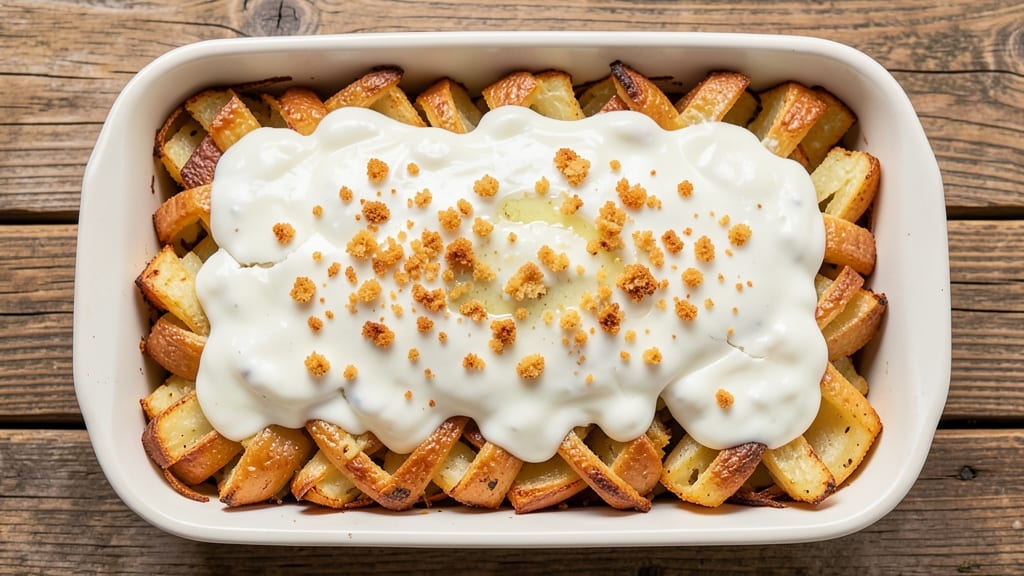
The America's Test Kitchen Duchess Potato Casserole delivers that perfect balance of crispy, vinegar-kissed top layers and velvety pink potato filling—exactly as the original should be.
This recipe captures the signature ATK precision, ensuring every bite is tender yet structured, with a golden crust that crackles just enough to hold your attention.
The secret lies in the technique: thinly sliced potatoes layered with a tangy sour cream mixture, then topped with buttery breadcrumbs for that signature crunch.
What sets this version apart is the attention to detail that transforms a classic comfort dish into something restaurant-worthy. The potatoes cook evenly, absorbing the creamy sauce without turning mushy, while the vinegar in the topping creates that signature tangy bite.
This isn’t your grandmother’s casserole—it’s a refined side dish that pairs beautifully with roasted meats or stands alone as a hearty vegetarian meal.
By following these exact steps, you’ll achieve layers that are perfectly set: crispy on top, creamy in the middle, and tender at the edges. The oven time is carefully calibrated to ensure no part of the casserole dries out or overcooks, making it foolproof for weeknight dinners.
Serve it warm, straight from the oven, and watch as it becomes the star of your table.
For those who love leftovers, this casserole reheats beautifully—just cover it tightly and warm in the oven until the edges are bubbly again. The flavors only deepen over time, making it an ideal make-ahead dish for gatherings or meal prep.
Let’s get started on recreating this ATK classic in your kitchen.
Ingredients for america's test kitchen duchess potato casserole
Thinly sliced potatoes, tangy sour cream, and buttery crispy topping—this ATK classic delivers restaurant-quality layers.
| Ingredient | Amount | Notes |
|---|---|---|
| Russet Potatoes 🥔 | 3 lb | Thinly sliced, uniform thickness |
| Sour Cream 🥛 | 1 cup | Full-fat for creaminess |
| White Vinegar 💧 | ¼ cup | Distilled preferred |
| Unsalted Butter 🧈 | ½ cup | Cold, cubed for topping |
| Panko Breadcrumbs 🍞 | 1 ½ cups | Japanese-style preferred |
| Sharp White Cheddar Cheese 🧀 | 1 cup | Freshly grated, sharp flavor |
| Heavy Cream 🥛 | ½ cup | Whole milk for lighter version |
| Granulated Sugar 🍚 | 1 tbsp | Balances tanginess |
| Diamond Crystal Kosher Salt 🧂 | 1 ½ tsp | Fine grain preferred |
| Freshly Ground Black Pepper 🌶️ | ½ tsp | Freshly cracked preferred |
| All-Purpose Flour 🌾 | ½ cup | For breadcrumb mixture |
| Garlic Powder 🧄 | ½ tsp | Freshly ground preferred |
| Dried Parsley 🌿 | 1 tbsp | Finely chopped for garnish |
The potatoes are non-negotiable—Russet is the only variety that holds its shape through baking. Organic potatoes from Whole Foods or your local farmers market stay crispier longer, but regular Russets work fine too. Thinly slice them (about 1/8-inch thick) using a mandoline for perfect uniformity. The vinegar is key—distilled white vinegar gives the signature tang without overpowering. If you can't find it, apple cider vinegar works in a pinch, but reduce to 1/4 cup plus 1 tsp lemon juice for balance. The sharp white cheddar should be freshly grated—pre-shredded gets clumpy and lacks flavor.
No sour cream? Full-fat Greek yogurt works in a bind, though it's slightly tangier. Short on panko? Toasted breadcrumbs from a baguette add crunch, but panko's airy texture is ideal. The butter must be cold for that perfect crackly topping—European-style butter like Plugrá melts more cleanly. For a lighter version, swap half the heavy cream for whole milk. The garlic powder can be omitted if you dislike garlic, but the parsley is optional—skip it if you're not a fan of garnishes. Every ingredient here serves a purpose: the vinegar cuts through the richness, the butter creates the crisp, and the cheddar adds depth.
This casserole reheats beautifully—cover with foil and warm at 350°F for 15 minutes. Leftovers keep for 4-5 days in the fridge, though the texture softens slightly. For make-ahead meals, assemble the casserole (without baking) and refrigerate for up to 24 hours before baking. Freezes well for 3 months—just thaw overnight in the fridge before reheating. The topping stays crispiest when served immediately, so pull it from the oven just before the table. Store any leftovers in an airtight container to maintain moisture.
Why You'll Love This Recipe
- One-Pan Magic: I swear by this recipe because it’s literally one bowl, one pan, and zero stress. Slice the russets thin, layer them with the tangy sour cream mixture, and bake—no chopping veggies or fussy assembly. That white vinegar trick? It keeps the potatoes fluffy and prevents gloopiness, which is basically a miracle.
- Creamy-Crisp Perfection: Between us, the texture is what makes this dish. The panko topping gets golden and shatteringly crisp, while the inside stays velvety from the butter-sour cream blend. Honestly, that contrast is why I make it twice a month—it’s like a hug in casserole form.
- Meal Prep MVP: I prep this on Sundays and it lasts all week. The leftovers reheat beautifully (just cover with foil to avoid drying out), and it’s the only side that doesn’t taste sad after three days. Plus, it’s cheap—russets and sour cream stretch for a crowd without breaking the bank.
- Weeknight Win: No one’s judging if it’s not fancy. This feeds a family of four for under $10, and the kids won’t even notice it’s "healthy-ish" (thanks to those potatoes). Bake while you toss a salad or grill chicken—it’s that unfussy. My secret weapon for nights when I’d rather not cook.
Step-by-step instructions for america's test kitchen duchess potato casserole
Here's how to build the iconic crispy-topped, creamy potato masterpiece—layer by layer, with precision.
👨🍳 Step 1: Prepare the Potatoes for Perfect Texture
Peel the 3 lb russet potatoes and slice them into ¼-inch thick rounds using a mandoline or sharp knife. I aim for uniform thickness—this ensures even cooking throughout the casserole. Place the slices in a large bowl of cold water to prevent browning while you prep the remaining ingredients.
The water bath also helps remove excess starch that can make the potatoes gummy. After slicing, drain the potatoes and pat them completely dry with paper towels. Wet potatoes steam instead of crisping, so thorough drying is critical for that signature golden crust.
🥘 Step 2: Build the Creamy Potato Layers
In a large mixing bowl, combine the drained potato slices with 1 cup sour cream, 0.5 cup heavy cream, 1 tbsp granulated sugar, 1.5 tsp diamond crystal kosher salt, 0.5 tsp freshly ground black pepper, and 0.5 tsp garlic powder. Gently toss until every slice is evenly coated in the creamy mixture.
Here's the thing—don't overmix. You want the potatoes to maintain their individual shape while absorbing just enough cream to become tender and moist. The sugar balances the tanginess of the vinegar we'll add later, while the garlic powder adds subtle depth that carries through the entire dish.
🍳 Step 3: Create the Vinegar-Kissed Breadcrumb Topping
In a separate medium bowl, whisk together 1.5 cups panko breadcrumbs, 0.5 cup all-purpose flour, 1 cup freshly grated sharp white cheddar cheese, and 0.25 cup white vinegar. The vinegar might seem odd, but it's what creates that signature tangy crunch—it tenderizes the breadcrumbs slightly while adding brightness to cut through the richness.
Mix just until combined—you'll see the vinegar begin to dissolve the flour slightly, creating a slightly sticky texture. This helps the topping adhere perfectly to the potatoes. Fold in 1 tbsp dried parsley at the end for a fresh finish that brightens the whole dish.
⏰ Step 4: Assemble and Bake for Maximum Crisp
Preheat your oven to 375°F. Grease a 9x13-inch baking dish generously with 0.5 cup unsalted butter, melting it slightly with your fingers to coat the bottom and sides thoroughly. This prevents sticking and adds extra richness to the final result.
Transfer the potato mixture to the prepared baking dish, spreading it out evenly in a single layer. Press down gently but firmly to create a compact base—this prevents the potatoes from shifting during baking and ensures even cooking. Sprinkle the vinegar-kissed breadcrumb mixture evenly over the top, pressing down lightly with your fingers to help it adhere.
🔥 Step 5: Bake Until Golden and Fork-Tender
Bake uncovered for 50-55 minutes until the top is deep golden brown and the potatoes are fork-tender. You'll know it's ready when the edges pull away slightly from the pan and the top has developed a crispy, almost crackly texture.
Let the casserole rest for 10 minutes before serving—this allows the juices to redistribute, ensuring every bite is creamy rather than soupy. The contrast between the crispy, vinegar-kissed top and the velvety potato layers is what makes this dish legendary. Serve warm with a simple green salad to balance the richness.
Pro Tips For Making America'S Test Kitchen Duchess Potato Casserole
- Pre-Cook Potatoes First: Boil the Russets whole for 12 minutes before slicing—this keeps them from falling apart when you layer them. I learned this the hard way after watching my first batch turn into a mushy mess in the oven.
- Whisk That Vinegar: Mix the white vinegar into the sour cream before adding it to the potatoes—it distributes evenly and cuts the tang without curdling. Skipping this step means you’ll taste the vinegar in pockets instead of a smooth, balanced flavor.
- Don’t Skip the Rest: Let the assembled casserole sit uncovered in the fridge for at least 30 minutes before baking—this helps the top crisp instead of steaming into a sad, gummy crust. Yes, even if you’re impatient like me.
- Toast Panko in Butter: Cook the panko in melted butter for 2–3 minutes before sprinkling it on top—this gives the crumb topping a deeper, nuttier flavor and a better grip on the casserole. Cold panko just slides off, no matter how hard you press.
Troubleshooting this recipe
Potatoes Too Mushy
If your potatoes turn out mushy instead of creamy, you likely overmixed the potato-cream mixture or didn’t dry them thoroughly. I’ve found that pat drying with paper towels is non-negotiable—skip this step at your peril!
Also, ensure your potatoes are uniform in thickness (¼-inch) and don’t overlap too much in the baking dish. For extra insurance, add ½ cup extra panko to the topping—it absorbs excess moisture during baking. 🥔
Topping Not Crispy
The vinegar-kissed topping should be golden and crackly, but if it’s soggy, your butter wasn’t cold enough or the oven temp fluctuated. Always use cold cubed butter (not melted) and preheat your oven to 375°F for at least 20 minutes.
For extra crispiness, broil for 1-2 minutes at the very end—watch closely to avoid burning! A light spray of olive oil on the topping before baking also helps create a crispier crust. 🔥
Uneven Cooking
Hot spots or undercooked edges mean your casserole didn’t bake evenly. First, ensure your 9x13-inch baking dish is placed on the middle rack—heat rises, so bottom racks can leave tops underdone. If your oven runs hot, reduce temp to 350°F and bake for 60-65 minutes.
For extra insurance, tent the dish loosely with foil after 30 minutes—this traps steam to cook the center while still allowing the top to crisp. Stirring the potato-cream mixture before baking also helps distribute heat more evenly. ⚡
Vinegar Overpowering
The vinegar adds that signature tang, but too much can make the dish taste harsh. If your topping tastes sharp, you likely used more than ¼ cup vinegar or skipped the sugar in the potato layer.
Balance it by adding 1 tbsp granulated sugar to the potato mixture or a pinch of salted butter (½ tsp salt) to the topping. For a smoother flavor, swap half the vinegar for lemon juice—it’s milder but still brightens the dish. 💡
Casserole Dries Out
Leftovers can get dry if stored improperly or reheated too aggressively. Always cover leftovers with plastic wrap pressed directly onto the surface to lock in moisture. Reheat covered at 350°F for 15-20 minutes—never microwave, as it turns the potatoes rubbery.
For extra richness, add 1 tbsp heavy cream to the reheating dish. If the topping loses crispness, broil for 1-2 minutes at the end to restore crunch. ❄️
Cheese Not Melting
Pre-shredded cheese or cold cheese clumps can create a grainy texture. Always use freshly grated sharp white cheddar—pre-shredded contains anti-caking agents that prevent melting. For extra insurance, mix the cheese with 1 tbsp flour before sprinkling—this helps it bind and melt smoothly.
If your cheese still clumps, strain it through a fine-mesh sieve to remove any large pieces. A quick fix? Spritz the topping with 1 tsp water before baking to help the cheese emulsify. 🧀
Nutrition facts
Frequently asked questions
Why does this recipe use vinegar in the topping?
The white vinegar creates that signature tangy crunch while tenderizing the breadcrumbs slightly. It cuts through the richness of the cheese and butter, balancing the dish perfectly. Without it, the topping would taste bland and flat—it’s what makes this casserole stand out from basic potato dishes.
Can I make this casserole ahead of time?
Assemble the casserole (without baking) and refrigerate for up to 24 hours before baking. For make-ahead meals, bake it fully, then store covered in the fridge for 4-5 days. The flavors deepen over time, and it reheats beautifully when warmed at 350°F for 15-20 minutes.
What’s the secret to getting the crispy top?
Cold cubed butter and proper oven temperature are key. Use 375°F and ensure your butter is firm, not melted. Press the topping firmly into the potatoes before baking, and for extra crispiness, broil for 1-2 minutes at the very end. A light spray of olive oil on the topping also helps create that signature crackly crust.
Can I substitute sour cream with something else?
Yes! Full-fat Greek yogurt works in a pinch, though it’s slightly tangier. For a lighter version, swap half the sour cream for whole milk. Avoid low-fat options—they won’t give the same creamy texture. The fat content is crucial for that velvety potato layer.
How do I fix mushy potatoes?
Thoroughly pat-dry the potato slices and ensure they’re uniform in thickness (¼-inch). Overmixing the potato-cream mixture also causes mushiness—toss gently. If it still turns out mushy, add ½ cup extra panko to the topping to absorb excess moisture during baking.