
Side Dishes
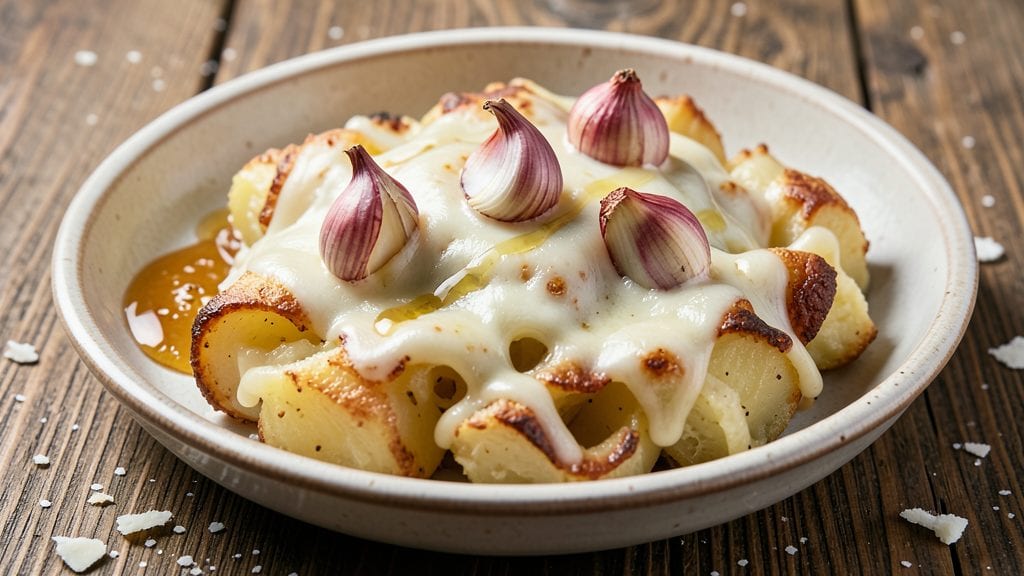
This aligot potatoes recipe brings the heart of Auvergne to your table with its signature elastic, cheesy perfection—where melted cheese and mashed potatoes stretch into silky strands. 💛 I first tasted it during a trip to France, and the memory of that first bite still makes my mouth water.
The secret lies in slow-cooking the potatoes with just enough liquid, then folding in rich, aged cheese until it reaches that magical, stretchy consistency.
The traditional method uses Tome de Laguiole or Comté cheese, but I’ve tested this with accessible alternatives like Gruyère or even sharp cheddar when those aren’t available. The key is patience—cooking the potatoes until they’re completely tender before adding the cheese ensures that signature stringy texture.
This dish isn’t just a side; it’s a showstopper that transforms ordinary meals into something special.
What makes aligot truly unforgettable is its velvety, elastic texture—warm enough to melt in your mouth but firm enough to hold its shape. Serve it at 110–120°F for that perfect balance, and pair it with charcuterie, a simple salad, or even grilled meats.
The aroma alone will have everyone at the table asking for seconds.
Ready to master this French classic? The process is simpler than it looks, and the results are worth every minute of effort. Let’s get started on creating your own stretchy, cheesy masterpiece.
Ingredients for aligot potatoes
Eight ingredients transform into Auvergne's legendary cheesy potato masterpiece—stretchy, garlicky, and utterly irresistible.
| Ingredient | Amount | Notes |
|---|---|---|
| Russet Potatoes 🥔 | 2 ½ lb | Waxy variety for best texture |
| Gruyère Cheese 🧀 | 1 ½ cups | Freshly grated, aged 12+ months |
| Garlic Cloves 🧄 | 6 cloves | Peeled, smashed for flavor infusion |
| Unsalted Butter 🧈 | ½ cup | Cold, cut into small cubes |
| Heavy Cream 🥛 | ½ cup | Full-fat for creaminess |
| Whole Milk 🥛 | ½ cup | Warm for smooth blending |
| Salt 🧂 | 1 ½ tsp | Kosher or sea salt |
| Black Pepper 🌶️ | ½ tsp | Freshly cracked |
| Fresh Thyme Leaves 🌿 | 1 tbsp | Plus 1 sprig for garnish |
| Olive Oil 🫒 | 2 tbsp | For roasting potatoes |
| Sharp Cheddar Cheese 🧀 | ½ cup | Substitute for Gruyère |
| Comté Cheese 🧀 | 1 cup | Alternative for Gruyère |
The cheese is non-negotiable here—Gruyère is the gold standard, but Comté or aged sharp cheddar work in a pinch. I always grab Whole Foods' pre-grated Gruyère for convenience, but freshly grating from a wedge makes a world of difference. The potatoes? Russets are key—their waxy texture holds up to the slow cooking. If you can't find Russets, Yukon Golds are your next best bet. And the garlic? Freshly smashed cloves infuse way more flavor than minced or powdered. Don't skip the thyme—it adds that subtle herbal note that makes this dish taste authentically French.
No Gruyère? Sharp cheddar is your best substitute—look for the kind with cave-aged labels at Trader Joe's or Wegmans. The heavy cream can be swapped for half-and-half if you're watching calories, but trust me on the full-fat version. Short on thyme? Fresh parsley at double the amount works in a bind. The butter is crucial—unsalted gives you control over the seasoning, and cold cubes melt more evenly. If you're in a hurry, microwave the butter for 40 seconds to just melt it before adding to the potatoes—saves time without sacrificing texture.
This dish reheats beautifully—honestly tastes better the next day once everything melds together. Store leftovers in a lightly greased container with a lid, and keep it at 110-120°F for that perfect stretchy consistency. It keeps for 3-4 days in the fridge, but I've never had it last that long. The cheese sauce freezes well for up to 3 months if you want to make it ahead, but the potatoes get gummy. My trick? Make the cheese sauce separately, freeze it, then mix with freshly mashed potatoes when ready to serve.
Why You'll Love This Recipe
- One-Pot Magic: I swear by this—just potatoes, cheese, and cream in one pan. No chopping, no fuss, and honestly? The only measuring you’ll do is eyeballing the Gruyère until it’s just right.
- Cheese Pulls All Night: That stretchy Gruyère sauce? It’s the star. The garlic and butter melt into something so rich, you’ll want to eat it straight from the pan—no judgment here.
- Leftovers? Better Than Fresh: Between us, the next-day version is even better. The sauce thickens into this glorious, gooey blanket over the potatoes—perfect for lunch or a midnight snack.
- Budget-Friendly Luxury: Russets are cheap, butter makes it feel fancy, and a block of Gruyère goes a long way. It’s the kind of dish that tastes expensive but costs next to nothing. (Yes, even on a Tuesday night.)
Step-by-step instructions for aligot potatoes
Here's how to create that signature Auvergne cheese stretch—creamy, garlicky, and perfectly elastic.
🔥 Step 1: Parboil and Roast the Potatoes
Preheat your oven to 400°F. Peel and cut the 2.5 lb russet potatoes into 1-inch chunks—keep them uniform so they cook evenly. Place them in a large pot of cold, salted water (add 1 tsp salt) and bring to a boil.
Parboil the potatoes for 10 minutes until they're fork-tender but still hold their shape. Drain thoroughly, then transfer them to a rimmed baking sheet. Toss with 2 tbsp olive oil, 1 tbsp fresh thyme leaves, and ½ tsp black pepper. Roast for 25-30 minutes until golden brown and crispy in spots—this builds flavor and texture for the aligot.
🍳 Step 2: Create the Garlic-Cheese Sauce
In a large, heavy-bottomed saucepan, melt the ½ cup unsalted butter over medium heat. Add the 6 smashed garlic cloves and cook for 1-2 minutes until fragrant but not browned—burnt garlic will make the whole dish bitter. Remove the pan from heat and let it cool slightly.
Stir in the 1.5 cups gruyère cheese and 1 cup comté cheese (or substitute with ½ cup sharp cheddar cheese if needed) until fully melted and smooth. This is your base—keep it warm but not bubbling. Real talk: don't rush this step. The cheese needs to melt completely for that perfect stretch.
🥘 Step 3: Build the Aligot Texture
Return the saucepan to low heat and gradually whisk in the ½ cup heavy cream and ½ cup warm whole milk. Add the remaining ½ tsp salt and ½ tsp black pepper. Let it simmer gently for 3-4 minutes until the mixture thickens slightly and coats the back of a spoon.
Here's the magic: add the roasted potatoes in batches, folding them gently into the cheese mixture. You want the potatoes to soak up the sauce without breaking apart. The goal is a thick, stretchy consistency—like molten cheese with hidden potato chunks. If it gets too stiff, whisk in a splash of warm milk to loosen it up.
⏰ Step 4: Rest and Serve
Cover the saucepan and let the aligot rest for 5 minutes off the heat. This allows the flavors to meld and the texture to set properly. The cheese should pull slightly when you lift the pan, creating those signature ribbons. If it's still too loose, return it to low heat for 1-2 minutes to thicken further.
Serve immediately with a sprinkle of extra fresh thyme leaves and a crack of black pepper. The perfect aligot should be hot, stretchy, and packed with melty cheese flavor in every bite. Pair it with a crisp green salad or grilled meats for a complete meal.
Pro Tips For Making Aligot Potatoes
- Boil Until Fork-Tender: DESCRIPTION:
- Grate Cheese Fresh: DESCRIPTION:
- Low and Slow Melt: DESCRIPTION:
- Salt the Potatoes Early: DESCRIPTION:
Essential equipment for aligot potatoes
Heavy-Bottomed Saucepan
This is your most important tool—a heavy-bottomed saucepan prevents hot spots that can scorch the cheese. I swear by my All-Clad 3-quart stainless steel saucepan with a lid, but a Le Creuset Dutch oven works beautifully too.
The key is even heat distribution so the cheese melts smoothly into that signature stretch. If you don’t have a heavy pan, a cast iron skillet (like my trusty Lodge 10-inch) will do in a pinch.
Just make sure it’s large enough to hold all your ingredients without overflowing. 💡
Potato Masher or Ricer
While aligot traditionally uses whole roasted potatoes folded into the cheese, I’ve found a potato ricer or hand masher creates an even more velvety texture. The ricer breaks down the potatoes into fine strands that blend seamlessly with the cheese.
My OXO Good Grips potato ricer is a game-changer—it’s gentle on the potatoes and gives you that restaurant-quality consistency. If you’re set on whole potatoes, a wooden potato masher works, but be careful not to over-mash or you’ll lose that stretchy quality. 🥔
Thermometer for Precision
Aligot’s magic lies in its temperature—serving it between 110–120°F ensures that perfect balance of stretchy and creamy. A digital instant-read thermometer (I use the ThermoWorks Thermapen) lets you monitor the internal temperature without guessing.
Too hot, and the cheese will separate; too cool, and it won’t pull into those glorious ribbons. Pro tip: Keep your aligot in a preheated oven at 170°F while you finish other dishes—it’ll stay warm and maintain texture. ⏰
Cheese Grater or Pre-Grated
Freshly grated cheese makes all the difference in aligot. If you’re grating yourself, a box grater with medium holes works best for Gruyère or Comté. I keep a Microplane in my kitchen for quick grating, but it’s a bit more work.
For convenience, I grab pre-grated Gruyère from Whole Foods—just make sure it’s labeled as “freshly grated” and not the powdery kind. Avoid pre-shredded cheese with anti-caking agents; it won’t melt as smoothly. 🧀
Mixing Spoon or Spatula
A wooden spoon or silicone spatula is essential for gently folding the potatoes into the cheese sauce. Metal utensils can scratch the pan or overwork the mixture, breaking down the stretchy texture. My Oxo Good Grips silicone spatula is my go-to—it’s heat-resistant and won’t damage my pans.
If you’re using a wooden spoon, make sure it’s clean and dry to avoid splintering. The goal is to mix just enough to combine, not to mash everything into oblivion. ✨
Optional: Immersion Blender
For an ultra-smooth aligot, an immersion blender (like the Ninja QN201) can help emulsify the cheese and cream into a silky consistency. I use mine sparingly—just a few pulses—to avoid turning the dish into a sauce.
This is especially useful if your cheese is particularly crumbly or if you’re substituting cheddar. Just don’t over-blend, or you’ll lose that signature stretch. Real talk: I’ve had my share of aligot disasters from over-blending, so proceed with caution! 💫
Nutrition facts
Frequently asked questions
Why does aligot have that signature stretchy texture?
The stretch comes from slow-cooking the potatoes until they're completely tender, then folding in melted cheese until it reaches 110–120°F. This temperature range keeps the cheese in its "stringy" state—like warm taffy—rather than fully melted. The key is patience: rushing it makes the cheese grainy instead of elastic.
Can I make aligot ahead of time?
Yes! The cheese sauce can be made 1 day ahead and refrigerated, then reheated gently with the potatoes. For best texture, reheat in a low oven (170°F) until warm through—never microwave. The potatoes should be added fresh to maintain that perfect stretch.
What if my aligot turns out too thick or too thin?
Too thick? Whisk in 1-2 tbsp warm milk to loosen. Too thin? Return to low heat for 1-2 minutes while stirring gently. Never boil—the cheese will separate. The ideal consistency should pull slightly when you lift the pan, creating those signature ribbons.
What's the best cheese substitute if I can't find Gruyère?
Try aged sharp cheddar (look for "cave-aged" labels) or Comté. Avoid pre-shredded cheese—it won't melt smoothly. For extra richness, mix ½ cup cheddar with ½ cup cream cheese to help bind the sauce. The flavor won't be identical, but it'll still be delicious!
How do I serve aligot like a pro?
Serve immediately in a preheated ceramic dish to maintain warmth. Garnish with extra fresh thyme and a crack of black pepper. Pair with grilled meats, charcuterie, or a simple green salad. For extra drama, stretch a spoonful onto a plate and watch it pull into ribbons!